

The Tallest Highways In America Aren't For The Faint Of Heart
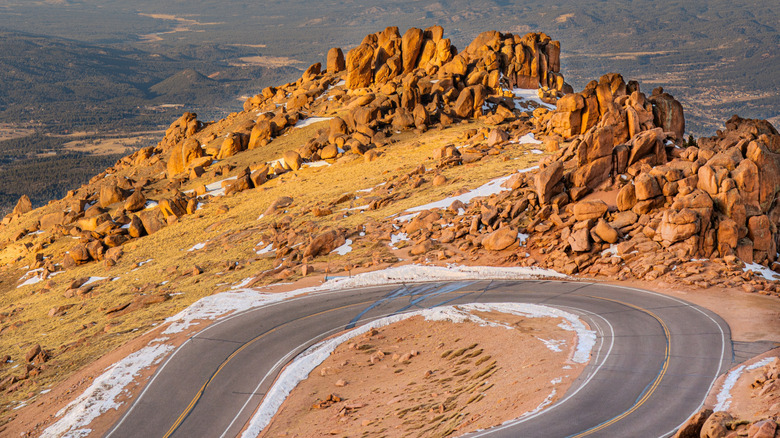
The U.S. is a huge place, and it's one that's full of exciting roads that many of us dream to drive one day. We've asked for your favorite driving roads in the past, and answers varied from California's Pacific Coast Highway to downtown L.A. interstates, plus just about any road in the Finger Lakes.
While those are all fabulous for one reason or another, there are some driving roads that appeal to only those with the most adventurous spirits. These are the tallest highways in the U.S., and with peaks sitting north of 12,000 feet or more, there are unique challenges that come with tackling these roads.
Those challenges include adverse weather, visibility concerns, and altitude issues that will affect occupants just as much as vehicles. Still, very few of them are regularly classed as genuinely dangerous driving roads. And so — with a little bit of common sense and forward planning — inspired motorists looking for a unique experience can tackle them quite safely.
Below, we've highlighted the five highest paved roads in America, and, interestingly, four of them are found in the state of Colorado, while the other requires a trip to Hawaii. So, for an adventure at altitude, a trip to Colorado looks like the best bet, and with Pikes Peak itself sitting within the top five, these highways certainly are not for the faint of heart.
Cottonwood Pass, Colorado - maximum elevation of 12,126 feet
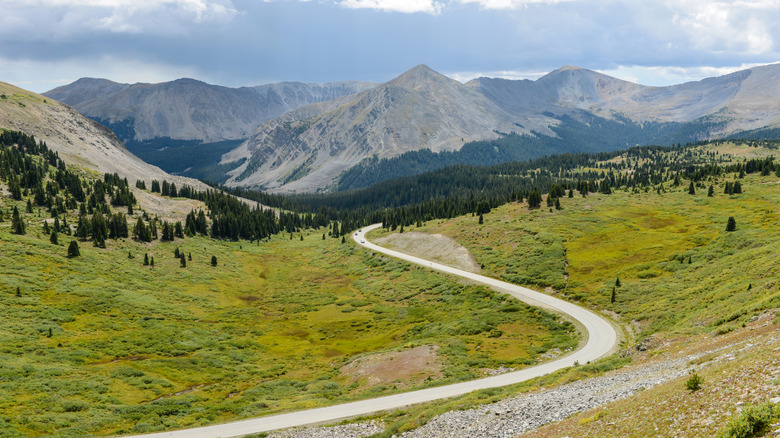
Kicking off our list is Colorado's Cottonwood Pass, which boasts a maximum elevation of 12,126 feet. It's actually a relatively easy pass to conquer, especially since 2019, when the paving of the entire road was completed. Prior to this, the Almont side was dirt. Now, you can manage it easily in a two-wheel-drive car, whereas other more challenging roads may require, or at least benefit from, the capability of a four- or all-wheel-drive vehicle.
Still, even on a relatively easy road like this, there are issues that arise when driving at altitude. Snowfall stops the road from being open year round — instead, it's only passable from May through October, so anyone looking to try it out will have to time a visit during the warmer months. There are also no gas stations on the 57-mile pass itself, so drivers will have to fill up beforehand to avoid what could likely be a long wait for recovery on the remote highway.
Despite being paved and not being as high as other roads on this list, the Cottonwood Pass is still no walk in the park for inexperienced drivers. In some areas, the road can be incredibly narrow, and when coupled with sheer drops, it's no wonder that locals report incidents of visitors stopping partway along the pass due to fear of continuing.
Trail Ridge Road, Colorado - maximum elevation of 12,201 feet
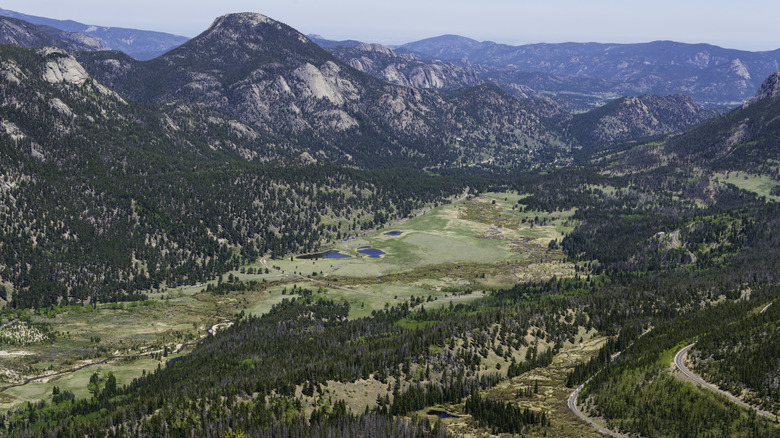
Following up with an elevation peaking just 75 feet higher is the Trail Ridge Road of Colorado. It connects two towns, Grand Lake and Estes Park, through the Rocky Mountain National Park. As is the case with the Cottonwood Pass, and indeed many roads within the U.S. that sit at such altitudes, the Trail Ridge Road opens only from May through October.
Naturally, sitting at such a close altitude to the aforementioned pass, many of the same issues also apply here. It's a road that can see an awful lot of snowfall, and at 12,000 feet, altitude will begin to play its part in decreasing your car's engine power, while also posing a risk of altitude sickness to any occupants.
The appeal of the road is clear, though. While much of the Rocky Mountains must be explored on foot by experienced hikers, this road allows others to view its majesty in relative comfort. We say relative, as many of the road's steep drop offs have no guardrails to protect wayward vehicles from veering off. That's a thought scary enough to keep many motorists away, no doubt, but even more fear inducing is the thought of clearing the snow in order for the road to open each year.
Experienced workers have to tackle this job prior to the road opening. With strong winds, poor visibility, and snow-covered verges to tackle, it's a dangerous task that surely only a few will envy.
Mauna Kea Access Road, Hawaii - maximum elevation of 13,781 feet
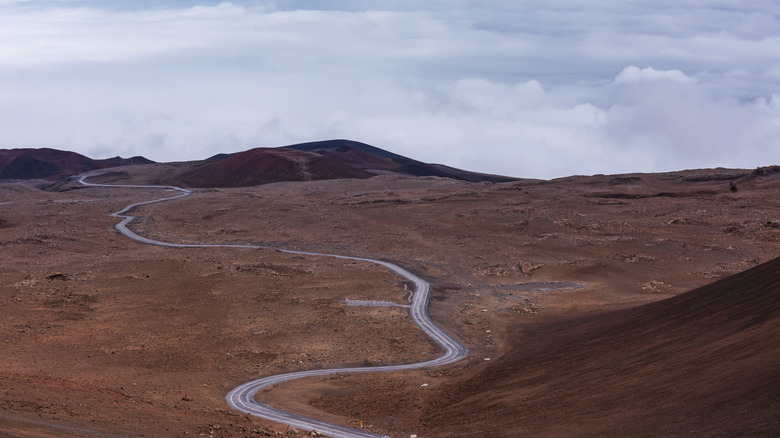
This access road is the odd one out from the selection — not only is it the only road found outside of Colorado, but it's also not a fully paved highway. At 14.6 miles long, it is notably shorter than other roads on the list, but unfortunately for those looking to tackle it with ease, that simply means the elevation has to be crammed into a tighter space. In other words, the gradient of this road, specifically nearer the summit, is really quite steep. It hits a maximum grade of 15%, averages at 9.27%, and, across those 14.6 miles, the total elevation gain is 7,149 feet.
The majority of it is paved, but sections toward the top – after the visitor's center – are unpaved, and a capable four-wheel drive or all-wheel-drive vehicle is required for tackling this specific road. For those looking to experience the road but skip the more dangerous aspects, the first 6.5 miles to the visitor's center are easy to pass in comparison, and they can be tackled with a two-wheel-drive vehicle.
It's worth noting, though, that even four-wheel-drive vehicles can fall victim to the road's challenging nature. In 2022, a Toyota Tacoma experienced brake failure in poor weather, and the result was a 100-yard tumble into a ravine. Unfortunately, this was a fatal accident, and seven others were injured, so Hawaii's highest road truly is not one for the faint of heart.
Pikes Peak Highway, Colorado - maximum elevation of 14,115 feet
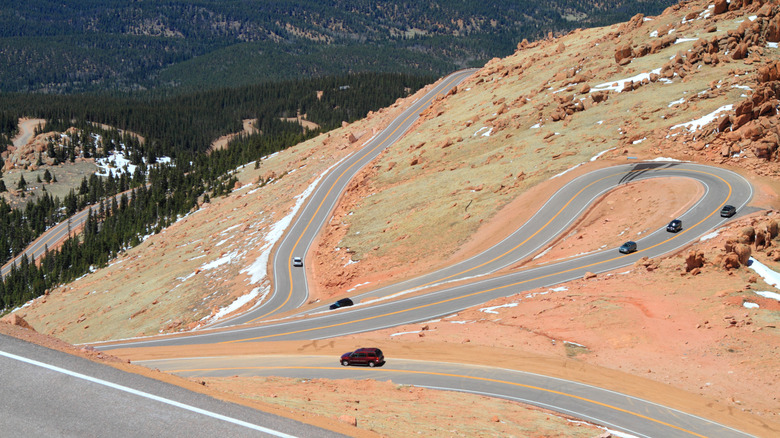
This entry probably will not come as a surprise to many, as not only is the Pikes Peak Highway the second-highest in America, but it's also a cruel and unforgiving mountain road that refuses to play favorites. It plays host to the famous Pikes Peak International Hill Climb, an event that has seen drivers and automakers fighting to achieve the fastest time up the hill for over a century.
The event itself has claimed seven lives in its 110-year past, four of which were motorcycle entrants. So, it's certainly not an event, or indeed a highway, for the faint of heart. Naturally, hurtling up the twisting stretch of road as fast as possible does add to the danger aspect, but it's also no walk in the park for regular traffic either.
In truth, the lower half of the route is actually quite a nice, scenic drive, boasting two clear lanes and plenty of beautiful native trees to protect motorists from telling views that would reveal the climbing altitude. At around 12,500 feet, the trees disappear, and the views reveal sheer drops. The road narrows, too, and there are no guardrails for protection either.
Toward the top, it's common to see brake-check points, where rangers will inspect the brakes of passing vehicles to ensure they aren't too hot and at risk of failing. Altitude sickness is a real possibility, too, reinforcing the idea that the Pikes Peak Highway isn't a journey to set out on without some preparation.
Mount Blue Sky Scenic Byway, Colorado - maximum elevation of 14,130 feet
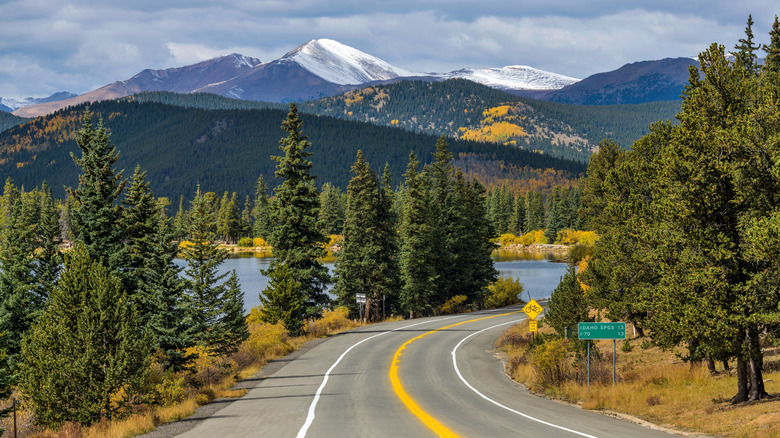
This specific stretch of road, which until very recently was closed for the better part of 2 years for construction work, holds the title of North America's highest paved road. It boasts a peak altitude of 14,130 feet, is 28 miles long, and climbs over 7,000 feet in elevation.
Naturally, many of the risks posed by the other roads also apply here: Low oxygen levels that can induce altitude sickness, decreased vehicle performance, and the risk of adverse weather play a part. There are also no guardrails, and — due to the tight and twisting nature of the road — vehicles over 30-feet in length are prohibited.
The use of engine-braking is strongly advised to help the brakes maintain their effectiveness. Numerous stopping points are located along the byway for vehicles to rest their brakes. Interestingly, despite it peaking higher than other roads, the gradient here is not all that steep, averaging out at 4.54% across the entire stretch.
Prior to the road closing, locals noted that certain sections were crumbling away. Construction work set about addressing such degradation, so, while it's still not a road for the fainthearted, the byway should now be safer than in previous years for those that are up to the challenge. Timed tickets are required for access to the road, which helps to break up traffic and reduce environmental damage.