

Here Is What NASA's Artemis III Mission Will Do
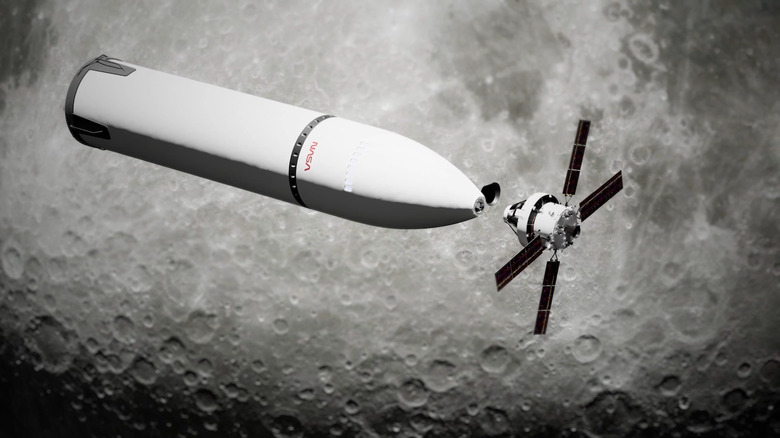
Now that NASA's Artemis II mission has successfully taken human beings farther from Earth than ever before, the time has come for the space agency to get serious about what comes next. On Tuesday, NASA revealed the details of the Artemis III mission, which is scheduled to launch sometime in 2027. It will not feature any returning crew from Artemis II, and it will not attempt to fly to the Moon, much less land on it. What it will do is arguably the most complex single mission NASA has ever attempted.
Not that long ago, the plan was for Artemis III to be the first Moon landing mission since 1972. However, that would have meant sending astronauts to do so without even testing any of the lunar landing vehicles first. Realizing that that's something it should probably do, in February NASA redesigned the entire Artemis program. The third Artemis mission was changed to stay in Earth orbit as a way to try out not one, but two lunar landers.
We now know what that will entail. First, an SLS rocket will launch four astronauts into orbit aboard an Orion capsule, exactly like Artemis II did earlier this year. Next, Blue Origin will send its Blue Moon lunar lander into orbit aboard a New Glenn rocket. Orion will dock with the lander for two days, during which the astronauts will run tests and practice entering the other spacecraft.
That's already a lot to handle, but Artemis III isn't done. Next, SpaceX will launch a Starship rocket into orbit, which will dock with Orion for one day. The astronauts will again run tests, but apparently not actually enter the spacecraft this time. After that, it's time to come home, and Orion will splash down in the ocean for recovery. Total elapsed time: around two weeks.
What could possibly go wrong?
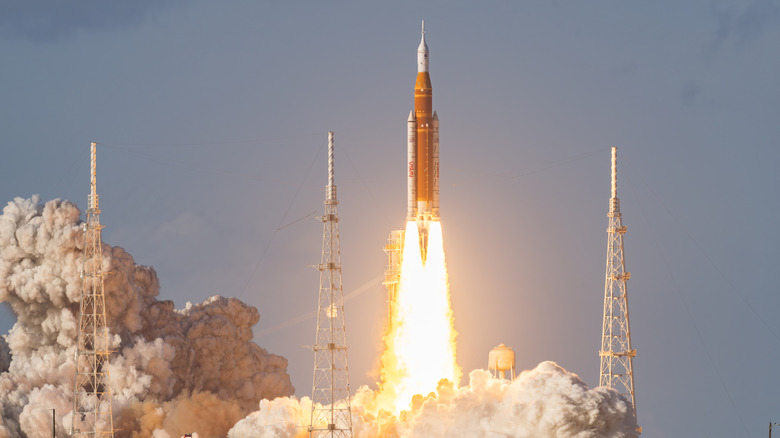
No space mission is without its risks, but it would be wrong to say that Artemis III is just like other missions. This one involves not one, not two, but three separate rocket launches (each of which is a completely different rocket), plus two dockings/undockings. As Space.com points out, neither of these landers actually exist right now. Meanwhile, Starship has never flown into orbit, ever, and a New Glenn just exploded on its launchpad so badly that Blue Origin won't be able to launch again for months at a minimum.
If nothing else, all this makes it apparent why Artemis III couldn't be the Moon landing mission! A lot of capabilities need to be demonstrated first. Should all go well, the idea is for Artemis IV to try to put astronauts back on the lunar surface in 2028. Obviously, if things do not go well, that will need to be pushed back. But for NASA to follow through on its ambitious plans to build humanity's first Moon Base, it needs to relearn how to get human beings onto other worlds. Let's see if it can relearn how to get them into a landing vehicle.