

Green Biofuels Could Save The Day If Oil Supplies Remain Disrupted (And Possibly Cause A Global Food Crisis)
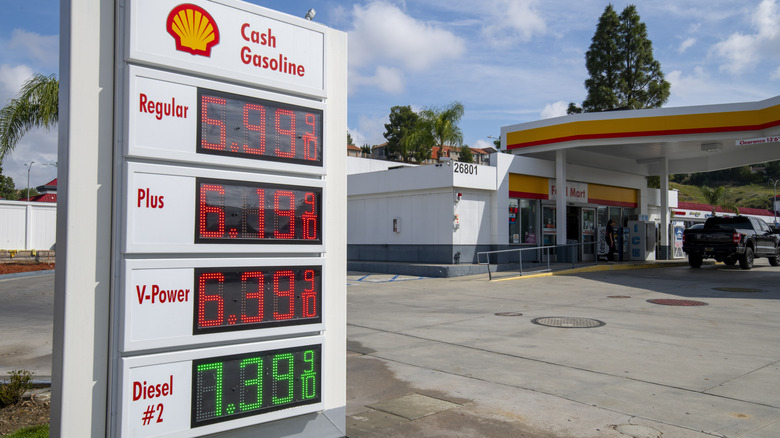
The bad news is the on-again, off-again war in Iran has caused fuel prices to surge around the world. The good news is there may be a solution in the form of biofuels. The bad news is the organic matter used to create biofuels is mostly food, so increasing the production of the former may cause a shortage in the latter. The good news is biofuels burn cleaner and emit less, so this mess could actually be good for the environment. The bad news is the land use for biofuel farming is very inefficient, which is bad for the environment. Make sense?
Biofuels have been a darling of energy regulators for a while. They don't require a brand-new vehicle, the way that hydrogen does; you can just fill up your ordinary gas-powered car with them. Since they pollute up to 80% less than their dinosaur-bone-based counterparts, they seem like an obvious winner in the fight against climate change, at least on the surface. For that reason, agencies around the world mandate their production. A tenth of all fertilizer use in the U.S. must be for biofuels, per the Guardian; meanwhile, the EPA sets annual targets for how much biofuel must be blended into the national fuel supply, and those targets have been rising fast, even during the Trump administration.
Financially, the more biofuel that is produced, the lower gas prices will stay. Ramped-up production can offset at least some of the losses from a choked Strait of Hormuz. That might prevent some of the worst-case scenarios for fuel prices or shortages. But there are costs beyond what you see on gas station signs.
Feeding cars or feeding people

The question is whether the world may soon start facing a real trade-off between feeding cars and feeding people. There is only so much fertilizer and land, so if demand (whether market or mandated) for biofuel goes up, then the incentive to grow and/or sell actual food goes down. What the war in Iran represents is a sudden spike in market demand for this readily available alternative to fossil fuels; the Guardian has this jumping by a third by the end of the year. If the fossil fuel supply doesn't get back on track soon, that demand spike could go all the way up to 70%.
In the meantime, the war in Iran is also crunching fertilizer supply. Food is going to get a lot more expensive for that reason alone; add in the incentive for farmers to sell it for fuel instead, and you've got the potential for a crisis worldwide. For this reason, even green energy think-tanks like Transport & Environment (T&E) believe that governments should be incentivizing food production over biofuels.
No clear alternative
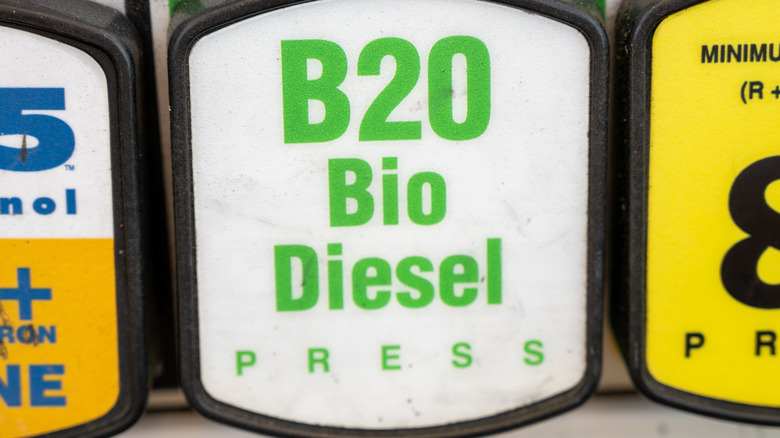
Don't worry, it gets worse. T&E also calculates that to fully power just 20% of the world's cars with biofuel, you'd need to dedicate crop-growing land equivalent to the size of South Africa — an increase in consumption of 5x the current rate. This has always been the Achilles heel of this climate change solution: its production is just too inefficient. While research on better techniques is being done, we're not at a breakthrough just yet.
In the long-term, electrification is a much more efficient solution, but large-scale rollout of EVs has been agonizingly uneven around the world, and anyway it doesn't solve the short-term problem of spiking gas prices. To power the current vehicle mix, which is still dominated by internal combustion engines, you need a drop-in solution. Biofuels are it. Already, there are people struggling to balance their checkbooks between food and gas. Civilization itself might be doing the same soon.