

These Used Hondas Aren't Worth Your Money At Any Price
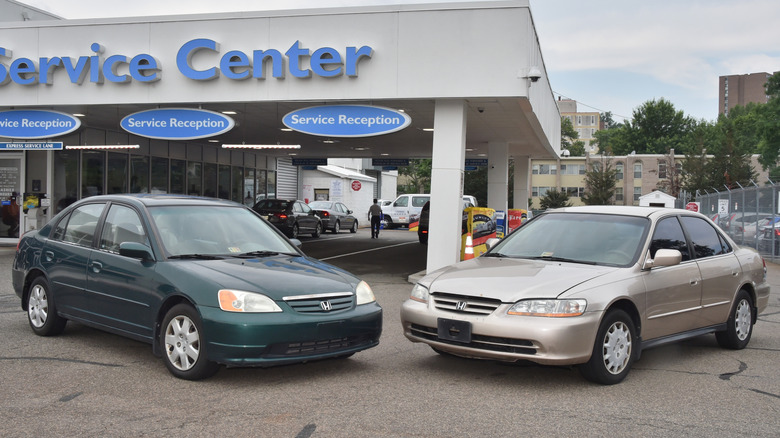
No car company is perfect, though there are a few brands with reputations so strong that they warrant headlines like "The Most Reliable Car Brand Isn't Toyota Or Honda" whenever they're not at the very top of a dependability ranking. And while Honda is one of those vaunted brands, it still isn't like you can throw a rock at their entire lineup over the last 20 years and expect to strike reliability gold every time. Like any manufacturer, you'll find that Honda has a past (and present) dotted with at least the occasional departure from the usual high expectations, whether that means a pervasive parts defect that leads to widespread recalls or design decisions that passed muster in testing but didn't hold up in the real world.
Often, those issues can be nailed down to specific model years, power trains, or design generations, which means it's still possible to set yourself up for a great ownership experience as long as you do your homework. So we're going to walk you through some of the most problematic used offerings from Honda, including a little background that exposes the kinds of issues that can help give a well-regarded company the occasional black eye. After all, if you're buying one of these Hondas, you're trying to make a prudent, responsible choice. Though if you wanted something with the reliability of a Maserati, you'd at least have the privilege of looking cool while you're broken down on the side of the road.
2003-2004 Honda Accord V6 Automatic / 2002-2004 Honda Odyssey
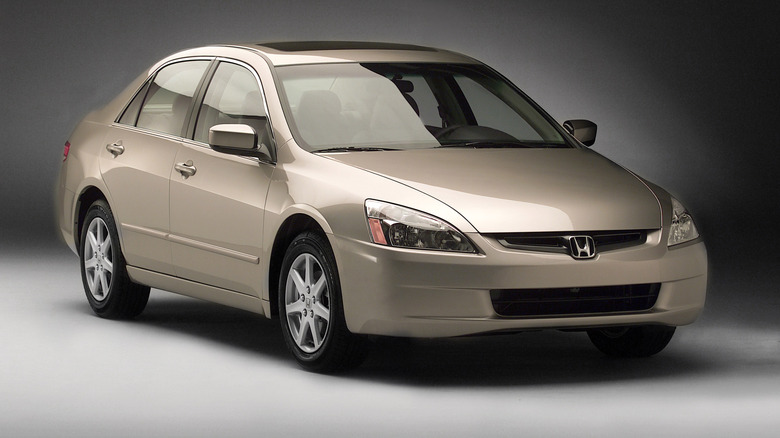
The 2003-2004 Accord V6 automatic and 2002-2004 Odyssey look like two versions of the same responsible used-Honda idea. One is a smoother, stronger take on the default family sedan, while the other is a practical minivan from a brand people trust to keep a household moving. On paper, both seem like exactly the sort of used car you buy when you want transportation to be affordable, sensible, and boring.
The problem is that both were swept into Honda's broader early-2000s automatic-transmission recall mess, with the Odyssey named in Honda's initial light-truck recall and the Accord V6 added when Honda expanded the campaign to certain passenger cars. The shared issue centered on heat buildup around the automatic transmission's second-gear set, which could lead to gear tooth chipping or breakage and, in rare cases, transmission lockup.
That is enough to kill the value proposition. These cars are only appealing as cheap used buys if they stay low-drama and dependable, and a used Honda with major automatic-transmission baggage is just an expensive repair estimate wearing a sensible badge. Skip them. There are too many used Hondas that do the responsible-car thing without bringing this particular failure risk along for the ride.
2006-2009 Honda Civic
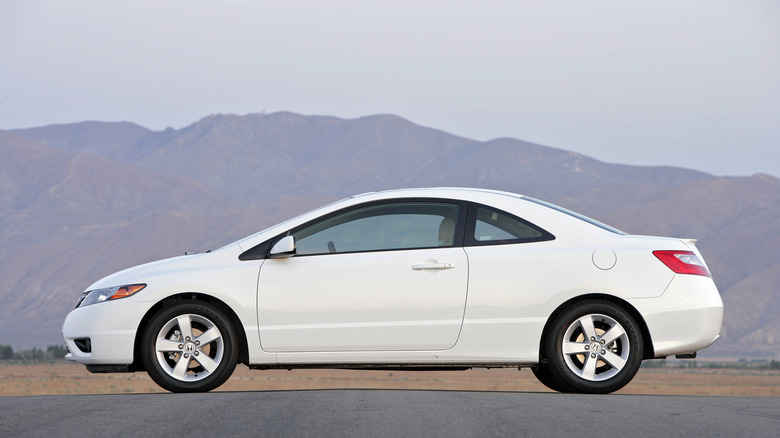
The 2006-2009 Civic is exactly the kind of used Honda that can make people let their guard down. It's small, efficient, common, inexpensive to run, and wrapped in one of the safest nameplates in the used-car universe. If someone tells you they are looking at an older Civic because they just need a cheap, responsible commuter, it is hard to argue with the premise. You can practically hear Dave Ramsey whispering encouragement to pay cash and scoop one up.
This particular generation, though, has one specific problem that should scare off anyone looking at affected non-hybrid, non-Si examples: the engine block. Honda extended warranty coverage on some 2006-2008 and early-production 2009 Civics because the engine block could leak coolant and cause overheating, with a free engine-block replacement program for affected Civics. Some owners ended up getting a whole new engine as part of the make-good.
That warranty extension was useful when these cars were newer, but time has done what time always does to old economy cars. A cheap Civic with possible engine-block trouble is not a smart way to save money; it is a repair problem dressed up as the most sensible car in the parking lot. The whole case for buying an old Civic is that it should make your life simpler. This one gives you one big reason to walk away, not to mention an excuse to grab an Si if you simply must have a Civic of this particular vintage.
2008-2012 Honda Accord V6 / 2008-2013 Honda Odyssey / 2009-2013 Honda Pilot (VCM Vehicles Only)
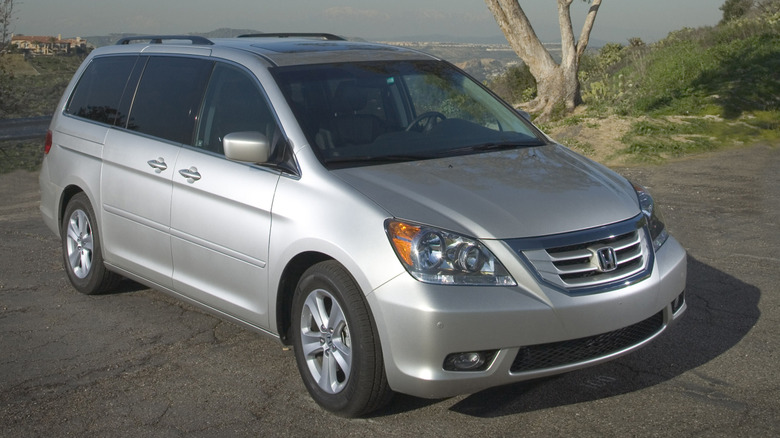
Honda's V6-powered Accord, Odyssey, and Pilot models from this era have the exact kind of appeal that ages into dangerous used-car confidence. The Accord V6 feels like a grown-up upgrade over the four-cylinder sedan, the Odyssey promises family practicality with extra highway muscle, and the Pilot gives you three-row SUV usefulness without leaving the Honda comfort zone. These are the versions people buy when they want something nicer than the base model but still think they are making the sensible choice.
The problem sits with Honda's Variable Cylinder Management system, meant to improve fuel economy by shutting down cylinders when the engine did not need all six. A class-action settlement covered certain V6 models equipped with VCM-2 over engine performance issues including misfires, burning oil, and fouled spark plugs. The covered vehicles included 2008-2012 Accord, 2008-2013 Odyssey, 2009-2013 Pilot, 2010-2011 Accord Crosstour, and 2012 Crosstour V6 models. Our apologies to Crosstour enthusiasts; there was only so much room up there in the heading.
That is exactly the kind of defect history that ruins the "nice Honda" argument. The V6 is supposed to be the reward: smoother, stronger, more relaxed, and better suited to road trips, hauling, and family duty. Once that upgrade comes bundled with oil-consumption and misfire baggage, the math flips. Skip the VCM-era V6s and let someone else discover how expensive the sensible upgrade can get. Besides, we hear Honda is working on its first new V6 in 30 years, so maybe redemption lies ahead.
2015 Honda Fit CVT
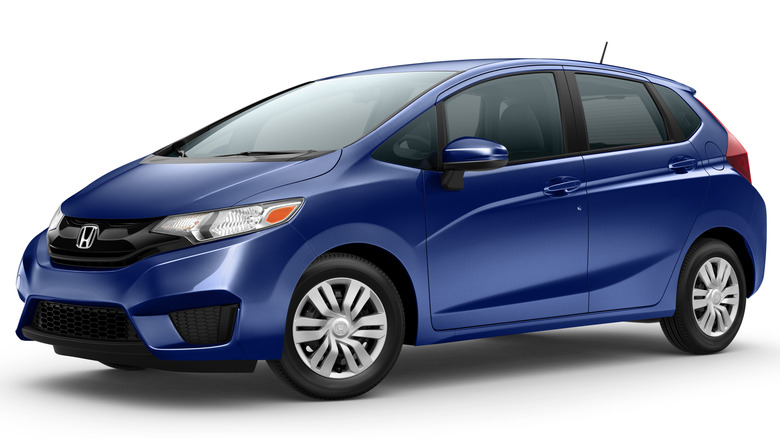
The 2015 Honda Fit is exactly the kind of small car that makes used shoppers feel clever. It is cheap to run, easy to park, absurdly useful for its size, and blessed with Honda's reputation for turning basic transportation into something that can survive years of commuter abuse. The Fit's whole pitch is that it gives you maximum practicality without requiring much money, space, or attention, which is why a used one can look like such an obvious win.
Unfortunately, the 2015 Fit also falls into a recall of continuously variable transmissions that makes that cheap-and-easy argument a lot harder to defend. And while your CVT hate is way overblown and bordering on irrational, this time the transmission really was a problem. Honda recalled 2015 Fits and 2014-2015 Civics because CVT software settings called for higher pressure than the transmission drive pulley shaft could handle, leading to potential failure.
That is a dealbreaker of a problem for a car whose entire appeal depends on being a simple, low-cost answer to worry-free commuting needs. The Fit is supposed to be the thing you buy when you want to avoid expensive complications, not the thing that makes you learn the phrase "drive pulley shaft" against your will. Skip the 2015 CVT and let some other bargain hunter discover the limits of small-car economic bliss.
2016-2020 Honda HR-V CVT
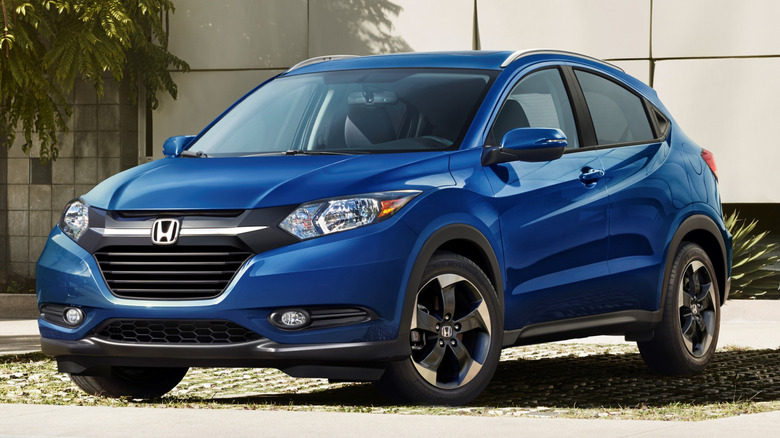
The HR-V arrived at exactly the right time for Honda, just as buyers were deciding that every small car would be better if it sat a little higher and looked a little more like an SUV. The HR-V looked like a tidy little answer to almost everything: it's efficient, has manageable dimensions, is available with all-wheel drive, and is genuinely useful for its size. For used-car shoppers, that can make the early HR-V look like something of a practicality life hack.
The trouble is hidden under all that harmless crossover logic. Honda extended warranty coverage for 2016-2020 HR-V models with CVTs because of possible premature deterioration of the transmission drive belt. The coverage was extended to seven years from the original purchase date or 150,000 miles — great news for owners inside the window, but much less comforting for buyers looking at aging early examples now.
That matters because the HR-V's appeal is built on being practical, modern, and low-risk. Once the transmission comes with a known drive-belt deterioration concern, the world's most tepid car stops looking like a sensible life hack and starts looking like a taller Fit with a worse sense of financial humor. Skip the early CVT HR-V and find a small Honda that doesn't threaten to make the transmission the main character in your failed commute.
2017-2018 Honda CR-V 1.5T / 2016-2018 Honda Civic 1.5T
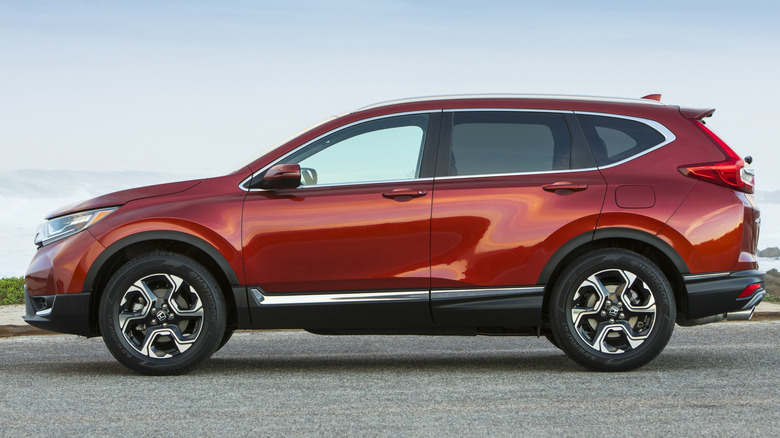
The 1.5-liter turbo was supposed to give Honda buyers the modern engine magic trick: useful low-end torque, strong fuel economy, and a more contemporary feel in the same dependable Civic and CR-V packages they already trusted. In the Civic, it made the compact feel sharper and more grown-up. In the CR-V, it gave one of America's default sensible crossovers a more contemporary power train. These were not weird fringe models for picky enthusiasts; they were mainstream Hondas bought by people who thought they were making the safe play.
Too bad the 1.5-liter turbo was potentially the worst Honda engine ever built, popping up in various configurations in Civics, CR-Vs, and Accords. When packaged with the 2017-2018 CR-Vs in particular, the motor experienced a variety of problems stemming from gasoline contaminating the oil supply. Honda ultimately added a year to the power train warranty for about 1 million 2016-2018 Civics and 2017-2018 CR-Vs with these engines. Reported symptoms included high oil levels, persistent fuel smell, hesitation on acceleration, and stalling.
That is the kind of problem that makes a modern used Honda feel a lot less modern. The turbo engine was supposed to be the efficient upgrade, not the thing that makes you sniff the dipstick like a lunatic in a grocery-store parking lot. Skip the early 1.5-liter Civic and CR-V. The whole reason to buy one is to avoid feeling like you are beta-testing someone else's power train compromise.
2016-2020 Honda Pilot / 2018-2020 Honda Odyssey / 2017-2019 Honda Ridgeline 3.5 V6
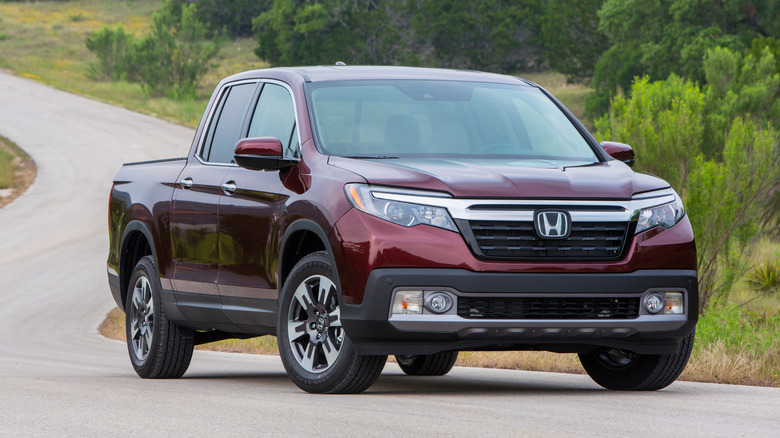
A used Pilot, Odyssey, or Ridgeline from this era is not some $3,000 Craigslist gamble with a dashboard full of warning lights and a title story that changes every time you ask. These are cars that can still command real money because they sit right in Honda's comfort zone: family SUV, family minivan, and weirdly sensible truck. That is exactly what makes the risk harder to swallow. You aren't buying some doomed beater; you are paying Honda money for what is supposed to be Honda peace of mind.
The issue here is Honda's 3.5-liter V6, which you'll find in the Pilots, Odysseys, and Ridgelines called out above, plus the 2018-2020 Acura TLX and the 2016-2020 Acura MDX. A potential for engine seizing tied to a connecting-rod-bearing manufacturing error led to the National Highway Traffic Safety Administration (NHTSA) initiating a recall query of over 1.4 million vehicles.
That's a brutal thing to have hanging over vehicles whose appeal is durability under boring, expensive real-life use. The Pilot is supposed to haul families, the Odyssey is supposed to absorb chaos with an excess of cupholders, and the Ridgeline is allegedly the thinking person's pickup. Once catastrophic engine failure enters the conversation, all three start looking less like responsible purchases and more like very expensive ways to learn that "Honda V6" is not always the flex you expect it to be. And if even Honda can't figure this out, maybe it's no wonder the naturally aspirated V6 is going extinct.
2009-2014 Honda Fit / 2012 Honda Civic Hybrid / 2013-2015 Four-Cylinder Accord CVT In Salt Belt states

The Fit is supposed to be the city-friendly cheap one, the Civic Hybrid is supposed to be the fuel-sipping commuter, and the Accord is supposed to be the sedan you buy when you want to start feeling like a proper adult. Unfortunately, a lot of the prudent car math goes out the window in a hurry when you combine the usual concerns about corrosion related to road salt and add in an automotive Achilles' heel in the form of an improperly rustproofed drive shaft that can open the door to the sensible Honda pitch dissolving underneath you, almost literally.
Honda recalled certain Fit, Civic Hybrid, Accord, and Acura ILX models, but only in the 22 U.S. states plus D.C. where road salt is considered a pervasive issue. It's an opportunity to start sniffing around for the rust-belt provenance of otherwise dependable vehicles to get a feel if that Civic you're considering is one of the 430,000 Honda and Acura vehicles affected.
Anyway, a broken driveshaft can cause a loss of power while driving, or let the vehicle roll away if the parking brake isn't set. That is more than enough to ruin the "cheap, sensible Honda" calculation. A used car from a salt state already deserves suspicion; one from a recall population with improperly rustproofed driveshafts deserves to be crossed off the list before the seller can say "mostly highway miles." And this is another reason why we should clear our roads with pickle brine instead of rock salt.
2001-2003 Hondas With Unrepaired Takata Alpha Airbags
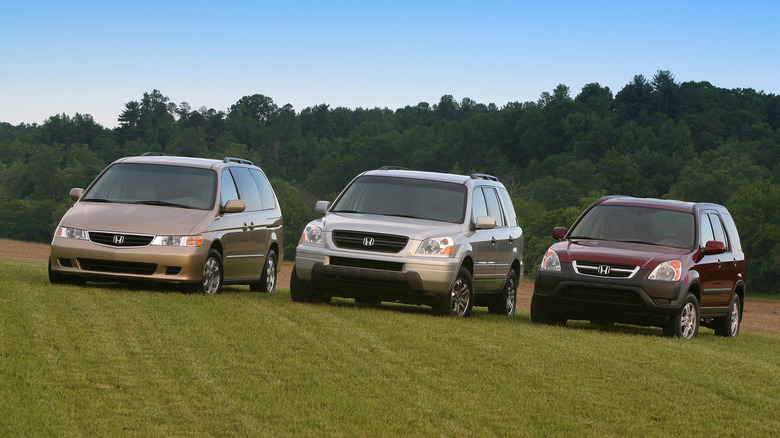
This one is not about repair bills, expired warranty coverage, or whether an old Honda is worth more than it should be. It's about whether the car should be driven at all. Certain 2001-2003 Honda and Acura vehicles with unrepaired Takata Alpha driver-side airbag inflators were dangerous enough for NHTSA to issue a "Do Not Drive" warning, which to be fair is about as subtle as federal safety language gets.
The affected Honda and Acura models include (deep breath...) the 2001-2002 Honda Accord and Civic, 2002 Honda CR-V and Odyssey, 2002-2003 Acura 3.2 TL, and the 2003 Honda Pilot and 3.2CL. It probably feels like you've been hearing about the Takata issues forever, and indeed these Alpha inflators are some of the oldest ones out there.
As much as we'd like to say that this was an obscure "take your chances" kind of risk, the rupture risk of these things is actually quite high, about 50%. Remember what we said about subtle federal safety language? NHTSA says, "If the inflators rupture, the metal fragments ejected toward the driver's face could kill or leave them with devastating, life-altering injuries," so we're pretty comfortable in telling you to stay away from these things.
That makes this the easiest hard pass in the whole group. There is no "but it runs great," no "but it's a Honda," and no "but the seller says the light has always been on." A car with one of these unrepaired airbags should not be part of anyone's used-car shopping list until the free repair is done. At any price, an unrepaired Takata Alpha Honda is not a bargain. It is a free shrapnel subscription on wheels.