

Gas Will Get 'An Order Of Magnitude' More Expensive In 2-3 Weeks If Trump Can't Open Strait Of Hormuz, Exxon Exec Tells Bankers
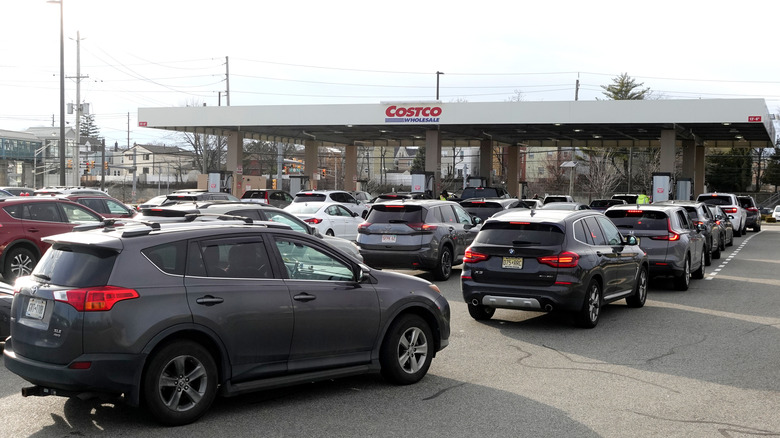
Gas prices have been up and down, but mostly down nationwide recently, something most people in the U.S. probably appreciate. After all, this Republican-enabled war with Iran has already collectively cost drivers more than $40 billion, and it's even gotten to the point that regular Americans are seriously starting to consider going electric. That's good news, right? Not necessarily. According to the industry publication Oil & Gas Journal, executives from companies such as Exxon and Chevron are already telling investment bankers we're running out of time to open the Strait of Hormuz, and if that doesn't happen, everything will get way, way worse.
While addressing a group of investment bankers at this year's Bernstein Strategic Decisions Conference, AccuExxonMobil senior vice-president Neil Chapman said oil prices will shoot up by "an order of magnitude" in the coming weeks, as oil inventories dwindle, and we finally get a real taste of the consequences of Trump handing Iran control of the Strait of Hormuz. The good news is, it sounds like he was exaggerating, and oil won't cost $1,000 a barrel by July. The bad news is, Oil & Gas Journal reports Chapman said:
the most important factor in the price of oil and associated products will soon be the releases of inventories that, along with distributions from countries' strategic petroleum reserves, have mitigated some of the effects of the Iran war taking offline or shutting in about 14 million b/d of Middle East production.
"We're approaching unheard-of inventory levels. I mean, really, really low levels," Chapman said. "You can debate whether that's going to hit those really low levels in two weeks or three weeks. Once you get to that point, you'll see price shoot up. [...] Most people with a model would say dated Brent will shoot up [...] to $150, $160."
Yikes. Not good!
Chevron agrees
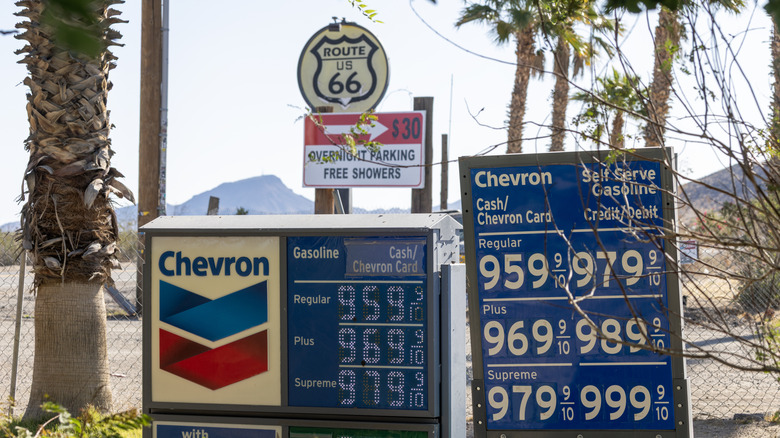
If you assume Jalopnik and everyone currently on staff are biased against Trump and untrustworthy, that's fine. But bias cuts both ways, and if anything, AccuExxonMobil senior vice-president Neil Chapman should be biased in favor of the administration that the oil and gas industry is already so heavily invested in. The fact that he's telling investment bankers that we have less than a month before this whole thing really blows up in our faces says a lot. Even worse, Chevron CEO Mike Wirth spoke after Chapman and largely agreed with his assessment:
Like Chapman, he pointed to reserve releases and noted that sanctioned oil from Russia, Iran, and Venezuela also has helped offset the loss of production in countries such as Kuwait and the United Arab Emirates. And he also said that "the buffers and the shock absorbers are being steadily drawn down," which will soon show itself in prices.
"Over the next few weeks, we're likely to see those pressures flow through more directly to physical prices," Wirth said. "There [will be] more upward pressure that I would expect as we get into June and certainly into July."
Chapman and Wirth's predictions generally align with the International Energy Agency's recent warning, except, as Oil & Gas Journal points out, the timeline they gave for real disaster to hit is far shorter than the IEA's. I don't know exactly what it means when oil and gas execs are more pessimistic about the future than outside organizations, but it probably isn't good. Ideally, Trump's crack team of Republican negotiators would find a way to force Iran to reopen the strait it now controls, but even if they succeed, it may already be too late to stop everything from getting worse. But I'm sure it's fine. It'll probably be fine, right?