

5 Worst Manual Transmission Habits That'll Shorten Their Lifespans
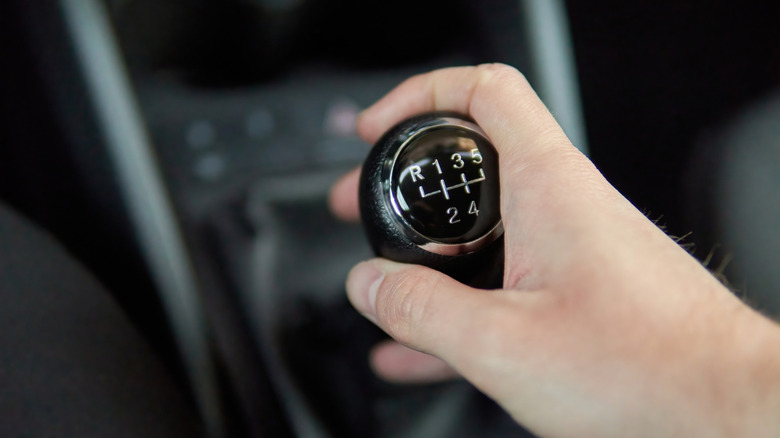
The history of the automatic transmission is full of misfires: The 1904 Sturtevant unit was known to have its centrifugal weights fly apart, and early versions of the Hydra-Matic still required the driver to engage the clutch to get the car moving. Today's torque converter and dual-clutch transmissions have largely put those complaints to rest, and with them came a new level of convenience that now dominates the car industry. There's no more need to wrestle a manual gearbox through bumper-to-bumper city traffic while your left leg goes numb.
That said, manual transmissions still offer something automatics simply can't replicate, and many enthusiasts argue that the purest driving pleasure still comes from three pedals. In fact, as many as 65% of all Toyota GR Supra models sold in 2024 were optioned with a manual. Still, if you are not an enthusiast, the extra work associated with a stick is often seen as a trade-off.
Smooth inputs, precise shifts, and good timing will reward you with unmatched driver feedback, but sloppy habits will do the opposite. Knowing how to handle a manual gearbox can mean the difference between feeling more in tune with your car and bleeding money from your bank account. With that in mind, here are five of the worst manual transmission habits that'll shorten their lifespan, and what you can do to avoid them.
Riding the clutch
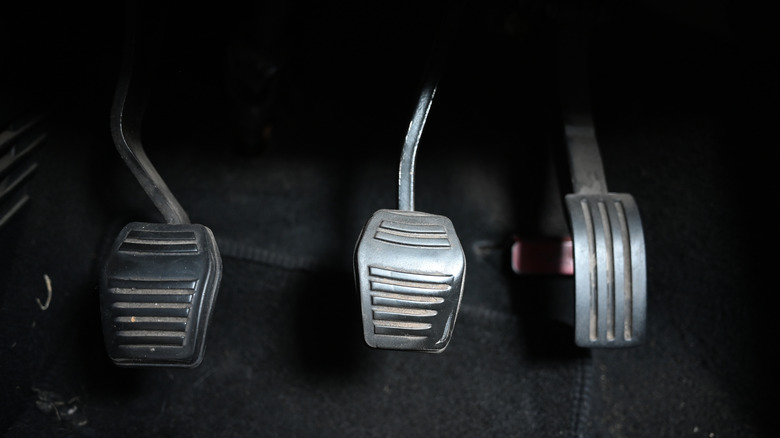
Probably the most commonly talked-about no-go with a manual transmission is a clutch pedal mistake that even experienced drivers might be making — riding the clutch. In the simplest terms, this means resting your foot on the clutch pedal and applying pressure while driving in gear. AutoZone puts the lifespan of a clutch at anywhere from 30,000 to over 100,000 miles, and while no academic studies will tell you exactly how much riding the clutch shortens its lifespan, it is likely going to land you closer to 30,000 than 100,000.
Pressing the clutch pedal releases the pressure plate's grip on the clutch disc, and when you release the pedal, the pressure plate clamps the disc against the flywheel again. When you work the clutch properly, you should not keep it partially in or out because that weakens the pressure plate's grip on the clutch disc, which can cause friction and wear out the disc, leading to clutch slippage. Edmunds warns that this kind of slippage can wear "the clutch disk to the point of replacement," and that symptoms such as clutch pedal vibration or "chatter" often mean that the clutch has overheated due to slipping.
Avoiding riding the clutch comes down to driving position and foot discipline. Always rest your left foot on the footrest instead of the clutch pedal. When at a stoplight, you can put the car in neutral. The idea here is simple — when engaging the clutch, engage it fully or not at all; anything in between can shorten its lifespan.
Don't rest your hand on the shifter, either
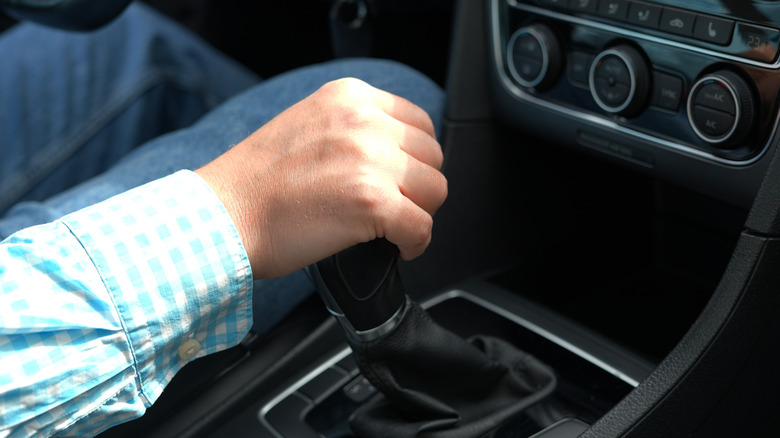
Resting your hand on the shifter is similar to resting your foot on the clutch pedal. Specifically, you should only ever use the shifter to shift gears, not as a place to rest your hands. This does not mean the shift knob is lava the moment you're done with it, but it does mean that applying pressure in any direction with no need is bad. The reason why has to do with the inner workings of the shifter mechanism.
Inside the transmission, selector forks are only designed to make contact with the rotating collar for the brief moment of an actual gear change. Keeping your hand on the shifter puts the two in constant contact, which inevitably leads to increased wear and tear. To avoid it, follow the ten and two rule you learned during driving school. In other words, always keep your hands on the wheel when you are not shifting. Driving a stick teaches you mechanical sympathy – something an automatic never will, and resting your hand on the shifter works against that.
Although the mechanical underpinnings of a manual transmission are made out of durable metals, they were not designed for prolonged hand resting. Besides just safeguarding the transmission, keeping your hands on the wheel will genuinely make you a better driver. Even the most experienced drivers sometimes have to go back to basics, and most of the advice your instructor gave you is there for a good reason.
Bite point balancing on a hill is a no-go
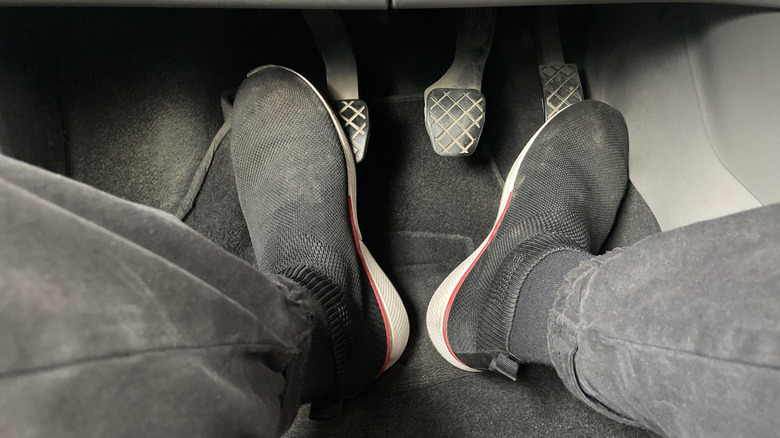
This one is rather similar to riding the clutch — it's the same basic principle, but the potential consequences can be even more damaging. Picture this: You are driving up a hill in a manual and need to stop. If your clutch control skills are on point — depending on the hill's incline — you can usually rely on the clutch bite point instead of the brakes or handbrake to make pulling away easier — except you shouldn't.
This means keeping the clutch pedal at the exact point where the transmission hooks up and keeps you from rolling backward, without moving forward or using the brakes. This results in the same friction problem as riding your clutch, but with higher stakes. The problem is mechanical: At the bite point, the clutch is neither fully engaged nor fully released — a state it was never designed to hold for more than a few seconds since the clutch disc friction material rapidly heats up as it rubs against the flywheel to hold the weight of the car. The longer you hold it, the worse it gets. In this situation, you should use the handbrake, find the clutch bite point while adding gas, and release the handbrake.
As one driver noted in our roundup of the worst manual transmissions, a Mercedes C-Class manual with no hill hold made hill starts genuinely difficult, even for an experienced driver used to manuals. The good news is that most modern cars now come with hill-assist technology, which prevents the car from rolling backwards for a few seconds after releasing the brake pedal, allowing the driver to step on the gas while the car is in gear.
Releasing the clutch too soon
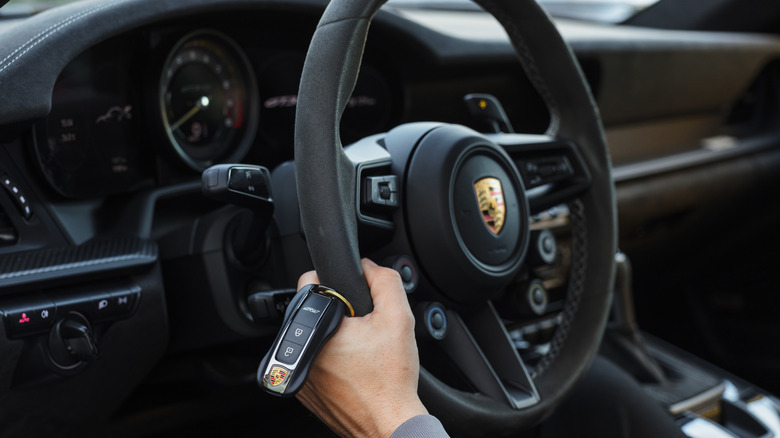
This one cuts both ways — it can damage your car, and it can get you into trouble on the road, potentially even in an accident. Releasing the clutch abruptly after a gear change sends a violent shock load through the entire drivetrain, and the consequences range from a lurch that unsettles the car mid-corner to snapping the clutch disc linings and springs outright.
As we noted in our comparison of power shifting and speed shifting, dumping the clutch is "fantastic at reducing acceleration times and breaking stuff," with synchronizers, clutch, shift forks, and gears all taking the notable dive in the longevity department. The fix is rev-matching — bringing your engine's speed in line with the transmission speed before letting go of the clutch by either adding gas during a downshift or waiting for the RPM to slightly drop during an upshift. While it's hard to always perfectly match the speed of the engine (flywheel) and the transmission clutch disc, the closer the two speeds are, the smoother the gear change will be.
It is a skill that takes practice, but the principle is simple: The smoother the engagement, the longer everything lasts. Rev-matching is an art as much as it is a skill, but the feeling of precise rev-matching makes it well worth the learning curve, and is easily one of the coolest aspects of properly driving a manual.
Shifting without fully engaging the clutch
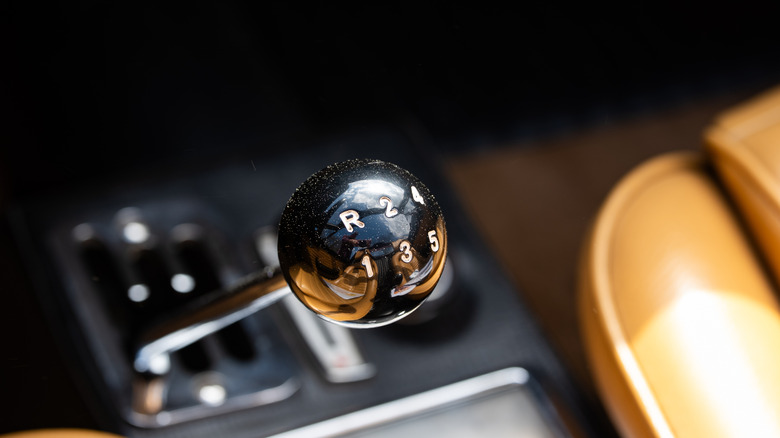
This one should be common sense, but for someone who hasn't had the necessary experience with a manual transmission, it is still worth mentioning. Before a gear can lock cleanly, the speed of that spinning gear and the shaft need to be equal — that is the job of synchronizers, which is also why double-clutching has become pointless in most modern cars.
When you engage the clutch, the clutch disc separates and disconnects the engine from the transmission. This is where the synchronizer comes in to match the speeds of the input and output shafts. When you don't fully engage the clutch or if the disc is still partially connected, the synchronizers have to fight against live engine torque to do their job, which causes immense friction and can basically destroy them.
It's worth noting that some transmissions are designed to handle this, such as dog box transmissions, which can shift without the clutch in certain situations. However, systems such as these require proper torque control. For everything else, it's just better to skip it altogether.