

How America Fell In Love With V8 Engines
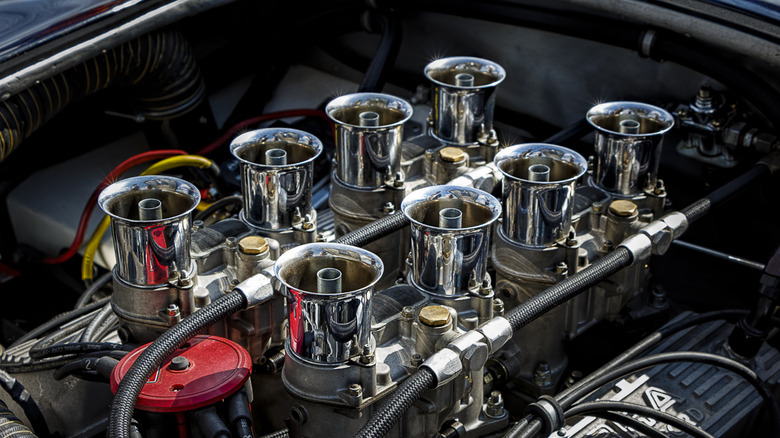
Baseball, hot dogs, apple pie, and Springsteen all define American culture. For car enthusiasts, though, it's always been the V8 engine and the muscle car. Yet ironically, the V8 was never originally designed for cars at all, nor did it originate in America. So, who invented the V8 engine? According to Kelley Blue Book, "Leon Levavasseur patented the first V8 engine in 1902 and called it the 'Antoinette' after the daughter of one of his financial backers." He wanted to use it for French speedboats and airplanes — but the U.S. had a different idea.
Fast forward 12 years, and Cadillac became the first car company to embrace the V8 on a mass scale with its L-head engine. Not long after, U.S. automakers jumped on the idea and transformed it into something affordable for ordinary working people. Over time, the V8 experienced both triumph and decline, particularly during the oil crisis of the 1970s, when rising fuel prices and tightening regulations nearly pushed it into irrelevance. Even so, the engine endured and continued to be woven into the fabric of American culture.
Following the rise of American industrial power after World War II, the V8 evolved into the symbol we know today: powerful, loud, and distinctly American. This is the story of how America fell in love with the V8 engine — and how it became the heartbeat of the country's muscle cars.
How Ford made the V8 a people's engine
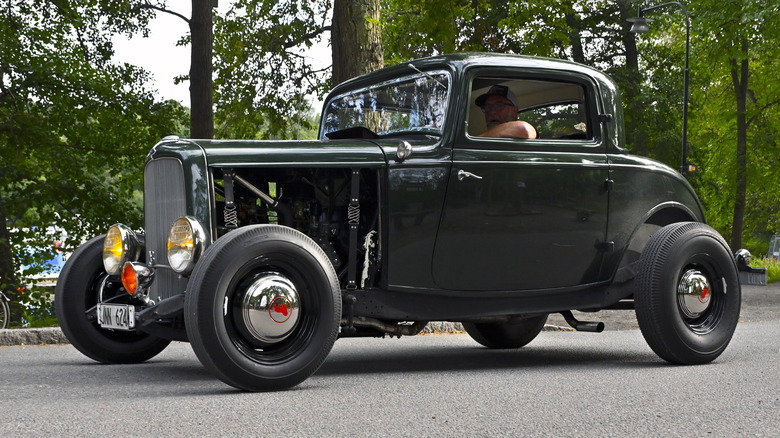
Before the 1930s, the V8 was not something an ordinary working American could afford. If you wanted one in the mass market segment, you had to buy either a Cadillac or a Lincoln – not exactly the working man's choice. This is when Henry Ford had the idea of putting a V8 into something more affordable. The Ford Model 18 was born, and the flathead V8 became an icon of hot rod history. At the heart of the Model 18 was an affordable cast-iron block V8, its prices ranging from $460 to $650 — roughly equivalent to between $11,180 and $15,800 in today's money when adjusted for inflation.
This was the defining moment for the American V8. Not long after, factories started stamping out 3,000 Flathead V8s from the production line every single day. After 18 years of production, more than 15 million units had been sold. The Flathead V8 also became a mainstay in the world of racing, winning multiple races across the globe and clocking a speed of 109 mph at the 1934 Indy 500.
The most important part about this V8 was that it was easy to repair, tune, and upgrade. This only increased its popularity among enthusiasts and military men returning home from the war. It also effectively birthed the hot rod movement. According to Matt Anderson, Curator of Transportation at The Henry Ford, "nearly every form of American auto racing has been touched by the Ford V-8," but what came after truly solidified the engine for decades to come.
Chevy's V8s joined the game
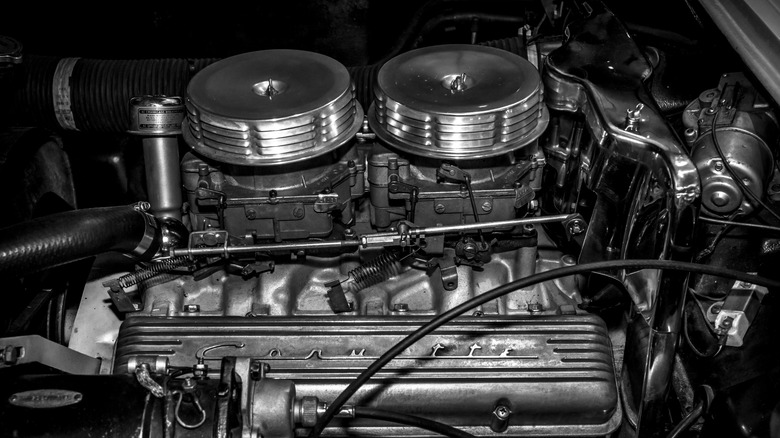
Fast forward to the 1950s, and the V8 fever spread across the continent. Back then, Chevys were perceived as old men's cars. General Motors was set on improving this image, and they did so in 1955 when the company unveiled the Chevy small block V8. The idea was similar to that of Ford — a small, affordable, workable, lightweight V8 that could rival more powerful engines. In 1957, the small block grew, and at 283 cubic inches, it became one of the very first engines that achieved one horsepower per cubic inch.
By the late 1950s, Chevy's image had been completely revamped, with the brand now seen as exciting, youthful, and performance-based. Chevy went a step further in 1958 and introduced the cast-iron Mark I W-Series V8, which marked the beginning of Chevrolet's big-block era. The engine started at 348 cubic inches before growing to 409 cubic inches in 1961 and 427 cubic inches in 1963. The latter would later become known among enthusiasts as 'Chevy big block V8 rat motors.'
The big block quickly became a hit. In the same way GM was looking from the sidelines when Ford made the V8 affordable for ordinary people, now the tables were turned, and Ford and Chrysler had to respond. Competitions like NASCAR and drag racing further fueled the rivalry between the Big Three and the V8's rise in popularity, eventually escalating into an all-out horsepower war that birthed the muscle car and defined the '60s.
The muscle car era of the '60s
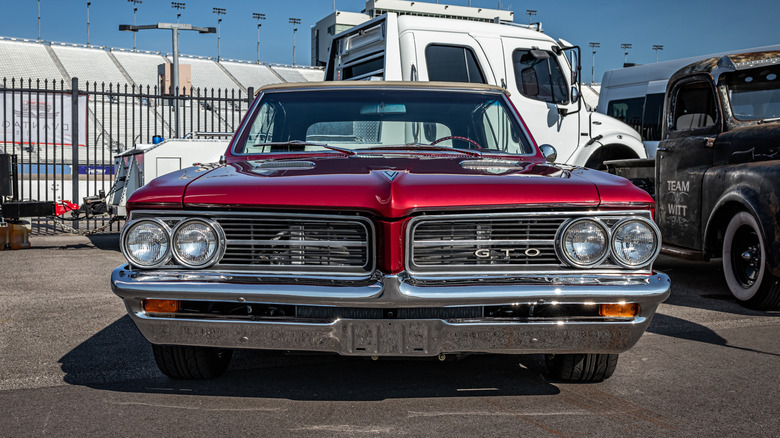
The birth of muscle cars is still a highly debated topic. For some, the Oldsmobile 88 was America's first muscle car. For others, the Pontiac GTO was the car that started it all because it combined an affordable midsize body with a powerful V8 engine. Other Detroit manufacturers quickly noticed the success. In 1966, the legendary Dodge Charger made its debut. By 1969, the Ford Mustang Mach 1 had joined the fray, followed by the notoriously powerful Chevrolet Chevelle SS 454.
Meanwhile, strong industrial growth led to the expansion of interstate highways, cheap gasoline, and a growing middle class of young Americans with enough disposable income to pursue performance cars. And through constant appearances in music, television, and film, muscle cars quickly evolved into a symbol of freedom, rebellion, and adventure. Car modifications were becoming increasingly popular too, and the V8 soon became the engine of choice for anyone seeking affordable speed and power.
The 1970s put the V8 on life support
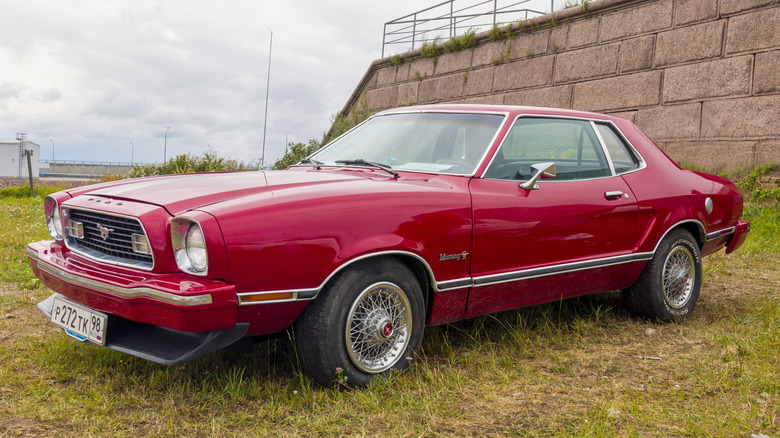
The U.S. automotive industry was at a turning point in the early '70s. Gone were the days of unregulated horsepower — in their place came emissions regulations, the oil crisis, and a close call that almost killed the V8 entirely. Gas was becoming more expensive, and long queues formed at gas stations nationwide. Add to that insurance companies raising their premiums for high-performance cars, and owning a V8 was slowly becoming impractical for the average American.
A rapid decline in the muscle car segment ensued — one that, for the first time ever, seemed like it might just end America's love affair with the V8. Performance versions of popular muscle and pony cars suffered dramatic horsepower losses due to emissions equipment and reduced compression ratios. For example, the Ford Mustang II featured the 88-hp Lima four-cylinder as its base engine, the 1975 Corvette made pitiful horsepower figures — 165 hp from a 5.7-liter V8 — and the 1975 Dodge Charger basically became a luxury coupe. Meanwhile, Japanese compact economy cars stepped in and started to boom in popularity.
Thankfully, the automotive industry realized that the V8 had to evolve to survive. Throughout the 1970s and 1980s, electronic fuel injection, catalytic converters, and emissions equipment kept the V8 alive. V8-powered "light trucks" were also a big part of the V8 surviving since they weren't as tightly regulated as smaller cars.
The American V8 of today
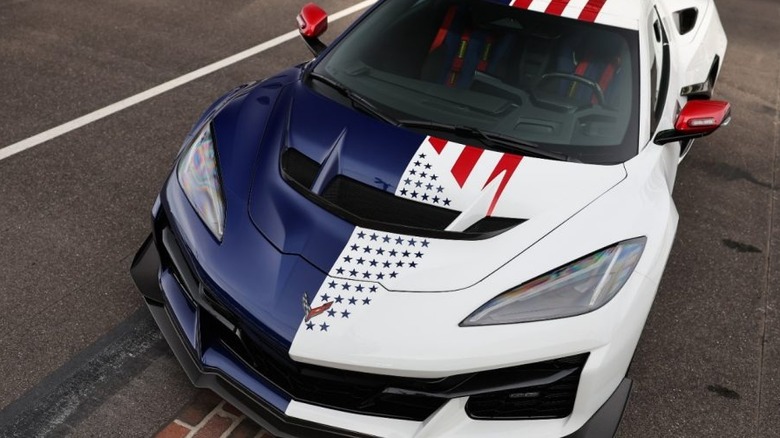
After the malaise era ended in the mid-'80s, the American V8 clawed its way back. Still, it never really managed to regain its popularity from earlier. And with widespread electrification and hybridization, these large engines still face serious threats. But given that General Motors is investing almost $1 billion in new V8 engines, it's still far from over for this iconic engine. In fact, Ram recently brought back the Hemi and relaunched the TRX — a V8-powered performance truck. And with the GT, Dark Horse, and the supercharged GTD, V8 engines still dominate Ford's Mustang lineup. Dodge even tried making the muscle car electric, but it failed to meet sales expectations, so the brand is bringing back the supercharged V8-powered Charger Hellcat for 2027.
From Henry Ford making the V8 accessible to the masses to the new Corvette ZR1X's hybridized V8 that produces a ridiculous 1,250 horsepower, the engine survived oil shortages, emissions regulations, and even the modern shift toward electrification. America fell in love with the V8 decades ago, and despite every attempt to replace it, the love story is far from over.