

These Are 11 Of The Most Powerful Semi-Truck Engines Ever Built
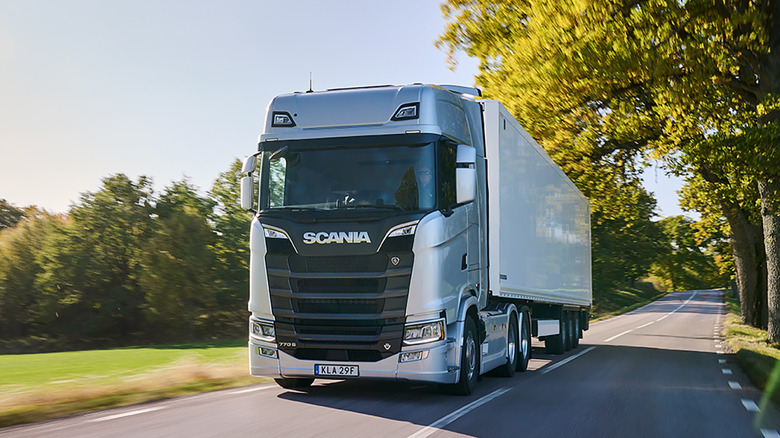
There is a new power war going on in the semi-truck segment. Swedish giants Volvo and Scania have been exchanging blows for over a decade, while an unlikely contender from Asia is setting new standards in power production. Beyond that, German and American manufacturers aren't standing still by any means, with several firms focused on producing more powerful and more efficient semi-truck engines.
Of course, that doesn't mean the landscape isn't in flux. In 2013, for instance, Europe began phasing in strict Euro VI truck emission regulations, which caused some truck giants to pull the plug on their big 16-liter engines. Some analysts even warned that manufacturers might need to downsize their engine lineups to comply. Yet here we are today, still talking about engines larger than 17 liters that produce north of 700 horsepower and 2,000 pound-feet of torque.
It's those enormous power figures that bring us here today. In this piece, we'll give you a closer look at the most powerful semi-truck engines ever made, focusing on horsepower and torque figures. It will be a fun ride, packed with galactic torque figures, massive displacements, and a lot of tech talk. Enjoy!
Cummins Signature 600 (600 horsepower & 2,050 pound-feet of torque)
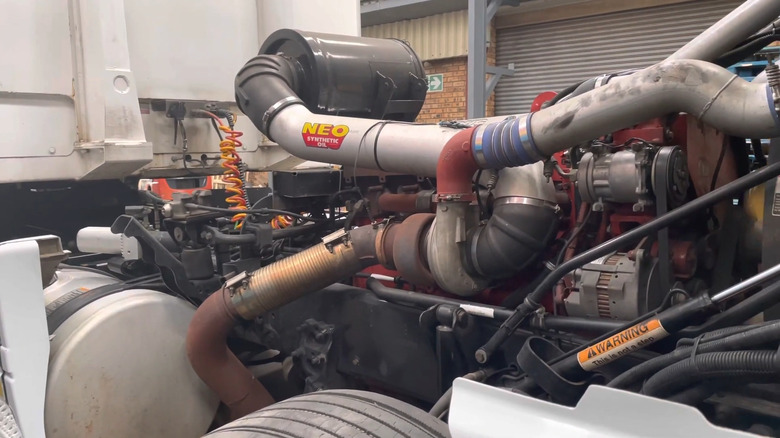
First introduced in 1997 as a successor to the legendary N14 14.0-liter engine, the Cummins Signature 600 ISX is a 15.0-liter turbocharged inline-6 that produces up to 600 horsepower — a bump of 75 hp over the N14 — and a whopping 2,050 pound-feet of torque. If that wasn't impressive enough, the Signature 600 is also 300 pounds lighter than the N14.
However, it isn't just about the numbers — the way they are delivered matters even more. The Cummins Signature 600 is a dual overhead cam (DOHC) design, where the first cam only manages the high-pressure fuel injection system to improve throttle response. Meanwhile, the second cam manages the intake, exhaust, and Cummins' Intebrake engine braking, also delivering 600 braking horsepower for successful deceleration with very heavy loads.
With so much power and braking capacity, the Cummins Signature 600 quickly found its way into many popular highway rigs, like Kenworths, Peterbilts, and Internationals, giving owners of these trucks 600-hp bragging power. But it wasn't just all go, no show. Cummins also eliminated all the dangling hoses and external wires, giving the engine its signature clean look and helping with repairs, too.
Speaking of which, the Signature 600 is a very reliable, low-maintenance engine, with well-maintained units frequently covering over a million miles. The venturi-style oil filter certainly helped matters, providing superior oil filtration over a regular filter. Thanks to it, Cummins recommends a service interval of 50,000 miles, double that of the predecessor.
Detroit Diesel DD16 (600 horsepower & 2,050 pound-feet of torque)
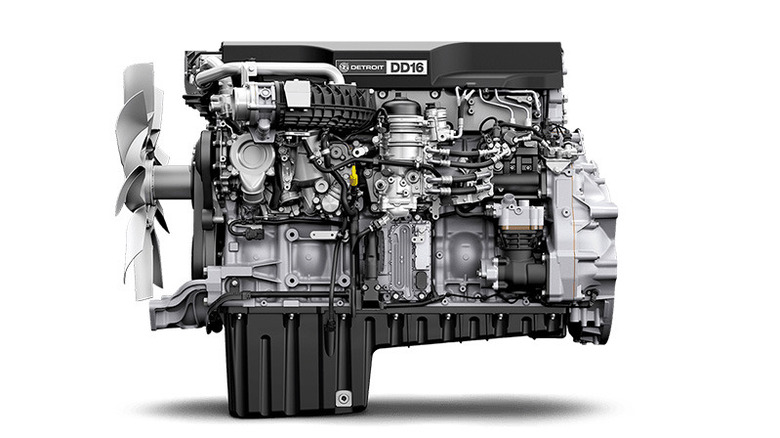
Detroit Diesel's largest and most powerful engine to date is the 15.6-liter inline-6 DD16. Launched under Daimler Truck AG's heavy-duty engine platform, the DD16 shares parts with the Mercedes OM 473. However, while Merc's engine is designed with European regulations in mind, the Detroit DD16 is specifically tailored to the North American market. Both engines share the cast-iron block, graphite-iron head, and steel pistons, designed for low maintenance and maximum service life.
Designed with modern emissions regulations in mind, the DD16 packs some of the most advanced systems in the industry. Thanks to the amplified 38,000 psi common rail fuel injection system, it provides excellent efficiency, low emissions, and low-rpm power delivery. This thing pulls almost from the get-go, providing the maximum 2,050 pound-feet of torque at just 975 rpm, all the way to around 1,400 rpm. The DD16 also produces its maximum 600 horsepower at relatively low 1,800 rpm.
However, the DD16's party piece is the turbo-compounding system, which utilizes a second, larger turbine downstream. It also captures heat from the exhaust to further improve efficiency and even feed the crankshaft with kinetic energy. Detroit says the turbo-compounding system also makes the engine smoother, while the Jacobs brake further reduces outside noise. That's right — Detroit Diesel went from the 2-stroke Screaming Jimmy to a modern, quiet engine that loves its low rpms.
Caterpillar C15 (625 horsepower & 2,050 pound-feet of torque)
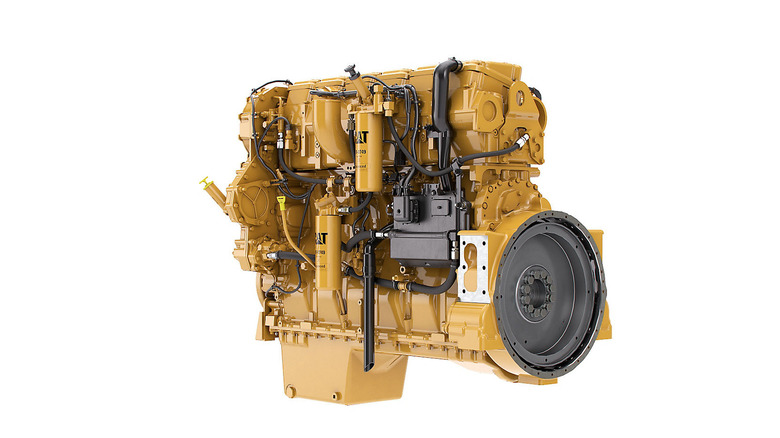
Caterpillar's answer to Cummins' Signature 600 ISX is a 15.2-liter turbocharged inline-6 leviathan, which is used in everything from Class 8 trucks to industrial machinery. This successor to the legendary Caterpillar 3406E produced up to 625 hp and 2,050 lb-ft of torque at just 1,200 rpm. As such, it became a cornerstone of Class 8 trucking at the beginning of the millennium that propelled many popular North American trucks, like the Peterbilt 379 EXHD, Kenworth W900, and Freightliner Coronado.
Of course, the C15 wasn't just about power. CAT's ACERT (Advanced Combustion Emission Reduction Technology) also introduced twin turbocharging and a one-piece steel piston skirt for added durability. This brings us to the C15's real claim to fame — its legendary reliability. CAT opted for a durable gray cast-iron block with forged steel crankshaft, forged connecting rods, and monotherm pistons for this engine. This makes it one of those diesel engines that won't quit, with heavy-duty rebuild specialists at Select Reman Exchange confirming that a properly maintained C15 is a legitimate million-mile engine.
The C15 is so tough that owners frequently bring it past its factory figures, with aftermarket tuning parts still readily available. You don't need to tune the C15 to appreciate the aftermarket support — its massive global footprint means parts and complete rebuild kits are always easy to source.
Mercedes-Benz OM 473 (625 hp & 2,213 lb-ft)
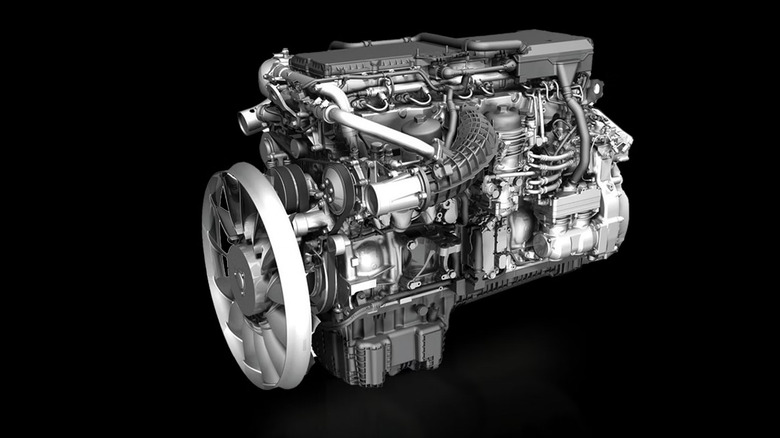
Mercedes' version of Daimler's heavy-duty engine platform was built with the strict Euro VI regulations in mind. As such, you might expect it to be less powerful than the Detroit DD16, but the OM 473 produces even higher 625 hp and a very impressive 2,213 lb-ft of torque available at just 1,100 rpm. Still, given Europe's unforgiving topography and frequent mountain passes, this massive power delivery was a necessity. The OM 473 is used in Mercedes-Benz Actros highway haulers and Arocs pulling trucks.
Like its American cousin, the OM 473 uses the same turbo-compounding system for maximum efficiency, alongside a 30,458-psi common-rail fuel injection system. It also features the same DOHC head design and the Jacobs engine braking system, this time capable of 625 hp.
Daimler also ensured long service life by opting for a cast-iron block, graphite iron head, and tough steel pistons. To meet the Euro VI requirements for lower NOx emissions, the OM 473 is equipped with the BlueTEC selective catalytic reduction (SCR) process. The system requires the use of AdBlue, which requires a separate tank and frequent refueling. Naturally, the OM 473 is also equipped with a Diesel Particulate Filter (DPF) and Exhaust Gas Recirculation (EGR).
MAN D3876 (650 hp & 2,213 lb-ft)
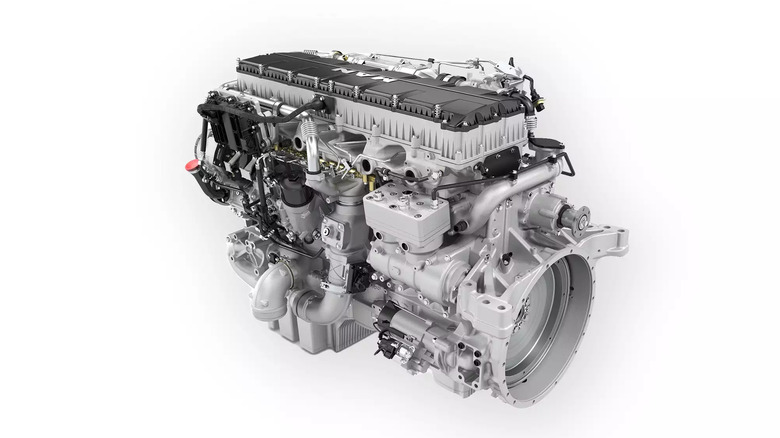
MAN's entry into the increasingly competitive truck segment is a 15.26-liter inline-6 behemoth, good for up to 650 hp at 1,800 rpm and 2,213 lb-ft of torque available from 1,100 to 1,450 rpm. Even more impressively, the D3876 comes with a Turbo Exhaust Valve Brake (TEVB) that delivers a whopping 805 hp of braking — critical for driving downhill with a massive load attached.
To achieve these impressive figures, the D3876 uses an advanced common rail injection system that injects the fuel at 36,259 psi and a sequential twin-turbo system. Off-road variants of the D3876 are equipped with a variable geometry turbocharger (VGT), though. Another key distinguishing feature of the D3876 is the top-down cooling, where the coolant first enters the engine head, and then the block. This allows MAN cool sensitive parts, such as the injectors and exhaust valve seats, more successfully than with a regular cooling method.
Unsurprisingly for a semi-truck engine, the D3876 features a compacted graphite iron head and block, alongside forged steel pistons. Additionally, MAN engineered convex, domed valves that resist distortion under extreme pressures, significantly extending the lifespan of the valve seats. To meet the Euro VI standards, the D3876 comes with the full suite of emission reducing systems, like AdBlue SCR and a Diesel Particulate Filter. The engine also has an EGR with two-stage cooling, which truckers love to hate due to its unreliable reputation.
Cummins X15D Performance (651 hp & 2,360 lb-ft)
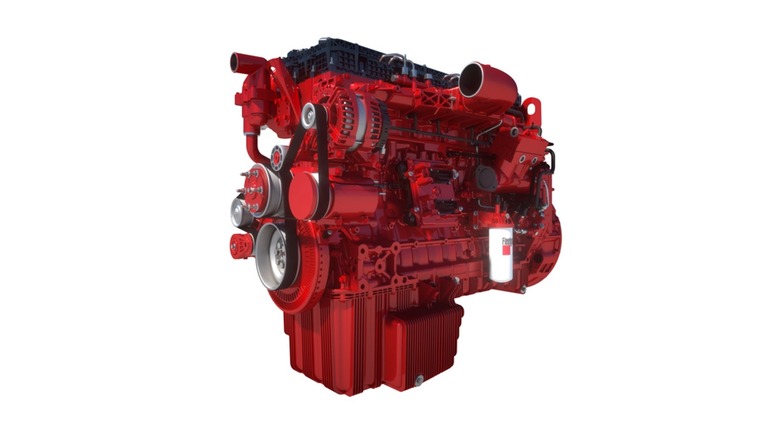
The crown jewel of the modern X15 Performance series of diesel truck engines is the X15D, Cummins' latest contender in the increasingly competitive power wars. A 14.5-liter turbocharged inline-6 engine, the X15D produces 651 hp at 1,800 rpm and a whopping 2,360 lb-ft of torque, available from 900 to 1,400 rpm. Since the X15D produces that much torque down low, it improves throttle response while also decreasing fuel consumption.
To make that feat even more impressive, the X15D is equipped with one turbocharger, which works alongside the company's proprietary Extreme Pressure Injection (XPI) system. This is essentially a common rail system, albeit one that injects fuel at industry-leading 37,710 psi. Perhaps even more impressive is the fact that the X15D is an astonishing 496 pounds lighter than the older X15, thanks to its sculpted iron block and composite oil pan. Thanks to this, Cummins claims that the X15D delivers the highest power-to-weight ratio of any truck engine.
As expected for a modern turbodiesel engine, the X15D is equipped with a DPF and an AdBlue SCR system to meet the strict Euro VI requirements. However, unlike most of its rivals, it doesn't feature an Exhaust Gas Recirculation (EGR). Instead, Cummins engineered an intelligent thermal management system to offset the elevated temps caused by the EGR delete.
Mack MP10 (685 hp & 2,300 lb-ft)
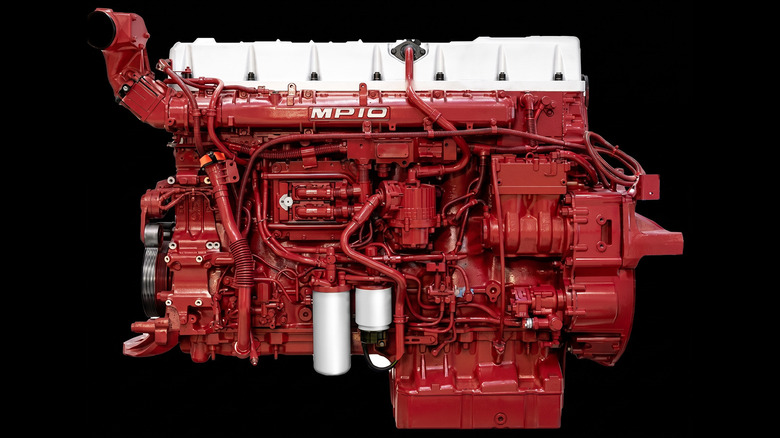
Mack's 16.1-liter inline-6 behemoth isn't quite a 100% original American design, as Swedish truck manufacturer Volvo bought Mack back in 2000. However, while the MP10 is based on Volvo's D16 inline-6 platform, it is still equipped with Mack's proprietary engine management system, the V-MAC IV.
The MP10 was tuned to 605 hp for the North American market, with the 685-hp version being reserved for the Australian outback. The two versions also produce different torque figures — the North American MP10 is rated at 2,060 lb-ft, while the Australian variant produces a staggering 2,300 lb-ft. More impressively, the maximum horsepower figure is available from 1,550 to 1,800 rpm, with the maximum torque available in a wide 1,000 to 1,550 rpm range.
Due to that massive torque, the MP10 is paired with the company's mDrive 12-speed automated transmission. Low-horsepower variants of the engine can be paired with an Eaton heavy-duty 18-speed transmission, however. The MP10 engine can be seen in the Mack Titan highway rig. While competitive in terms of power, Mack and Volvo discontinued the 16.1-liter engines in 2017 due to dwindling consumer interest. The Mack Titan truck was also discontinued, with Volvo redirecting buyers to its more fuel-efficient D13 platform.
Volvo D16K750 (780 hp & 2,620 lb-ft)
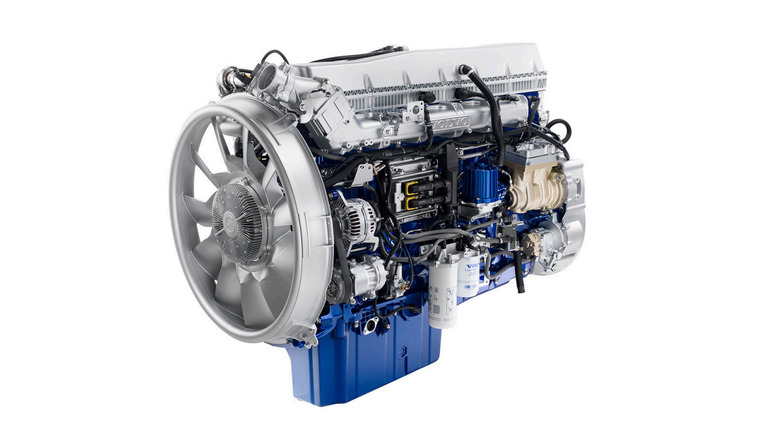
Like the MP10, Volvo's D16 engine also has a 16.1-liter capacity spread across six cylinders, though Volvo equipped it with a 24-volt electric system. Unlike the regular D16's variable geometry turbocharger, however, the high-power D16K750 utilizes a sequential twin-turbo system, with one smaller turbocharger for higher throttle response and a larger turbocharger for more power at the top end. Volvo used the D16K750 in the top-tier, heavy-hauling monster, the FH16.
Thanks to these technologies, the D16K750 produced an impressive 750 hp and astronomical 2,620 lb-ft of torque, making it significantly more powerful than the MP10. An even greater engineering feat is that the maximum torque is delivered from 950 to 1,400 rpm, with maximum power available between 1,600 and 1,700 rpm. Like its Mack cousin, the D16K750 was paired with an automated gearbox.
The D16K750 was also able to meet the Euro VI regulations after they were introduced in 2014, but extracting that much power while keeping emissions at check was challenging. To do so, Volvo had to deploy a complex system to successfully clean the exhaust gases. This means that the D16K750 comes with the usual DPF and SCR systems, but also Diesel Oxidation Catalyst (DOC) and Ammonia Slip Catalyst systems.
Scania DC16 770S (770 hp & 2,729 lb-ft)
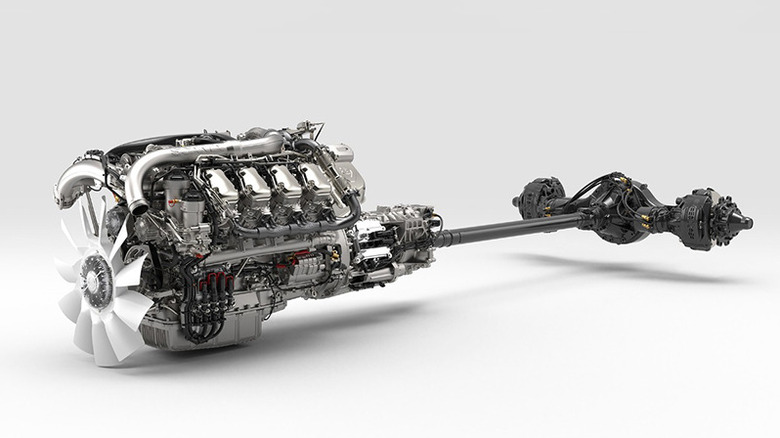
The U.S. is famous for its love of V8s, but when it comes to semi-trucks, inline-6s are the predominant engine configuration in North America these days. In Europe, however, Scania reigns supreme with its V8 turbodiesel semi-truck engines. These are among the best V8 diesel engines ever built, consistently beating competitors in power, efficiency, and reliability.
At the top of the pile sits the DC16 770S — a 16.4-liter turbocharged V8 diesel that produces 770 hp and brutal 2,729 lb-ft of torque. Its also a popular choice among truckers, as not only does it have the distinct V8 rumble, but it's also an outstanding performer. The DC16 fitted in a Scania 770S achieves its astronomical torque figure from 1,000 to 1,450 rpm, meaning it pulls pretty much from idle.
The DC16 770S is also a technological marvel, equipped with all the latest systems to increase efficiency. It features Scania's XPI fuel injection system, fixed geometry turbocharger with ball bearings, and twin-dosing AdBlue technology for an even higher reduction in NOx emissions. The DC16 770S is also 165 pounds lighter than its predecessor, despite having a 40 hp higher output. Scania's 14-speed Opticruise automated gearbox also makes driving more comfortable, while also reducing fuel consumption by 1%. That may sound minimal, but for a semi pulling cargo thousands of miles, it adds up.
Volvo D17 & Mack MP11 (780 hp & 2,800 lb-ft)
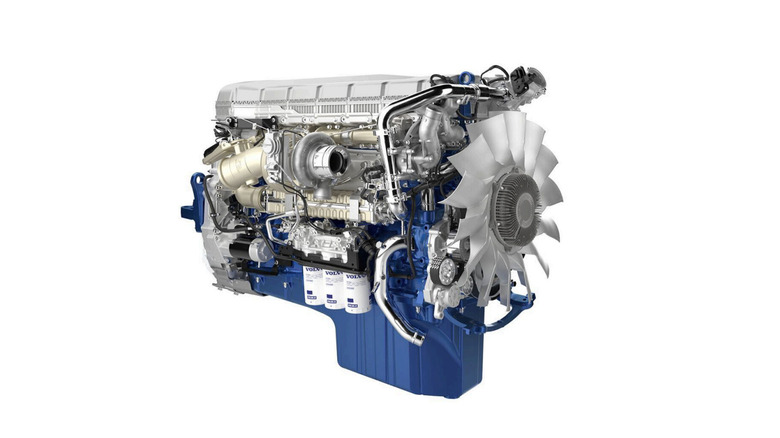
Just when it seemed like Scania's V8 had given it the upper hand on Volvo, its national rival introduced its brand-new 17.3-liter inline-6 colossus in 2024, the D17. Producing 780 hp and 2,800 lb-ft of torque, Volvo's latest brute has set new standards in the industry. Its sister company, Mack, also launched the same engine under the MP11 moniker, designed for the Australian and New Zealand markets.
The real kicker? The D17 delivers its maximum torque figure between 1,000 and 1,200 rpm, with the maximum 780 hp arriving at a low 1,700 rpm. As a result, Big Rigs reported in its review that a D17 pulling a triple grain-container configuration could "haul the three trailers with ridiculous ease." Unlike its Scania rival, Volvo's top engine has a variable-geometry turbocharger, alongside common-rail fuel injection and unique pistons with a wave pattern for optimal combustion. While it might not sound as cool as Scania's V8, the D17 was designed for minimal noise and vibration, thanks to the use of hydraulic vibration dampers on the crankshaft and camshaft.
The D17 also comes with a plethora of systems to reduce emissions, like a DPF, DOC, EGR, an AdBlue injection system, and an Ammonia Slip Catalyst. In addition, the engine was designed to operate on the renewable HVO (Hydrotreated Vegetable Oil), which reduces CO2 output by 90% over a regular diesel fuel. As a result, both the Mack MP11 and Volvo D17 are compliant with the Euro VI emissions standards.
Weichai WP17H (840 hp; 2,766 lb-ft)
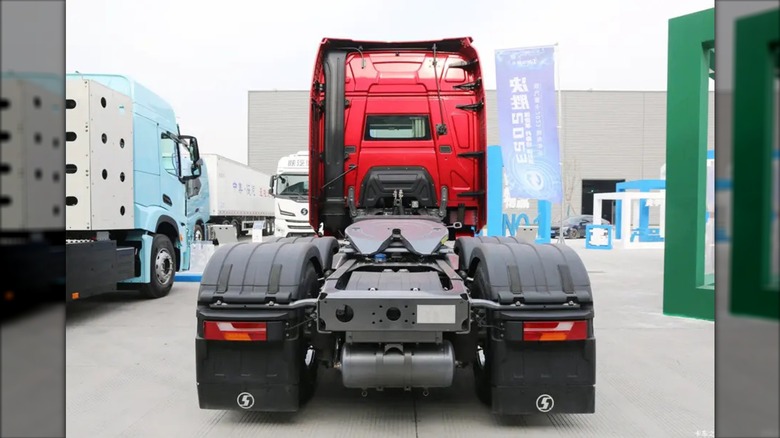
Mention an engine with an earth-shattering 840 hp and 2,766 lb-ft of torque to a crowd of truckers, and they'll assume you are talking about an upgraded Scania V8 or maybe a more powerful variant of Volvo's D17. But no, the most powerful semi-truck engine currently in production comes from Chinese company Weichai, designed for the Shaanxi Automobile Delong X6000 hauler.
The power ratings of this 16.6-liter turbocharged inline-6 monster aren't even the WP17H's most impressive figures — that would be the 52.28% thermal efficiency. If you follow the industry, this shouldn't come as a surprise, as Weichai's smaller 12-liter, 13-liter, and 15-liter engines had already achieved an outstanding thermal efficiency of 53.09%. Weichai also produces a version of this engine that runs on natural gas — the WP17NG — that produces 700 hp and 2,360 lb-ft of torque.
Weichai achieved this feat by using high-pressure common-rail fuel injection, high-efficiency turbocharging, and low-friction internals. As a result, the WP17H — which is paired exclusively with a 16-speed automated gearbox with manual mode designed to keep the engine in its optimal power band — consumes 5-8% less fuel than its predecessor. Even more impressive? Weichai claims its flagship has a lifespan of over 1.2 million miles!