

Volvo CEO Says 'Generational Shift' Could Bring On The Return Of Wagons
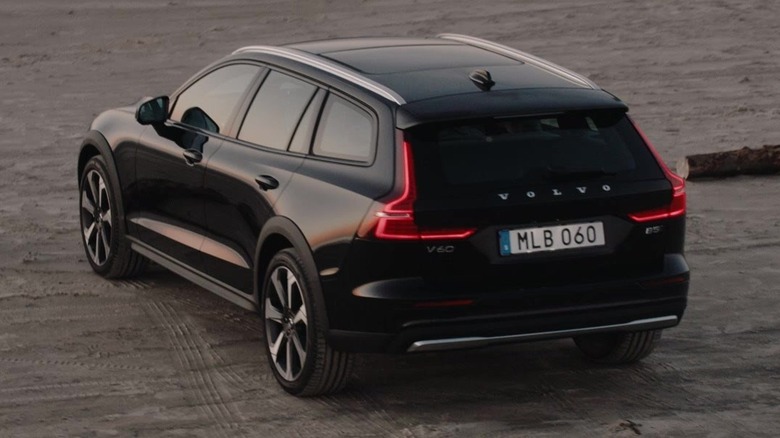
It's the crossover's world, and we're just living in it. Or at least that's the case with most automakers, but that's never really been how they operate at Volvo. The Swedish automaker currently sells its fair share of crossovers (six, including the brand-new EX60), but it has a long and storied history of building wagons as well. It's one of just five automakers that currently sells a wagon in the United States, and since the V60 Cross Country isn't exactly a spring chicken, it isn't inconceivable that wagons could leave the lineup completely one day. Hell, sedans bent the knee to Volvo's nearly all-crossover lineup, so why not wagons next?
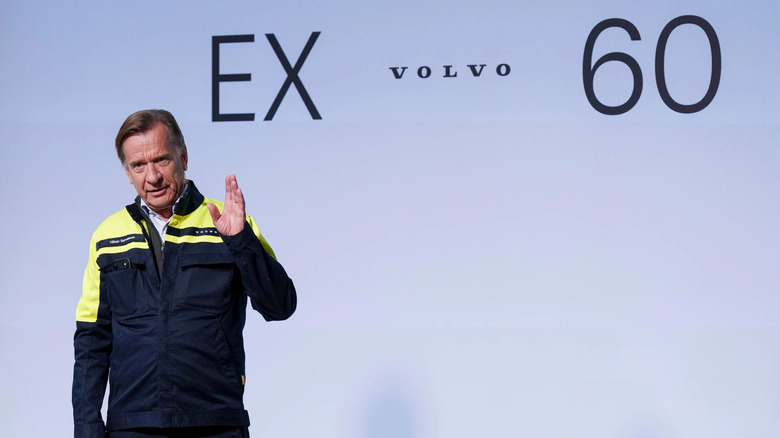
Well, fear not, dear reader, because Volvo CEO Håkan Samuelsson thinks there's absolutely a future for wagons here in the U.S., saying the market has possibly gone "a bit too far into a single SUV market." I know that virtually no one reading this is going to buy one of them new, but, as a wagon-enjoyer myself, it's still very nice to hear.
"I don't think 10 years from now, we will only have SUVs from Volvo," Samuelsson told a group of journalists during a roundtable.
Later on in the interview, the two-time CEO actually said Volvo wouldn't just have SUVs even five years from now. Since I don't have much hope for the grand comeback of the sedan, and there's no indication a Volvo minivan is on the horizon in the U.S., a wagon seems to be the logical conclusion.
Why RETVRN to wagons?
To enlightened individuals like you and me, there are plenty of reasons why wagons are better than crossovers. Obviously, as car enthusiasts, we're more interested in the fact that they're better to drive on the whole. They also carry a bit of that forbidden fruit mystique. (Be honest, if they didn't sell wagons in Europe, you wouldn't be as interested in them.) This isn't why they're drawing Volvo's attention, though.
"I think for various reasons, we need lower cars. Air resistance is one, because we talked about range, and of course, if you have a lower frontal area, it's easier — everything gets easier," Samuelsson explained to the group of assembled journalists, who pretended to understand aerodynamics.
He also pointed to another factor that could lead people away from crossovers and back to wagons, but this is something that's far more cultural than it is practical. However, it is a pattern we've seen throughout the history of the automobile: nobody really wants to drive the car their parents drove.
"Another reason, which I pick up now and then when you hear people saying, 'but that car... my mother used to have it,' when they've seen an SUV," Samuelsson said jokingly. "So, I mean, there is also some generational shift back to lower cars."
Speaking to the media, the CEO chose his words carefully, admitting that he didn't want to reveal too much. My take, though, is that there's a clear indication here that Volvo is cooking up some sort of wagon revival. We know Volvo's new SPA3 platform is scalable, so it would be easy enough to reshape it into something more wagon-shaped. It could also finally give the V60 CC the update it so desperately needed. That car may look wonderful, but it's certainly feeling its age — the current generation started production in early 2018.