

Pay Attention To These 5 Things If You Want Your Car's AC Compressor To Last The Summer

Summer is right around the corner, which means the temperature will soon be soaring, and air conditioning (AC) units in everyone's cars will be blasting from dawn till dusk. That's all well and good when the system is in fine working order, and our tips for keeping the AC running cold are followed, but if the system starts acting up, you could be in for a hot and sticky summer.
Fortunately, AC compressors at least give drivers fair warning if they are in need of replacement. Unusual noises from under the hood, air from the AC blowing hot rather than cold, and burning smells are all signs that the unit's compressor is on its way out and needs to be looked at.
If the AC is blowing hot, it might just need a recharge, which is easily done and usually costs right around $250. However, if the issue is the compressor itself, that's far more concerning. Replacement costs will vary depending on the make and model, but the bill could easily end up between $750 and $1,500. Even tackling it yourself could easily run you north of $500.
Listen for unusual noises and vibrations

The AC system does more than just cool the air, and it naturally wears down. Over time, internal parts such as bearings or shafts can begin to vibrate or make other unexpected sounds. Of course, there are plenty of causes of vibrations and noises under the hood, so just because an odd sound makes itself known, that alone doesn't mean the compressor is on its way out. In this case, listen for squealing or metallic grinding. Both are solid indicators that the AC compressor is crying out for help, and if any of the other symptoms from this article accompany them, that's already grounds for a pretty reliable diagnosis.
What's happening within the compressor when these noises start occurring is that the bearing has either worn out or seized up. If it seizes completely, the drive belt won't be able to spin properly, which is where that high-pitched squeal comes from.
Your AC should be able to continuously blow cold air

When driving with the AC on, if the temperature keeps fluctuating, or it's blowing hot air rather than cold, that is another sign that the compressor could be failing — although that's not always the case. It could also be down to a leak in the system, which can be quite difficult to diagnose since AC refrigerant is colorless, and it doesn't have a strong smell.
If the compressor is past its best, it will struggle to maintain the pressure required to keep a continuous cool flow of air coming into the cabin. One of the things that can wear an AC compressor out fast is low refrigerant levels or leaks. A low level of refrigerant will force the compressor to work harder and hotter, which places it on a fast track to failure — an issue that needs to be addressed as soon as possible.
Unusual smells are often AC-related

Peculiar smells can crop up in a car for various reasons. If the air blowing from the AC system has a musty smell, that's not necessarily pointing toward compressor failure, and is instead more likely down to mold and mildew hiding out somewhere in the HVAC. If, however, there's a burning smell, this points to the compressor. A proper diagnosis will be required at this point, as the smell could be coming from an electrical short or misaligned rubber belt. It could also be an oil leak burning off on the hot engine, with the smell seeping through into the cabin via the AC system, so it is well worth investigating as soon as possible.
A sweet or chemical smell in the cabin could indicate there is an antifreeze leak within the car's cooling system. This doesn't really hint at compressor failure, but it's worth repairing just as quickly, as low antifreeze levels can quickly cause critical mechanical issues such as overheating and head gasket failure. In fact, it's worth getting familiar with all the important smells cars can make, to help with self-diagnosing issues in the future.
Increased fuel consumption
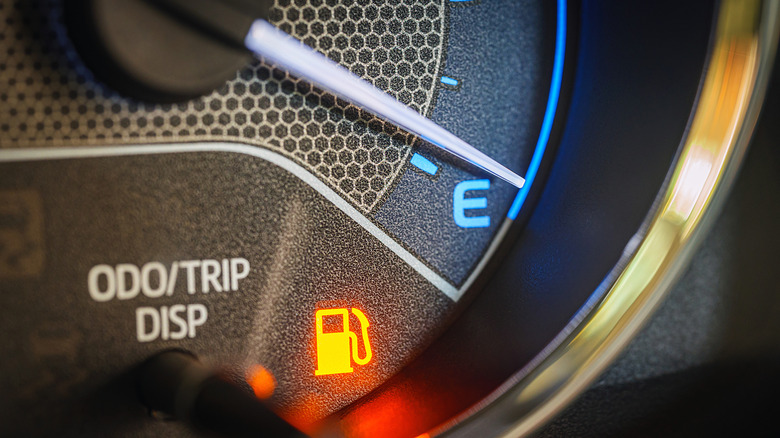
With gas hitting $4 a gallon in March 2026, the last thing anyone needs is a faulty AC system making things worse. A bad compressor won't make a world of difference, but if it's having to work overtime to maintain a cool cabin, then it will be sapping the car's fuel economy.
Here's how it works. The AC compressor runs off the engine's power. When things are in good order, the compressor can quickly and efficiently cool the cabin. But when it's in rough shape, or the system is suffering from a leak, it needs to work harder to achieve the same cooling effect.
This puts more strain on the engine, which, in turn, eats away at the gas more quickly. Putting off repairs, such as curing a refrigerant leak, will only put more strain on the AC compressor and worsen the fuel economy. Not only will this lead to more regular gas station visits, but as previously discussed, that extra strain could cause the compressor to overheat and fail completely.
Check for physical damage on the AC compressor
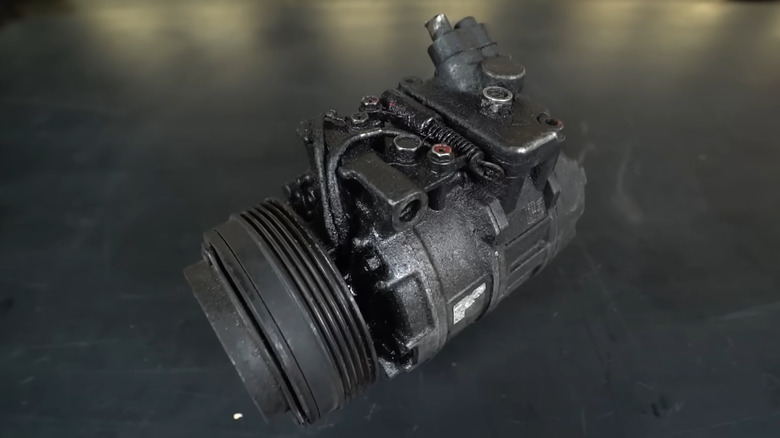
The AC compressor lives within the engine bay, which can get dirty or oily. Look past the grime, though, and examine the compressor itself. If it's corroded or there's dried residue on the unit, that's a sign of an oil or refrigerant leak in the system, which can cause loss of lubrication and result in compressor failure, so it's well-worth investigating. The chances are, if the compressor does have a leak or any sort of internal damage, it won't be presenting just one of the symptoms discussed here, but a combination of them.
All of the above doesn't make compressor failure any less frustrating, but it does make it easier to catch. It's always best to jump on top of these issues while they are fresh rather than waiting for them to escalate, which is the last thing you want heading into summer.