

Here's How Technology Has Assisted Drivers With Disabilities Through The Ages
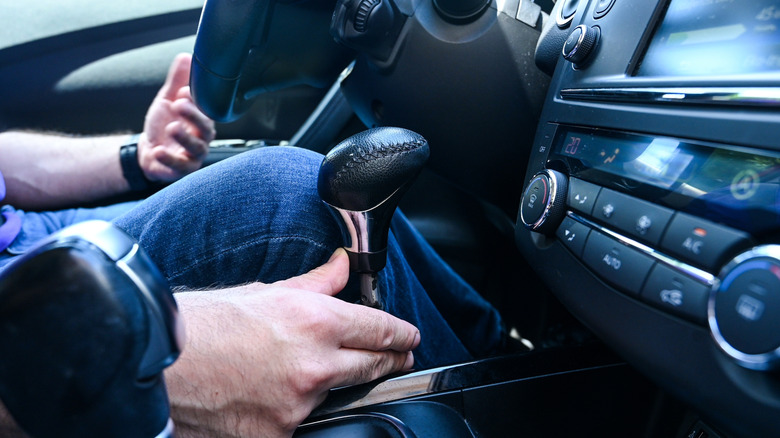
Driving is so much more than just driving, it's also freedom and independence. Public transport allows anyone to access such freedoms to a degree, but users are restricted by the reliability and frequency of these services. So, getting behind the wheel of a car is often the ultimate desire.
The trouble is, for some people with disabilities, doing so safely can be a challenge. Simply getting in and out of a vehicle can be nearly impossible for some, let alone taking control of both the pedals and steering wheel. Then there is the challenge of accessing the various accessories and features within a modern car, all of which can pose a physical barrier to many drivers with disabilities. Factor in visual impairments and a myriad of other conditions that could easily affect one's ability to pilot a vehicle, and it becomes clear why mobilizing people with disabilities is such a tall order.
In the early days of motoring, the solutions were less than ideal. Thankfully, though, things have come a long way since, with early innovations such as the Invacar, and later technologies like the gas ring and wheelchair-accessible vehicles with lowered floors and fold-out ramps. From hand controls to specially designed cars and clever driver-assist technologies, the story has evolved significantly for drivers with disabilities. Features that many drivers may take for granted are often life-changing solutions that finally allow people with disabilities to comfortably and safely enjoy the freedom that comes with driving.
Refining crude hand control systems and developing the Invacar

For drivers with disabilities in post-WWII America, the outlook was pretty grim. Available hand controls were often costly and cumbersome to use, as Alan B. Ruprecht discovered after suffering from adult polio. Instead of settling, he used his background in engineering to develop a much improved system: the Drive-Master.
Developed in 1952, Drive-Master's Push Pull Hand Control System allowed people with disabilities to control the gas and brake with their hands. From there, further refinements and products were added to the range. While Ruprecht was busy coming to the aid of America's disabled drivers, the British developed something called the Invacar — an outdated term for single rider mobility vehicles in the U.K. The Invacar was a dinky three-wheeler with asthmatic performance that the British government provided free of charge for drivers with disabilities to use.
It was a wonderful idea, but it wasn't without its shortcomings. The cars flipped over, caught on fire, and were hideously built. Still, many enjoyed the freedoms that the Invacar afforded them, thanks to its hand-controls. In the end, after decades in service, the Invacar was outlawed from British highways and replaced with a far more efficient system.
These earlier efforts may seem crude to us today, but they helped tackle the issues that disabled drivers faced and provided solutions to once largely ignored challenges. The developments that followed continued to aid people with disabilities in a variety of innovative and efficient ways.
Power-assisted brakes and steering took the strain away

Those aforementioned innovations allowed disabled drivers to actually take control of a car, which was huge. However, as the years progressed, engineers began looking at how driving could become easier — not just for people with disabilities, but these later innovations certainly helped.
The introduction of both power steering and power-assisted brakes meant that less physical exertion was required in order to steer and brake. It was a nice convenience for most drivers, but it was no doubt a game changer for many drivers with disabilities, especially when the effects can be amplified for those that need a higher level of assistance.
Other seemingly small tweaks introduced to help people with disabilities include more streamlined hand controls and pedal systems, which, again, only become easier to use when paired with modern brake-assist systems and gas rings. The latter is a ring that sits behind the steering wheel and acts as an accelerator — squeeze it to accelerate, and let go to lift off the gas. This device doesn't act as a brake, but it simplifies things, and it's reasonable to imagine that such a tool is far easier to use in conjunction with a modern power-steering system.
Modifications and innovations like these don't necessarily make the difference between a person with disabilities being able to drive or not. However, they can introduce comfort and confidence in ability into the mix, which matters greatly.
Accessibility became a priority in the '80s and beyond
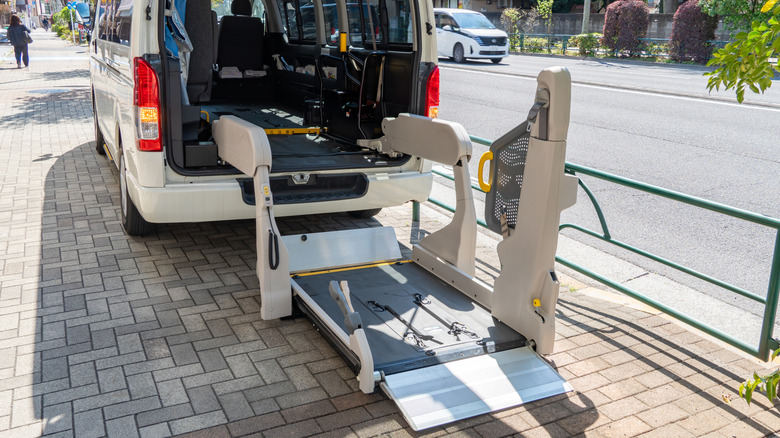
The above innovations are wonderful, but if a person with disabilities can't physically get into the vehicle, then what's the point? Physical disabilities can seriously restrict a person's ability to bend, as well as climb into or out of a vehicle, and this can act as a serious roadblock for aspiring drivers. It can also get in the way of being a passenger. Even trains and buses could be dangerous for some disabled folks to navigate — which is why wheelchair accessible vehicles, or WAVs, were introduced.
WAVs aren't exactly new, dating back to the 1950s as a way to help injured soldiers. However, they started appearing en masse from the 1980s onward. This coincided with the minivan's explosion in popularity, which naturally provided a suitable platform for wheelchair users, especially with added ramps, lowered floors, and raised roofs.
Indirectly, our taste in cars is aiding those with disabilities, too. Not long ago, the sedan was the flavor of the month. Now, though, SUVs and especially crossovers dominate the market, which is great news for many with mobility issues. Taller rooflines and elevated ride heights can make ingress and egress easier. However, on the flip side, overly high-riding models can be difficult to climb into, so it's important to research a vehicle thoroughly before committing, especially if mobility is a concern.
Smarter driving reduced both mental and physical strain in the '00s

By the dawn of the new millennium, motorists with disabilities were benefiting from decades of continued engineering and development. This was also the point in time in which technology really began to take over in cars. Advanced driver-assist systems (ADAS) were beginning to creep in, as were features such as voice-activated controls for vehicle settings, navigation functions, and taking phone calls. Yes, driver-assist features can be a distraction, but the benefits they offer largely outweigh any negatives.
Systems like adaptive cruise control, lane-keep assist, and emergency braking all take some of the strain off of drivers. For people with disabilities, this surely helps when it comes to stressful city commutes or time-consuming family road trips. For example, Blind-spot detection was first introduced on the 2003 Volvo XC90. This feature reduces the need for the driver to twist their neck, which can be a real difficulty for those with physical disabilities. The same is also true of self-parking technology.
The rise of voice-activated tech was also critical. Something as simple as reaching for the control dial to adjust radio or navigation settings can be a source of real strain for someone with a physical disability, so being able to take control simply by talking is a small but noticeable way in which technology has assisted drivers with disabilities in recent decades.
Hands off and freedom-on: how autonomous driving is reshaping our future
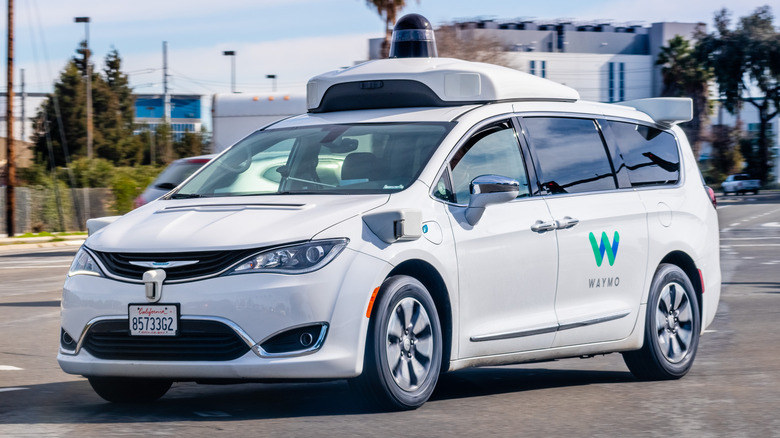
As we've covered, the last 80 to 100 years have seen huge advancements in the technologies that support people with disabilities. However, it's only really in the last handful of years that the most impressive solutions have started arriving in the form of autonomous driving tech.
In total, there are 6 levels of autonomy that a car can have, but it's levels 4 and up that need honing in on here. At level 4, the car handles complete control of its own operation, although the driver still retains the ability to take control and steer the ship if needed or desired.
So, a fully autonomous WAV could eliminate the need for a separate driver and instead enable wheelchair users to drive independently. They could simply travel completely alone, in perfect comfort and with total independence. The same is true, in theory, for visually impaired or even legally blind individuals, as this tech allows them to travel independently without putting themselves and other road users at serious risk. This, finally, allows drivers with disabilities the total freedoms of motoring that others enjoy on a daily basis. And while the world of autonomous cars is still tangled up in red tape, the tech at least is there.