

Diesel Prices Are Choking The Trucking Industry, And We'll All Feel The Pain
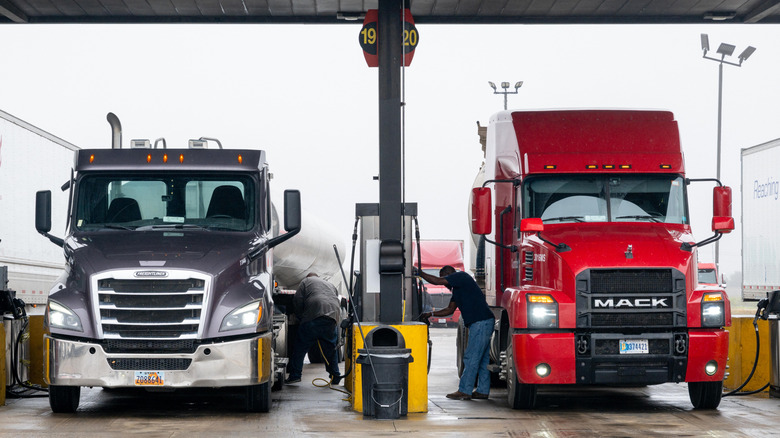
Most people have been focusing on high gas prices, up more than a dollar per gallon since Trump's Iran boondoggle started. Since most of us don't run diesel, most of us haven't noticed that it's costing nearly $2 a gallon more than before we started this mess, with a current national average price of $5.68, according to AAA. These near-record prices are pushing the trucking industry to the breaking point, and perhaps beyond it, reports the Los Angeles Times.
California has long had the highest fuel prices in the nation. As of this writing, the average price of diesel there is $7.73 a gallon. Considering that the average semi-truck only gets around 5 to 6 MPG, those fuel costs add up quickly, even in states like Oklahoma and Kansas that have the least expensive diesel.
Trucking companies aren't going to eat the cost of fuel themselves. We saw fuel surcharges in 2022 when prices spiked after the invasion of Ukraine, and we're starting to see them again from Amazon, UPS, FedEx, and even the U.S. Postal Service (which isn't supposed to make a profit, but anyway). What we're not seeing is how much trucking companies are increasing their prices for retailers, who in turn will increase the prices we pay for just about everything, as if the price of everything wasn't already too high.
It's always worse for the little guy
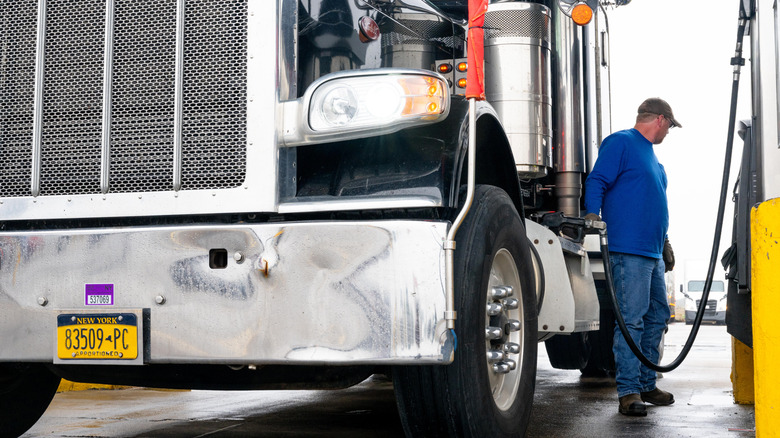
As usual, when the going gets tough, it's the small companies and independent owner-operators who get the worst of it. Their customers usually have weeks or months to pay for deliveries, according to CNN, but truckers have to pay the higher prices for fuel immediately. Even if they raise prices, they won't begin to see that extra money until those bills are due. Meanwhile, it's crunch time as diesel prices continue to rise, and are unlikely to come down anytime soon, even as the Strait of Hormuz may or may not be partially open to shipping for a significant fee.
Large trucking companies have an easier time. Their sheer size enables them to absorb short-term fluctuations in prices that could drive an independent trucker out of business. They can also negotiate bulk contracts for reduced fuel prices, including protection against spikes like this that independent truckers are forced to absorb.
The U.S. trucking industry was already in bad shape before all this started. The loss of 200,000 legal immigrant truck drivers for the Trump Administration's rationally thought-out reason of "because I said so" made shipping even more expensive due to a lack of drivers to take the jobs. According to Reuters, off-contract spot rates, which are basically unscheduled on-demand shipments, are still around 25% higher than a year ago, but only because there are so many fewer drivers now than there were then. Hopefully this gives the remaining independent drivers a fighting chance to survive, rather than our corporate overlords taking over yet another industry.