

Tesla Reclaims Top Spot As World's Largest EV Maker While BYD Falters
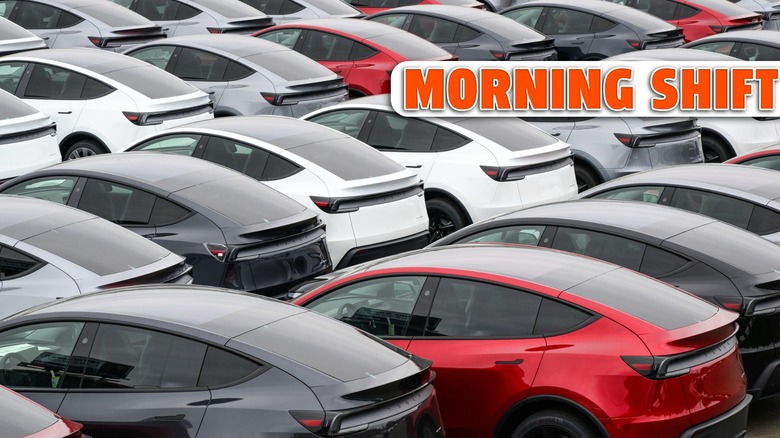
Good morning! It's Tuesady, April 7, 2026, and this is The Morning Shift, your daily roundup of the top automotive headlines from around the world, in one place. This is where you'll find the most important stories that are shaping the way Americans drive and get around.
In this morning's edition, Tesla retakes the EV-selling crown from BYD as everyone seems to forget the sins of its very recent past, labor tensions continue to rise at Audi while its CEO signals more possible job cuts, it's the end of an era at the GM Renaissance Center and —would you look at that — there's another Ford recall.
1st Gear: Short memories help Tesla get to number one spot
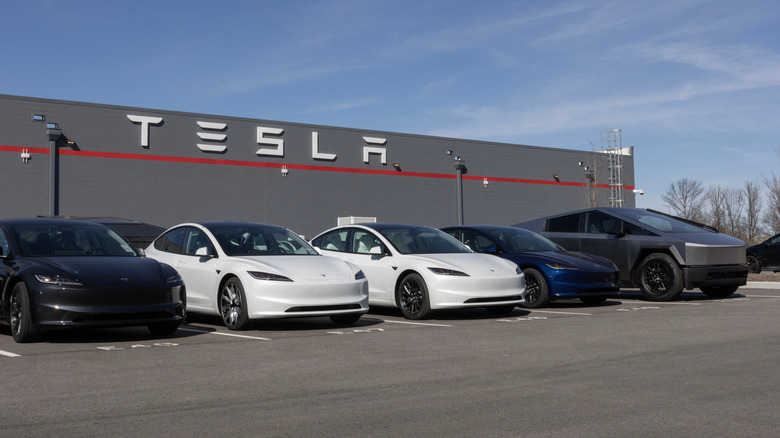
Following an increase in delivery numbers during the first quarter for Tesla and a decrease during the same period for its main competitor, BYD, the Austin, Texas-based automaker reclaimed the top spot as the world's biggest electric vehicle manufacturer. I'm sure CEO Elon Musk and all Tesla shareholders are breathing a sigh of relief that the average consumer has the memory of a goldfish, and all of the nasty things he did over the past few years have flown out of the public's consciousness.
In any case, Musk's company delivered 358,023 EVs in the first three months of 2026 — a 6.5% increase over the same period last year. (Though, the number did miss Wall Street's expectations.) However, BYD, which took home the top spot in 2025, experienced quite the dip in Q1 — delivering just 310,389 pure EVs to customers. That works out to be a 25% year-over-year decrease. From InsideEVs:
The two companies have locked horns for the number one spot in global EV sales since 2023, when BYD first outnumbered Tesla in EV deliveries in the fourth quarter. The Chinese giant finished 2025 as the biggest EV manufacturer on the planet, but now its grip is slipping. Its cars are nowhere to be found on American roads, and the company has slowly been ramping up deliveries in Europe, where the EV market is growing stronger month after month.
In its home market, though, things are not as rosy as they used to be. The Chinese government has slashed subsidies for new EV buyers, capping a sought-after bonus at 20,000 yuan (roughly $2,905) for new car purchases. Last year, the trade-in subsidy scheme offered 12% of a new car's price as an incentive, regardless of the car's MSRP. What's more, EV buyers now have to pay a 5% tax on their vehicles, whereas the previous rule exempted EVs. In other words, buyers get fewer incentives and have to pay more taxes.
It's more of the same for Tesla. Stateside, the $7,500 federal tax credit for new EVs was canceled last year, forcing all automakers, not just Tesla, to rethink their strategies. What's more, the American company is charging forward with just two main cars in its portfolio, the Model 3 and Model Y, whereas BYD has a much more diversified lineup.
The one caveat with all of this is the fact that BYD sells more than just EVs with plug-in hybrid making up a massive chunk of the automaker's portfolio. When you include everything the company sells, it actually moved nearly double the number of cars compared to Tesla — with 695,772 sales when PHEVs are included. Even so, that's a 30% decrease from last year.
It'll be interesting to see how the rest of the year plays out, and if Musk, who has been laying sort of low for a while now, can continue to do that.
2nd Gear: More possible cuts are angering Audi workers
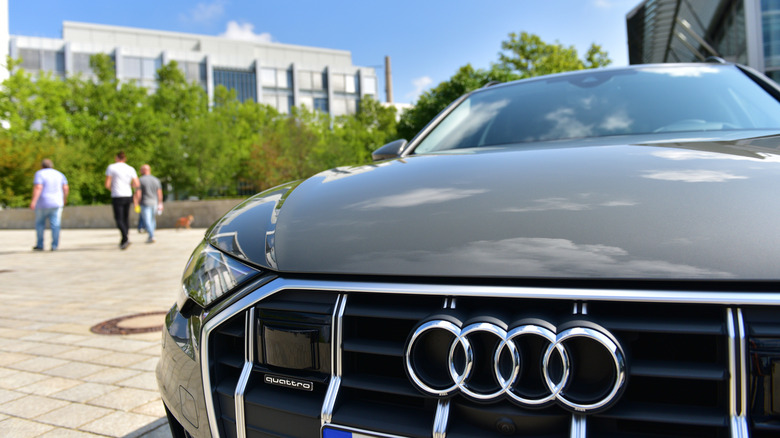
The Volkswagen Group, and Audi especially, is going through it right now. The German automaker is facing renewed labor tensions because of the possibility of additional job cuts. Employee representatives are warning management to stick to previously agreed-upon commitments... or else. This unease was first sparked by comments made by Audi CEO Gernot Döllner, who pointed to efforts above and beyond what existing agreements accounted for. From Automotive News:
While Döllner said at a results briefing on March 17 that there is no immediate need for action — citing a "future agreement" struck in March 2025 — he also emphasized that, from VW Group's perspective, additional steps may be necessary.
The current agreement includes plans to cut up to 7,500 jobs by 2029 and invest €8 billion in Audi's German operations.
Döllner's comments have drawn a sharp response from labor leaders, who argue that raising the specter of further cuts during the implementation of current measures risks undermining trust.
Jörg Schlagbauer, head of Audi's general works council, said employees are already contributing through measures such as already agreed job reductions.
Management should now deliver on its side of the deal, including pledged investments and ensuring sufficient utilization of German plants, he said.
Tensions have apparently been compounded by uncertainty over the A8's future (which is looking rather dim). It has thrown the entire future of its Neckarsulm plant into question, and that's why labor leaders are pressing hard for a decision on the future of the segment at the brand. They say that any A8 successor — whether its fully electric or hybrid — has to be built in Neckarsulm, Germany.
3rd Gear: The logo is gone!
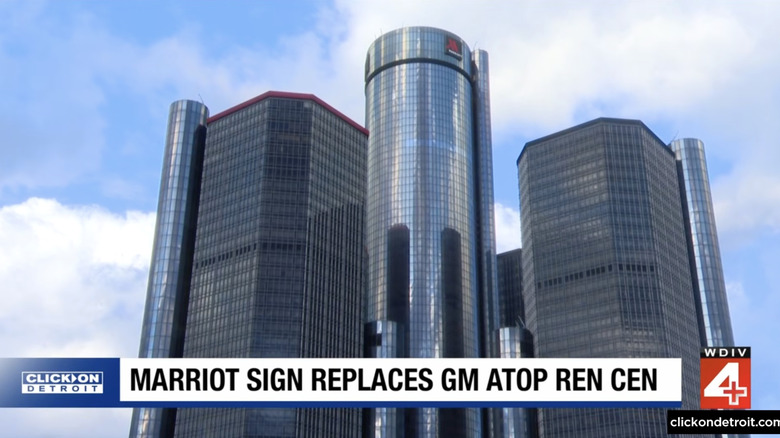
Goodnight, sweet prince. There's a new crown jewel atop the iconic Renaissance Center in Detroit, as General Motors removed the Buick, Chevy, Cadillac and GMC logos that were once displayed all the way up there. Now, folks in downtown Detroit will be treated to the Marriott logo instead, and it marks three months since GM officially moved out of the iconic building.
Of course, the automaker still owns it, but at this point it's largely empty of occupants, and the Marriott hotel is its largest remaining tenant. That's sort of bleak, no? From the Detroit Free Press:
Public access is available for those visiting the remaining tenants or staying at the Marriott, GM said.
GM also turned off the exterior colored lights on the two RenCen towers closest to the riverfront in January. Those towers, Towers 300 and 400, have been earmarked by GM and Bedrock for demolition as part of their $1.6 billion proposed redevelopment.
Of course, I get it, but it still makes me a bit sad. I don't know. The RenCen has always just been so intrinsically tied to GM in my mind. It's hard to imagine that it'll serve another purpose and that GM isn't headquartered there anymore. Then again, it spent less than 30 years there in total, so I suppose time does just keep on moving.
4th Gear: Over 420,000 Fords, Lincolns recalled over windshield wiper issue
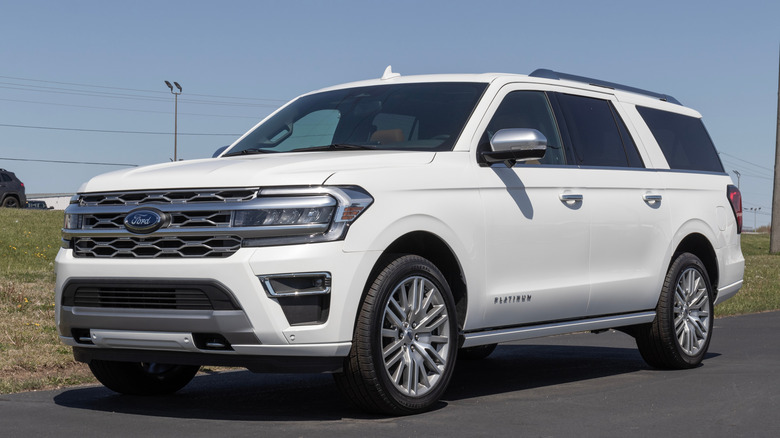
I know you were getting worried there hadn't been any juicy Ford recalls in a few days at this point. Well, worry no more, because I've got a hot one for ya! The Blue Oval is recalling 422,613 full-size SUVs and pickup trucks that it produced from 2021 to 2023 because of an issue with the windshield wiper arm. What in the world? From AutoEvolution:
In said Ford F-Series Super Duty, Expedition, and Lincoln Navigator vehicles, the windshield wiper arm latch retention plates may have been incorrectly staked by the supplier. The recall documentation published by the National Highway Traffic Safety Administration lists Trico's Mexican subsidiary as the supplier.
FL34-17527-AA and FL34-17526-AB are the part numbers of the driver- and passenger-side wiper arm assemblies. Due to said condition, either windshield wiper arm may operate erratically, stop working, or detach from the vehicle, increasing the risk of a crash for other drivers.
FoMoCo says that the remedy is under investigation as of this writing, with Ford also evaluating a potential inspection process. Any wiper arm that doesn't pass inspection will be replaced at no charge to affected customers.
Of course, remedy arms will be produced with the correct staking of the latch retention plates. Furthermore, the Ford Motor Company also promises wiper arm splines produced according to design specifications. Known owners and lessees will be notified by first-class mail no later than April 17, 2026.
FoMoCo started looking into the reported problem back in January 2026, starting with reports about failing wiper arms on Expedition and Navigator vehicles. The root cause was determined in March 2026, with Ford citing a combination of conditions that led to incorrect teeth engagement in the head-to-knurl interface.
The resulting damage caused by the stripping of the engagement surface is what leads to a failure of either windshield wiper arm. During the investigation, Ford's safety boffins identified plenty of warranty reports, field reports, and customer service reports associated with 1,533 unique trucks and sport utility vehicles.
[...]
The affected vehicle population was produced in the period from October 21, 2021, through December 31, 2022. The Super Duty line is listed with 326,239 potentially affected vehicles, ranging from the F-250 all the way to the F-600.
This marks the 27th recall Ford has issued in so far in 2026 (second place is Toyota with 10), and these recalls, thus far, have covered a combined 8,089,949 vehicles, according to NHTSA. That's fairly astonishing considering the fact we've just wrapped up the first quarter of the year. It'll be exciting to see what the rest of 2026 hold.
Reverse: I love how weird baseball is
 History.com
I might hate the Astros for costing the Yankees a shot at the 2017 World Series (and Aaron Judge's rightful first MVP), but I can't help but be giddy over weird baseball happenings like this. It's truly a wonderful sport with enough bizarre coincidences to make you believe in a higher power... if you're into that sort of thing. Anyway, if you want to learn more about the Forsch brothers, head over to History.com.
The Fuel Up
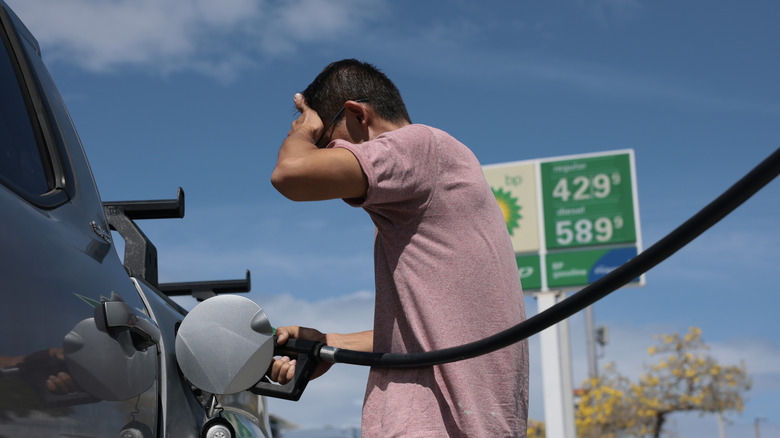
Things have been bad in gas price land. They remain bad today, and I wouldn't expect them to get better tomorrow. At this point, I really don't think I've got to tell you why, but it's important to note that WTI Crude Oil futures have cracked $115 per barrel, and Brent Crude is hovering right around $110.
It helps explain why the average price of a gallon of gas jumped overnight by two cents (rather than the one cent we've been seeing for a few weeks now) — going from $4.12 to $4.14, according to AAA. Gadzooks, bro. Gadzooks.
The last time gas was over $4.14 per gallon was back in July of 2022, according to data from the Energy Information Administration. The average price of a gallon of gas is now up $1.16 — or about 32.6% — since the war first broke out on February 28, when it was $2.98.
On the radio: Geese - 'I See Myself'
Everything's pretty bleak out there right now, I can't lie to ya. So, why not listen to a little Geese and enjoy a song about finding commonality and empathy with others? It's something people could use a lot more of these days.