

Astronauts Are On Their Way To The Moon For The First Time In 50 Years After Successful Launch Of NASA's Artemis II
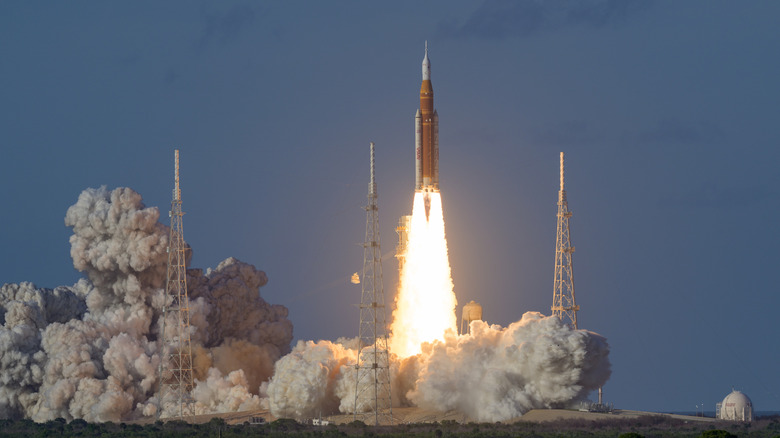
NASA's long-awaited Artemis II mission successfully launched Wednesday from Kennedy Space Center in Florida, sending three Americans and one Canadian astronaut on the first voyage to the Moon since the final Apollo mission in 1972. Despite a few last-minute gremlins and glitches on the 322-foot tall Space Launch System (SLS) rocket, Artemis II achieved liftoff more or less at the earliest possible time it could within today's window, a sign of confidence. Two solid rocket boosters aided the core stage of the SLS itself to provide 8.8 million pounds of thrust, eventually achieving a speed of over 18,500 mph. Their job done, all of those have since separated and fallen into the Atlantic, leaving only the Orion spacecraft and the SLS second stage in orbit around the Earth. Appropriately, Commander Reid Wiseman gave Houston this update: "We have a beautiful moonrise, and we're headed straight at it."
The four astronauts won't be going immediately, though. They'll spend another day or so in Earth orbit, testing maneuvering capabilities and running evaluations on the Orion. Once that's done, assuming everything goes well, they will then begin the 250,000-mile flight to the Moon on April 2. They will arrive at our closest neighbor on April 6, doing a single loop around before heading straight back from whence they came. Splashdown ought to be on April 10 in the Pacific Ocean.
You can read more of our coverage on the mission itself and the astronauts here, but the main point of Artemis II is to prove that America, even though it is now 250 years old, can still send humans to the Moon and bring them back alive. To be clear, there will be no landing; that will come with future Artemis missions. At its furthest point, the flight will go nearly 4,000 miles over the surface of the far side of the Moon, farther from Earth than any human being has ever been before. If you'd like to come along with them, you can follow the mission using the Artemis Real-time Orbit Website (AROW).
Artemis, past and future
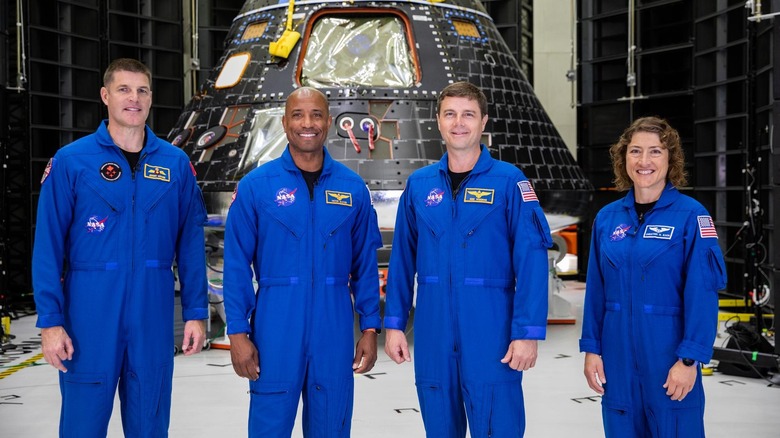
The Artemis program is NASA's attempt to return astronauts to the lunar surface, and this time, hopefully build a base for long-term habitation. It's been a long process, initiated at the beginning of the first Trump administration. Artemis I, an uncrewed lunar flight by an empty Orion, happened during the Biden administration. That is a long time between flights, and for that reason, NASA recently overhauled future missions to happen much more frequently. Artemis III ought to happen next year, an in-Earth-orbit test of two lunar landers that NASA is considering, a Starship from SpaceX and a Blue Moon from Blue Origin. If all goes well, Artemis IV in 2028 will be humanity's first footfalls on white soil in 50 years.
But a lot has to happen for that schedule to succeed, and everything needs to go right. In the meantime, China has its own lunar program that is proceeding apace. Whether astronauts or taikonauts make it to the Moon first remains to be seen. Wednesday's successful launch of Artemis II is a huge step forward for the American-led program, and a demonstration that this country can still do great things if it puts its mind to it. Apollo was one of the 20th century's greatest triumphs; Artemis is just starting to see how much farther it can go.