

Every Tire Brand Owned By Continental
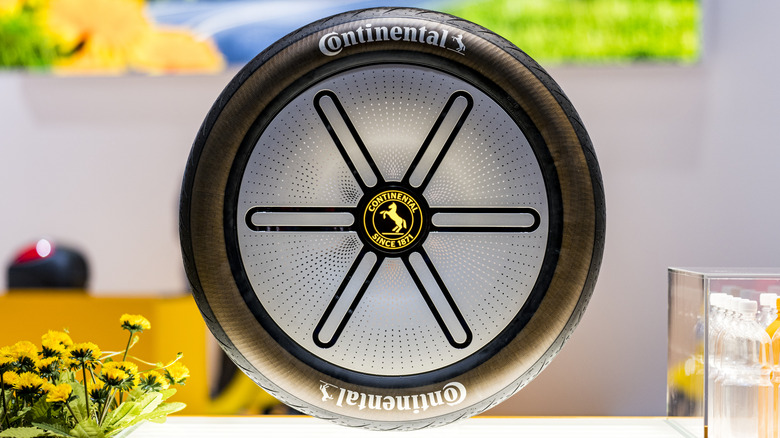
Continental is a German multinational with a legacy that stretches as far back as 1871 — that's nearly 15 years before Karl Benz patented the first automobile. Indeed, this company has been in the tire business since before cars even existed, although back then it focused on hot water bottles along with bicycle and carriage tires. This makes it one of the oldest names in the industry, considering companies like BFGoodrich didn't even make tires at first.
More than 150 years later, Continental has grown into the fourth-largest tire manufacturer in the world by revenue, according to ConsumerAffairs, sitting just behind Bridgestone, Michelin, and Goodyear. And before you chalk that up to longevity alone, remember that this is the same company that produced the first German pneumatic tires for bicycles.
Of course, Continental isn't just one tire brand. While it does sell tires under its own name, the company has spent decades building a portfolio of brands through strategic acquisitions. With that in mind, here's every tire brand owned by Continental.
Continental
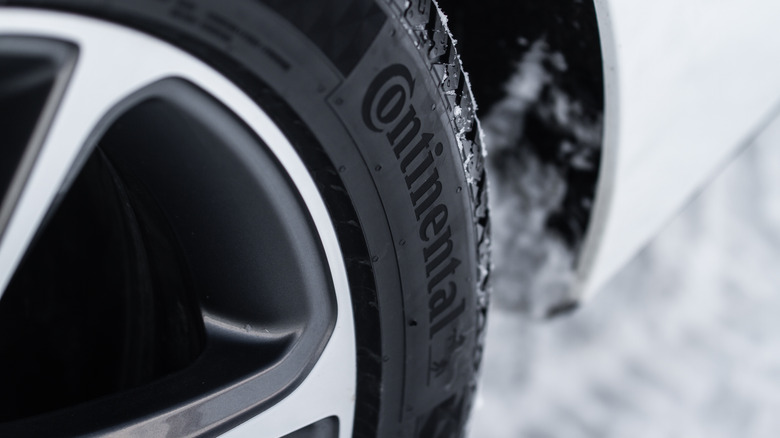
The first Continental tires were actually pneumatic bicycle tires sold in Hanover, Germany. Continental's pneumatic tires later graced the first Mercedes in 1901, helping it win the Nice–Salon-Nice race.
In 2025, Continental had some of the best all-season tires, but its products also frequently rank at or near the top of premium summer and winter tire tests. A recent example is the Continental SportContact 7, which narrowly edged out rival brands (a list that included other premium brands such as Pirelli, Michelin, and Hankook) to win AutoBild's 2026 Sports Cars Summer Tyre Test, as Tyre Reviews noted.
The tire dominated most categories, setting the benchmark for wet handling with precise turn-in and sharp steering feedback. It also excelled in dry handling and delivering the shortest braking distances in both wet and dry conditions — 42.40 meters (139.1 feet) and 34.20 meters (112.2 feet), respectively, from stops of 100 km/h (62 mph) — all while maintaining noise levels at a respectable 72 dB.
The truth is that none of your winter driving hacks beat simply buying winter tires. The WinterContact 8S high-performance winter tire sports even better wet braking numbers at 32.90 meters (107.9 feet), although the WinterContact TS 870 P has better dry and wet handling, which is no small feat for a winter tire.
Uniroyal
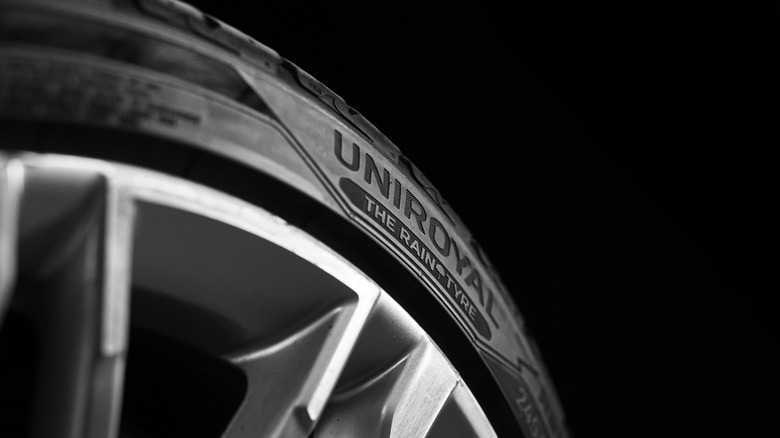
The origin of Uniroyal predates that of its parent company. It traces its roots back to 1868 under the tutelage of Belgian artillery officer Oscar Englebert. Much like Continental, the company that would later become Uniroyal started off making bicycle tires and horse carts.
Uniroyal has a long record of innovation, from developing tires that were the first to survive a full day at Le Mans unchanged to pioneering wet-weather tires ("rain tires" as they are called). These tires are engineered to efficiently divert the flow of water away from the contact patch, helping maintain traction on wet roads and significantly reducing the risk of hydroplaning.
Englebert's love for challenging the limits of the relationship between rubber and water was central to Uniroyal's philosophy, so much so that it eventually led to the development of Shark Skin technology, which imitates the fine texture of shark skin that helps them move effortlessly through water. Here, the advanced surface allows tires to disperse water and retain traction on wet roads.
Semperit
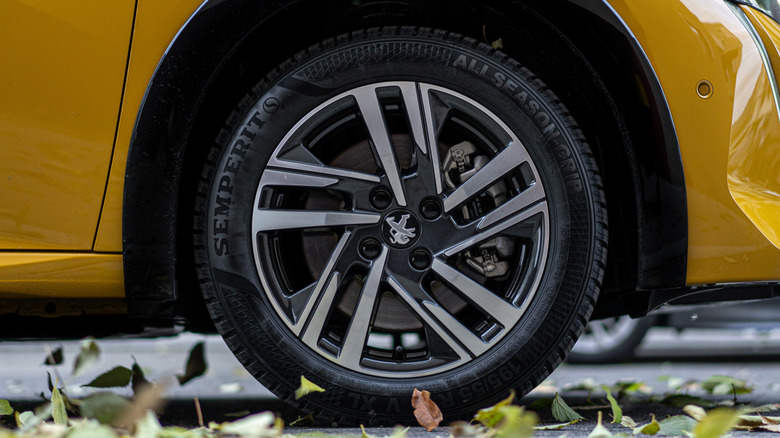
Incorporated into the Continental group in 1985, Semperit was founded in 1824 in Austria, but only adopted that name in 1906 – "semper it" is Latin for "it always works." Realistically, it should be "it always grips," reflecting the Semperit design philosophy, which has always been focused on traction performance.
The Semperit Speed-Grip 5 winter line scores well on Tyre Reviews' dry, wet, snow, and ice grip metrics. At speeds of 100 km/h (62 mph), it stops at 45.90 meters (150.59 feet) on dry roads, and 54.50 meters (178.8 feet) on wet roads. The tests showed Speed-Life 3 performing very well in wet handling, braking and rolling resistance — its dry handling and braking are slightly weaker but still adequate.
Semperit also produces 13- to 19-inch Allseason-Grip tires with strong winter performance and moderate wet braking, but at the cost of relatively poor performance when it comes to dry road braking.
Barum
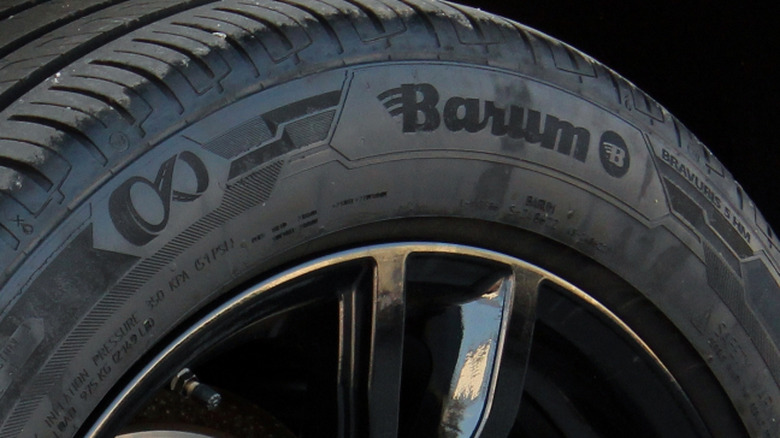
Barum is an acronym for Baťa, Rubena and Mitas, the three Czech rubber manufacturers that merged in 1948 to form Barum. Since the merger, Barum has grown into one of the leading tire manufacturers in Europe, now churning out more than 21 million tires annually from its Otrokovice plant.
Production accelerated significantly after Continental Group acquired the brand in 1993. Just four years into this strategic acquisition, annual production had already risen to six million tires, and just five years after that, it had nearly tripled to 15 million per year.
Barum produces high-quality steer, drive, trailer, and all-position tires that are also budget-friendly. The Bravuris 5HM summer tire, for example, is a decent and safe option, especially in heavy rain, but it doesn't offer particularly sporty performance. Although it might not top Consumer Reports' lists of the best bang-for-your-buck tires, it provides good resistance to aquaplaning and reliable performance.
General Tire
The General Tire story begins in 1915, when William O'Neil and Winfred Fouse founded the General Tire and Rubber Company in Akron, Ohio, then the epicenter of the American rubber industry. The company revolutionized tire manufacturing by inventing the oversized pneumatic tires for trucks and then the low-pressure, "Ballon Jumbo" tires for cars in the '20s, which solved the blowout problem seen in high-pressure models. Three decades later, in the '50s, General Tire had begun manufacturing tires for General Motors.
General Tire's status as a global brand within Continental's portfolio came about in 1987, when the then holding company, GenCorp, came under structural reorganization and was sold to the former to resist a hostile takeover bid. It's one of those brands that still manufactures tires in the United States, with plants across the country, including a dedicated radial tire plant in Mount Vernon, Illinois.
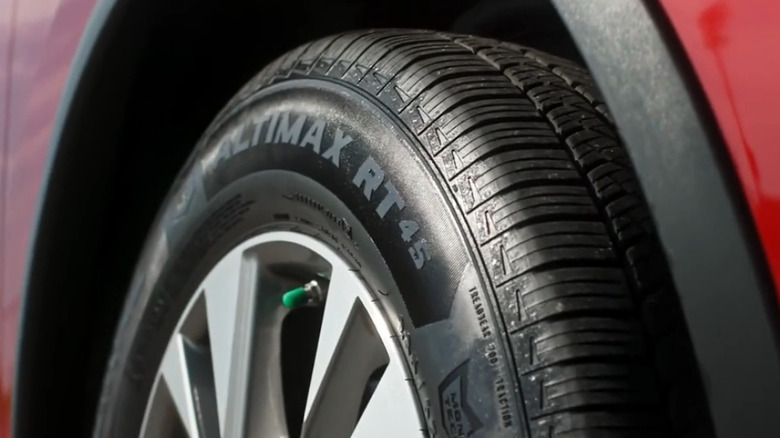
General Tire's Altimax line is the brand's practical, reliability-focused answer to passenger-vehicle tires that can handle a range of driving conditions. Each meets a specific climate need: the Altimax RT45 is an all-season option, and the Altimax 365AW is an all-weather tire, good for winter conditions.
Viking
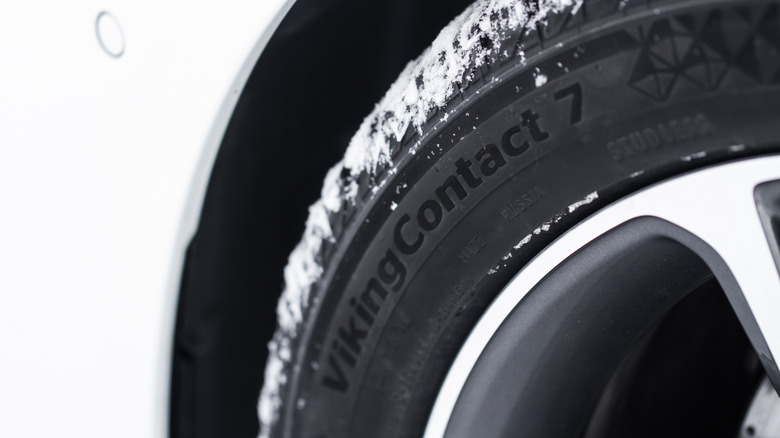
Viking, the largest tire brand in Norway, has been around since 1931 and is an original equipment supplier for well-known global brands such as Volvo and Ford. Its product lines are designed mainly for passenger cars, SUVs, and vans with either summer (ProTech, CityTech, and TransTech) winter (WinTech), or all-season (FourTech) choices.
Being a Nordic brand, Viking naturally excels in winter tires, though its high-performance summer tires are notable as well. Compared to competitors, Viking's WinTech winter touring tire is particularly affordable, rarely going past $171 (€150). For reference, the Continental VikingContact 8 winter tires can reach as high as $378 per unit, and Michelin's X-Ice Snow sometimes costs north of $500, depending on the size.
Despite the competitive pricing, Viking tires are still ranked unsatisfactorily on ADAC's 2024 test (11th out of 16, per Tyre Reviews) for want of dry-road handling precision. What it lacks in that and steering feedback, however, it makes up for in tread longevity and good snow traction, though road noise is a frequent complaint.
Gislaved
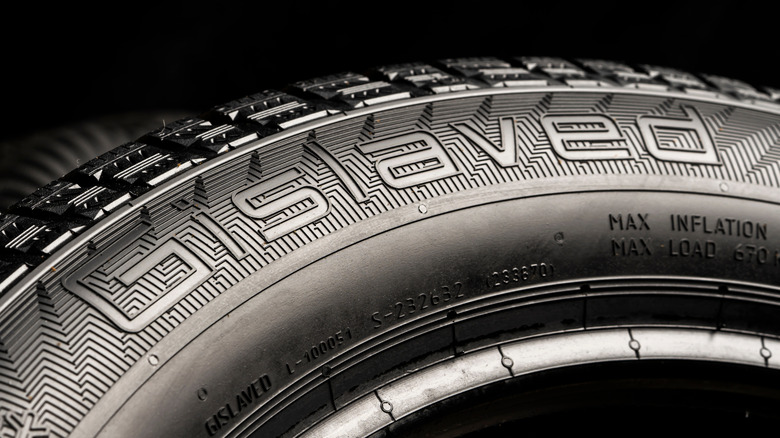
Just like Norway, Sweden boasts a Continental-owned tire brand that specializes in winter terrain: Gislaved. The brand was founded by the Gislow brothers, Carl and Wilhelm, in 1893 and established the country's first tire rolling production line twelve years later in 1905. Gislaved was later acquired by Continental AG in 1992 as part of the German manufacturer's expanding European tire portfolio.
Gislaved's Nord Frost 200 sports the hallmarks of a good snow tire: wide grooves and dense sipes to eject packed snow, asymmetrical tread patterns, and noise-reducing tread blocks to cut down on road noise. However, it improves on the strength of its predecessors by introducing stud technology for improved ice traction.
For what it's worth, Tyre Reviews says the Nord Frost 200 is a well-balanced winter tire with solid performance (regardless of an inconsistent ice grip) on snow and wet roads. Gislaved's Ultra Speed 2 high-performance summer tire also performs reliably in most conditions, but it doesn't stand out as the best in any single area.
Mabor
Mabor started its life on the line in 1938, when Dr. Júlio Anahori De Quental Calheiros (the Count of Covilha) established a plant in Northern Portugal's Lousado. By 1950, it reached an annual production of one million tires. In 1990, it became part of the Continental AG family, positioning it within a broader European tire network.
Mabor operates as a regional budget brand today (alongside Matador), operating within three product lines: Sport-Jet (summer), Winter-Jet (winter), and Van-Jet (van summer tires). Sport-Jet 3 ranked 23rd in AutoBild's 2017 passenger car summer tires (225/50 R17) test on wet and dry braking distance, posting a 77.3 meter (253.6 feet) total distance from speed of 100 km/h (62 mph) — below the 71.1 meters (233.27 feet) of Uniroyal's Rainsport 3 or the chart leader, Continental's PremiumContact 6 with 69.9 meters (229.3 feet).
The Winter-Jet 3 has a noise level of 71-72 decibels, and sits above fellow Continental-owned Viking WinTech, General Altimax Winter 3, and Matador MP 92 Sibir Snow on wet braking rankings with 34.70 meters (113.8 feet), but is nowhere near Continental WinterContact TS 860, Semperit Speed Grip 3 and Uniroyal MS+ 77.
Matador
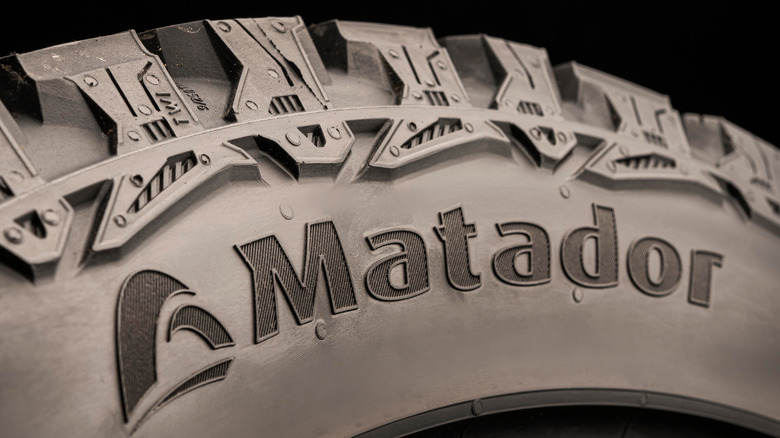
Like many other tire manufacturers, Slovak tire brand Matador started off as a rubber maker. It began operations in 1905 under the Matador Rubber and Balata Plant name, and it wasn't until 20 years later that the brand produced its first tire. A decade after that, it patented a rubber-iron system that advanced tire construction at the time. Continental AG started eyeing Matador when it acquired a majority of shares in the latter's rubber division in 2007, only completing ownership of total shares in 2010.
Among its products, the Matador MP72 Izzarda AT2 stands out in the 225/65 R17 all-terrain category. While it's no Pirelli Cinturato SF3, the Matador MP72 Izzarda AT2, offered second-to-none traction on gravel and in off-road conditions. It took 40.40 meters (132.5 feet) to stop from 100km/h (62 mph) on wet roads, better than the 43.70 meters (163.06 feet) of the industry juggernaut that is the Yokohama Geolandar AT G015.
On dry roads, it's a different story. At the same speed, the Izzarda AT2 needs 47.90 meters (157 feet), which is even worse than the 45.10 meters (148 feet) of the MP93 Nordicca, no thanks to slower steering response and delayed lateral grip build-up. On snow at 30 km/h (18.6 mph), it stops in 11.20 meters (36.7 feet), compared with 9.70 meters (31.8 feet) for the winter-focused Matador MP93 Nordicca.
Sportiva
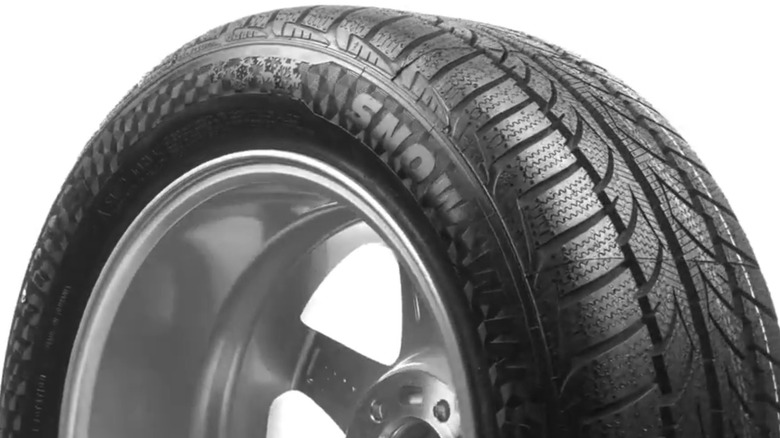
Continental created Sportiva in 1995 as its first in-house tire brand. The result is that Sportiva essentially functions as a strategic extension of its parent company's portfolio, designed to compete across multiple price tiers.
Sportiva offers a range of products for winter (Snow Win 3, Snow Winter, and W80) and summer (Compact, Performance 2, and Super Z+) driving needs. As an ultra-high performance model for passenger cars, the Performance 2 boasts a combined braking distance of 71 meters (232.94 feet) — 38.5 (126.3) dry and 32.5 (106.6) wet. The Snow Win 3 ranked 21st on Tyre Reviews' 2025 winter tire braking tests, posting snow braking distance of 29.2 meters (95.8 feet) and wet braking distance of 36.50 meters (119.75 feet) (a mere meter behind Continental WinterContact TS 870 P).
Pricing reflects its budget positioning. On resale marketplaces such as eBay, a pair of pre-owned 205/50 R17 93Y Performance tires may set the buyer back roughly $159, while a pair or pre-owned 205/55 R16 91H Sportiva Snow Win 2 costs about $95.
Hoosier Tires
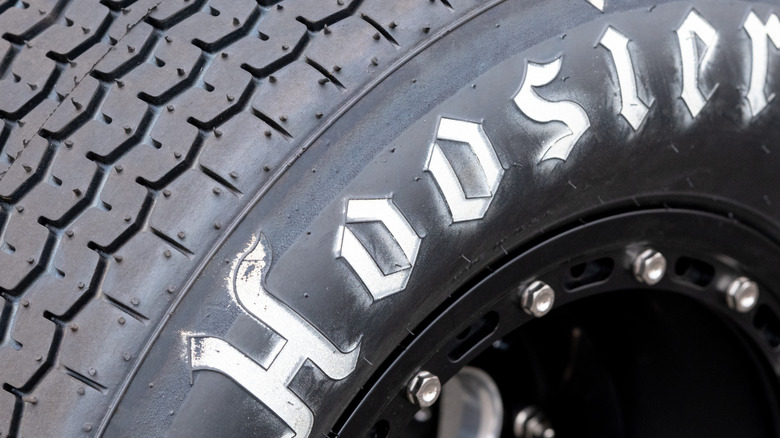
Hoosier Tires built its reputation making specialized racing tires. The idea came about in 1957 when Indiana couple Bob and Joyce Newton grew frustrated with the limitations of standard street tires in racing. What began as an experiment with softer rubber compounds gradually evolved into a small business operating out of an abandoned horse barn, and then grew into one of the world's leading makers of racing tires. Continental acquired Hoosier Racing Tire in 2016.
Hoosier's products are used in many racing disciplines such as dirt oval racing, drag racing, and circuit/road racing. Among its best-known are the Hoosier R7 and the Circuit Slick.
The Hoosier name is primarily associated with the tracks, but the brand also offers a street-legal version; only just, as the TrackAttack Pro debuted in late 2024. Although street-legal, the TrackAttack Pro offers no less performance than its racing cousins. Technology borrowed from the latter sees the TrackAttack Pro boast super-grippy rubber compound and a tread design that improves cornering stability, braking, and steering response. Hoosier offers this model in 46 different sizes for wheels between 15 and 21 inches, which is enough to fit plenty of sports cars.