

The Difference Between California-Produced Gas And The Other 49 States
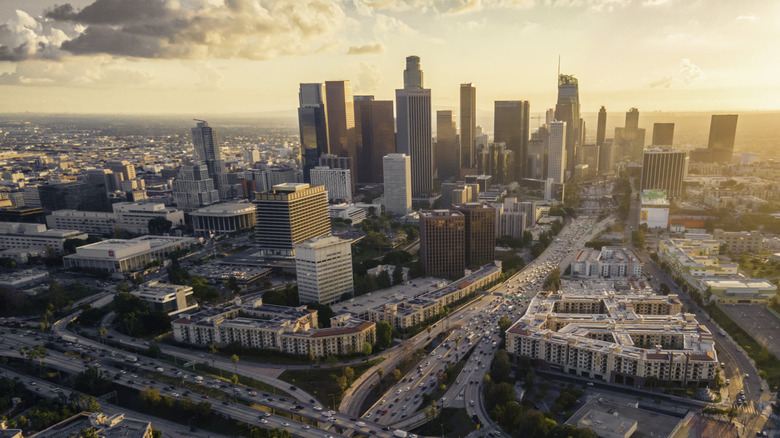
They're always a topic of conversation, but right now, gas prices are even more top-of-mind for American car owners. As of this writing, the Strait of Hormuz is essentially closed, which is a major shipping lane for black gold's transportation. This has spiked fuel prices in a big way and even led to shortages in other countries.
Here in the USA, it's commonplace (and old hat) for people to start pointing their fingers at California when gas prices are in the spotlight, as the Golden State has the highest gas prices in the country. The Facebook comments truly come alive when photos and videos pop up of random rogue stations around Los Angeles sell it for over $8 per gallon.
It must be said, however, that California gas prices have been noticeably higher than those of every other member of the contiguous 48 for several decades. This is not only due to geography, but also the state's special, more environmentally friendly fuel formula, as well as the added taxes on top of the standard gasoline prices. Let's dig into that formula and the difference between California-produced gas and gas produced in the other 49 states. Additionally, what legislation has been passed in recent years to maintain a higher standard of environmental friendliness, yet (hopefully) bring costs down.
CaRFG3 sounds like the name of a fax machine
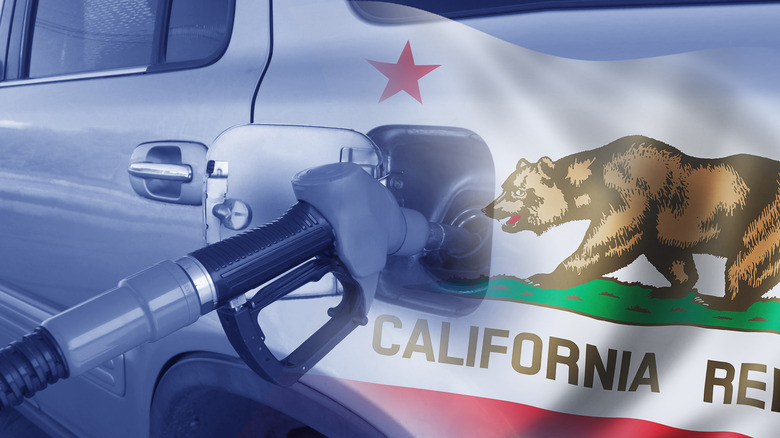
In order to understand California's high gas prices, it's important to note where the state is located. For the most part, the Rocky Mountains disallow the formation of a pipeline between the rest of the country's oil refineries and its boundaries; thus, California produces most of its 87-91 octane and diesel in-house. According to the U.S. Energy Information Administration (or EIA), very few refineries outside of California can even meet the state's blending requirements, which adds to refining costs.
The California Air Resources Board (CARB) requires a special blend to be sold within the state's borders. Referred to as California Reformulated Gasoline Phase 3, or CaRFG3, which sounds like the name of either a fax machine from the '90s or a calculator from the early '00s. This fuel went on the market back in 2003. According to CARB, its predecessor CaRFG2 lowered "previously regulated components (Reid vapor pressure and sulfur content), [requires] the use of oxygenates year-round, and [regulates] additional components (benzene, total aromatics, olefins, and distillation temperatures T50 and T90)." CaRFG3 takes it a step further by removing methyl tertiary butyl ether from the blend. In essence, CaRFG3 burns cleaner than everyone else's gas.
CARB says that utilizing its own blend since the early '90s (when CaFRG2 was introduced) has cut down carcinogenic toxic air contaminants by more than a third, as well as reduced smog-forming emissions. The Los Angeles basin still gets a hearty amount of smog due to its geographic location, but it's not as bad as it used to be.
The tax man cometh
On top of the clean-burning fuel requirements, there's the fact that California slathers on a lot of tax – that brings a lot of negative attention to the Golden State as well. According to EIA as of last spring, the feds want a modest piece of the action at 18 cents per gallon of gasoline — from all states — whereas California's taxes amount to an additional 72 cents per gallon. State excise and sales tax, as well as an underground storage tank fee, comprise this princely sum.
It's not all doom and gloom when discussing fuel prices in California. I paid $9.99 per gallon for 100 octane earlier this week, the same price I paid before bombs fell over Tehran. OK, that's not really progress, so much as it is stagnation. Some progress, though, comes in the form of California's Assembly Bill 30, which was signed by Governor Newsom in October 2025. According to CARB, AB 30 immediately allows blends of gasoline containing 10.5% to 15% ethanol by volume to be sold in the state for use as a transportation fuel.
By allowing more ethanol in California's blend, total hydrocarbons, carbon monoxide, particulate matter, and ethylbenzene are reduced. The rub is that it's only deemed worthy in light-duty trucks, SUVs, and cars produced after 2001. Then, flex-fuel vehicles are in the clear, too. Not only does it burn cleaner, but it could lower fuel prices by approximately 20 cents per gallon. Not monumental, but not nothing, either.