

9 Hot Rodder Terms You've Heard, But Probably Never Fully Understood
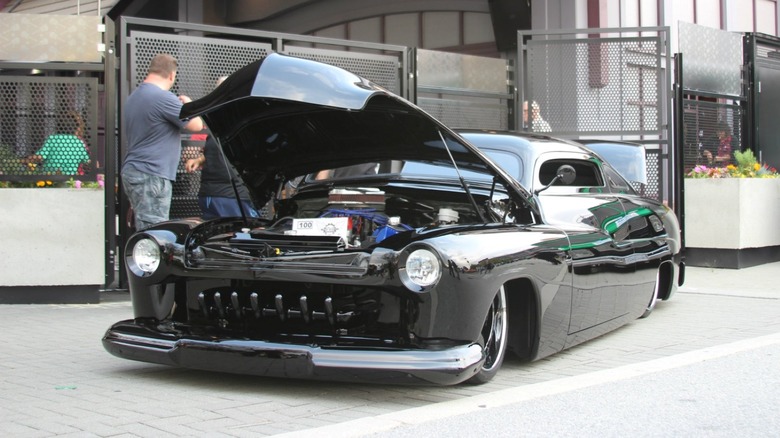
After World War II, in the days before the internet and cable television, young people spent their free time customizing their cars, with engineers like hot rod pioneer Ed Iskenderian turning factory-made vehicles into custom works of art. In fact, hot rod culture was effectively youth culture, especially among the more rebellious sects. It was arguably overtaken by rock and roll in the 1950s, but for a while there, fondness for hot rods and love of rock music defined what it meant to be young in America.
Hot rods aren't just cars. They're expressions of a person's individuality, and extensions of their personality — and this goes beyond the cars themselves. Hot rod enthusiasts have their own language, with words that might sound like gibberish to people outside of the scene, but which are used like shorthand among those in the know. Get an old-school hot rod fanatic going, and they'll tell you about the zoomies on their double-pumped mouse gasser or their lead sled. Can you dig it, daddy-O?
Blower
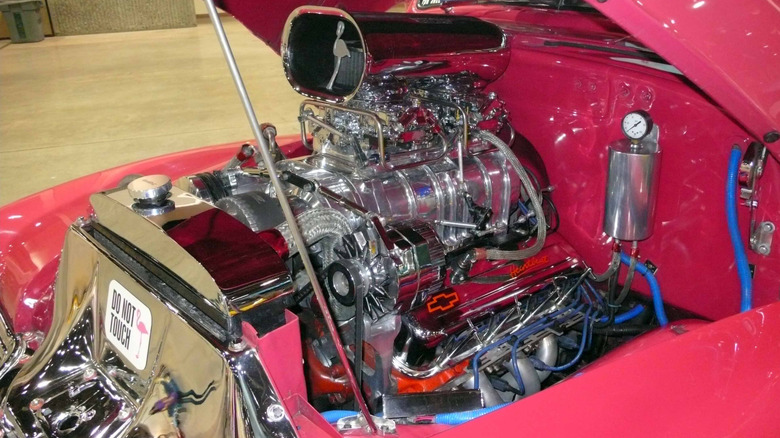
When someone says, "Your engine blows," you might have a knee-jerk reaction to take offense, but relax: they probably just mean you have a particular type of old-school supercharger attached to your engine.
In layman's terms, a "blower" is just another word for a supercharger. If you don't know what that means, a supercharger is an air pump attached to the intake that pushes air into the engine to draw extra performance from the vehicle. Technically, not all superchargers are blowers – which originate from the heyday of hot rod culture — but the terms are interchangeable to most people. Blowers are specifically roots-type superchargers that don't compress the air before pushing it into the engine, while modern superchargers do compress the air first. Simply put, every blower is a supercharger, but your modern-day supercharger might not necessarily be a blower, though you have to be a real gearhead to know the difference.
To this day, blower modifications remain popular, even to the point of delightfully absurd abominations like the addition of a Hellcat Blower to a Chevy LS.
Tubbing
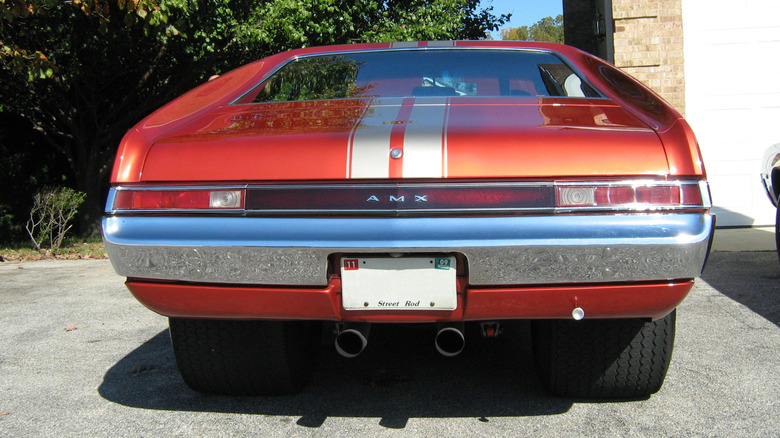
Have you ever seen an old-fashioned muscle car with typical front wheels but oversized rear tires? If so, you saw a car that was tubbed to make room for those gloriously husky wide wheels.
Tubbing involves modifying the rear wheel well of a car so that it can accommodate a plus-sized pair of rear tires. With extra wide rear tires, your vehicle will be packing some major junk in the trunk — or under the trunk, as it were. This modification sounds easy, but it can lead to some issues down the line.
The undercarriage of a car is full of parts that fit together to make a cohesive whole. Modifying one part can necessitate changing others. You might need to adjust your suspension, since some components can get in the way of the widened wheels. The leaf springs could interfere with the gas tank, requiring a new tank with a narrower shape. Depending on how large your new tubs are, you might have to alter or completely remove the back seat of your car. But at the end of the process, your car will look undeniably cool, and that makes it worth all the hassle of getting there.
Double pumper
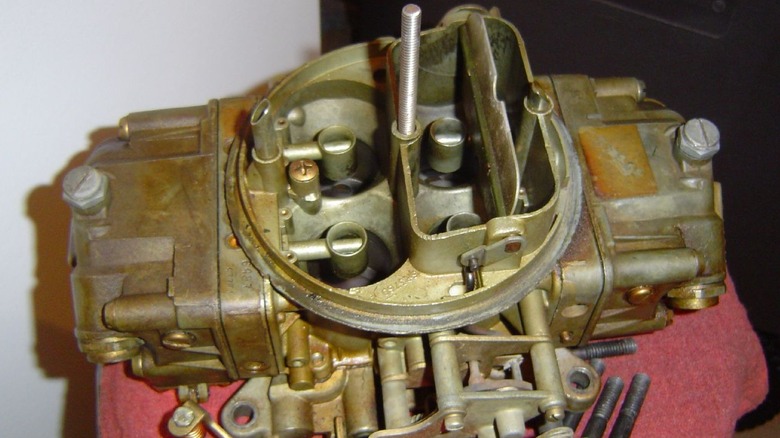
Before the days of modern fuel-injection, if you wanted to get maximum performance from your hot rod, you went out and bought a double pumper, which is a carburetor with two accelerator pumps. Double the accelerator pumps, double the acceleration, right? Well, sort of. It's a bit more complicated than that, but a double pumper of any type will get more gasoline to the engine faster than a carburetor with a single accelerator pump.
There are multiple types of double pumper carburetors. There are mechanical secondary carburetors and vacuum secondary carburetors. Vacuum carbs are notable for technically not being double pumpers since they don't consistently use the secondary pump, though some people still refer to them as DPs. Meanwhile, the mechanical variant — the more traditional double pumper — is the real deal.
But that extra performance comes at a price, as the additional accelerator pump obviously means drivers will be burning through their fuel supply more quickly.
Flathead
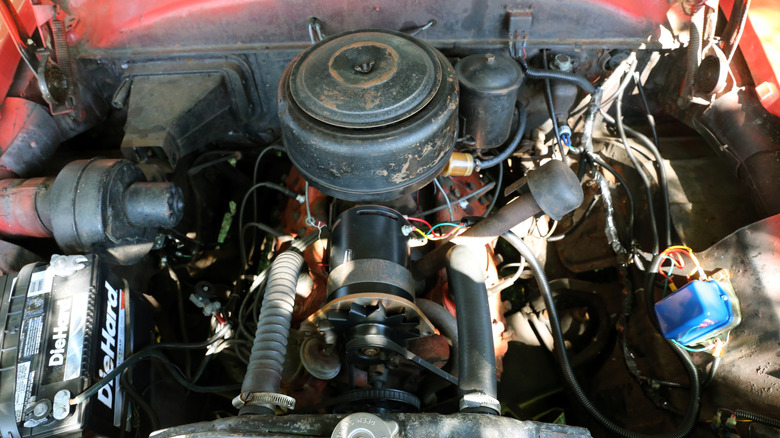
Without an engine, a car is nothing more than an art installation. It's great if your car looks cool, but if it doesn't drive well, then what's the point? There have been countless different automobile engine types over the last century or so, but few are as iconic as the immortal Ford V8, in particular the legendary flathead version introduced way back in 1932, which became an icon of hot rod history. It wasn't the first-ever V8 engine, but it codified the power of the American automotive industry. Ford would continue manufacturing the engine through 1953.
The name "flathead" comes from the flat cylinder heads of the engine, which became ubiquitous in the hot rod scene. Even now, more than seventy years after Ford developed its final flathead, classic hot rods just aren't the same without one of these legendary engines. If your 1940s-style hot rod runs on anything but a flathead, then it's little more than an imitation of the real thing.
There are multiple types of V8 engines. A small-blocked V8 is known as a "Mouse," while its large-blocked variant is called a "Rat." There's a couple of extra bonus hot rod slang terms for you!
Gasser
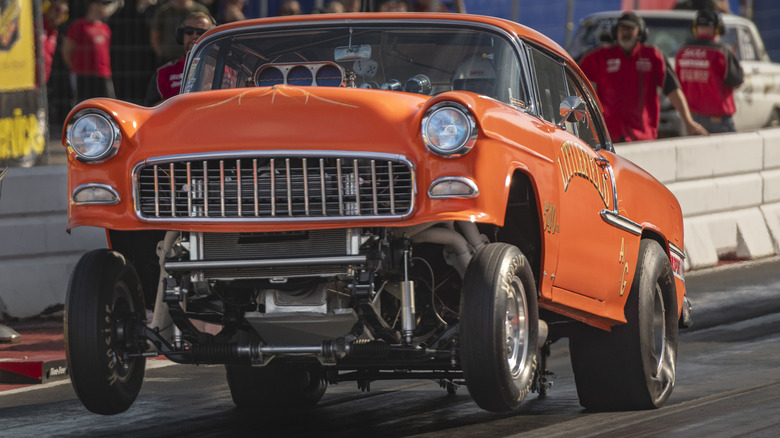
Imagine you're a teenager in the late 1940s or into the 1950s. You invest all your summer job money into modifying your car. Now what? You race your friends and rivals, of course, to see who has the most powerful car in town. Hot rod drag racing became so popular that in 1951, the National Hot Rod Association was founded to make a centralized governing body over the drag racing scene.
Save your flatulence jokes. A "Gasser" is a nickname for a hot rod specialized solely for high-speed drag racing. It became particularly popular due to the NHRA's Coupe and Sedan races in the 1950s. These cars had a unique mix of dragster modifications and high suspension, which meant they could accelerate quickly but were a hassle to control. There's nothing better in a sprint, though there's also a huge risk of losing control and flipping upside-down. That might sound like a bad thing, but it also makes for great crowd-pleasing spectacle for onlookers.
Highboy
As hot rod culture became more prevalent, many enthusiasts began "channeling" their cars, which is when the car's profile is made lower to the ground than originally intended, due to the body being mounted lower on the chassis via lowered (or channeled) rails.
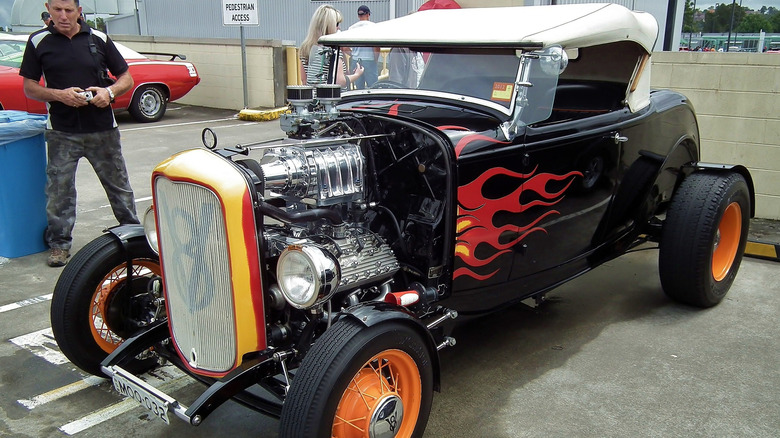
A highboy is essentially the opposite of that — a hot rod body that wasn't channeled, but nestled atop the rails. Alongside this modification, the fender and running boards are removed for style and speed. There's no quicker way to improve a vehicle's power-to-weight ratio than to lighten its load by any means necessary, and fenders are just dead weight... Heaven help you if you crash, though.
Highboys are a curious phenomenon, since their core feature — the elevated body on the chassis — isn't actually a modification. Instead, the modification of lowering the body closer to the ground became so common that not doing it became an expression of automotive individualism itself. It just goes to show how prevalent hot rod mods became during their heyday.
Frenching
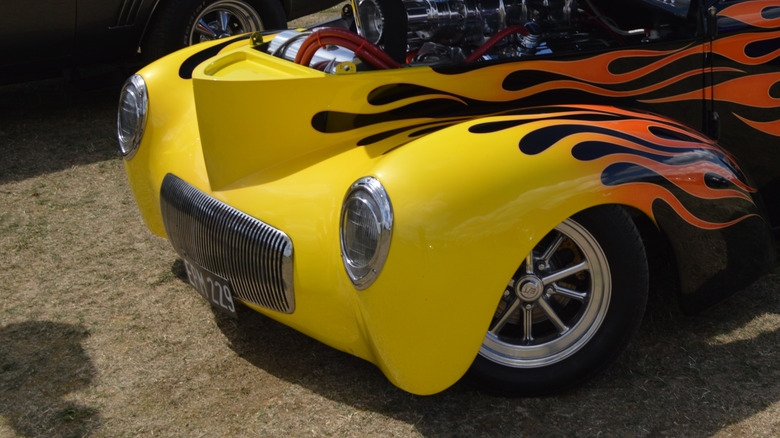
Hot rod enthusiasts love a smooth exterior. We'll get to nosing and shaving your lead sled in a minute, but first, there's frenching. Frenching is the act of smoothing out your vehicle by embedding elements like the headlights, taillights, license plate, and radio antenna into its body. Think of it like the automobile equivalent of lasering off pesky skin tags and moles. The term comes from the "French cuff" on fancy dress shirts, which was the inspiration for this automobile customization.
This is purely an aesthetic enhancement. In theory, your hot rod will be slightly more aerodynamic which could make a difference in a high-stakes drag race, but it's really about the look, the attitude, and the love for one's vehicle. It's all about making your car as gorgeous and identifiably yours as it can possibly be.
A car that's had its exterior components properly frenched, or tunneled into the body, has a distinct look. Tunneled headlights, especially in the old days – before car lights became retina-searing white – are a thing of beauty. This isn't something that rolled off the assembly line at the factory; it's been customized into a unique shape by the owner (or their mechanic). Two people can own a vehicle of identical make and model, but they can tell which one is theirs just by looking at how they've tweaked the aesthetics of their car.
Nosing and shaving
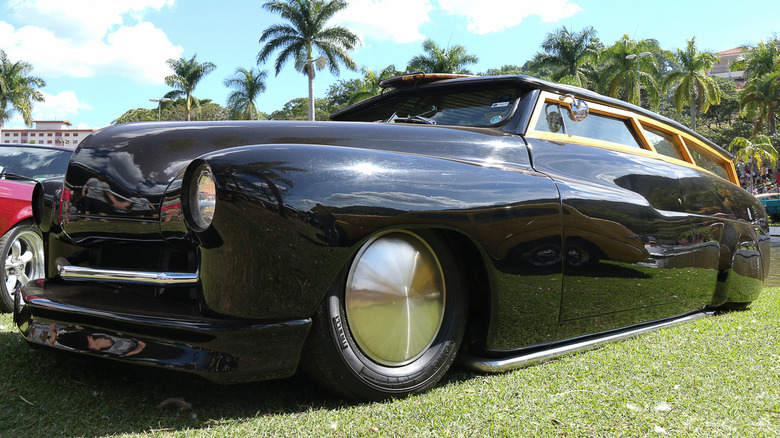
Building off the smooth aesthetic of frenching, nosing and shaving applies that principle to the rest of the car.
Nosing is the act of smoothing out the hood of your vehicle, removing all the trim. Emblems, flourishes, details — everything must go, all to make the hood of your vehicle as smooth as a baby's bottom.
Shaving is effectively the same thing, but on the sides of your car. Door handles can be minimized or even shed completely. Not only does it look cool, but it's also a viable anti-theft measure. If you entirely remove the door handles, then nobody can get into your car — not without a "door popper," a specialized modification that will simultaneously unlock and open your door. Of course, if you have a wireless door popper, you'd better not lose it, or else your prized hot rod will become little more than a 2,000-pound paper weight. Hopefully, your mechanic makes house calls.
There's also the issue of rescue workers getting into the car during a crash or fire. It's tough for medics to rescue people from cars when they can't open the doors. This problem has extended to today's ill-advised retractable door handles. And don't even get us started on Tesla's controversial door handles, which are so problematic that they have been banned in China.
Lead sled
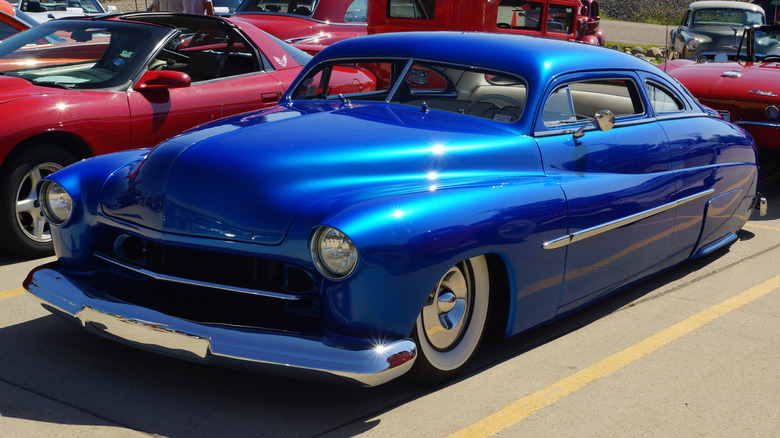
Lead sleds are something of a rarity in the hot rod world. They're impractical, expensive, and they don't perform particularly well on the road, but if you lay eyes on a genuine lead sled, you'll never forget it. A true lead sled is built from a Mercury chassis from between 1949 and 1951. It's possible to make a pseudo-facsimile using other vehicles, but it's not a proper lead sled if it's not a Mercury.
A lead sled basically makes use of every customization we've already mentioned. The entire body is made as smooth as possible. It gets completely nosed and shaved, the headlights are frenched, and the rear tires are almost entirely hidden due to the frame being channeled, or made lower and closer to the ground.
The "lead" in lead sled comes from the fact that, in the early days of these modifications, lead was used as a filler when reshaping the various parts. That lead made these vehicles extremely heavy, so their V8 engines would have to be replaced or enhanced. The mid-1950s saw the introduction of "Bondo," a new type of filler made from plastic. This alternative to lead made for a safer, lighter, and more effective filler — and the industry never looked back, save for the most nostalgic mechanics.