

How The 'Non-Passenger Work Vehicle' Became The Family Car
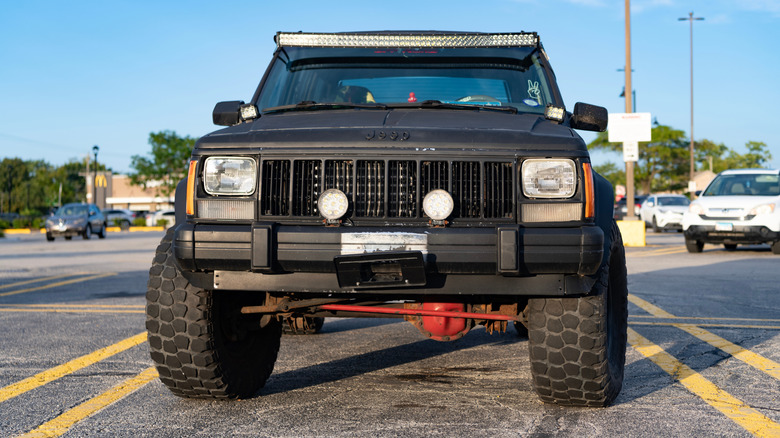
If you've been watching, you've seen the slow decline of the sedan and its replacement by SUVs and crossovers, some of which you secretly don't hate. We've touched on parts of this story over time, but a new video by Climate Town does a great job summarizing exactly how things came to be this way.
Thousands of years ago in the early 1970s, nobody really cared about fuel economy, until we did. In 1973, Arab oil producers didn't care for U.S. support of Israel and turned off the taps, leading to shortages, long lines at gas stations, and skyrocketing fuel prices. Suddenly, fuel economy mattered as a national security issue. Congress established Corporate Average Fuel Economy (CAFE) standards that required automakers to improve overall economy across their passenger car fleets from 13.5 mpg to 27.5 mpg by 1985.
However, thanks to one of the biggest green car failures of all time, the "Light Truck Loophole," trucks were exempt from the more stringent emissions, safety, and fuel economy standards. They were work vehicles used by farmers and companies, not daily drivers, so they were only required to reach 20.5 mpg by 1987. These "non-passenger work vehicles" made up a tiny fraction of vehicles on the road, so these lower standards could never be exploited to bypass the stricter standards for passenger cars, right?
First Jeep, then scope creep
American Motors was worried that the cost to make Jeeps hit passenger car CAFE standards would bankrupt its shoestring budget as it struggled to survive. But it had a cash cow on its hands: Jeep. So AMC lobbied the government to classify Jeeps as light trucks instead of passenger vehicles. The government agreed. After all, very few people other than off-road enthusiasts actually drove Jeeps, so what would it matter?
Ten years later, a new Jeep would emerge: the XJ Cherokee. It became a whole lot more friendly to passengers while still technically qualifying as a light truck, creating what Climate Town calls the "non-passenger work vehicle passenger family vehicle." It wasn't marketed to farmers or outdoorsy types who already bought trucks and Jeep CJs, but average families who had always bought cars. The plan worked. My dad swapped his Olds Delta 88 for a Jeep Cherokee, which I later learned to drive in.
The Big Three automakers had to cash in. Ford already had the Ranger-based Bronco II, but reworked it into the Explorer, a longer version with four doors and a usable back seat. It saw great success of its own. Chevy had introduced the S-10 Blazer a year before the XJ Cherokee arrived, but dragged it heels on introducing a four-door version. Chrysler took a slightly different approach. It simply bought AMC to acquire Jeep for itself.
Making SUVs more like the cars they replaced
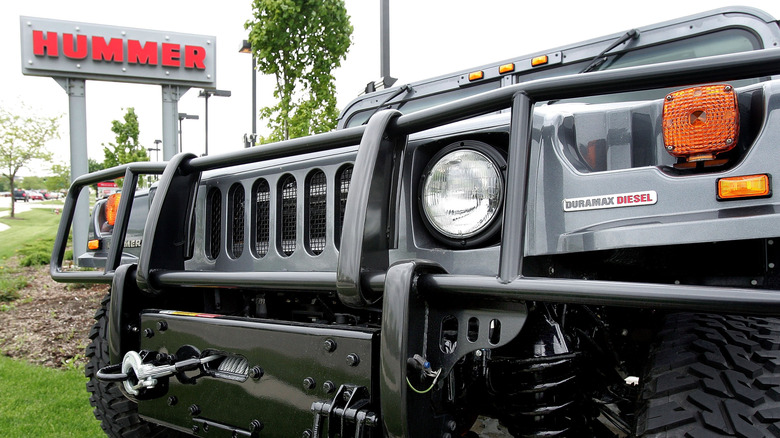
How did the government feel about this regulatory loophole big enough to drive a Hummer H1 through? It didn't want to "kill the golden goose" that kept the domestic auto industry strong. It needed that help because imported cars at the time, mainly from Japan, met CAFE standards, were better quality, and reasonably priced. Rather than build better cars — Saturn came close but, like the S-10 Blazer, GM didn't give it a fair chance — American manufacturers pivoted to SUVs. They were more profitable, partly because customers were willing to pay a premium for them, and partly because they didn't have to meet as strict standards as cars.
While many drivers appreciated the higher seating position and station wagon practicality that looked tougher than a minivan, some didn't appreciate the rougher ride like a truck. That's when the crossover came along. It had smoother styling and a smooth ride like a car while keeping the size, height, and technicalities of an SUV that qualified it as a "light truck." In 2015, SUVs and crossovers outsold cars for the first time, and haven't looked back since. Some companies that built themselves on cars, like Ford and Chevy, don't even sell sedans in North America anymore.
The video goes into far more detail than I have here, and is worth a watch if you've ever wondered how things came to be this way. It discusses the safety and environmental issues, as well as the added costs. Usually such videos conclude with advice on what to do about the issue, but with SUVs so firmly entrenched and a government that thinks pollution is perfectly safe to breathe, there's no firm call to action here. Except to like, comment, subscribe, and join their Patreon, of course.