

2026 Toyota C-HR EV Is Actually Pretty Cool, I Swear
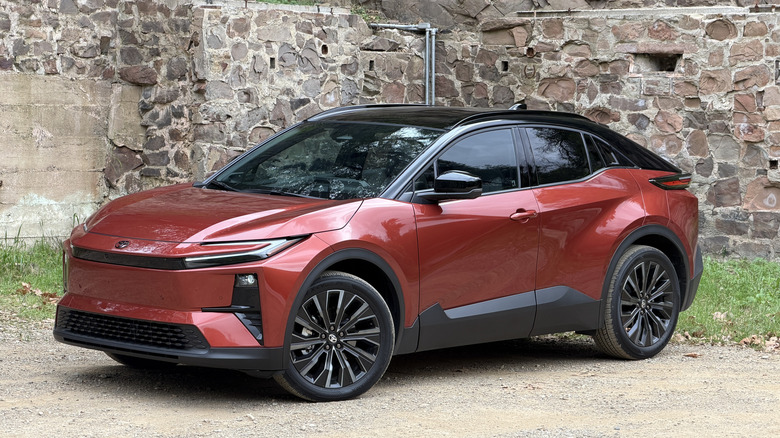
The first-generation Toyota C-HR had a rough go of it in America. Sold here from 2017 through 2022, the tiny crossover had a funky design that was polarizing to say the least, and the U.S. only got it in naturally aspirated, front-wheel-drive guise, while other markets got turbocharged engines, hybrid options and all-wheel drive. The U.S. has also been denied the second-gen C-HR, which went even wilder with its design, but now we're getting a new, fully electric C-HR (that's bigger and thus sold elsewhere as the C-HR+).
Maybe I'm just biased because I actually liked the design of the original C-HR and have been envious of the new model sold in Europe and Asia, but I've come away from driving the 2026 C-HR EV thinking that it's actually quite cool. Despite being basically the same as the bZ underneath and inside, the C-HR's more fun exterior design, smaller size and, crucially, its awesome upholstery make it a lot more appealing to me. It won't be the EV for everyone, but I'm at least happy to see some personality out of a new mainstream Toyota.
Full disclosure: Toyota had me drive to Ojai, put me up in a hotel room for a few nights and fed me, all so I could see the new Highlander and drive the C-HR and bZ Woodland.
More power than a GR Corolla
Underpinning the C-HR is the same e-TNGA platform as the bZ. Unlike its more sensible sibling that's also offered with a smaller battery and front-wheel drive, the C-HR comes only with the larger 74.7-kWh battery pack and dual-motor all-wheel drive. You get a total of 338 horsepower from the pair of motors; the one up front has 198 pound-feet of torque, while the one on the back axle only has a maximum output of 125 lb-ft. Accelerating from 0 to 60 mph takes 4.9 seconds, Toyota says, matching the normal bZ. That's half a second slower than the bZ Woodland, which has 375 horsepower — the C-HR feels quick enough, but I think it's a shame it doesn't get that higher power output.
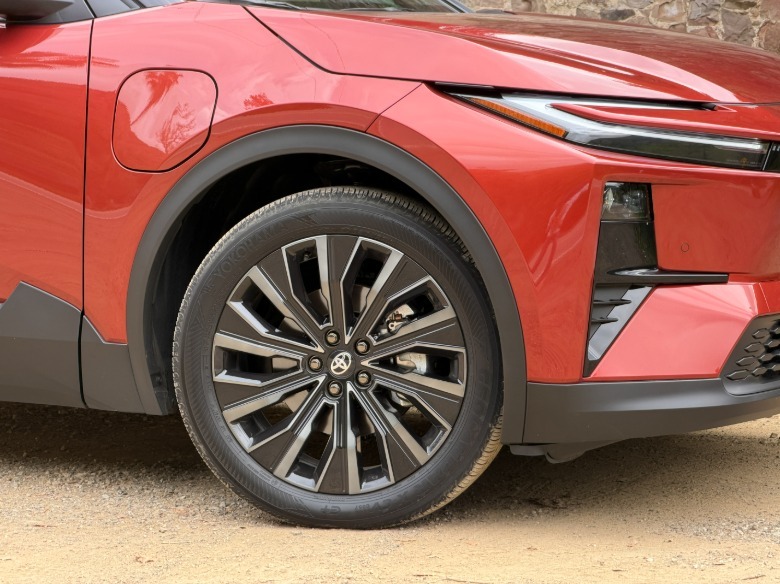
18-inch wheels are standard, but the C-HR I'm driving is an XSE model wearing 20s with Yokohama Geolander X-CV tires. And you know what? On Highway 33, an epically good mountain road north of Ojai, the C-HR is fun enough that I keep driving for another half-hour past the turnaround point that Toyota set for us. It's no performance car, to be clear, but it's more enjoyable than you'd expect. The C-HR's 108.3-inch wheelbase is 3.9 inches shorter than the bZ's, it's 6.7 inches shorter overall, and it also weighs around 100 pounds less; all of that helps make the C-HR feel a little more nimble. The suspension is well-damped without too much body roll, the steering is numb but linear, there's enough thrust for it to still feel brisk when accelerating from above 40 mph, and the tires can put up with some fairly fast speeds in corners without too much understeer or squeal. It's really quiet inside, too.
 Daniel Golson/Jalopnik
It's too bad the C-HR is saddled with the same middling range and charging specs, though. Like the bZ, it can only accept up to 150 kW when DC fast-charging, which can take it from 10% to 80% in about 30 minutes. That wouldn't be so bad if the range were better, but the EPA rates the C-HR at 287 miles with the smaller wheels or 273 miles with the bigger ones, each slightly behind the equivalent bZ. Still, that's enough for everyday driving or an extended mountain-road jaunt, and the adjustable regenerative braking is pretty strong and recaptures a good amount of energy on my way back down the mountain, but it's not strong enough for real one-pedal driving.
It's all about the style
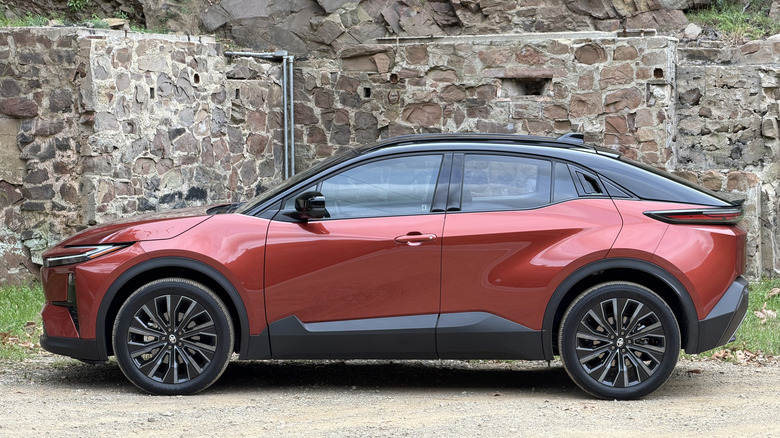
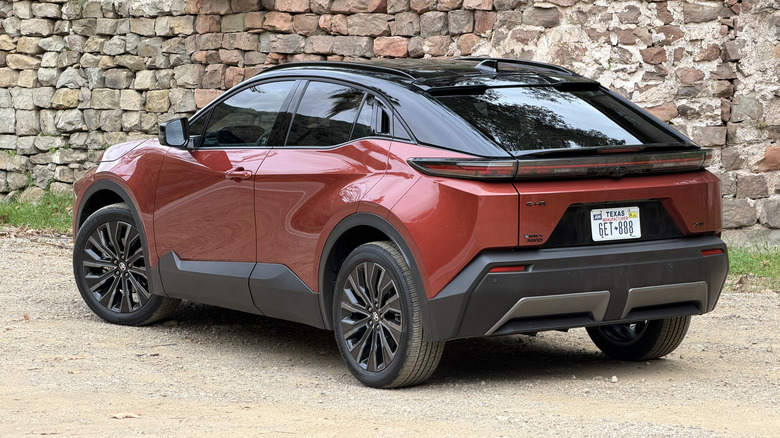
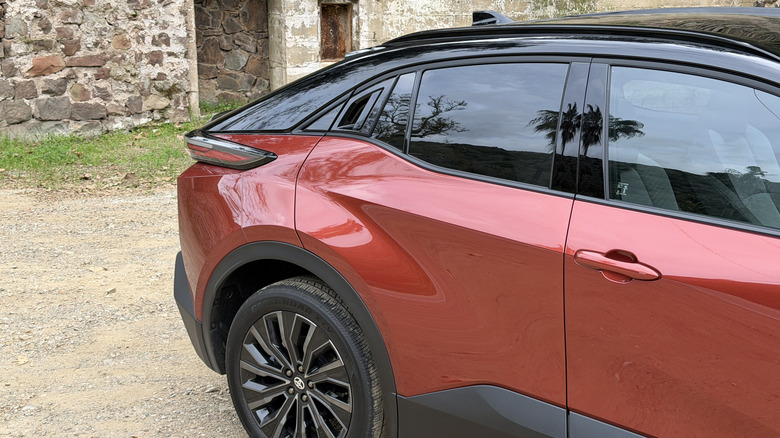
The real appeal with the C-HR lies in how it looks. It has a more mature design than its predecessor and the second-gen C-HR we don't get, but it's still strange in the grand scheme of Toyotas. It's got the brand's hammerhead nose design with a more sculpted hood and sportier bumper, and although there's no central light bar here, it also lacks the bZ's awkward fender flare designs. That's a fine tradeoff, I think. Behind the front wheels is where the C-HR really sets itself apart. Its sloping roofline (C-HR does stand for "coupe high-rider," after all), prominent rear haunches, angular side skirt cladding and pert rear end look great.
I especially love the character line that extends off the front door handles, and the hidden rear handles are mechanical pulls, not an electronic release. The taillight bar has a little spoiler integrated on top of it, and I like how the C-pillar flows down to meet it. Getting the C-HR in Tandoori orange with the contrasting black roof definitely helps, but even in a single-tone grayscale color scheme I think it's an attractive little crossover. It even looks good on the base 18s, but given how nicely it rides on the 20s, I'd definitely go for them.
One material can make a lot of difference
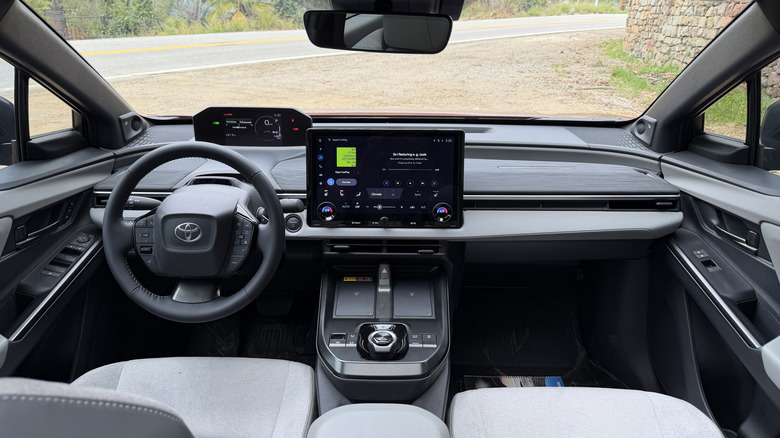
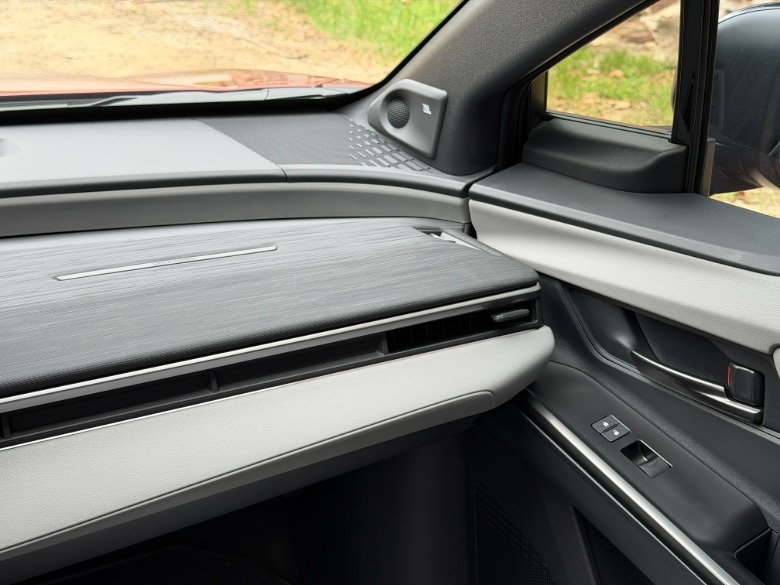
Step inside and you're greeted with an identical dashboard and layout to the bZ, just with a couple different material textures. It's a nice place to be, as long as you like the arrangement of the compact steering wheel and far-back digital gauge cluster. The 14-inch touchscreen is great, and while I don't really understand the placement of the dual wireless charging pads, you get some sizable storage compartments. Visibility is good even out the back, and an available panoramic sunroof lets a lot of light in — and unlike in many other EVs, it comes standard with a powered sunshade.
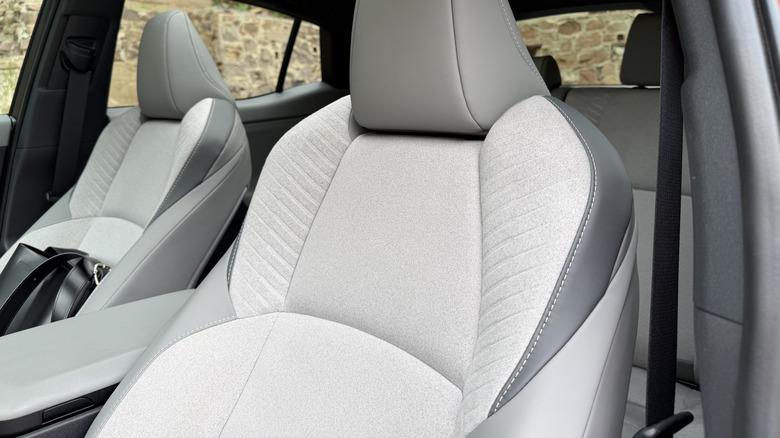
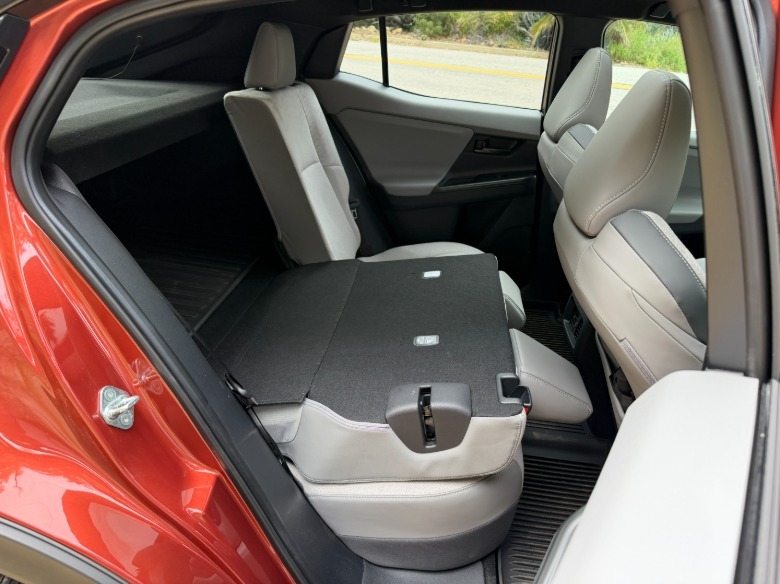
But it's the seats that Toyota really won me over with. Base cars get a mix of fabric and Toyota's SofTex synthetic leather material, but the XSE's seats are covered in what Toyota just calls "synthetic suede." I think it feels fantastic. The upholstery is softer and more plush than the microsuede we usually see in car interiors, and it doesn't feel cheap like so many synthetic materials can. And it's not just used in certain sections; the suede covers almost the entirety of both rows, aside from bits of the front-seat bolsters and the center seat in the back bench. The front seats themselves are pretty supportive as well.
 Daniel Golson/Jalopnik
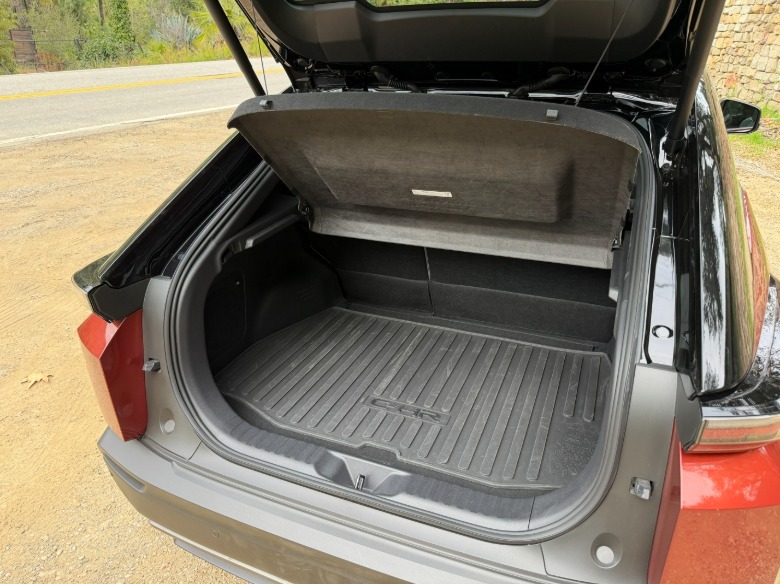
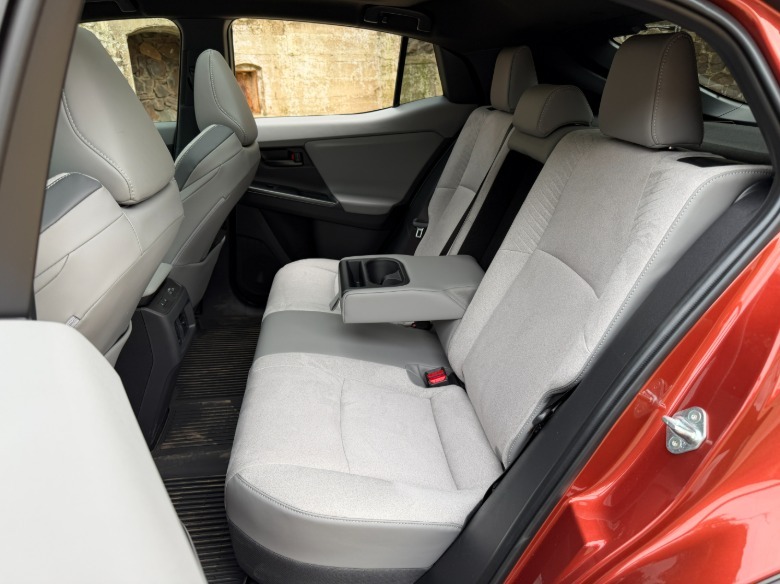
The C-HR's size becomes a bit of a detriment when you climb into the back seat, but not by much. There's three inches less legroom in the second row compared to the bZ, but actually a little more headroom in both rows of seats, and hip room and shoulder room are a wash. Even with the panoramic sunroof, which takes about an inch of headroom away, my 5-foot-9 self fits comfortably in the back. Cargo space isn't much worse, either. The C-HR has 25.3 cubic feet of space with the second row in place, 2.4 cubic feet less than the bZ, but fold down the 60/40-split rear seatback and it has 59.5 cubes of space, a few more than the bZ. The sloping roofline definitely gives the cargo area a less-practical shape, though.
It's a good value
At least the C-HR's smaller size has presumably made it cheaper than the bZ. The base C-HR SE AWD starts at $38,450 including destination, $2,900 less than a bZ XLE AWD, while the C-HR XSE AWD comes in at $40,450, still $900 cheaper than that cheapest all-wheel-drive bZ. You are able to get the bZ in a Limited trim that has a few more niceties than what the C-HR offers, but it also starts at almost $45,000.
 Daniel Golson/Jalopnik
The C-HR SE comes with LED headlights and taillights with automatic high beams, heated mirrors, a power liftgate, rain-sensing wipers, heated front seats and a heated steering wheel, an 8-way power-adjustable driver's seat with lumbar support (and a 6-way manual passenger seat), keyless entry, digital key capability, 64-color ambient lighting, three USB-C ports, dual-zone automatic climate control, auto up/down for all four side windows, that 14-inch touchscreen with wireless Apple CarPlay and Android Auto, and Toyota's Safety Sense 3.0 suite of driver-assist features.
 Daniel Golson/Jalopnik
Stepping up to the XSE adds the 20-inch wheels and suede upholstery, an 8-way power-adjustable front passenger seat, memory for the driver's seat, traffic jam assist, lane change assist and a 360-degree camera system. On the XSE, the panoramic roof costs $1,000, a 9-speaker JBL sound system is $900 (and is pretty good), and a cold weather package that adds heated rear seats and headlight washers will set you back $450.
I have an idea
At around $43,000 fully loaded the C-HR is bumping up against the base prices of some other really appealing design-forward EVs like the Kia EV6 and Hyundai Ioniq 5, but the Toyota is still thousands less than those models are when equipped with all-wheel drive and their bigger batteries. Even the Chevrolet Equinox EV is a bit more expensive when you add on AWD, though it's also a much bigger vehicle. The C-HR's closest competition comes from its own litter: The Subaru Uncharted, which is essentially a rebadge of the Toyota. The Subaru has a slightly lower base price than the equivalent C-HR, and it'll also be offered in an even cheaper front-wheel-drive trim, something the Toyota currently lacks. I can't imagine the Uncharted will feel at all different from the C-HR, and I think it looks even better. Luckily for you, the person reading this, I'm driving the Subaru this week and will be able to report back soon.
 Daniel Golson/Jalopnik
Even acknowledging the existence of the Subaru, I think the Toyota C-HR is a cool product that I hope gets more people into an EV. But do you know what would be really cool? Imagine I've spun my armchair around and am speaking directly to you, Toyota, now. What would be really cool would be a performance version of the electric C-HR. Maybe it could be called GR C-HR. Give this thing about a hundred more horsepower (I'll even accept an even 400), performance tires, some chassis upgrades and sportier styling. That would be awesome. In fact, make it a little Ford Mustang Mach-E Rally competitor and give it all-terrain tires, mud flaps and a big wing on the back. And make sure it's still sold in orange.