

Despite Everything, The Tesla Model S Is Still The Most Important Car Of The 21st Century
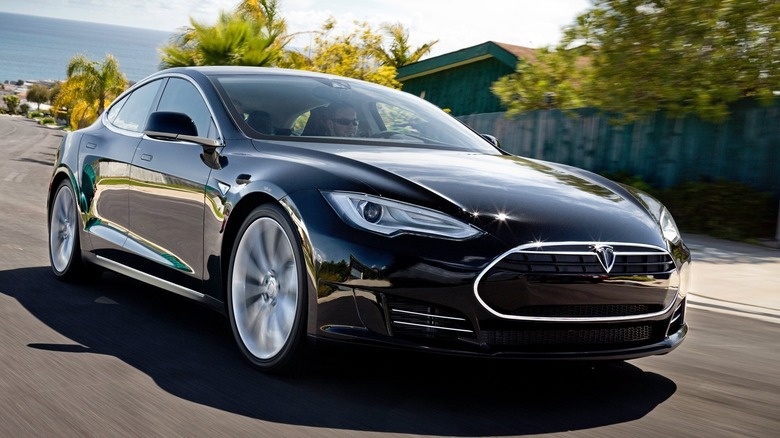
Well, it's officially the end of the line for the Tesla Model S and Model X. It was also probably time, considering the Model S first went into production all the way back in the summer of 2012, and calling recent sales "slow" would be a serious understatement. For example, while Tesla delivered 406,585 Model 3s and Model Ys in Q4 of 2025, it only delivered 11,642 "other models," which includes the Cybertruck. But even so, it's still a little sad to see the Model S go because, no matter what you think about Tesla and Elon Musk these days, the Tesla Model S is still the most important car of the 21st century.
That may hurt to say now that Elon Musk has revealed himself to be one of the most toxic people on the planet, but that doesn't change the fact that the Model S changed the automotive landscape and deserves credit for kicking off the electric revolution. Without the Model S, who even knows how long it would have taken for a legacy automaker to introduce a true long-range EV.
Stiff competition
Of course, the Model S wasn't Tesla's first electric vehicle. That honor instead goes to the Tesla Roadster, and you could make the argument that makes it more important than the Model S, but if you're really honest with yourself, you know that's not true. It may have been cool and futuristic, but it was also a car legacy automakers could mostly ignore. After all, Tesla only ever built a few thousand Roadsters, and with only two seats, it was more of a fancy toy for wealthy buyers who already owned plenty of other cars.
You could also argue the Bugatti Veyron deserves that title more than the Model S, but again, I think you have to admit the Model S was more important. Sure, the Veyron may have offered the kind of power that was basically unthinkable at the time, and as someone who was exactly the right age to become obsessed with a car he would never drive, it still holds a special place in my heart. I just don't know how much it actually changed anything for regular drivers.
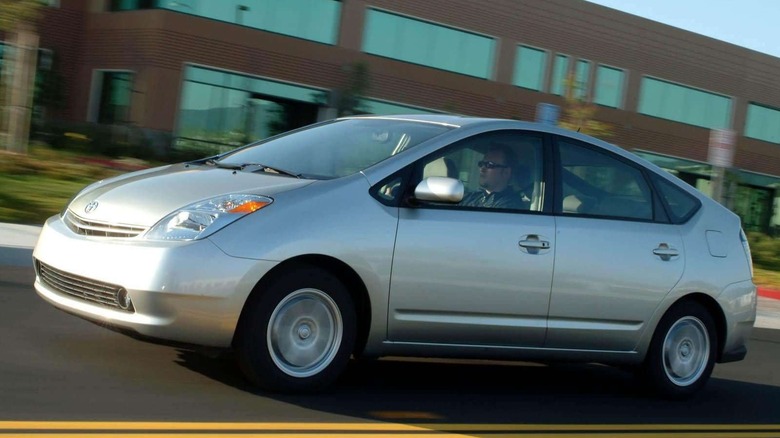
I am, however, open to hearing arguments defending the second-generation Toyota Prius. The first-gen Prius was a '90s car and therefore belongs to the 20th century, but the Prius's popularity exploded when Toyota redesigned it for the second generation, and it quickly became a must-have car for anyone who wanted to look like they cared about the environment, including many celebrities who could absolutely afford something more comfortable.
The first real electric car
Still, as important as it was for the Prius to introduce mainstream buyers to the benefits of electrification, the Model S was the first electric vehicle that regular buyers looked at and accepted as a real car. By today's standards, its original range of 265 miles isn't all that impressive, but at the time, that was enough to move it out of the "toy" category, especially when you throw in the rear seats that offered enough room for a family of four to use it as a daily driver.
That didn't necessarily mean everyone who could afford a Model S rushed out to buy one immediately, nor did it mean that jokes about EVs being toy cars stopped. But almost out of nowhere, a car without an engine became a hot commodity. People who previously had no interest in cars became obsessed with Teslas, to the point that Tesla stans quickly became some of the most annoying people on the internet. Sorry, losers, but Porsche did not copy Tesla when it gave the 911 a front trunk.
The obsessive fan behavior that the Model S kicked off is also a big part of the reason Elon Musk is considered one of the wealthiest men on the planet, if not the wealthiest. Even if you couldn't afford an actual Tesla, you could buy the stock, and for many, they weren't investing in a company — they were investing in the future that Tesla would obviously dominate, since those dumb legacy automakers would never be able to compete.
The Model S made Musk who he is today
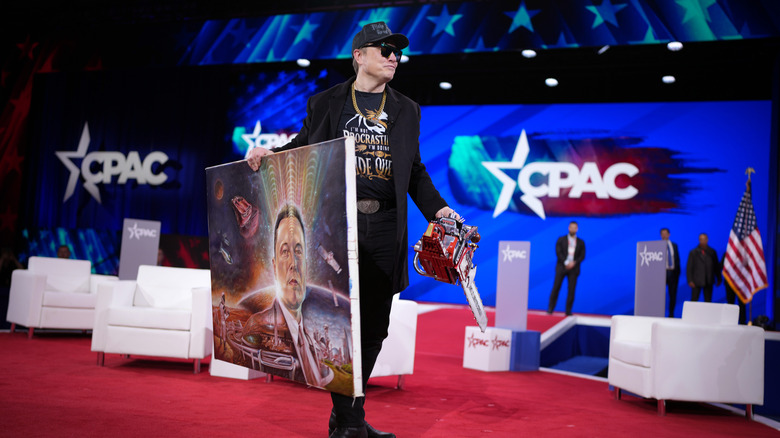
Without Tesla and the Model S, Musk would probably still be incredibly wealthy, but he also probably wouldn't have had nearly as much influence as he does today, nor would he have probably been able to buy Twitter or contribute hundreds of millions of dollars toward his goal of electing Donald Trump. You can debate whether or not his money and influence actually changed the outcome in 2024, but would we even be having that debate if the Model S hadn't been such a success?
Plenty of automotive executives have left their mark on the automotive industry — Ferdinand Piëch definitely comes to mind there — how many have been accused of interfering in international elections? How many have been brought on by a world leader to intentionally destroy their own government's ability to regulate businesses? How many can you credibly tie to the deaths of hundreds of thousands of people worldwide?
Had Musk remained a relatively normal kind of weirdo, the Model S would have likely still been considered the most important car of the 21st century, and I'm certainly not the first to make that argument. Our friends at MotorTrend declared the 2013 Model S their Ultimate Car Of The Year all the way back in 2019, long before Musk went fully mask-off. But when you look at everything Musk has done with the money and influence the Model S helped make for him, it really seals it — the Tesla Model S is undeniably the most important car of the 21st century.