

9 Car Maintenance Myths It's Time To Set Straight

Automotive maintenance misconceptions are understandable. Your uncle would tell you something questionable about a carburetor while you held his beer in a poorly lit garage when you were nine, and it's very possible that you could live your entire life without ever being educated to the contrary. Maybe you'd end up with some gearhead friends in high school who would set you straight, maybe they'd make it worse, and maybe you arrive at age 50 with, "but Uncle Dan said," going more or less unchallenged. But you obviously weren't going to spend the afternoon at the local library trying to find "carburetor" on one of those stupid index cards in the little drawers. You'd just stay, well, wrong.
Lucky for us, we have the modern internet, a bottomless well of human knowledge that removes all such roadblocks and finally gives us the ability to learn everything from whether tire rotations are a scam to how long it takes to change the water pump on a 2016 Ford Explorer. So, most of those classic automotive misconceptions have thankfully been cleared up, right? Not so much. The internet has largely served to make misinformation spread further, leaving plenty of room for us to set the record straight, even if your Uncle Dan refuses to listen to a word of it. And because we know that some of the worst car myths continue to persist, we'll keep fighting the good fight.
Myth: Idle your car before driving

When temperatures drop, it seems sensible to let your car run before getting on the road. While it's true that back in the day – think carbureted vehicles with a manual choke – there was a bit of nuance to getting the car up and running from cold, today's world of electronic fuel injection has largely made the practice obsolete.
It might feel like you're doing your vehicle a mechanical kindness by starting it up and letting it run a bit, especially if you have a remote start button that makes this exceedingly easy, but the truth is that you're wasting fuel, causing unnecessary engine wear, and spitting needless emissions into the air every time you do it. Researchers have estimated that in the United States alone, we waste around three billion gallons of fuel by idling passenger cars, and another three billion from commercial vehicles.
For all the complaining we do about gas prices, we could at least avoid using a bunch of it for no good reason. So, while we stand by our assertion that the annual debate over warming up your car is imaginary, if this is indeed a real question you have, the answer is that the best way to get a car to operating temperature is driving it.
Myth: Change your oil every 3,000 miles
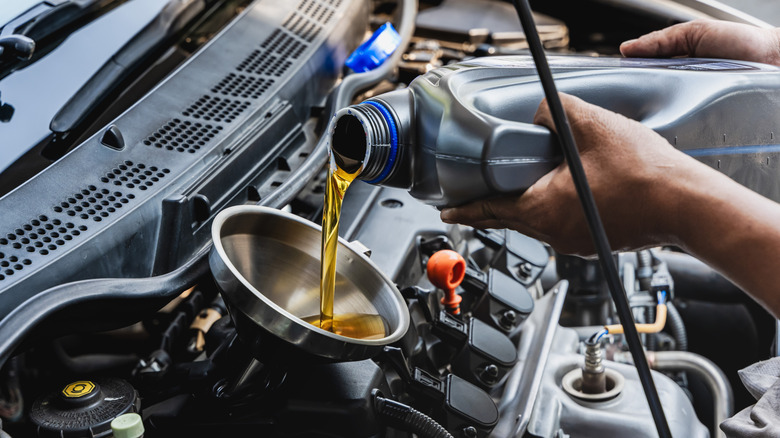
The 3,000-mile oil change rule is ludicrous, and we're surprised that this misconception still exists. To illustrate our internet point about misinformation, we decided to see what Google's AI summary had to say. It confirmed that 3,000 was perfect and, following its helpfully linked citations, we learned that it pulled the information from somewhere in this Quora thread. Despite the author boasting their impressive self-described credentials of "Bought >20 used cars and zero lemons to rent out on Turo," this is the deep research we were hoping for. We'd also like to point out that the Turo guy didn't mention 3,000 miles anywhere, so remember not to blindly trust the things at the top of your search results.
Anyway, it turns out that the hallowed 3,000-mile oil change interval is a holdover from simpler times when neither oil nor engines were as sophisticated or robust as they are today. Even the notoriously conservative manufacturer recommendations you'll find in your owner's manual suggest something closer to 7,500 or even up to 10,000 miles. If you take your car into one of those quickie lube joints, they will likely concede that 3,000 is a lie.
Myth: Premium fuel bring premium performance

There's obviously a tons of discourse about when you should and shouldn't use premium gas in your car, but if we're being honest, that's mostly driven by people who are trying to convince themselves that they don't need to listen to that demanding little sticker inside their fuel door telling them that their vehicle is hungry for premium. Yet surely you've heard some folks talk about going in the other direction as they justify spending more, usually saying something poetic and confidence-inspiring like "my baby gets the good stuff" as they mash the premium button on the pump – you know, the one that hasn't been scuffed up and worn down like the workhorse "regular" button.
Yeah, that's nuts. While you should definitely use a higher octane fuel if that's what your vehicle calls for, there's ample evidence that, for everybody else, the (relatively) cheap stuff is just fine. Studies have shown that while you can squeeze added fuel economy from premium gas, it comes nowhere close to offsetting the additional cost. As for performance, the boost averages just over one percent. In terms of both mileage and horsepower, the difference was most pronounced under harsh conditions and was negligible in typical everyday driving. The bottom line here is to do what your car is telling you to do, and don't be tempted to pony up the big bucks per gallon if you don't have to.
Myth: Lifetime transmission fluid is maintenance-free
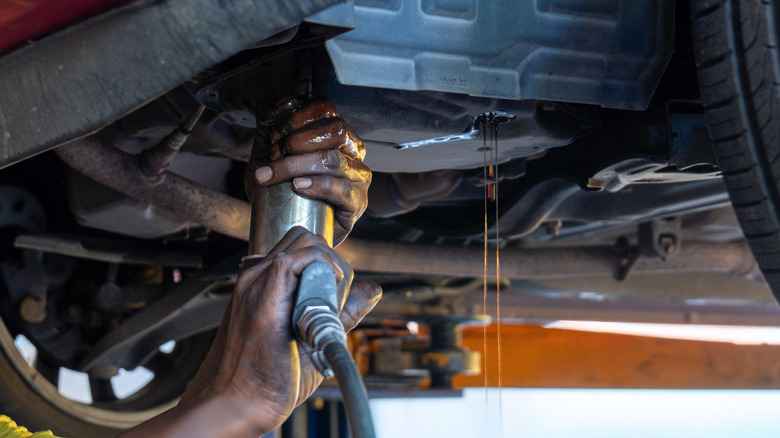
We already covered how manufacturers suggest changing your oil less frequently, and with some vehicles beginning to remove the transmission dipstick altogether. You'd be forgiven for thinking that we're approaching an automotive maintenance utopia where we can all weld our hoods shut and pretend we drive a Lexus from the 90s. Spoiler: we're not. For now, most vehicles on the road lean heavily on the health and effectiveness of their transmission fluid, which provides lubrication, temperature control, cleaning, and protection to your drivetrain. It's similar to engine oil in that way, and because the transmission is a sealed environment, it can run longer without accumulating a problematic amount of grit and debris.
That said, "longer" doesn't equal "infinity," and there's no clear consensus on what manufacturers mean when they say "lifetime" in the first place. In practice, the actual specified transmission fluid change intervals often align suspiciously with the vehicle's warranty period, suggesting that perhaps they mean something along the lines of "for the life of this being our problem," which might not bode well for someone planning to keep their vehicle running its best for the long haul. While we wouldn't call this a regular maintenance item, it is something to consider as your odometer hits the six-figure milestone.
Myth: Third-party service voids your warranty

The misconception that visiting an independent garage or a DIY oil change can void your warranty is explicitly and legally false. Without diving super far into a legal history lesson, the Magnuson-Moss Warranty Act from way back in 1975 pretty clearly prohibits manufacturers from getting away with limiting warranty coverage unless you use their parts or their service. This means that you aren't tied to the dealership where you bought your car when it comes to maintenance or repairs. You can get your oil change done however you see fit, up to and including doing it yourself.
That said, if one of those third parties (including you) messes up or damages something while they're in there, that's going to be on them and/or you. That may or may not be enough to avoid playing ball with the manufacturers. It's also worth noting that there are common mods that void your warranty. Indeed, there's a related myth that doing any aftermarket vehicle modification at all will immediately void your warranty, but that's untrue (once again, thanks to Magnuson-Moss, above).
Myth: EVs require no regular maintenance
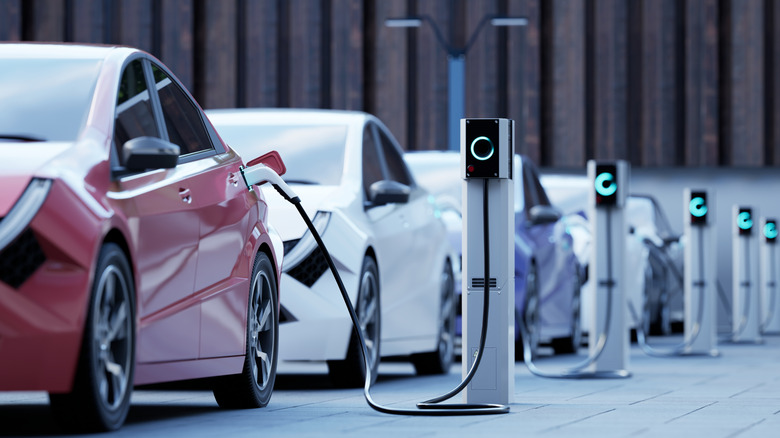
We've talked before about how EV maintenance and ownership isn't all that it's cracked up to be, but maybe that's because, for a lot of people, it's "cracked up to be" an effortless walk in the park where you don't have to worry about anything other than plugging it in until your lease is up and you throw it in the recycling bin when picking up a new one. While there's certainly some truth to the potential of your EV to be significantly less demanding in terms of regular maintenance – zero oil changes and brakes that can last damn near forever - it's worth noting that electric vehicles still have a whole bunch of boring wear items just like their ICE counterparts, specifically tires, suspension components, cabin air filters, and the like.
Couple that with the fact that you're trading your big, demanding combustion engine for a giant battery that's going to have its own quirks and nuances, and you might feel more like the scales have balanced. While not exactly a maintenance issue, the battery pack needs to be charged properly, kept at a friendly temperature, and run responsibly. If this still sounds like a maintenance bargain to you, that's great. Just be real and remember that the maintenance isn't zero.
Myth: Tire age doesn't matter if there's tread
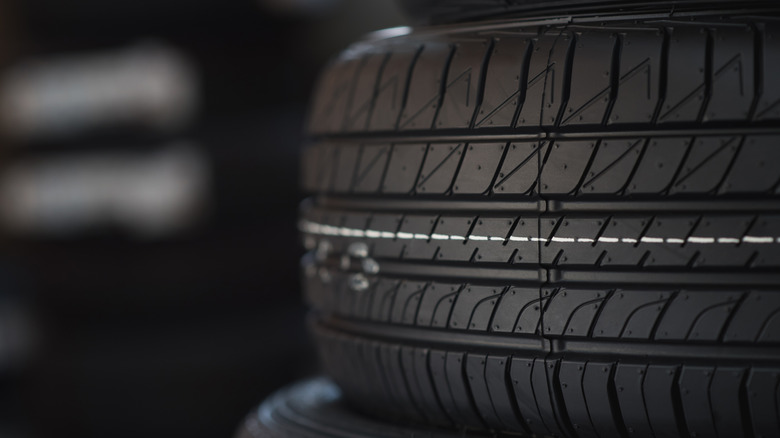
The question of whether tires expire before they wear out is one that a lot of us manage to avoid, just for the simple fact that it's pretty easy to go your whole life without ever having a tire last long enough to expire. Even a moderate degree of daily driving causes treadwear before the tires age, which typically takes between five and six years. A tire with plenty of tread can safely last longer, with some tire manufacturers suggesting up to 10 years, but they do encourage careful and regular inspection beginning around the five-year mark.
Tires are rubber, and rubber degrades. Internal cracks can develop even if the car (or the tires) is in storage, setting the stage for a catastrophic failure on the road. If your tread depth is good and it's going to leave a hole in your wallet plus sadness in your heart, at some point, it's time to let them go. The risk just isn't worth it, even for your Cars and Coffee show car that only comes out once a month. In any case, you can check the age of your tires by looking at the standardized DOT code on the sidewall. For any tire made after 2000, the final four digits tell you when they were made: the first two digits are the week, and the second two digits are the year. For tires made before 2000, change them.
Myth: The check engine light is just being dramatic
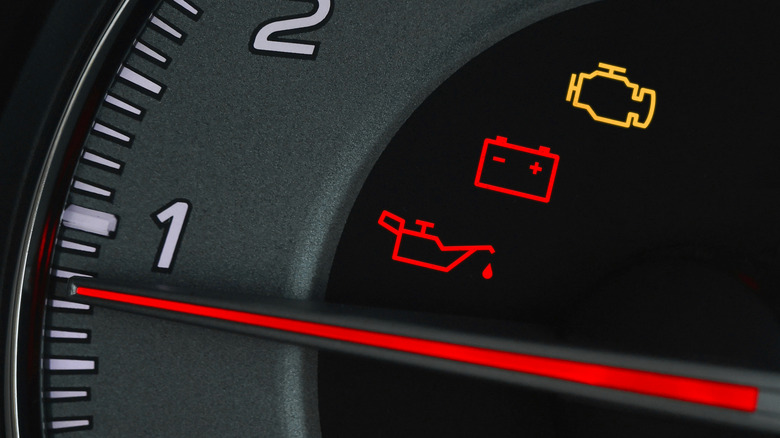
The check engine light is a horrible, terrible thing, sure. But so is an angry chimpanzee with a handgun, but that doesn't mean you should ignore it when it's right in front of you. Yes, it's temperamental, sometimes unclear, and often leads to more questions than answers, but that doesn't mean that you can start to tune it out of your consciousness like a mildly intrusive banner ad on your favorite automotive website. Frustratingly broad in what it can indicate, that glowing yellow light can mean something as innocuous as a fuel cap that you didn't tighten down a full three clicks to something as expensive and maddening as your catalytic converter disappearing from under your car overnight while parked outside.
And while you'd think that modern vehicles would be giving you a whole lot more clues as to where on that spectrum your problem might lie, most of the time you're going to need to go get your codes read to see exactly what's going on. Just remember that no matter what your cousin says after rocking his check engine light since the Obama administration, just because he's still plugging along doesn't mean that the check engine light or any other warning light can be ignored. These are as close to literal red flags as you can get, so treat them as such.
Myth: Severe service is just upsell language

Severe service or severe duty refers to operating in any conditions that put an unusual amount of strain on your vehicle. Towing, extreme hot, and extreme cold all come to mind here naturally enough, but even something as innocuous-feeling as driving primarily for very short trips or spending a bunch of time in stop-and-go traffic can qualify as severe use. These seemingly mild conditions can take quite a toll on your vehicle, which is probably why many drivers feel skeptical when their mechanic or service advisor starts talking about severe use, especially if it comes with a recommendation of a more expensive part, fluid, or service.
But it's not just upsell nonsense! (Probably.) When polled, about six percent of drivers reported operating their vehicle in severe conditions, but when educated about what that actually meant, the number jumped to sixty percent, with qualifying conditions including hot weather, stop-and-go traffic, long distances spent at less than 50 miles per hour, dusty or salty roads, and towing. If any of that sounds like you, it might be time to consider helping to better prepare your vehicle for the apparently more strenuous demands. This will most commonly mean tightening your existing regular maintenance intervals, which may even have severe condition alternatives right in your owner's manual.