

11 Car Mods That Actually Make Your Car Faster
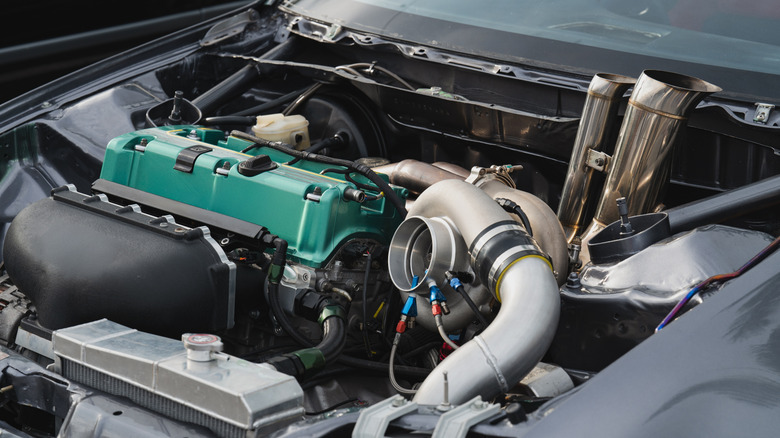
We all know exactly what our vices are, even if we don't care to admit it. Car enthusiasts, journalists, and whoever else drives and writes about cars professionally insist their enjoyment of driving is rooted in sophisticated sensory items like steering feel, engagement, grip, and chassis dynamics, all of which are all undoubtedly important and valid hallmarks of a truly fun driving experience. But (and it's a big but), what they won't always admit is that the dopamine centers in their brains fire off a little harder when higher speeds are involved.
It's addictive, and it's a pure reminder of the fact that you first fell in love with cars because of the idea of going faster. In all transparency, many of us never grew out of that and still chase that desire for velocity when we should be focusing on more important, less dangerous ventures.
Yet alas, the vice of speed never really goes away, and to us, there's nothing wrong with feeding that goofy little voice inside your head saying, "I want more." So, if you're ready to destroy your car's value, while simultaneously having more fun, here are some mods to get you started.
Performance Tires
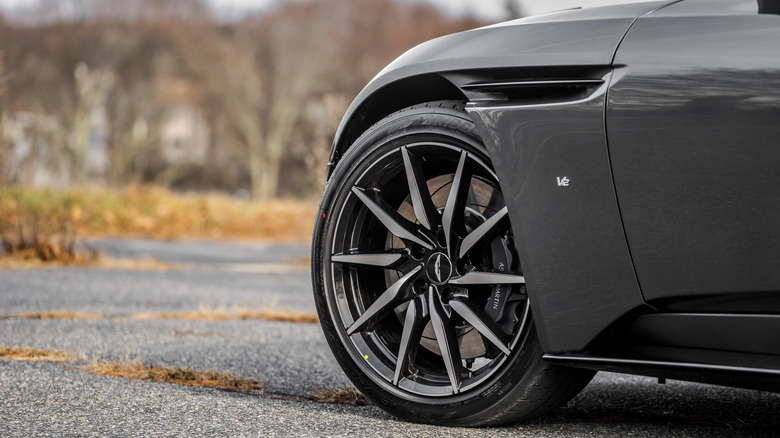
If you only plan on making a handful of the following modifications, make sure this one is on that list. Going straight to power boosters is tempting, but ensuring that your rubber can handle that extra oomph should be priority number one. There are three main advantages to a performance tire, including acceleration, cornering grip, and, possibly the most important of them all, stopping.
Starting with acceleration, it's fairly obvious, but the maximized contact patch and tread pattern distribute the torque coming through your axles more evenly and over a larger area, decreasing wheelspin and putting more of your car's power to the ground. On the cornering front, it's much of the same — performance tires can offer more contact, less slippage, and (typically) stiffer sidewalls to eliminate excessive body roll. And braking? That's the most interesting of all. You'd think that larger rotors or high-performance pads would have more of an effect on braking distances, but they are only as effective as your tires' ability to apply that stopping force to the ground.
However, before you blindly spend a month's rent on a set of Michelin Pilot Sports for your Miata, consider some of the best bang-for-your-buck tires that suit your climate and driving style. If you commute often, don't purchase a stiff low-profile semi-slick that'll bounce around and probably get destroyed on uneven public roads. If you live in a place where it rains often, go for a performance all-season set that can divert water and won't send you into a guard rail.
ECU Tuning

The manufacturer had many things to worry about when tuning your factory ECU, including fuel efficiency, reliability, performance, overall costs, and how all of those individual factors cooperate. Translation: They had to make compromises. Luckily for you, you're not an automotive engineer, and you can prioritize whatever you damn well please. One of the simplest ways to do this is with an ECU tune. ECU stands for engine control unit. It is the central brain of your vehicle's electrical and computerized systems, controlling injectors, air-fuel mixtures, and timing, all in the form of some ones and zeros.
There are two common routes folks go with ECU tuning — a flash of the existing factory ECU, or replacing the stock computer with a standalone unit. A flash involves software that rearranges your car's existing ECU code, and though it's the cheaper option, there are limits to how much you can change. On the other hand, a standalone unit gives you complete control, but it will cost far more both to purchase and to properly apply to your car.
Specific power gains from each of these are hard to pin down, and results will always depend on your situation. But, in general, a flash may be well-suited for someone who wants to make the most out of a few simple mods (like an exhaust and intake) and find slight horsepower gains. A standalone unit may better serve a fully built performance engine that needs to carefully balance a turbo kit, modified internals, and race gas.
Forced Induction
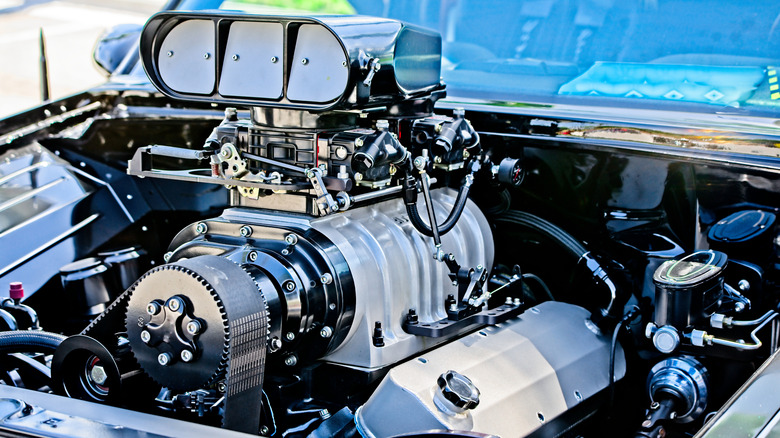
If your car is naturally aspirated, there's only so much you can do to get more air through the intake. Why? Well, when the pistons move down and the valves open, it creates a low-pressure area (or vacuum) that naturally sucks in high-pressure air from the atmosphere to fill that space, meaning the amount of air your engine receives is limited by the ambient air pressure.
This is where forced induction comes into play. The two most well-known avenues for this concept are turbocharging and supercharging. They are extremely different, but, put simply, turbochargers utilize exhaust to spin a turbine and move more air, whereas a supercharger is driven by a belt and pulley connected to the crankshaft. In general, superchargers tend to deliver more immediate low-end torque, while turbos take more time to spool and are at their best in the mid-to-high end of the rev range.
For horsepower gains you can feel in the seat of your pants, forced induction is hard to beat, and as long as your motor can withstand the extra boost, the sky's the limit. But the issue is, of course, cost. A high-quality turbo/supercharger kit and installation for a modern performance vehicle can cost anywhere from $5,000 to $20,000 (and up from there). Conversely, older and less complex vehicles can be boosted for less. The most important factor, though, is ensuring your engine's internals (and other supporting components) can handle the extra power.
Weight Reduction
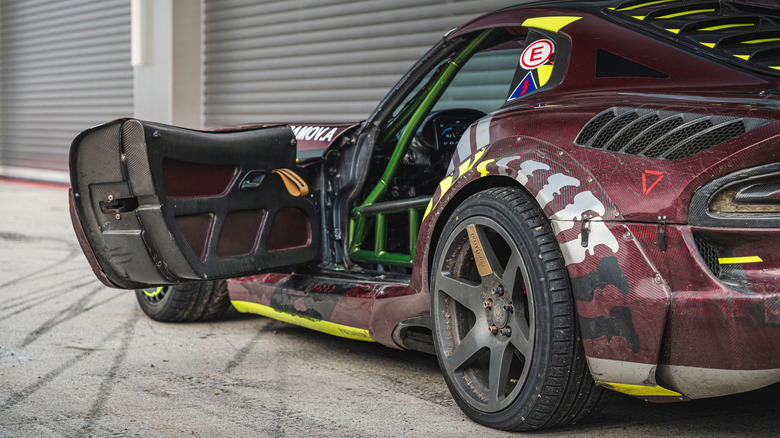
While a turbo kit extracts power and torque from the motor through the addition of parts, weight reduction is at the other end of the spectrum — it involves removing extra weight that the engine would otherwise have to carry. Think about it this way: If you had to run one lap of a track by yourself, and another while giving your 200-pound friend a piggyback ride, which one do you think would be faster? Exactly.
We can apply this to the automotive world by comparing the 2014 Ariel Atom 3.5R to the 2024 BMW M3 CS. The Atom uses a supercharged 2.0-liter Honda inline-four that produces 350 horsepower and 243 pound-feet of torque, while the M3's twin-turbocharged 3.0-liter straight-six delivers 543 horsepower and 479 pound-feet of torque. The BMW makes nearly twice the torque, and almost 200 more horsepower than the Ariel. However, despite this gaping output advantage, both can hit 60 mph in 2.7 seconds. Why? Because the Ariel weighs 2,500 pounds less (3,890 vs. 1,350).
Every car can benefit from weight reduction, even if that means removing sound-deadening insulation, carpets, spare wheels, or simply throwing away all the trash in your trunk. That's the free version, but if you've already crossed that bridge, a next step could be replacing stock body panels with lightweight aftermarket parts or lighter driveshafts and wheels. Regardless of how you do it, reducing weight can improve everything from acceleration to handling, braking, and even fuel efficiency.
Coilovers
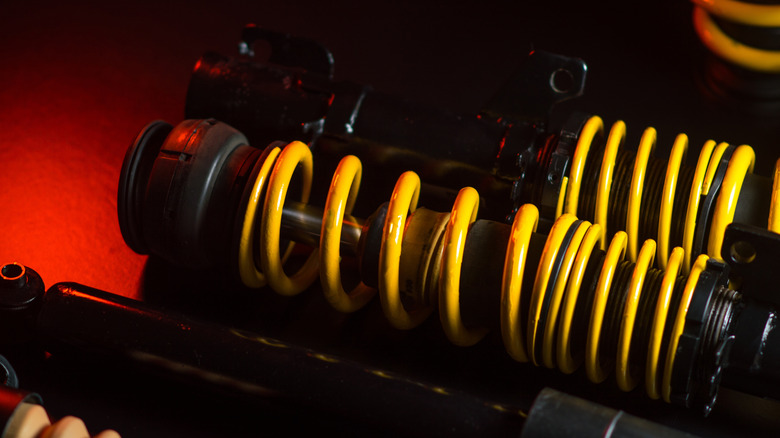
Contrary to what you may assume, coilovers can make your car faster in more than just the turns. Anyone who drag races will tell you that managing weight transfer on a launch is all about good damping. So, if your car didn't come with a performance-oriented suspension system from the factory, there's a good chance it's leaving performance on the table in several areas.
Being able to adjust and control the ride height, stiffness, and damping of your suspension components can make your car handle sharper and more controlled when at the limit, and it can translate to higher cornering Gs and speeds. Additionally, a well-tuned suspension isn't just about keeping your car flat in a bend, it can also improve your car's ability to quickly and safely deal with uneven pavement and other bumps. Remember, if you have to slow down for every little crack and undulation, your car isn't as fast over any given stretch of road.
It's also important to note that lower isn't always better. All cars need some suspension travel to properly load the tire and grip the road. Fortunately, a quality set of coilovers is typically adjustable in both ride height and compression, and a little trial and error can help you find the perfect balance. To us, the best coilover formula also includes a set of performance tires and sway bars (which we'll get to next) to maximize the grip of your new suspension.
Sway Bars
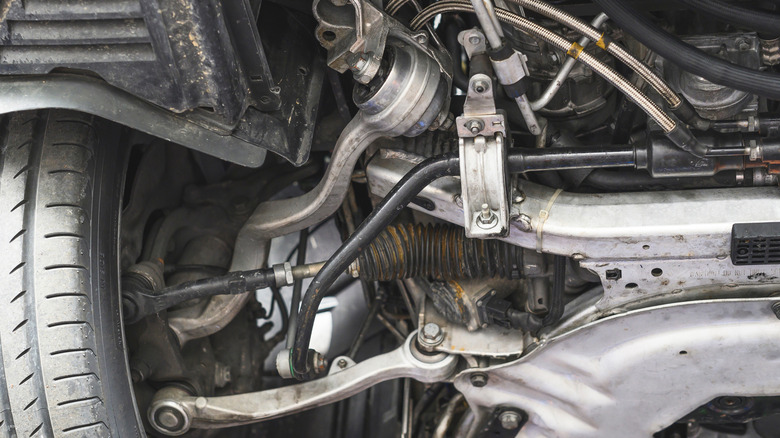
Sway bars, anti-roll bars, whatever you want to call them, these simple pieces are crucial in preventing unnecessary body roll and possibly dangerous handling characteristics. In fact, the majority of modern cars come from the factory with some kind of anti-roll device, but, as we demonstrated in our ECU section, stock parts are designed with compromises in mind. That's why the aftermarket is your friend.
But first, what is a sway bar, and how does it work? Higher-end vehicles can have complicated active sway bars, but for the average car, these are often U-shaped bars that connect to either side of the front or rear suspension (or both), with the center of the bar secured to the frame. When the body rolls to one side, the sway bar acts as a torsional spring that twists and provides downward resistance to the lifted side of the car, minimizing body roll. It's fair to say that these are pretty important.
Performance sway bars work the same way, but provide extra resistance in a more controlled manner, and they often provide some degree of adjustability. This ensures that all four tires are working to get your car around a turn instead of just the two on the outside, giving you more traction and, therefore, faster cornering speeds. Every car and sway bar application will be different (we all know that installing parts never truly goes according to plan), but roll bars made specifically for your make and model often use the same mounting points and positions as the factory part, keeping your hands off the cutting wheel and welder.
Performance Intake Manifold
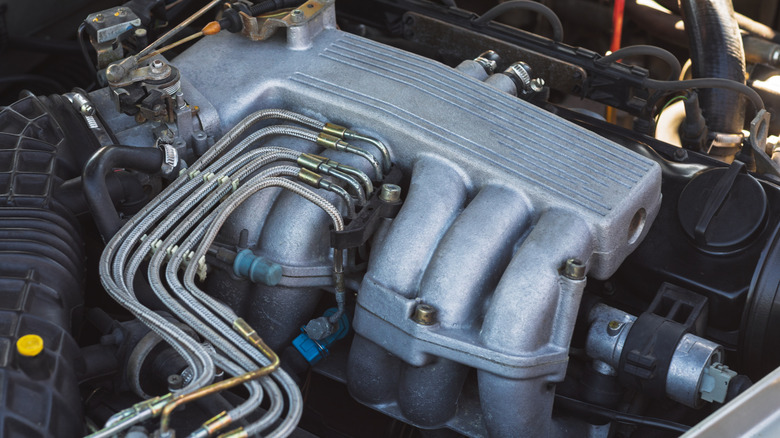
No, we're not talking about a cold air intake. And while that is a good way to dress up your engine bay, a true performance manifold (coupled with a cold air intake) is what will make tangible differences in power. Manifolds, specifically, are the last visible part that guides air into the cylinders before combustion, and the kind you choose will be dependent on your engine and what you want out of it.
For example, performance intakes with longer runners (the channels through which the air passes) are better for torquey, low-to-mid rpm range power, whereas shorter runners are advantageous for mid-to-high range power. This is because the interval when the valves are open and allowing air to enter the chamber is longer at low rpms and shorter at high rpms. So, a longer runner would not be able to deliver as much air at high rpm, due to the greater distance and shorter time it has to travel to the valve. On the flip side, a short runner and its fast air waves wouldn't match the waves of the slow, low-rpm pulses.
You need to understand the natural torque/horsepower curves of your engine's rev range, and choose a performance intake that matches its nature, whether that be low-end torque or top-end power. As usual, supporting mods like a high-flow fuel system and cold air intake, for example, are recommended to bolster critical mods such as an intake manifold.
Performance Exhaust
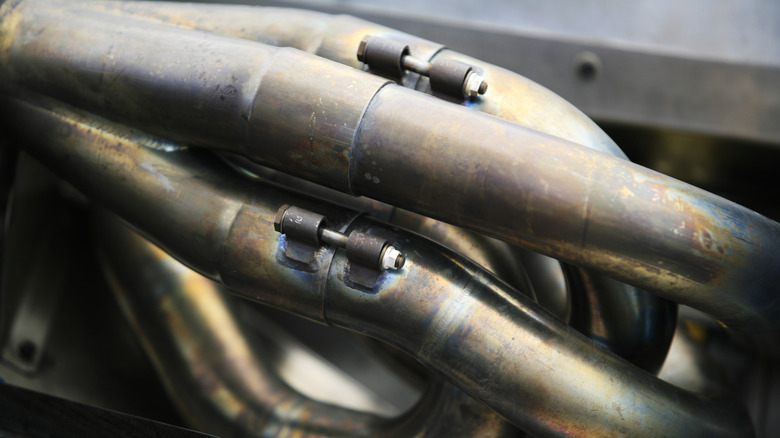
Shocking statement incoming: The better an engine breathes, the more power it makes. But instead of a turbo or an intake that deals with the air before it enters the engine, an exhaust's job is to expel the used gases outward in a swift manner. Why does air that's leaving the engine matter? Firstly, turbocharged engines utilize that exhaust to spin up the turbo and deliver boost, but even for naturally aspirated motors, a free-flowing exhaust eliminates excess backpressure that can limit the effectiveness of a combustion cycle.
An exhaust system is multifaceted, including headers or manifolds, catalytic converters, resonators and mufflers, and even valves. Knowing what each component does and how they affect your particular vehicle is important if you're after additional power. There are countless online forums debating details like X-pipes versus H-pipes, where to put your mufflers, unequal versus equal-length headers, and so on. Ultimately, researching what yields the best result for one's own car is the best route, and it can provide genuine power gains when done right.
As an important note, if a car is new enough to come from the factory with a catalytic converter, it is legally required to stay there (straight-piping your car is also illegal), but otherwise, stock manifolds, resonators, and mufflers can be switched out, depending on local laws. If you're willing to ignore those rules and risk getting a ticket, your options grow even more, but don't be shocked if you attract the boys in blue.
Upgraded Fuel System
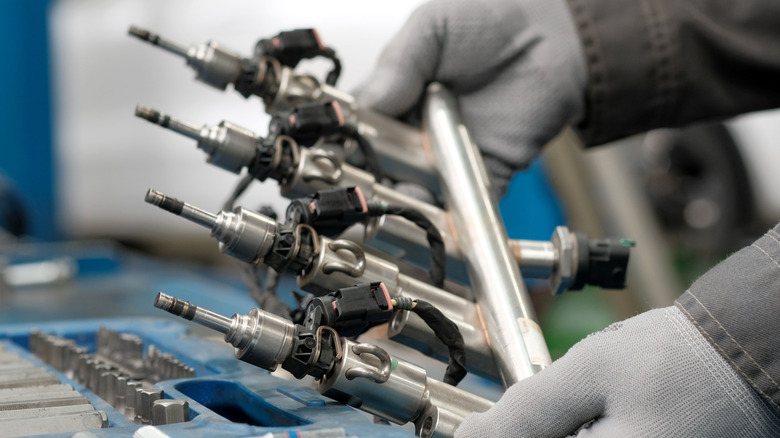
Slapping bigger injectors and a high-pressure fuel pump on your engine will do nothing on their own, and adding more fuel without anything else can actually make your car slower. So, as is the case with the majority of these mods, creating a cohesive package of parts that work in tandem with the fuel system is ideal. In the context of what we've covered so far, this cohesive group of parts could include our ECU, intake manifold, exhaust, and the new fuel system. Taken together, and depending on the intensity of the build, these could certainly amount to noticeable improvements in horsepower.
Like an exhaust, there are several parts to a functioning fuel system that one should know before diving into the aftermarket. The basics include your fuel tank, fuel pump, fuel lines, fuel filter, and fuel injectors or carburetor. None of these should overpower or hold back another, and if you can, always shoot for metal fuel lines instead of rubber (they don't erode as quickly, and they offer less resistance).
Possibly most crucial in regard to the fuel system is your ECU (if the car is fuel injected). As the brain of your fuel delivery operation, the ECU and the map you give it will determine whether you make additional power or blow up your engine, especially if you have forced induction. Not everyone's familiar with using a laptop to tune their car, so don't be afraid to take it to a professional.
Performance Cylinder Heads
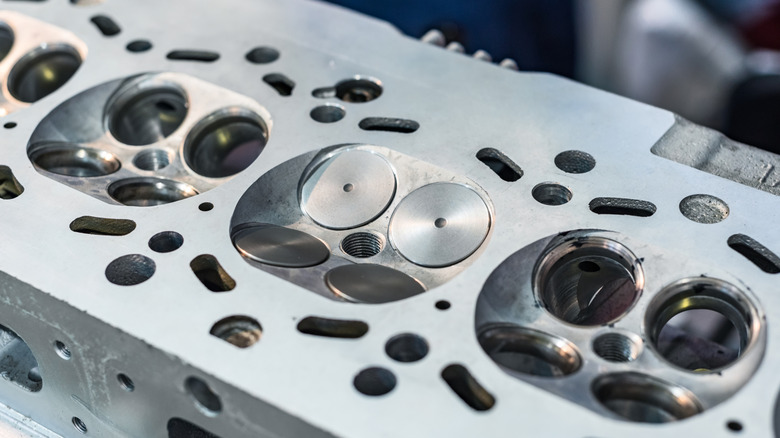
All of those fuel and air mods we've discussed can be enhanced even further with a good cylinder head. Right off the bat, though, this is an expensive one (not that the others aren't), but if you can swing it, performance heads will make power and create opportunities for more diabolical mods.
To briefly explain the significance of this component, cylinder heads are where the magic happens. They make up the housing that creates the combustion chamber and accommodates other important pieces, like valves, springs, oil channels, intake and exhaust ports, and camshafts (in newer OHC engines), among other components. This is the true last point of contact your air-fuel mixture encounters before combustion, and when applied to an engine properly, they can make massive differences.
With any of these mods, pointing to explicit stock versus modified power gains is nearly impossible, due to the thousands of different aftermarket examples and make/model applications, which is why doing your own research for your specific build is critical. Anything from port size to chamber shape and countless additional items will alter the direction you need to go for extra power. But the fact remains, heads are probably the single most important key to an engine's performance.
The Driver Mod

Buy all the expensive speed parts, race tires, or supercars you want — you'll still be slow without knowing how to drive a car at its limit. We probably all believe we're good drivers, fast drivers, even, but the best way to test that belief is by visiting a performance driving school. These range from cheaper local track club classes to manufacturer-backed operations costing thousands of dollars and lasting several days. But any experience on a track or autocross course is better than none. You'll get faster, and you be able to safely squeeze some extra potential from your car.
One of the most valuable lessons you can learn from classes or solo track time is where a car's limits are. Your throttle, brake, and steering inputs are all tied together and at the mercy of how your car is set up. Feeling where your tires let go in corners at different speeds and over different surfaces is sure to boost your confidence the next time you go for a spirited drive on public roads.
If possible, a hands-on, on-track session is the way to go, as the talented journalist (and Jalopnik alum) Kristen Lee once explained in her piece about an experience at Cadillac's V-Performance driving school. She wrote, "It was meticulous and in-depth — and way more confidence-inspiring than the 45-minute or so classroom session and two-ish instructor ride-along laps I did in my first track day."