

5 Nearly Indestructible Transmissions (And The Cars That Use Them)
Let's say the input and output shafts of your transmission are between 1 and 1.5 inches in diameter, which is a little thinner than the average banana. Though they may seem relatively diminutive, these shafts must transmit hundreds of pound-feet of torque from the engine to the wheels for thousands upon thousands of miles. That's not something most bananas will handle unless they're made of tungsten or something.
To be fair, some transmissions do seem about as weak as your average Cavendish. They may have a few Achilles heel parts that will wear or break with less time and stress than they should, or the transmission may be one giant flop where anything and everything can go wrong (wave hello, Ford 10-speed automatic, we're addressing you directly).
Some gearboxes, on the other hand, seem to have been hewn from raw adamantium and designed by engineers with geniune clairvoyance. Any potential problem came to them in a vision and they simply pre-fixed the issue. These are the transmissions we're focusing on here. They have a reputation for solidity and durability that elevates them to legend status, and they can be trusted to withstand miles, years, torque, and possibly the sun exploding. No transmission is perfect, but these get closer to perfection than most others.
Tremec TR-6060
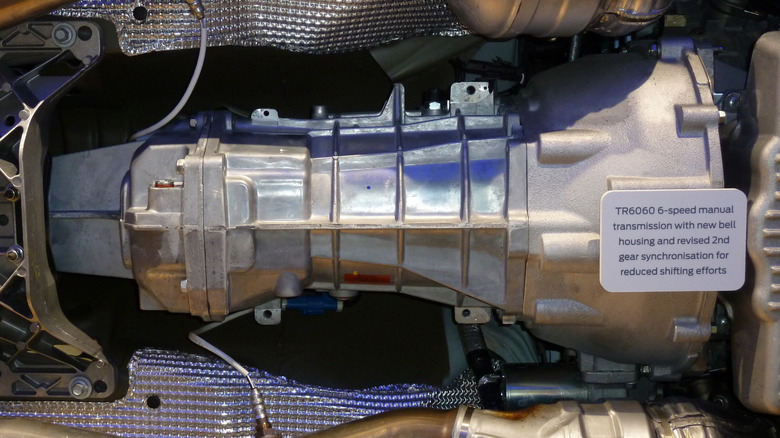
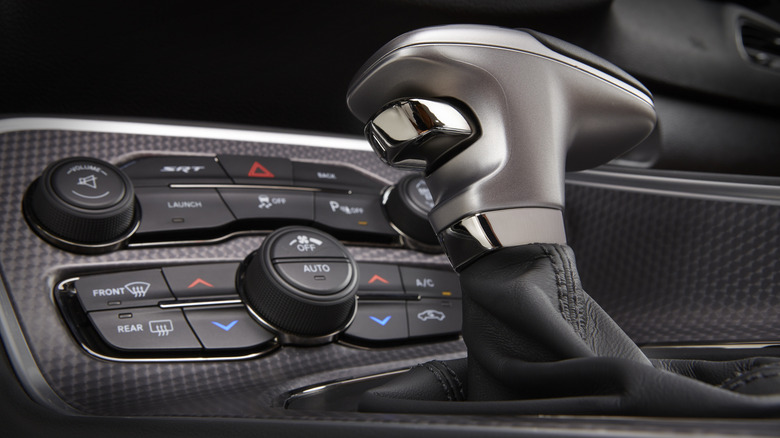
It was tempting to highlight the Tremec T-56, the transmission Dodge installed to shoulder the brutal torque of Viper V10s. But the TR-6060 is stronger in nearly every way. If you drive a manual Hellcat Dodge Challenger, this is your gearbox. Hellcats make torque like AI tools make bland copy — the car debuted in 2015 with 650 pound-feet of torque when using the Hellcat's full-power red key and 575 pound-feet of torque with the black valet key.
Both the TR-6060 and the T-56 Magnum (basically a retrofit version of the TR-6060) are found in cars like the Camaro ZL-1 and can handle up to 700 pound-feet of torque, though there are certain OEM versions of the 6060 that have lower torque ratings. First and second gears in the TR-6060 get triple-cone synchronizers and dual-cone synchros for the other gears. T56s used dual and single cone synchros. The extra cones alone can increase torque capacity, but 6060s also get larger diameter synchros. Plus, the rings changed from carbon fiber to more durable and consistent sintered bronze.
Even better, the synchro assemblies are narrower, which leaves room for thicker, stronger gears. The 6060's output shaft is beefier than the T56's, too, and has a one-piece rather than a two-piece countershaft like in T56s. Finally, the TR-6060 did away with the T56's adapter plate to increase case rigidity. Still, 6060s can experience premature bearing failures and develop grinding in first and second gears (and even second gear failure), but this is usually due more to user abuse than any design flaws.
Mercedes-Benz 5G-Tronic
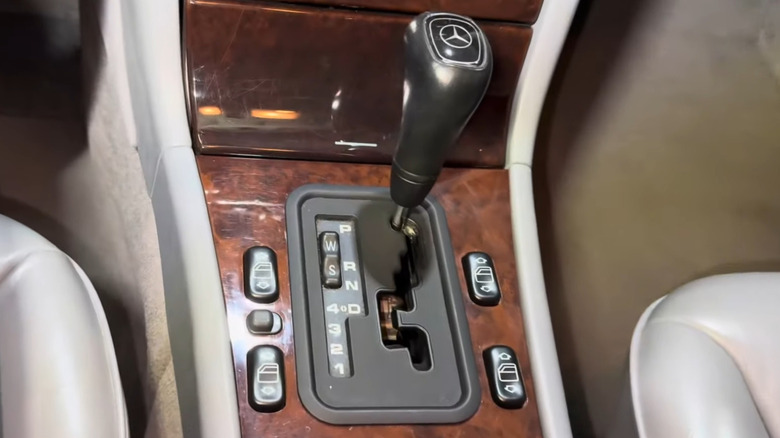
Late-'90s Mercedes-Benz often gets compared unfavorably to the good old days when it made the first ever S-Class. And yet, two of the most durable things ever made came from pre-2000 MB. In addition to the stupendous M113/M113K V8s, there was also the 5G-Tronic transmission, which can apparently take the torque of an ocean liner. Also, depending on the vehicle's model, it came with two reverse gears for dry and slippery conditions! Just use the W/S toggle to choose between the two settings.
The 5G-Tronic, or 722.6, is an excellent example of engineering from the top down. Mercedes designed it to serve its 4-cylinder models, as well as the twin-turbo V12s and even the silver batmobile itself, the SLR McLaren. Since the 5G-Tronic could handle 796 pound-feet of torque, the SLR McLaren's 575 wasn't going to hurt it.
There are even adapter kits that make it easy to install on vintage Mercedes cars with the iron block M116 and M117 V8s, improving performance and reliability for older models using those engines. You could also find this transmission in DaimlerChrysler-era Mopars, such as the first-gen Jeep Grand Cherokee SRT-8s.
Great as they are, 5G-Tronics are aging. Shift rod bushings dry out and crack, valve body bores can wear out, which leads to vibrations, and bad conductor plates can send the gearbox into limp mode. Thankfully, shops can still handle this transmission's few flaws.
ZF 8HP
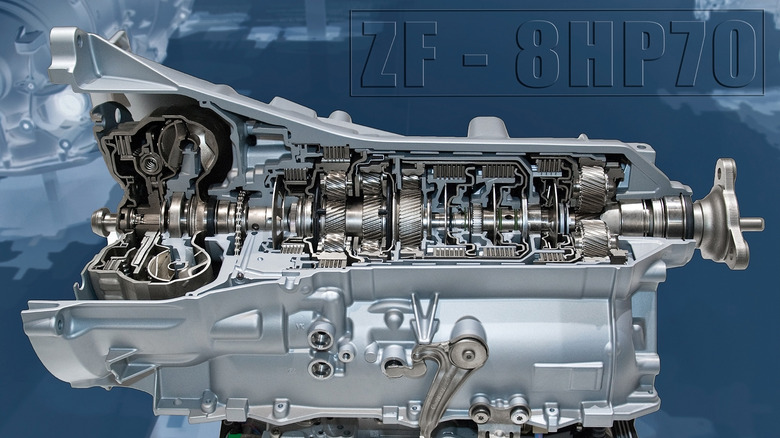
You're probably within 1,000 feet of a ZF 8HP right now. It can be found in Dodge Challengers (where it's called the Torqueflite 8), BMW 760Lis, the now dying Toyota GR Supras, Morgan Plus Sixes, Ram 1500s, Lamborghini Urus, Ineos Grenadiers, Rolls-Royce Ghosts, and Bentley Mulsannes, among many others. The 8HP is everywhere, it is ubiquitous, it is omnipresent, it is everyone and it is no one, and it may outlast civilization itself.
Possibly the most astounding aspect of the 8HP is that it apparently has no downsides (unless you consider it a downside when a transmission doesn't have a clutch pedal). It shifts as smooth as whipped butter for EV-like unobtrusiveness, but can also shift quickly enough (200 milliseconds!) that companies like Aston Martin prefer it to dual clutch transmissions. The 8HP is also lighter and cheaper than your average dual clutch, too.
All functions in an 8HP are electronic, which is why it has a neutral safety switch to get it out of park when the battery dies. Aside from that minor inconvenience, there are only two main issues that can develop with this transmission, and even then, they're not common and are easy to fix: Oil cooler connections can leak and the Mechatronic sleeve, which shields electrical connectors from fluids, can fail. That's pretty much it unless you plan on pushing more power through than the transmission was designed to handle.
General Motors Powerglide
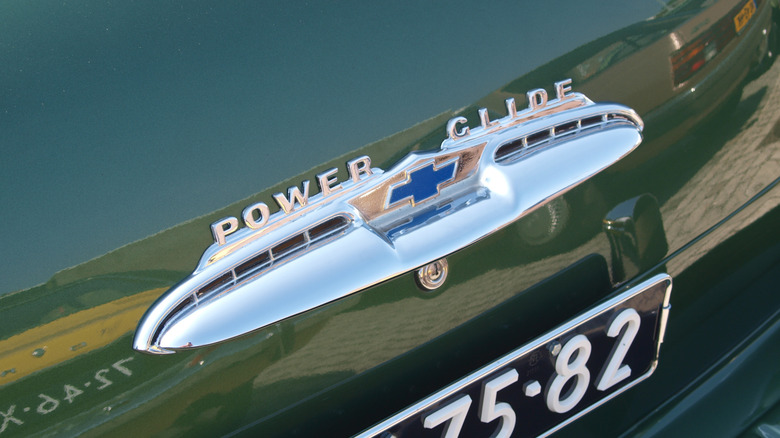
Simplicity, thy name is Powerglide. While not as basic as the very first automatic transmission, it still adheres to the engineering adage: Never add more parts than necessary, as that creates more failure points. Powerglides have two forward speeds, and that's it. While this is a detriment to fuel mileage as the transmission constantly coin-flips between two ratios that are rarely the most efficient for the situation, no one cares about fuel mileage at the drag strip, which is where these gearboxes are true heroes. GM only produced the Powerglide from 1950 to 1973, but drag racers still love them, rescue them, and upgrade them to handle insane power, thanks to the vast array of aftermarket parts.
Powerglides used a single planetary gearset, band, and clutch pack, and the first versions used cast iron cases. The only really complicated part of the early version was its bolted-together five-element torque converter. In 1962, the Powerglide dropped 100 pounds, thanks to a new aluminum case, and gained a simpler, sealed three-element torque converter.
For the most part, the Powerglide sat in second (top) gear and let the torque converter provide the mechanical advantage. This translated to mushy feeling acceleration, like power had to transmit through marshmallow to reach the output shaft, hence the term, "slip-and-slide Powerglide." But again, this list is about durable transmissions, not refined ones, and with owners reporting hundreds of thousands of miles racked up with no issues, Powerglide durability isn't in question.
Aisin A340
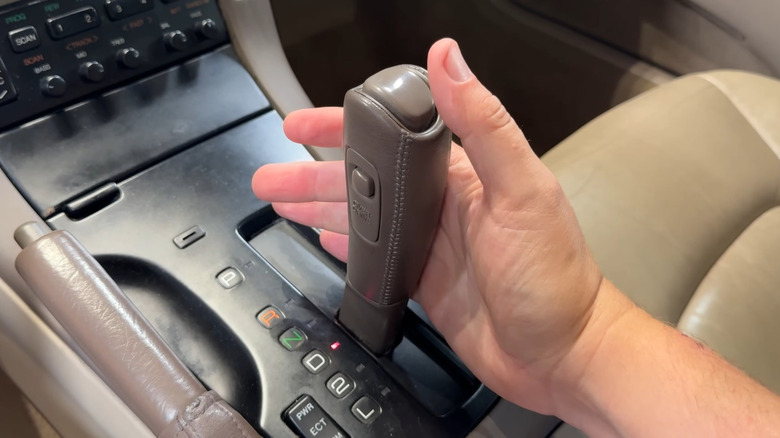
Will it surprise you to learn that Aisin, the company that made the rock solid, robust, granite-like A340, is under the Toyota Group umbrella? Of course not. A340s will go over 150,000 miles with nary an issue. The TacomaWorld forum is full of first-gen Tacoma owners (1995 through 2004) who have racked up well over 200,000 miles with no signs of failure, and some are approaching 300,000 miles.
The A340 is a simple torque converter four-speed automatic that was in a slew of Toyota products during its lifespan. From 1985 to the early 2000s, buyers could find this transmission in the Supra, 4Runner, Tacoma, Tundra, and Sequoia, as well as Lexus GS and SC 300s. A rebadged version of the A340 called the AW4 also found its way into the XJ Jeep Cherokee and even the 1993 6-cylinder Grand Cherokee. There were versions of the A340 for rear wheel drive (RWD), all-wheel drive (AWD), and four-wheel drive (4WD) vehicles (yes, there's a difference between AWD and 4WD), and the gearbox could handle up to 350 pound-feet of torque.
As with any transmission, there are a few issues that can crop up. Solenoids can fail, which leads to slipping gears or simply a failure to engage any gear at all. Also, when used to tow heavy trailers or when driving in stop-and-go traffic, A340s can overheat from the extreme friction. There's no shortage of shops that can work on these transmissions, though, and they can be modified to handle gobs of power.