

12 Plug-In Hybrids With The Longest Electric-Only Range
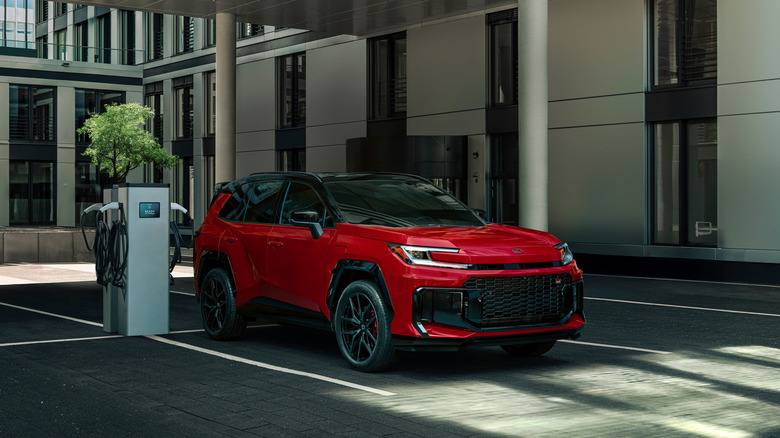
Back in 2010, Chevrolet introduced the groundbreaking Volt — America's first plug-in hybrid production car. Packing a fairly big 16-kWh battery pack, the Volt had an EPA-estimated electric range of 35 miles, with later first-generation models rated at up to 38 miles. When the battery was depleted, it turned to a 1.4-liter four-cylinder engine with 84 horsepower to cover longer distances.
Although it ultimately failed to attract enough buyers and was discontinued in 2019, the Chevrolet Volt was so far ahead of its time that many current PHEVs struggle to match its electric range. In fact, out of the 12 plug-in hybrids with the longest electric-only range on sale right now, four have lower range figures. Of course, many modern PHEVs offer more EV range, with some models, like the 2027 Land Rover Range Rover Plug-in Hybrid, 2027 Mercedes-Benz GLC 350e 4MATIC, and 2027 Toyota RAV4 Plug-in Hybrid, capable of delivering 50 miles of driving without calling on the internal combustion engine.
To compile this list, we evaluated the 2027 plug-in hybrids for the U.S. market, ranking them from the shortest to longest electric range based on EPA estimates. For models awaiting official 2027 figures, we used their 2026 EPA ratings, noting any powertrain changes. Excluded are models that are all-new for 2027 and not yet EPA-rated. Also, all listed prices include the destination charge. Let's dig in!
2027 Kia Sportage Plug-in Hybrid (34 miles)
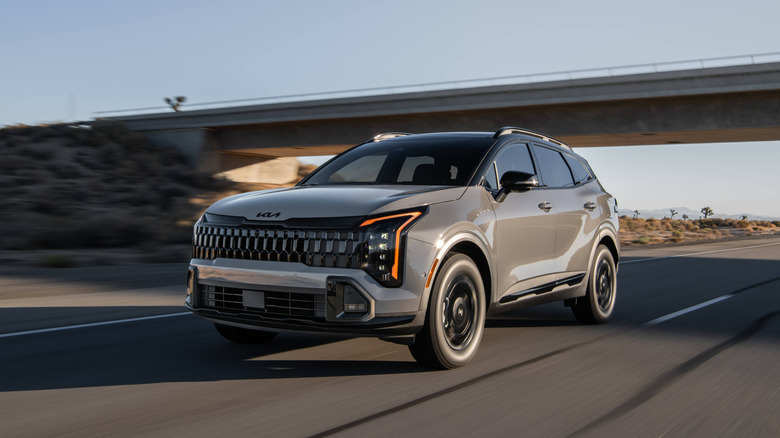
The 2027 Kia Sportage is offered with three powertrains — a 2.5-liter gas engine with 187 hp, 1.6-liter turbo-four hybrid with 232 hp, and a plug-in variant with an electric motor for 268 hp combined. However, the PHEV's added potency doesn't translate into real-world performance, as it needs the same 6.9 seconds to reach 60 mph as the regular hybrid (per Car and Driver's testing procedure).
But this should surprise nobody, as the Sportage Plug-in Hybrid has a significantly larger and heavier 13.8-kWh battery, with the regular hybrid packing a small 1.5-kWh pack. As a result, it provides a meaningful EV-only range of 34 miles. The battery also supports Level 2 charging, so it can be fully recharged in only two hours. Once the battery is depleted, the Sportage Plug-in Hybrid doesn't turn into a gas guzzler and returns a respectable 36 mpg combined. Not bad, considering it also comes standard with AWD, unlike the gas and hybrid models, where AWD is optional.
Saving money on fuel by making the most of the PHEV's battery does require a few compromises, though. The Sportage Plug-in Hybrid starts at $42,085 in the X-Line trim, compared to $37,285 for the regular hybrid in the same trim. The hybrid Sportage is also available in lower-end trims, with the base LX costing $32,085.
The PHEV's larger battery also eats into cargo space. While the Sportage Hybrid has a big 39.5-cubic-foot trunk — only 0.1 cubic feet smaller than the gas model — the PHEV offers only 34.5 cubic feet of cargo capacity. Fortunately, there is no difference in passenger accommodation, with all Sportage models offering ample space for adults in both rows.
2026 BMW 750e xDrive (35 miles)
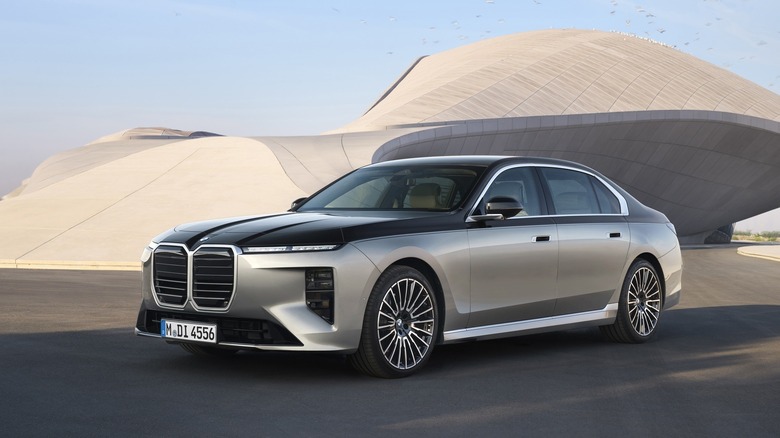
BMW facelifted the 7 Series for 2027, replacing the outgoing model's convoluted fascia with a cleaner front end that actually complements its monolithic, slab-sided proportions. As is customary nowadays, the cabin got a tech upgrade, with the 7 Series now packing BMW's Panoramic iDrive system with a parallelogram-like center screen, a thin panoramic display at the base of the windshield, and even a passenger screen. Meanwhile, passengers in the rear can now use the massive 31.3-inch theater-screen for Zoom video calls thanks to the built-in camera.
BMW also massaged the 3.0-liter turbocharged inline-6 in the 740, which now produces 394 hp (previously 375 hp). The 750e xDrive PHEV variant remains largely unchanged, though, packing the same 3.0-liter turbocharged inline-6 hybrid with 483 hp and 516 lb-ft of torque sent to all four wheels. It's a potent powertrain, bringing the luxury sedan to 60 mph in 4.6 seconds and up to an electronically limited top speed of 155 mph, which drops to 87 mph on EV power alone.
Arriving next year, the 2027 750e xDrive hasn't yet received its official EPA figures. However, it should be rated close to the 2026 model's 35 miles, as they share the same powertrain. The 2026 750e xDrive is also rated at 24 mpg once the battery is depleted, for a total range of 460 miles. BMW hasn't announced pricing for the 2027 model yet, but expect a slight bump over the 2026 version's $111,550 starting price.
2027 Volvo XC60 Plug-in Hybrid T8 AWD (35 miles)
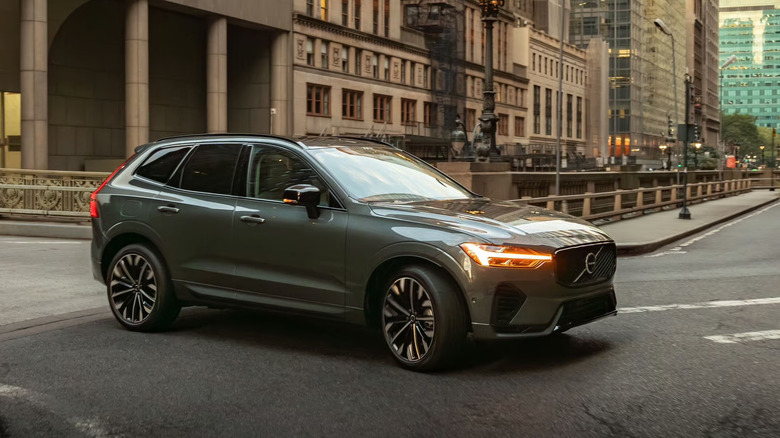
The 2028 Volvo XC60 will offer more electric range than any other PHEV when it arrives in spring next year. Packing a large battery pack with a 37.9-kWh usable capacity, the heavily refreshed XC60 will cover 78 miles on electricity alone, more than enough for covering all daily driving errands, apart from the occasional long trip. In that case, the driver can always utilize the 2.0-liter turbo-four engine and expand the range to 590 miles.
With such astonishing numbers, the refreshed XC60 makes you think twice about buying the current model. With a smaller 14.7-kWh (usable) pack, the 2027 Volvo XC60 Plug-in Hybrid has enough juice for an EPA-estimated range of 35 miles. That's still in line with current offerings in the PHEV space, but, damn, the 2028 model makes a massive case for itself with that EV-like range. Let's hope it doesn't cost much more than the 2027 XC60 PHEV's $67,595 starting price, because batteries are expensive.
The refreshed XC60 Plug-in Hybrid will also be more potent, producing 455 horsepower. The current model is no slouch, though. With 401 hp on tap, courtesy of an electrically assisted 2.0-liter turbo-four, the XC60 PHEV needs only 4.6 seconds to reach 60 mph. The PHEV powertrain is hooked to an eight-speed automatic and standard AWD. The XC60 offers decent interior room, though the PHEV's 21.1-cubic-foot cargo capacity is on the small side for the category. The cabin design is classically minimalist.
2026 Lexus NX 450h+ AWD (37 miles)
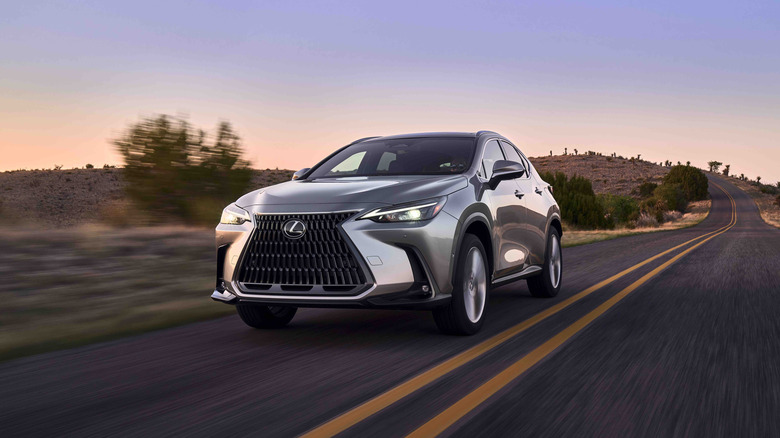
Lexus gave the NX a comprehensive mid-cycle overhaul for 2027, ditching the 2.4-liter turbocharged four-cylinder engine in favor of an all-hybrid lineup. Crucially, the plug-in hybrid NX 450h+ comes with a next-gen powertrain with more power and an 8% larger battery. Lexus estimates a 45-mile range for the new model, a significant jump from the 37-mile EPA-estimated range of the 2026 model.
Even if the EPA range turns out to be lower than Lexus' estimate, the 2027 NX 450h+ is worth the wait, with the first models arriving by the end of this year. For instance, while the ample interior space hasn't changed, there is a new, classier dashboard that comes standard with a 14.0-inch touchscreen and a 12.3-inch digital instrument cluster. Lexus says it also improved the driving dynamics, though in our first drive, we found that the Lexus NX doubles down on quiet luxury rather than chasing sportiness.
That said, the 2027 NX 450h+ should be a bit quicker, packing 324 horsepower thanks to a more powerful front motor-generator. With 304 hp on tap, the 2026 NX 450h+ sprints to 60 mph in 6.0 seconds, with the 2027 model expected to drop a few tenths. Pricing for the 2027 NX is unknown at the moment, but it will almost certainly creep past the $59,505 starting figure of the 2026 model.
2027 Lexus RX 450h+ AWD (38 miles)
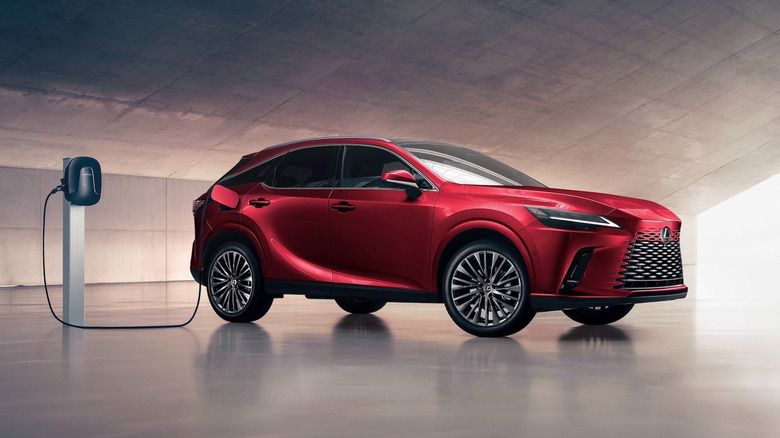
In 2005, Lexus followed its parent company Toyota's lead by introducing the RX 400h — the world's first luxury hybrid vehicle. Since then, every generation of Lexus' luxury crossover has been available as a hybrid, with the current RX available with three distinct electrified powertrains: RX 350h, RX 450h+, and RX 500h.
The RX 450h+ is the first plug-in hybrid RX, combining a 2.5-liter gas engine with three electric motors for an output of 304 hp. As a result, the 2027 RX 450h+ sprints to 60 mph in 6.2 seconds. It also comes standard with AWD, enabled via an electric motor on the rear axle. With an 18.1-kWh battery onboard, the RX 450h+ has a solid EPA-estimated range of 38 miles. Thanks to Toyota's efficient series-parallel hybrid system, the plug-in RX sips fuel with a 35-mpg combined EPA rating once the battery is depleted.
The interior of the latest RX is luxurious and tech-forward, with an available 14.0-inch infotainment screen housing physical knobs and on-screen buttons for HVAC control. The cabin is more than spacious enough for adults in both seating rows, with a good 30-cubic-foot cargo volume — the same as on the RX 350h hybrid with the smaller battery. The RX 450h+ starts at $66,880 for the Premium trim, driving the price up considerably over the regular hybrid's $57,750 with the same equipment.
2027 Mercedes-AMG E 53 HYBRID (44 miles)
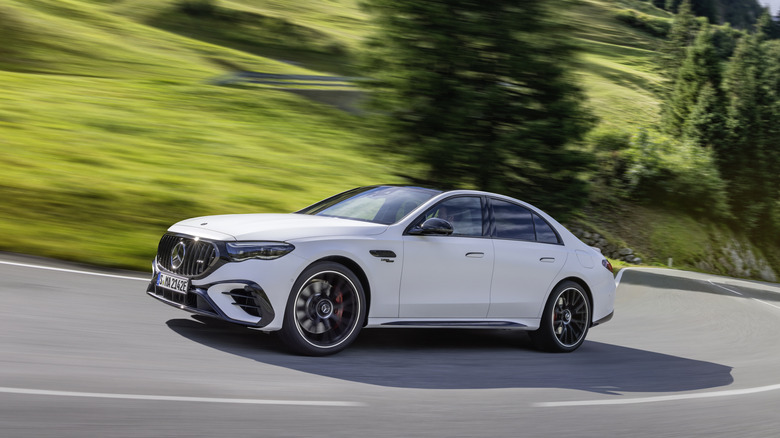
The fabled Mercedes-AMG E63 nameplate was discontinued in 2022, taking with it the 4.0-liter twin-turbo V8. But Mercedes-AMG didn't want to give up on the idea of a high-performance E-Class, so it used a novel plug-in hybrid powertrain in the latest E 53 Hybrid.
Combining a 3.0-liter turbocharged inline-6 with 443 horsepower and a 161-hp synchronous electric motor, AMG's PHEV produces 577 hp as standard, or up to 604 hp with the Dynamic Plus Package and RACE START mode — 1 hp more than its V8 predecessor. The E 53 AMG Hybrid comes standard with AWD and a 9-speed automatic, reaching 60 mph in just 3.9 seconds.
Yes, this new high-performance E-Class won't sing V8 harmonics to your ears, but it has another trick up its sleeve: a big 28.6-kWh (21.2 kWh usable) ultra-lightweight high-performance battery. As a result, the E 53 AMG has an EPA-estimated EV range of up to 44 miles (2026 model), or 41 miles for the wagon.
Did we say a wagon? Yup, the E 53 AMG is also available in wagon form in the U.S., which should probably be the model you go for, as it has significantly more cargo space. Both models offer excellent cabin space, but due to the large battery, the sedan has a comically small 12.7-cubic-foot trunk. The wagon rectifies that with a much more usable 33.1-cubic-foot trunk, while delivering a 3.8-second 0 to 60 mph sprint with RACE START. The sedan E 53 AMG Hybrid starts at $92,550, while the wagon will set you back $96,650.
2027 Toyota Prius Plug-in Hybrid SE (44 miles)
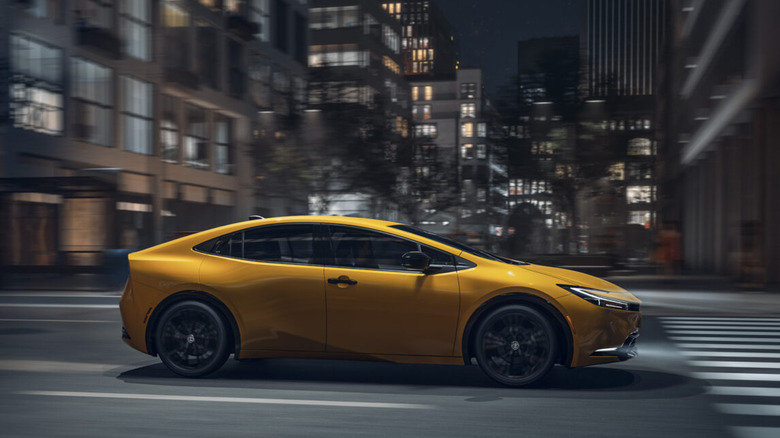
The hybrid pioneer has been significantly revamped for the current generation, transforming from the industry's ugly duckling to possibly the best-looking car on the market, with a sleek, coupe-like silhouette and athletic proportions.
Naturally, the Prius is a hybrid-only affair, available with a regular or plug-in hybrid powertrain. The former is an efficiency king, rated at up to 55 mpg combined by the EPA, while the latter provides an EPA-estimated electric range of up to 44 miles from a relatively small 13.6-kWh battery.
Because it's over 350 pounds heavier, the Prius PHEV is rated at a lower 51 mpg combined once the battery is depleted, which is still an impressive figure. The Prius PHEV is more powerful, though, producing 220 hp from its 2.0-liter hybrid powertrain. As a result, it accelerates to 60 mph in 6.6 seconds, a solid figure for a family car. Unfortunately, while the regular hybrid is available with FWD and AWD, the Prius PHEV is FWD-only.
Due to the Prius PHEV's coupe-like shape, the rear bench is short on headroom, and knee room isn't particularly stellar, either. Still, the 20.3-cubic-foot trunk is decently sized for a compact family car. Also, while the 12.3-inch (8.0-inch standard) touchscreen houses most of the functions, the climate control buttons are physical.
2026 Mercedes-Benz S 580e 4MATIC (47 miles)
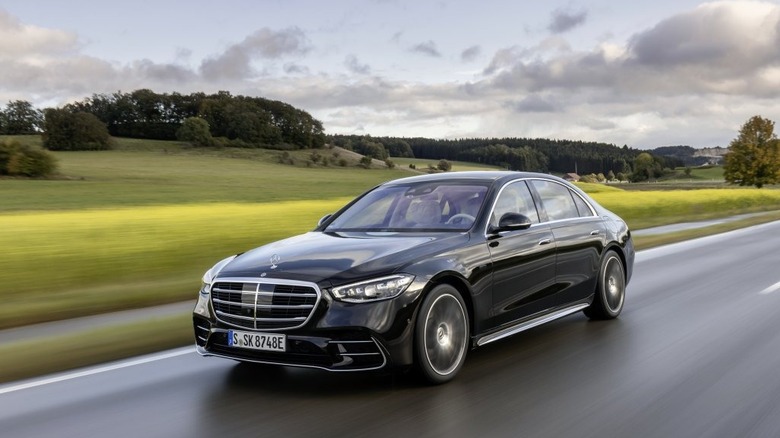
Mercedes-Benz has thoroughly refreshed the S-Class for the 2027 model year, giving it a new design, advanced micro-LED headlights that provide better illumination without blinding other drivers, and of course, a new MBUX Superscreen infotainment with three separate screens and three built-in AI agents: Microsoft Bing Search, Google Cloud Automotive AI Agent, and ChatGPT-4o. Also, like in the latest 7 Series, rear passengers in the 2027 S-Class can now take video calls.
What a time to be alive, right? Hey, at least Mercedes-Benz improved other parts of the S-Class, like the plug-in hybrid powertrain in the S 580e 4MATIC variant. The outgoing 2026 model combines a 3.0-liter turbocharged inline-6 with a 161-horsepower electric motor and pumps out 502 hp. Thanks to its 22-kWh battery, it has an EPA-estimated range of 47 miles. The 2027 model keeps the same battery capacity, but bumps the output to 576 hp. So, while the range stays the same, the new model will be quicker off the line. That extra performance pushes the price up to $136,150, compared to $131,750 for the outgoing car.
Unfortunately, the 2027 S 580e 4MATIC doesn't solve the biggest gripe of the 2026 model: the tight 8.1-cubic-foot cargo capacity. Mercedes-Benz lists the new car's trunk at 9 cubic feet, which is simply too small for a high-end luxury sedan.
2027 Land Rover Range Rover Plug-in Hybrid (50 miles)
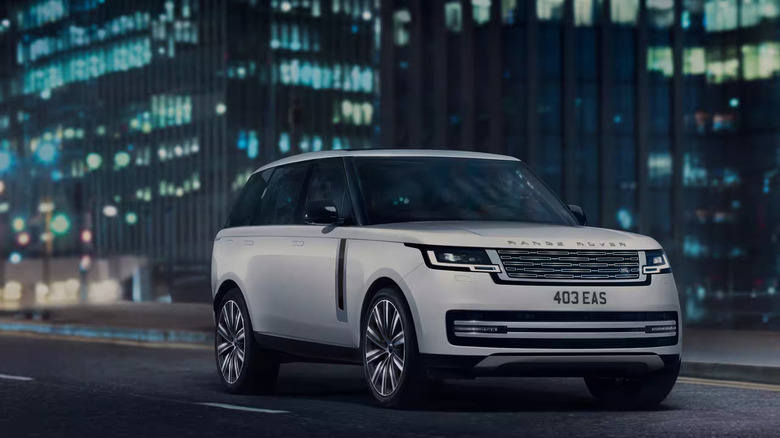
Want a PHEV with a long EV range and more cargo capacity? The Range Rover P550e Plug-in Hybrid can swallow much more cargo than the S 580e in its 40.7-cubic-foot trunk, while also offering an EPA-estimated range of 50 miles thanks to its sizeable 38.2-kWh (31.8-kWh usable) battery pack. With a base price of $131,350, it's also cheaper than the 2027 S-Class PHEV.
Naturally, the Range Rover PHEV provides ample space for adults in both rows, though you can't have it in long-wheelbase, three-row form. Not that you'll miss much, as the rearmost seats in three-row Range Rovers are only fit for kids. As you'd expect from a Range Rover, the cabin is laden with high-quality materials. But it won't flood you with massive screens, packing a 13.1-inch infotainment screen and a 12-inch digital instrument cluster on its clean, minimalist dashboard.
The Range Rover P550e offers more than enough performance for a luxury SUV. The powertrain centers on a 3.0-liter turbocharged inline-6 and an eight-speed automatic, producing 543 horsepower after the electric boost. Land Rover says this is enough to move the 6,025-pound behemoth to 60 mph in 4.8 seconds and up to a top speed of 150 mph. The powertrain's efficiency isn't its forte, though, as it's only rated at 21 mpg combined once the battery is depleted.
2027 Land Rover Range Rover Sport Plug-in Hybrid (53 miles)
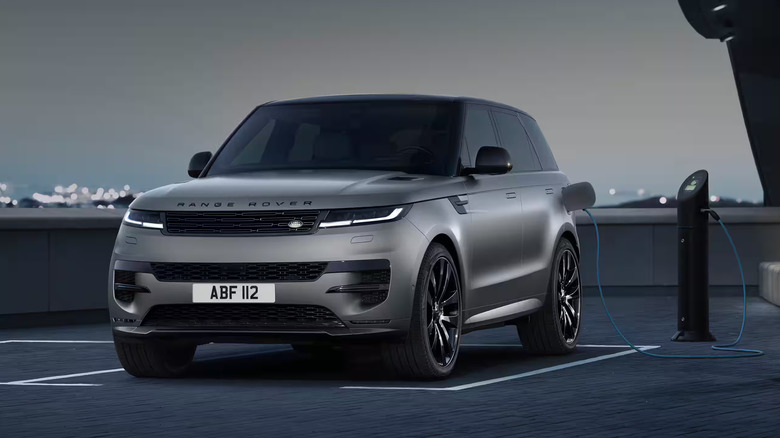
The smaller, sporty variant of the Range Rover Plug-in Hybrid comes in two flavors: P460e and P550e. Both are based on a 3.0-liter turbocharged inline-6 engine and one electric motor, but differ in power output. The P460e is good for 454 horsepower and a 0 to 60 mph sprint of 5.3 seconds. Meanwhile, the P550e matches its larger sibling with 543 hp and drops the acceleration figure down to 4.7 seconds.
Both PHEVs share their larger sibling's battery pack, with 31.8 kWh of usable capacity, good for an EPA-estimated range of 53 miles. Still, they are significantly cheaper, with the P460e starting at $96,950, while the P550e is only available with the Battersea Edition trim, which includes goodies like a rear limited-slip differential and 22-inch forged wheels, and costs $113,850.
The Range Rover Sport has a similar interior design as the Range Rover, with an identical two-display approach and high-quality materials. Both rows offer ample space for passengers, though unlike the larger model, the Sport isn't available in three-row form with any powertrain. Since it's smaller, the Range Rover Sport has less cargo capacity: 31.9 cubic feet.
2027 Mercedes-Benz GLC 350e 4MATIC (54 miles)
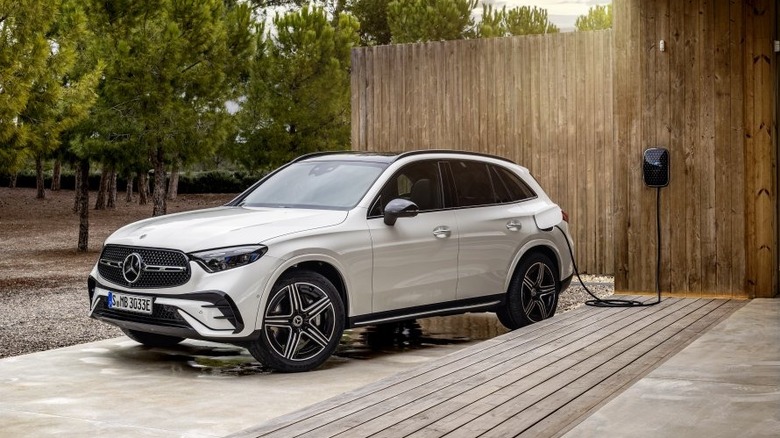
With a starting price of $64,150, the Mercedes-Benz GLC 350e 4MATIC is more expensive than the 2026 Lexus NX 450h+ ($59,505), but it also houses a larger 24.8-kWh (23.3-kWh usable) battery pack that provides an EPA-estimated range of 54 miles. The GLC 350e also supports 60-kW DC fast charging, enough to take the battery from 10 to 80% in just 20 minutes. Still, Merc's hybrid powertrain can't compete with the efficiency of Toyota's hybrids, with the GLC 350e 4MATIC delivering 25 mpg once the battery is depleted.
Based on a 2.0-liter turbo-four, Merc's plug-in powertrain is more potent, too, producing 313 hp. Mercedes-Benz says that's enough for a 0 to 60 mph time of 6.3 seconds, slightly slower than the NX's 6.0 seconds. The GLC 350e 4MATIC comes standard with AWD and a 9-speed automatic, which some buyers might prefer over the NX's e-CVT.
Inside, the Mercedes-Benz GLC pampers passengers with ample space in both rows and premium materials throughout. Its 22-cubic-foot trunk is also reasonably sized for a compact SUV with a fairly large battery. Unlike most modern Mercedes-Benz vehicles, the GLC 350e comes with a relatively small 11.9-inch infotainment screen in the middle, paired with a 12.3-inch digital instrument cluster.
2026 Toyota RAV4 Plug-in Hybrid SE (54 miles)
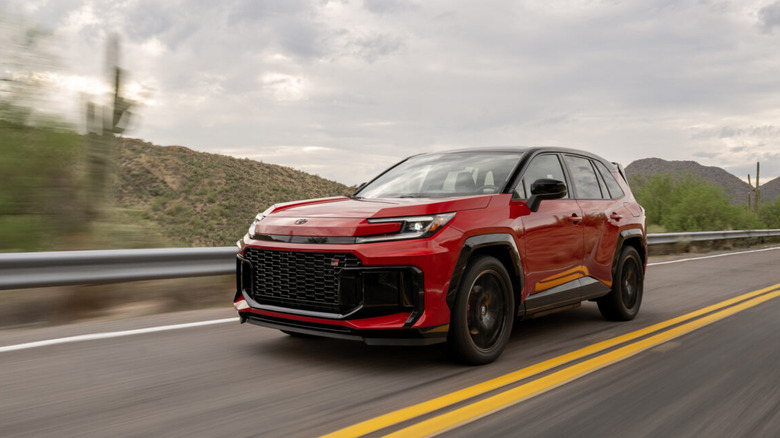
The 2026 Toyota RAV4 arrived as an all-hybrid model ready to once again dominate its category. With a new design and a powertrain lineup consisting of Toyota's fifth-gen hybrid and sixth-gen PHEV powertrains, the latest RAV4 bets on efficiency. A year later, Toyota further improved the RAV4 formula by equipping every PHEV trim with a NACS port and support for DC fast charging.
The powertrain itself remained largely unchanged, though. Based around a 2.5-liter four-cylinder engine and three electric motors (AWD), it produced 324 hp in 2026 form, enough for a 0 to 60 mph time of just 5.4 seconds. That's quick for a compact crossover, with Toyota even launching the fun-to-drive RAV4 GR Sport variant around this powertrain. As per Toyota's estimates, the entry-level 2027 RAV4 Plug-in Hybrid SE has a range of 52 miles. Still, the 2026 model is rated at an EPA-estimated 54 miles, although Toyota initially estimated a shorter 52-mile range.
The latest RAV4 can comfortably accommodate adults in both rows, while boasting a 33.5-cubic-foot trunk. Its dashboard is now more tech-forward, with a standard 10.5-inch touchscreen powered by Toyota's latest Arene software platform. The 2027 RAV4 Plug-in Hybrid starts at $43,695 for the SE trim, an increase of $600 over the 2026 model.