

Honda Goes All-In On Hybrids With New $3 Billion Plant In Ohio
Good morning! It's Tuesday, November 10, 2026, and this is The Morning Shift, your daily roundup of the top automotive headlines from around the world, in one place. This is where you'll find the most important stories that are shaping the way Americans drive and get around.
In this morning's edition, Honda is spending billions on a new hybrid vehicle plant in Ohio, Waymos still love blasting past stopped school buses, Stellantis angers a Canadian auto workers union by officially selling its Brampton assembly plant to a defense contractor, and NHTSA is probing 1.2 million Fords because their side airbags are allegedly burning passengers when they're deployed.
If you'd like a recap of the latest auto news sent to your inbox each weekday, you can sign up for Jalopnik's free Morning Shift newsletter here.
1st Gear: Honda picks up pieces from EV bet, pivots hard to hybrids
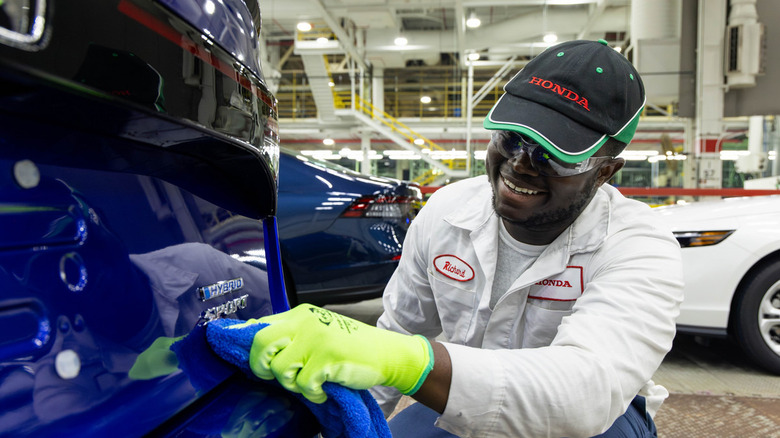
Honda's EV plans flopped hard and cost the Japanese automaker big time. Now, it's pivoting to hybrids in a huge way, and a large part of that is a brand new $3 billion factory in central Ohio that is meant to boost capacity for its most popular vehicles. The new plant is slated to start cranking out vehicles in 2029, expanding its output by 240,000 vehicles per year.
The move is an inflection point for Honda — part of a strategic pivot that started earlier this year when it threw in the towel on electric vehicles in America. The write-down on that decision cost the company $15.7 billion and caused its first annual loss since going public in 1957. Now, it aims to introduce 15 new hybrids globally by March of 2030, with North America as the primary target. From Bloomberg:
The new facility will be located between two existing auto assembly plants it operates in Ohio. It will be tooled to build gas-only, hybrid and fully electric vehicles, but the company didn't provide a breakdown by production volume.
Honda also wouldn't say which vehicles will be made in the new plant, but its focus will be on boosting output of models offering a hybrid option, including all-new models.
[...]
In a separate statement, it announced an investment of C$166 million ($118 million) in its Canadian factory in Alliston, Ontario, to make next-generation vehicles and for "the reintroduction of engine manufacturing."
Honda was prepared to spend C$15 billion on an EV battery supply chain complex in Canada, but put that plan on indefinite hold in May. It also canceled a trio of battery-electric models it was preparing to manufacture in the US. But it began production this summer of battery cells at a $4.4 billion joint venture with LG Energy Solution in Ohio.
That facility was originally designed to build batteries for electric vehicles but has pivoted to make hybrid batteries, [Honda U.S. executive vice president Bob] Nelson said.
[...]
Honda has vehicle assembly operations in Ohio, Alabama and Indiana as well as in Canada and Mexico. In addition, it makes key parts such as engines and transmissions in Alabama, Georgia and Ohio. The company said on Monday that it will also make investments in a number of other facilities in North America, but not at its Mexican plant.
Despite the doom and gloom of this year's overall financials, the automaker itself is having a fairly solid year. Honda's U.S. sales have actually risen 5% in the first 10 months of 2026, thanks to strong demand for hybrid versions of the CR-V, Accord, and Civic. Clearly, Honda is following the money, and right now the money is in hybrids. As it stands, hybrids make up about a third of the company's total sales volume in the U.S., and that's while the lineup is missing hybrids in key players like the Pilot and Passport — not to mention, the entire Acura brand.
Last year, I visited Japan and got a look at Honda's next-generation V6 hybrid powertrain, which is meant for larger vehicles. Don't be shocked if it ends up in the MDX and aforementioned Pilot sooner rather than later. There's also news that Acura is working on a Passport-based off-road eight-passenger hybrid SUV, and that's sure to be something rather neat.
2nd Gear: Waymos are still flying past stopped school busses
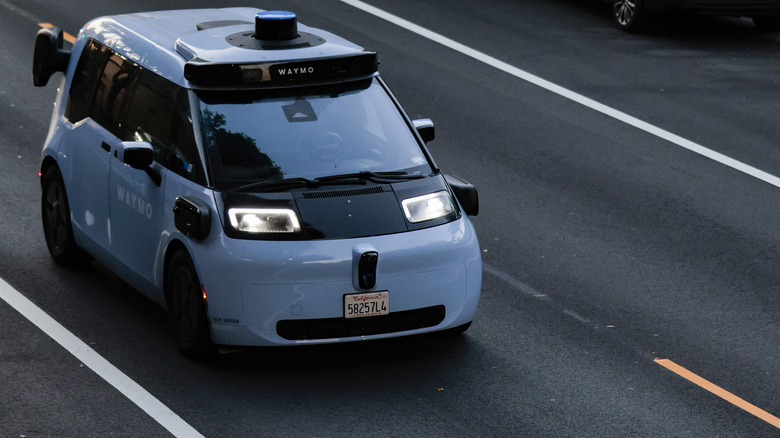
The U.S. National Highway Traffic Safety Administration said it had opened a recall inquiry into Alphabet's Waymo because the damn things keep passing stopped school buses. You and I, people who passed driver's ed, know you're not supposed to do that. But these robogoofuses somehow can't get that through their thick, electronic skulls. I mean, it's something we've reported on numerous times before.
The probe will look into nearly 3,000 Waymos with the goal of determining whether a software update that Waymo rolled out last year failed to stop the robotaxis from passing stopped school buses with flashing red lights. Odds are that it didn't, as most of the violations allegedly happened after the company said the remedy had been deployed. Oopsy. From Reuters:
In October 2025, NHTSA opened a preliminary evaluation into the issue of Waymo vehicles illegally passing stopped school buses. The agency closed that investigation on Monday in favor of the new recall query to determine the cause of the additional violations.
In Austin, Texas, the independent school district documented 19 distinct violations and issued numerous $300 tickets to Waymo. Six other violations were recorded by public schools in Atlanta.
NHTSA said it was reviewing the software update implemented by Waymo under a December 2025 recall. The auto safety regulator said most of the incidents occurred after November 2025, when Waymo said it had completed the software remedy for all affected vehicles.
NHTSA's query is meant to assess how well Waymo's remedy actually worked and then determine the causes of the post-remedy incidents. Just to add to all the fun, the NTSB is also investigating.
3rd Gear: Stellantis sells Brampton Assembly
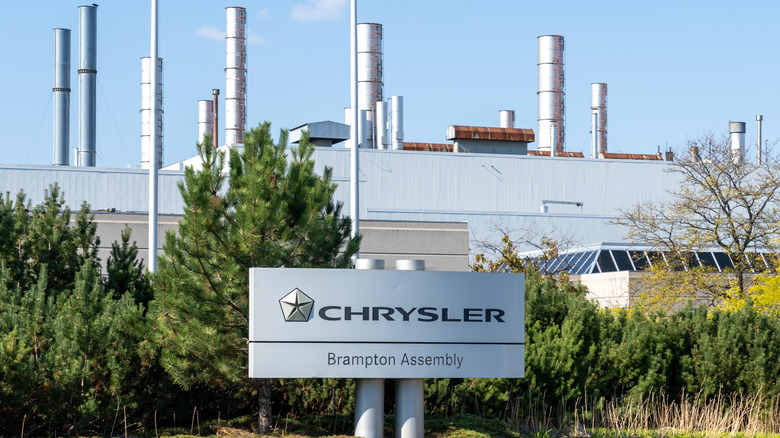
The long saga is finally over. Stellantis seems to have a deal to sell its Brampton Assembly plant in Canada to none other than armored-car maker Roshel. The transaction, if it closes at the end of the year, would bring an end to vehicle manufacturing at the Ontario factory, which has been a flashpoint in the U.S.-Canada trade war. It's also likely to trigger all sorts of labor tensions among the company's unionized employees. Unifor said Stellantis' Brampton plans prompted an impasse in talks on a new labor deal, and they called on Prime Minister Mark Carney to block the sale. From The Wall Street Journal:
Stellantis' turnaround plan laid out earlier this year calls for using a higher share of its North American factory space by 2030. The automaker has too much factory space relative to its North American sales, said Sam Fiorani, vice president of consulting firm AutoForecast Solutions. "Taking Brampton offline removes some idle capacity," Fiorani said.
The Brampton factory was built four decades ago, and has floor space of nearly three million square feet, or about five football fields.
Roman Shimonov, the founder and CEO of Roshel, said he wants to build a top-tier manufacturing operation in Brampton, adding the transaction promises to drive job creation in Canadian manufacturing. Shimonov had previously said that Roshel was ready to bring affected Stellantis workers on board as part of the new production facility.
Unifor, unsurprisingly, is not thrilled with the news.
The reassurances didn't sit well with Lana Payne, president of Unifor. She said Stellantis "betrayed" the company's 9,000 unionized workers "with an underhanded deal to sell the plant and walk away from its commitments."
Stellantis said in September it was contemplating a sale of the Brampton factory to Roshel, as a return to auto production was deemed financially unfeasible.
The Brampton plant has remained idle since 2024 due to retooling, and Stellantis had plans to manufacture the next-generation Jeep Compass at the Canadian factory. Those plans changed after President Trump imposed hefty tariffs on foreign-made vehicles.
Instead, Stellantis said it would shift production of the Jeep Compass to Illinois, citing trade and market conditions. That move angered Canadian officials, given that federal and regional governments provided over $700 million in taxpayer-backed financing to retool the Brampton factory, as well as a plant in Windsor, Ontario.
Canadian officials have, on several occasions, threatened to sue Stellantis to recoup the money.
In a statement, Industry Minister Mélanie Joly said officials would focus on helping the 2,000 impacted workers in Brampton, and she urged the union, the automaker and regional authorities to meet this week to come up with some sort of a solution. However, her statement doesn't make any mention of pursuing legal action against the automaker.
Last month, Stellantis workers voted to formally give Unifor the mandate to pursue a strike in Canada amid stalled talks.
4th Gear: Ford Explorer side airbags are allegedly burning passengers
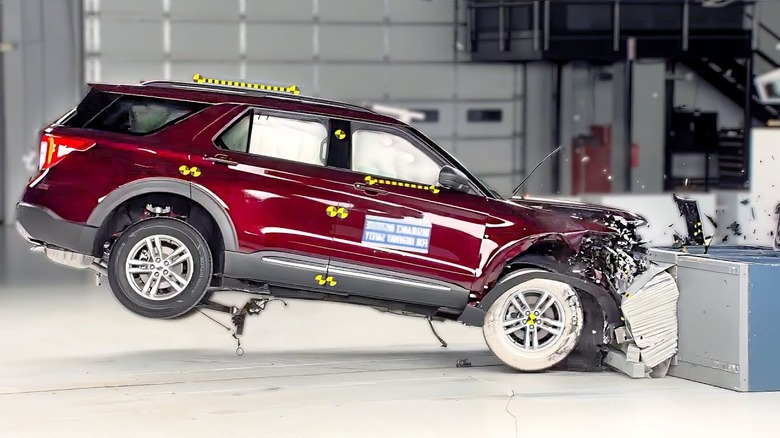
Federal safety regulators are probing 1.2 million 2021-2026 Ford Explorers after several drivers allegedly suffered burns after their side airbags deployed.
The National Highway Traffic Safety Administration says the investigation centers on complaints that the deployment of seat-mounted side airbags was causing serious burns. So far, it has received eight Vehicle Owner Questionnaires and four Early Warning Reporting "Death and Injury" reports related to the issue. From the Detroit Free Press:
"Consumers have described that during a crash involving deployment of the seat-mounted side airbag, they sustained burn injuries," NHTSA's report read. "Burn injuries have been reported for both drivers and front passengers and were typically diagnosed as second or third-degree burns requiring medical treatment."
The NHTSA document went on to say that some of the Vehicle Owner Questionnaires report injuries were to law enforcement officers following side airbag deployments in Ford Explorer Police Interceptors. According to a recent report by CNBC, more than half of the 12,000 U.S. police departments drive Ford vehicles. It said Ford claims it has two-thirds of the police market with the General Motors and Stellantis supplying the balance.
[...]
A spokesman for Ford Motor told the Detroit Free Press on Nov. 9 that the company might have a comment on NHTSA's announced preliminary evaluation later. Ford makes the Explorer at its Chicago Assembly Plant in Illinois.
I can't exactly say something like this is shocking. I mean, so far this year, Ford has issued 85 recalls, and second-place Stellantis is only at 41. It has literally lapped the field, and if this inquiry turns into a recall, it'll only add to that total.
Reverse: The gales of November came early
 History.com
It has been 51 years since the SS Edmund Fitzgerald sank, and not a day has gone by that someone from Detroit hasn't brought it up. If it wasn't for those damn early November gales, she'd still be sailing the Great Lakes today, I'll tell you that much. In any case, if you want to learn more about its doomed journey in early November, head over to History.com.
The Fuel Up
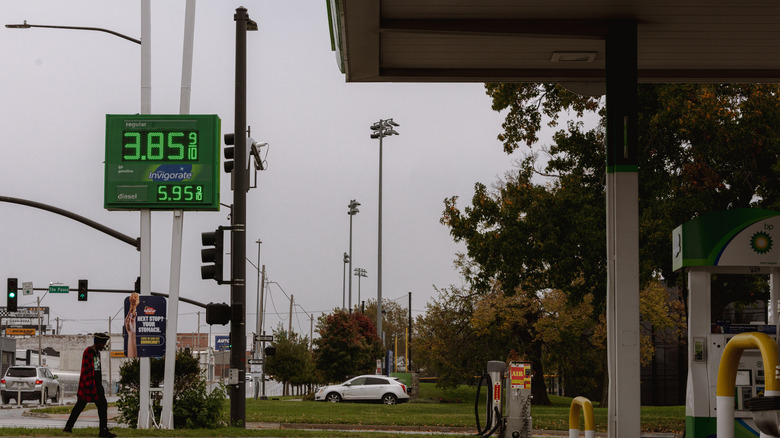
I've got some beautiful, breathtaking, wonderful, amazing, lovely news. The average price of a gallon of regular gas has fallen below $4 for the first time March 30. I could just about cry. Helping matters along are the fact that both WTI Crude Oil futures and Brent Crude prices are retreating — sitting at $85 and $91, respectively, at the time of publication.
Here's where national average prices stand right now, according to AAA:
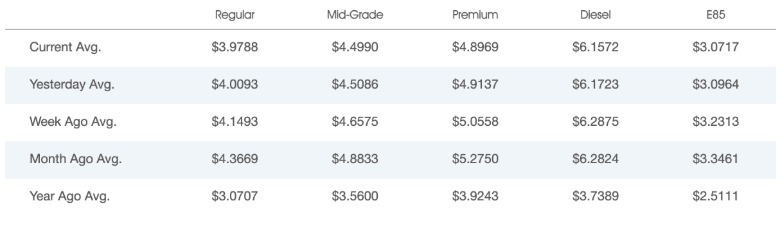 AAA
This good news means the average price of a gallon of gas dropped another 3 cents overnight to $3.98, according to AAA. Diesel saw its own 2-cent drop, and it's now at $6.16. Fingers crossed this trend holds, but you never really know, do you?
On the radio: Gordon Lightfoot - The Wreck of the Edmund Fitzgerald
Since I've already covered my Edmund Fitzgerald thoughts, I'll just say this: my buddy once decided to sing this song at a karaoke bar in Williamsburg, Brooklyn, full of people as a joke, and no one thought it was funny. No one got it. No one was in on the bit. Make sure you pick your karaoke songs carefully, or the crowd will turn on you.