

These 7 Porsches Have A Reputation For Being Nearly Indestructible
For many, owning a Porsche is something of a dream. However, keeping one running as it should year after year without having to spend thousands in preventative maintenance or labor-intensive repairs might not be all that easy. Sure, the automaker enjoys a reputation for engineering excellence, but that doesn't mean each model from its back catalog is as capable as the last when it comes to covering moon mileage.
It's models like the 996-generation 911 that might give buyers a reason to pause, as while the right advice could save 996 buyers from getting screwed, the model is still plagued with complex issues. Problems such as failed intermediate shaft (IMS) bearings and cylinder bore scoring quickly make the 996 look less of a tempting proposition for those who need something they can rely upon.
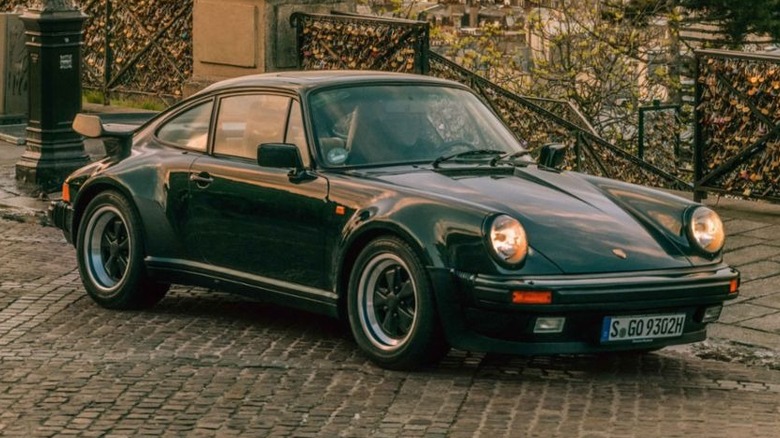
That need not end the dream for Porsche fans, though, as there is still a plethora of used Porsches that have proven pretty much indestructible. Some are cheap, like the 987.2-generation Boxster, and some are far from it, such as the iconic "widowmaker" 930 Turbo. What they all prove, however, is that with the correct maintenance and know-how, a secondhand Porsche really can run forever. Here are seven of our favorites, listed from the oldest through to the newest, and justified via high-mileage examples, owner reviews, and expert opinions.
Porsche 924 (N/A 2.0 1976-1982)
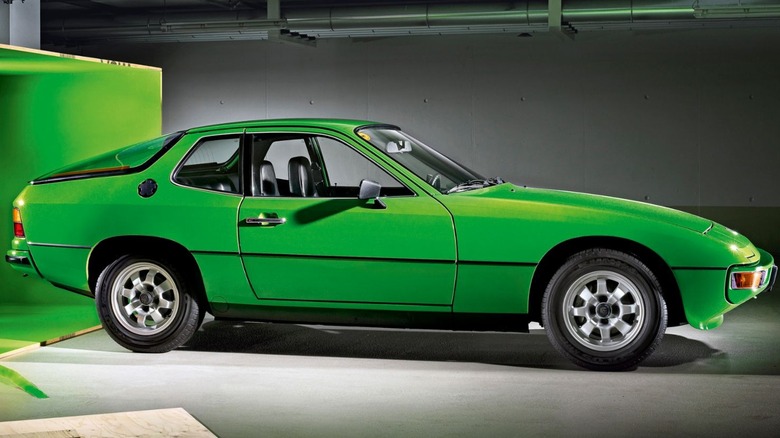
It can be difficult to deduce whether the Porsche 924 was a success. It sold rather well, with a total of 152,082 finding homes across its full production window, 1976 to 1988. However, it sat unloved for decades, with many enthusiasts citing its lackluster performance and what they erroneously called its van-derived engine as solid proof that it wasn't a "proper" Porsche.
The eventual 924 Turbo and homologation special 924 Carrera GT models did much to align the little coupé with enthusiasts, but for our purposes here, it's the naturally aspirated 2.0-liter inline-4-powered model that appeals the most. The Classics World 924 Buyer's Guide describes it as remarkably robust, and says "simple DIY maintenance" is often all that's required to keep it running. The guide adds that 924 spare parts are available directly through the automaker via Porsche's Classic program, and are frequently quite affordable.
Numerous enthusiasts on owners forums are happy to boast that their own pride-and-joys have been able to surpass 100,000 miles, and often by some serious margins. One post on Porsche Club Great Britain details both a 168,000-mile and 272,000-mile example, and that post is almost 20 years old, so many more examples may well have hit such achievements since. Owner reviews further back up the 924's claim to indestructibility, saying that, in spite of its age, the little Porsche largely proves very dependable across long ownership windows.
Porsche 930 Turbo (1975-1989)
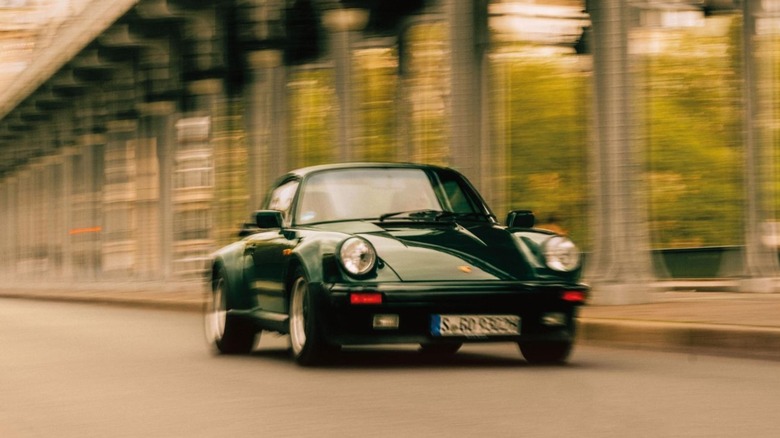
While the Porsche 924 is impressively reliable and durable, it probably isn't the adrenaline-fueled sports car that springs into most minds when the word "Porsche" is uttered. Instead, something like the original 930 Turbo is far more appropriate.
It was produced between the 1975 and '89 model years, and throughout that time the engine evolved from a turbocharged 3.0-liter flat-6 with 256 horsepower into a boosted 3.3-liter unit that produced 296 horses. U.S. versions received slightly less power, but these were still very formidable sports cars for the era.
Turbochargers do add extra complexity into engines, and they can fail prematurely, so it might be reasonable to assume the 930 Turbo doesn't fall into the "indestructible" category. Well, you'd be wrong to assume that, and one man alone proves that point impeccably. His name is Bill MacEachern, and he ordered a 930 Turbo back when they were new in '76. He's kept it ever since, and racked up in excess of 826,000 miles during that time. Yes, its engine has been rebuilt, but he's had it tuned to produce in excess of 550 horsepower, and it's still managing its daily duties without stress. Here he is on Magnacars telling the story:
Those seeking to find themselves an indestructible 930 Turbo for piling on the miles should head for a 3.3-liter model. These received internal improvements over the earlier cars, like different sealing rings that could deal with heat more effectively, enabling the engine to handle its performance more reliably. Also, the addition of an intercooler massively reduced intake temperatures on 3.3-powered cars, as well as helping to bring that extra grunt.
Porsche 911 SC (1978-1983)
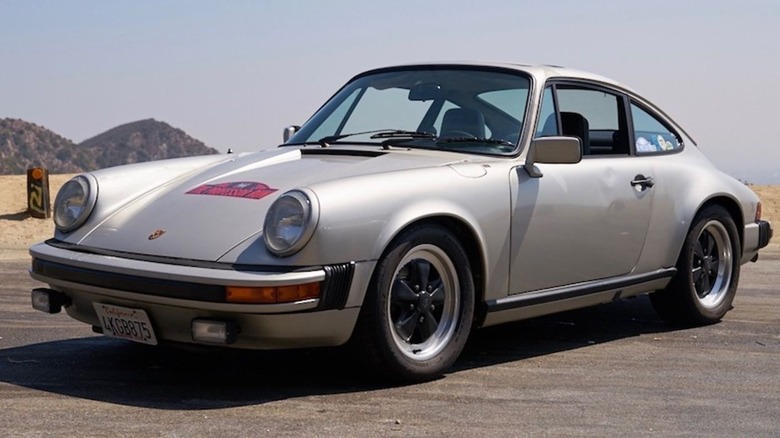
If a boosted Porsche 911 from the late '70s is capable of punching out 800,000-plus miles, it stands to reason that a less performance-focused 911 of the same era also makes for a pretty dependable companion. The SC introduced new technologies and developments in the engine bay that really helped boost reliability.
The previous model was powered by a 2.7-liter mill, the last evolution of the 911's original engine. By this point, it was at its limit, and with thermal reactors used to help reduce emissions in line with new legislation, heat was a major issue. This heat buildup caused head stud and valve issues, and while fixable via the aftermarket route, such issues plagued the reliability reputation of early '70s 911s. The later SC rectified this issue with an all-aluminum engine casing that could better handle the engine's higher temperatures, and those thermal reactors were replaced with catalytic converters, which ran far cooler.
It's well-documented that these 3.0-liter SC models are good for 200,000 miles or more between engine rebuilds, as long as they are suitably maintained. So if it's an early 911 with built-in indestructibility that you're seeking, this is a far better starting point than any pre-'77 car. In fact, Porsche Club GB describes the 3.0-liter as "probably the most reliable Porsche engine ever" and "simple to work on." Just be prepared for the prices commanded; we recently found a 164,000-mile 911 SC selling for close to $75,000, so even with high mileage, these cars are still a significant investment.
Porsche 944 (N/A 2.5 1983-1988)
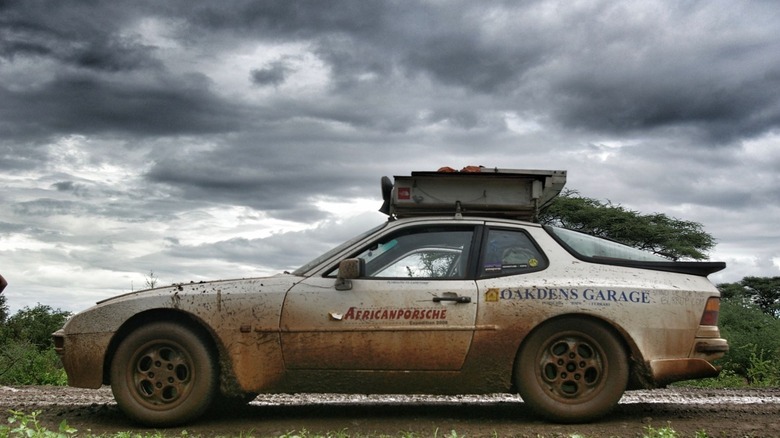
This next entry steers us back away from Porsche's legendary line of rear-engined flat-6-powered models, and once again to a four-cylinder front-engined sports coupé. The Porsche 944, much like the 924, was available in a variety of guises, but for reliability and durability, the simple naturally aspirated models appeal the most.
Its 2.5-liter engine (displacement grew throughout production) is derived from the V8-powered 928, and it's known to have a remarkably strong bottom end. While the Turbo cars aren't exactly fragile, these later boosted engines are more complex, and failures can and do occur, as both turbo exhaust manifolds and wastegates can crack. In terms of what a base 944 can achieve, it's well-documented that these engines are good for in excess of 250,000 miles before a rebuild is necessary, provided necessary maintenance is kept up with along the way.
Looking at owner reviews, the 944 experience seems to be mostly trouble-free. Across 127 reviews on CarSurvey, the 944 received a 7.5 out of 10 score for reliability. One owner of a high-mileage example noted that, while certain items like locks, alarms, and other accessories were beginning to fail, they were easily DIY-able, and no power train concerns were noted, despite the car having north of 160,000 miles.
Some owners would say a 160,000-mile 944 is still just being broken in. In 2023 a 571,000-mile example was spotted at an auto auction, and even boosted models have been seen with 400,000 miles on the clock, who knows how far a well-maintained 944 can go?
Porsche 911 Carrera 3.2 (1984-1989)
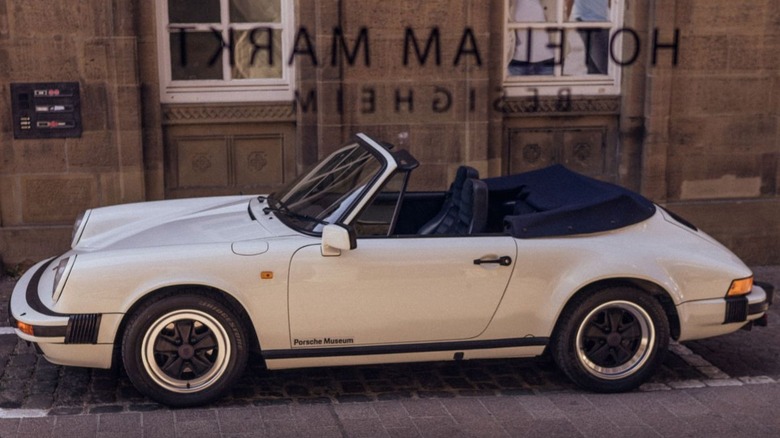
The 3.2-powered Carrera models follow on from the SC, which is a textbook example of an indestructible Porsche. The Carrera 3.2 is less bulletproof than the earlier 3.0 SC, with some experts suggesting it may need top-end work by 130,000 miles, whereas SC cars can exceed that mileage and more without having to come apart. That doesn't mean, however, that the Carrera 3.2 isn't worthy of a place here.
In fact, the 3.2-liter engine received a plethora of updates that 3.0-liter engines miss out on. New pistons, hydraulic timing chain tensioners, and a new Bosch Motronic engine management system were chief among the updates, bringing more power, efficiency, and reliability, especially in the timing system.
Regardless of whether the Carrera 3.2 is as bulletproof as its 3.0-liter SC predecessor, it's a fine place to look for a durable classic Porsche. While some do argue the top end may need work by 130,000 miles, others say 200,000 miles is perfectly possible before a rebuild is required. A very smart 218,000-mile example sold this year at auction in the U.K., described by Historics Auctioneers as "One of the best maintained G Series cars we have offered." Admittedly, it had been treated to an engine rebuild and glass-out repaint in recent years, so both its engine and body should be good for another 200,000 miles or so.
Porsche Cayenne (955 2004-2006)
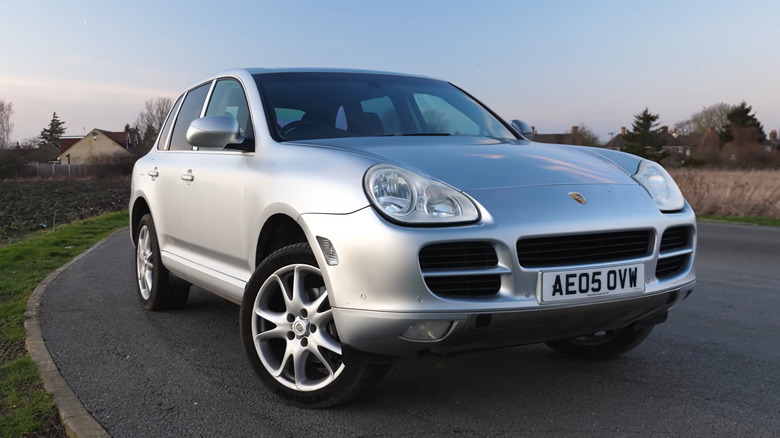
The last two entries on our list bring things back up to date, at least a little. While the latest batch of Porsches very well could be the holy grail of reliability and indestructibility, they simply haven't been on the road long enough to prove it, which is why most models here are far older. They've had the chance to accumulate hundreds of thousands of miles and demonstrate their strength.
One such model is the first-generation Porsche Cayenne, specifically the 3.2-liter model. It's powered by Volkswagen's 30-year-old VR6 engine, which was already well-known by the time Porsche's 955-generation Cayenne debuted as a 2004 model. Why the 3.2? Well, it boasts a strong cast-iron block, whereas the V8 models sported aluminum blocks, and serious engine concerns are quite uncommon.
The 3.2-liter VR6 engine is certainly capable of completing 200,000 miles with basic maintenance covered, and what's just as reassuring, is that the rest of the Cayenne seems built just as tough. One owner on Pistonheads thoroughly detailed every expense during their 51,000-mile and five-year ownership of a Cayenne 3.2 that was already 100,000 miles and 10 years into life when purchased. Apart from general servicing, some tidying up, and a few minor repairs, the Cayenne wanted for nothing, and was sold on to continue its service. Porsche's brand-new Cayenne Turbo Electric might be an impressive $200,000 powerhouse of excellence, but if robust dependability is called for, perhaps its nameplate forefather is the better bet.
Porsche Boxster and Cayman (987.2 2009-2012)
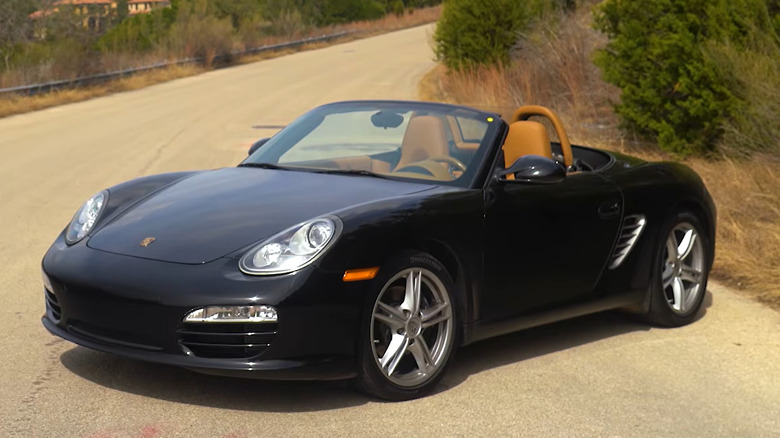
We called the 2024 Porsche 718 Boxster GTS 4.0 perfection on wheels, and while it's not a model that's attracting much negative attention to itself, it's barely old enough to call reliable yet, let alone indestructible. The 987.2-generation of Boxster and Cayman, though, is another matter altogether, especially in base 2.9-liter flat-6 guise. While the 3.4-liter "S" model is a better performer, it has been known to suffer bore-scoring, while the 2.9-liter lump seems to avoid that costly concern. Porsche specialist LN Engineering says it has "never seen a case of cylinder bore scoring with these models," when referring to the 987.2 Cayman and Boxster.
It's also important to detail why it's the 987.2 cars which deserve a spot here, rather than the 987.1 models. The later models employed an all-new 9A1 engine, which did away with the troublesome IMS bearing altogether. All previous iterations of the Boxster and Cayman were motivated by M96 and M97 engines, which did suffer from IMS problems.
It would appear most owners find the rest of the car to be just as dependable. Across 12 reviews on Cars, specifically for 2010 model-year Boxsters, owners rated the drop-top a respectable 4.4 out of 5 on reliability. Most comments commended the car's sublime road manners, but some did point out their Boxster had been nothing but reliable, which should reassure potential future owners.