

5 Classic Pony Cars And Their Modern Equivalents
Imagining a collage of objects of American culture, the mind conjures up images of things like sports stadiums, a drive-thru menu, the Wall Street Bull, the Hollywood sign, blue jeans, apple pie, and likely, some kind of car. Cars, our car dependency, and the American love for V8 engines are integral to our culture, and there are no cars to demonstrate this better than the pony car family. While very similar, there are some differences between a muscle car and a pony car.
To put it simply, the muscle car and the pony car are two sides of the same coin. The muscle car was bigger and purely focused on looking cool and going fast, with not much thought to anything else. The pony car took all that was fun about the muscle car, including the good looks and exciting performance, and made it all a bit easier to live with, often by being smaller than its muscle car counterparts. The Mustang started the pony car trend, but it wasn't the only one to do it. Since those early days in the 1960s, we've seen different takes from different manufacturers, including models like the Chevrolet Camaro, the Dodge Challenger, and even some from the hands of Carroll Shelby. Many of these models have stuck around to the modern day. The spirit of the pony car is old, but it is far from gone.
Classic: 1969 Chevrolet Camaro ZL1
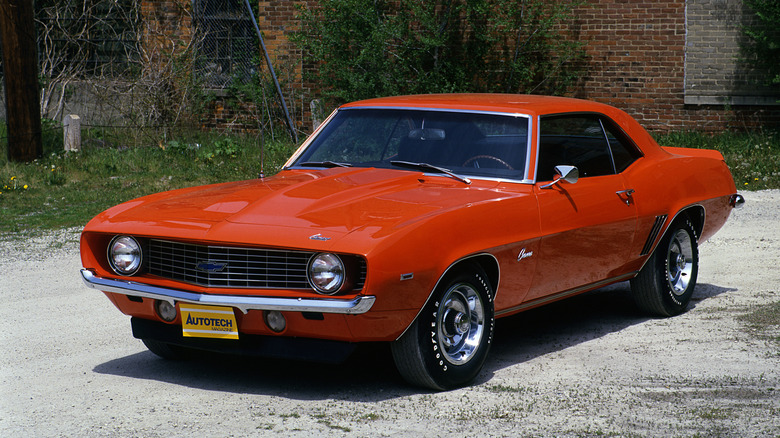
The Chevrolet Camaro and the Ford Mustang have been in a constant battle for the pony car crown since the 1960s. As they chug on and on, new trims and upgrades grace each car, and in 1969, we saw a Camaro born of the pure rebellious nature a pony car should represent. The legend of the ZL1 starts with a man called Fred Gibb. Gibb was a Chevrolet dealer who was particularly sick of the brand's internal practices. The Corvette was the monarch of the Chevrolet lineup, and Chevy wanted to keep it that way. It adamantly ensured that no performance car other than the Corvette could be fitted with an engine with over 400 cubic inches of displacement. Gibb was sick of this favoritism, and he knew the Camaro could be so much more. So, he did something about it.
Gibb contacted Chevy's Central Office Production Order, a division charged with custom orders for mundane civil and municipal services, building things like taxi cabs or police cars. Ordering from COPO was something like a deli sandwich counter for cars with no questions asked. You could mix and match parts, and that's exactly what Gibb wanted. He ordered 50 Camaros stripped down for light weight and fitted with 430-horsepower, 427-cubic-inch V8s sourced from Chevy's Can-Am race cars. Chevrolet quickly wised up to Gibb's loophole and shut down production, but the original ZL1 remains the stuff of pony car legend.
Modern: 2024 Chevrolet Camaro ZL1
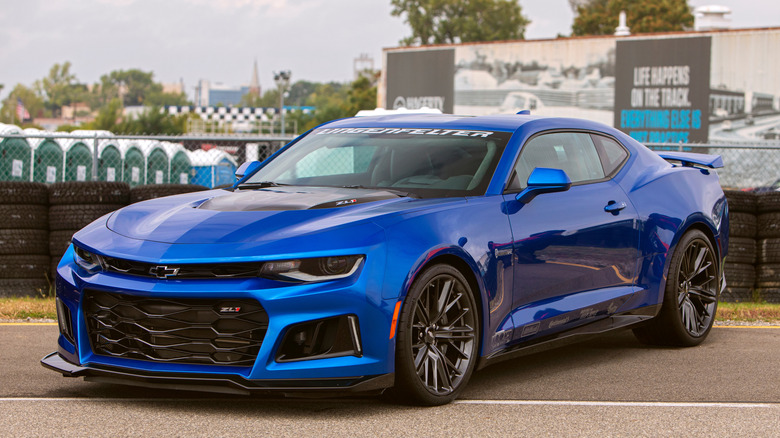
The ZL1 is Chevy's story of childhood rebellion, and even though Chevy didn't see the greatness of a high-powered stripped-down Camaro originally, it eventually came around to the idea. To see just how far the company has come from its Corvette-rules-all philosophy, we can look at the most recent, and final, example of the ZL1 from 2024.
What would have been blasphemy in 1969 was now standard procedure, as the 2024 ZL1 was powered by a pushrod V8 pulled straight from the C7 generation Corvette making 650 horsepower thanks to some help from a supercharger. Keeping classic pony car character, the ZL1 sends all that power strictly to the rear wheels, and it can be distributed via either a 10-speed automatic or a six speed manual transmission. If you really want to turn things up, you can opt for the 1LE package, which throws in some extra upgrades, and you don't have to go through COPO to do it. The 1LE adds some stickier tires, carbon fiber everywhere, adjustable suspension, and a rear seat delete. It's Chevrolet's love letter to a car it originally didn't want to exist.
Classic: 1967 Ford Mustang Shelby GT500
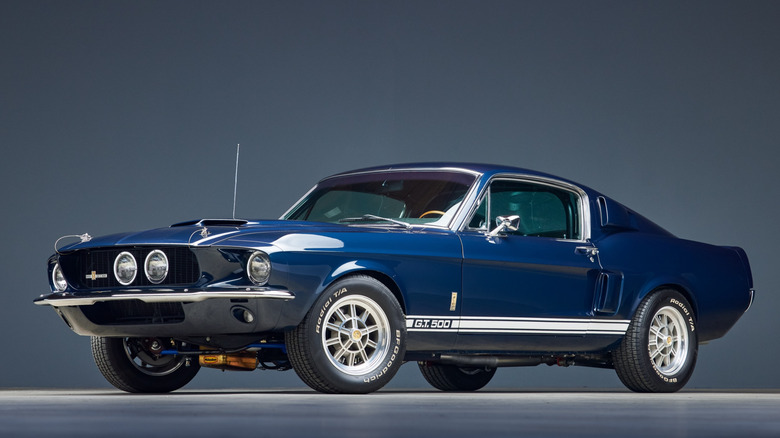
So, the Camaro has its defiant ZL1 package, but what does the Mustang have to match it? The answer is the Shelby GT500, whose original iteration came before the ZL1 in 1967. If you know a thing or two about Ford performance cars, you'll recognize the name Shelby. Before Carroll Shelby ever had a Mustang with his name on it, he was busy stuffing his nimble European-esque Cobras with massive Ford engines that had no business being there and helping Ford beat Ferrari at Le Mans. After that former achievement, in 1967, Shelby convinced Ford to put the Le Mans-based and Le Mans-winning 428 V8 into the Mustang. And so, the GT500 was born.
Prior to the GT500, Ford had already made the GT350, which was raucously fast but a bit unpolished. The GT500 took the GT350 recipe, smoothed out the edges, and eliminated the almost homemade character. By no means did this mean that the GT500 was a tame car, though. Covered in aggressive aerodynamic body panels of fiberglass for lighter weight, the GT500's V8 made 355 horsepower, and could cover the quarter mile in 15 seconds, ripping past the line at 95 mph. It was a race-bred Mustang for the road, a hot-rodder's garage build in a suit and a Stetson, and it was one of the wickedly cool cars that made Carroll Shelby a legend.
Modern: 2020 Ford Mustang Shelby GT500
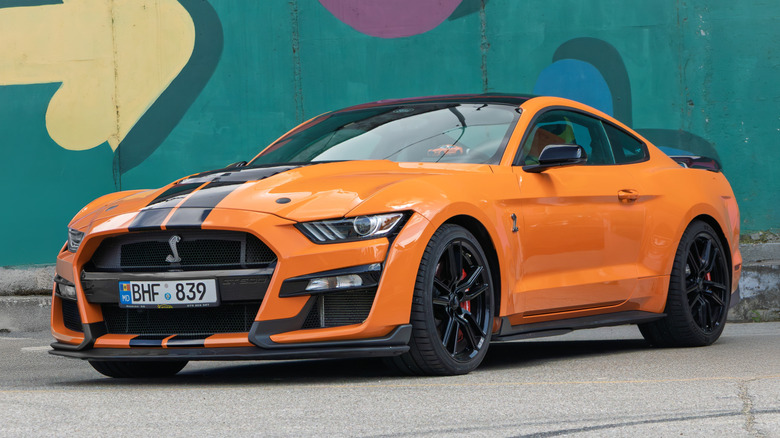
Fast forward to 53 years later, the Shelby GT500 nameplate lived on. Although the newest S650 generation of Mustang drops the GT500 trim in favor of the Dark Horse SC, the S550 received the Shelby treatment for the 2020 model. As with the original, the 2020 GT500 is very clearly not your average Mustang. If the massive hood bulge, aggressive wing, and imposing front fascia aren't enough to convince you this car means business, the exhaust note certainly should. Thanks to its cross-plane crankshaft, the GT500 produces an all-American muscle car growl with a throaty bass.
Under the hood is a 5.2-liter V8, christened "Predator" by Ford, making a whopping 760 horsepower, thanks, in part, to the Eaton-supplied supercharger, which makes 12 psi of boost. The GT500 has brains to match the brawn as well. Power is distributed by a Tremec seven-speed dual clutch automatic. Operated by paddles, your pulls go straight to the transmission controller without a detour through the powertrain control module, massively improving response. It also uses what's called magnetorheological dampers. These units are filled with a liquid, and that liquid is littered with particles of iron. Also housed in the dampers are sets of electromagnets, whose currents influence and manipulate the iron particles to adjust the fluid viscosity, thereby changing the damping and ride character. The GT500 takes all the brutish charm of the original and adds the best of the modern world's fun and fancy tricks.
Classic: 1970 Dodge Challenger R/T 426 Hemi
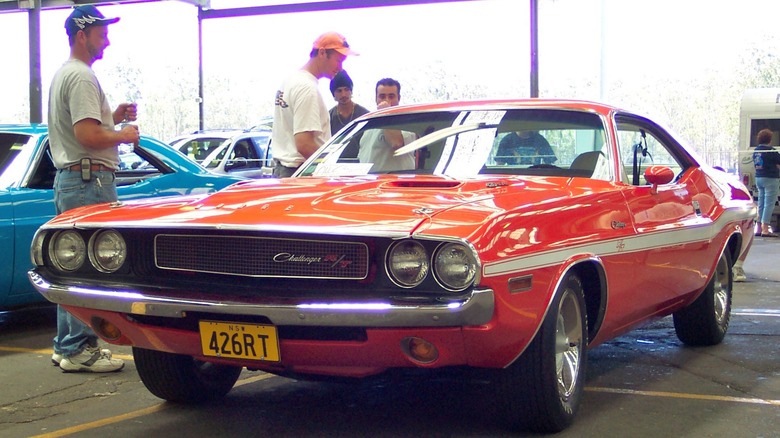
By 1970, the pony car race was already on, with Ford and Chevrolet battling for supremacy in this new market. Dodge was stuck on the sidelines. It knew it needed to get into the game, and it needed to do it fast. When the first Challenger debuted in 1970, it was clear that Chrysler and Dodge had taken an approach that was a bit of a headscratcher. Rather than making a purpose built pony car, the Challenger was a jack of all trades, attempting to swipe customers from all corners of the performance market.
Regardless of what it wanted to be, the original Challenger was certainly something to behold. It was exciting just to look at, with its muscular haunches and angry face, but all that car did translate to a lot of weight, 3,890 pounds to be exact. Dodge reasoned that it had to be big to make a statement on the road but also to maximize interior space, which it felt was lacking in its competitors' entries. While Dodge got what it wished for in a comfortable and commanding car, the driving dynamics suffered heavily, literally, from the Challenger's heft. Understeer was unavoidable, thanks to its weight, a sore point for the joking boat comparisons Dodge products still endure today. However, the R/T model was fitted with a pushrod V8 that made a whopping 425 horsepower. That alone made it extremely desirable and easy to forgive.
Modern: 2023 Dodge Demon SRT 170
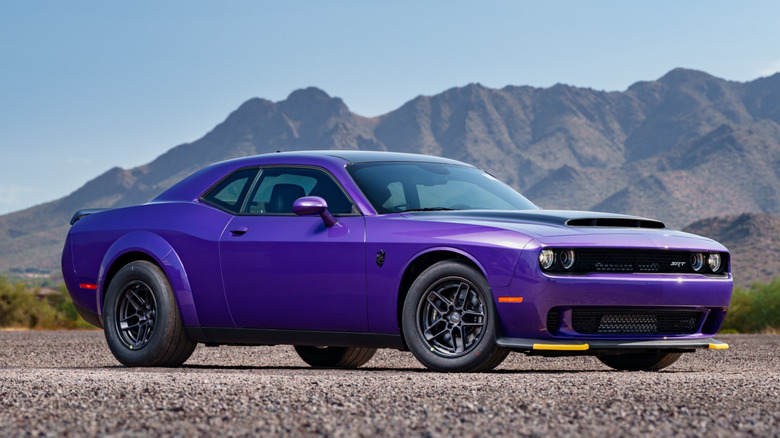
More than 50 years after the release of the original Dodge Challenger, the nameplate had solidified itself as one of America's most rowdy pony cars. Over the years, the Challenger got more powerful and more ridiculous. In 2015, we got the Hellcat, a 707-horsepower supercharged beast that shot the Challenger into legend status, with each subsequent version being somehow more obscene.
Much to our delight, it seems like Dodge wants to bring back the Hellcat V8, but the Demon SRT 170 is currently the final entry in the Hellcat family tree. The elephant, or Demon in the room, is the car's 1,025-horsepower output, making its V8 one of the most powerful 8-cylinder engines ever made. How does a road car get that, you ask? The answer is a 6.2-liter V8 with a supercharger and a hunger for E85 fuel with 170-proof ethanol, hence its name. So powerful is the Demon, that the rear axle and driveshaft had to be upgraded to safely handle its horses and 945 pound-feet of torque. Its eight-speed gearbox is specially designed with a transmission brake for drag racing, allowing rocket-like launches for the quarter mile, with Dodge claiming a 0-to-60 time of just 1.66 seconds. In truth, the Demon 170 goes beyond the original understanding of what a pony car can be. It is a quarter-mile drag racer with a warranty and a price tag guaranteeing the Challenger a place in the history books.
Classic: 1967 Chevrolet Camaro SS
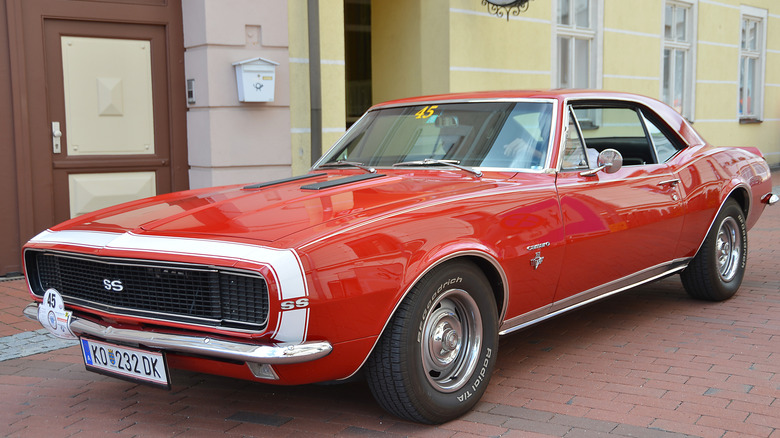
By 1967, Ford was already two years into its newfound stride with the Mustang. Chevrolet was behind, and likely a bit annoyed, because the Mustang had scalped customers from Chevrolet's Corvair market. Chevy had gambled on a car that focused more on lightness, agility, and introducing turbocharging to the masses in the Corvair, and the Mustang served as a rude awakening that American buyers merely wanted something that looked cool and drove fast. Chevy quickly caught up though, and released the new Camaro in 1967.
Compared to the almost European-looking Corvair, the Camaro was an entirely different beast. Chevrolet went all-out for the aggressive look, with the car measuring up at 185 inches long, much of which was taken up by a massive hood. Its grille was flat and wide, and higher trim models like the SS included extra cosmetic enhancements, along with performance upgrades. The SS, standing for Super Sport, featured the biggest V8s in the Camaro lineup, with the crowning version being the L78 396, making 375 horsepower, all of which was sent to the rear wheels. Suspension was upgraded as well, making the SS a truly well-rounded opponent for the Ford's Mustang, and helping the nameplate dig in for what would become a years-long pony car rivalry.
Modern: 2024 Chevrolet Camaro SS
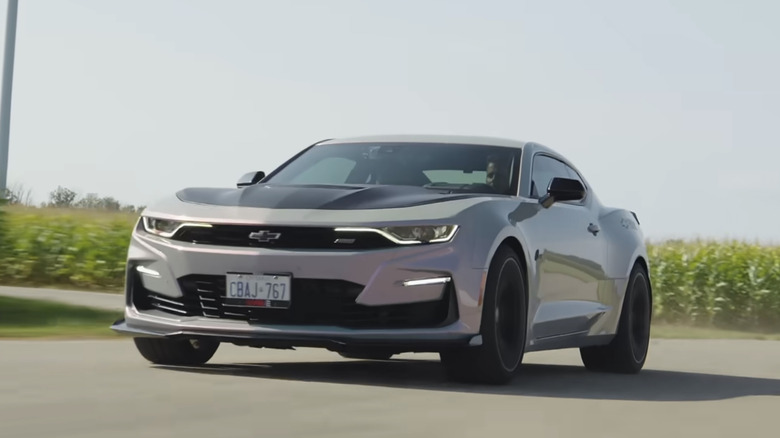
Fast forward to 2024, and the Camaro SS nameplate was still going, but not for much longer. Introduced in 2016, the sixth-generation Camaro would prove to be the last entry in Chevrolet's pony car lineage, at least for now, with the 2024 model year being the last of that last generation. The SS lived on until the very end, though, and in its final form, it was truly something special, bridging the gap between entry-level Camaros and top-trim monsters like the ZL1. Even as a mid-level Camaro, the car still boasted 455 horsepower straight from a no-frills V8.
The V8 in question came with 6.2 liters of displacement, no forced induction, and a pushrod cam setup. To get the most out of the SS, though, you could opt for the 1LE performance package. This added a ton of fun bits and pieces like exclusive black wheels, Recaro racing seats, powerful Brembo brakes, and an adjustable exhaust system that could take the car's roaring V8 siren song from rebellious to rambunctious. Perhaps the coolest thing about the sixth-generation SS, though, was that it could be had not only with a six speed manual transmission, but also with a soft-top body style, giving you wind in the hair and a V8 soundtrack for the ears.
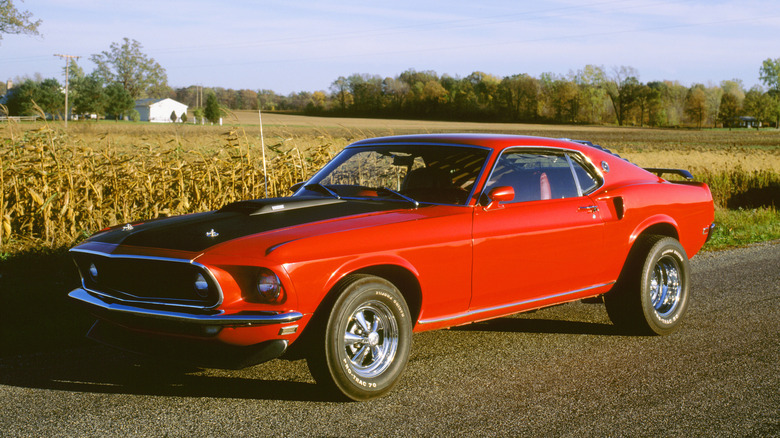
Classic: 1969 Ford Mustang Mach 1
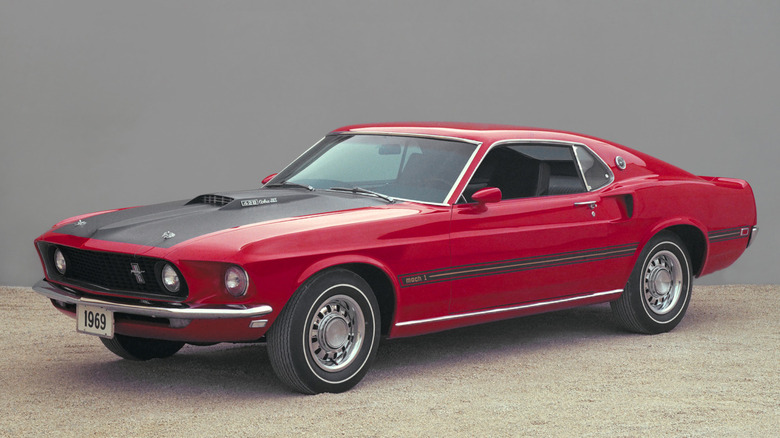
By 1969, the Ford Mustang had fallen into stride as the king of the pony car market and one of Ford's most beloved models. The lineup had grown to envelope entry-level Mustangs all the way up to things like the Boss 429. There was seemingly a Mustang for everyone, and in 1969, Ford decided to enter a new trim called the Mach 1 to serve as a middle-ground ambassador for the Mustang family. The Mach 1 sat in the goldilocks zone of Mustang performance — not too little to be fun, but not too much to be ridiculous, and that was all thanks to its engine.
The Mach 1 had six engine options, with the two most exciting options being the Cobra Jet V8s at the top of the line. This duo of engines both put out 335 horses and were identical in every way except for one using a ram-air function. Despite only one engine option actually needing it, both cars wore a hood scoop that contributed to the car's flashy looks (though only the ram-air model's scoop was functional). Despite its handsome face, the Mach 1 weighed 3,607 pounds, and 59.3% of that weight was on the front wheels. As a rear wheel drive car, this made putting the power down a bit of an issue and detracted from traction and stability. Still, the Mach 1 blended the best of each side of the Mustang spectrum, and it remained undeniably cool.
Modern: 2021 Ford Mustang Mach 1
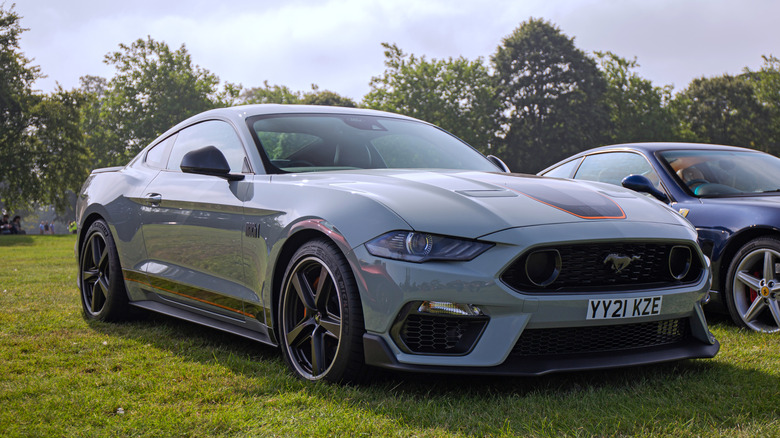
52 years after the release of the original Mach 1, we saw the final and most recent version of the trim on the S550 generation mustang. A lot has changed in 52 years, but the Mach 1's purpose and place on the Mustang food chain remained the same. When it came out in 2021, the Mach 1 actually replaced three middle ground trim levels in the GT350, the Mustang Bullitt, and the Mustang GT with Performance Package 2. This left a lot of open ground to cover for the Mach 1, with Ford trying to make a modern pony car you could live with, commute in, and even take on the track.
Trying to achieve that perfect blend, the Mach 1 ends up pulling lots of parts from the bins of the three cars it replaced. At the heart of the Mach 1 is a 5.0-liter V8 making 480 horsepower, the same engine that powered the Bullitt. Putting that power to the pavement is a Tremec TR-3160 six-speed manual transmission, sourced from the GT350, with an automatic rev-matching system for perfect downshifts, although it can be disabled for expert drivers. The Mach 1 borrows its front and rear subframes from the GT350 as well, and it uses Ford's fancy adjustable magnetorheological dampers for pinpoint ride control. The underbody also features tons of carved out air channels to help cool anything that gets hot, including the six piston Brembo brakes.