

2027 Nissan Rogue Hybrid's Silence Speaks Volumes
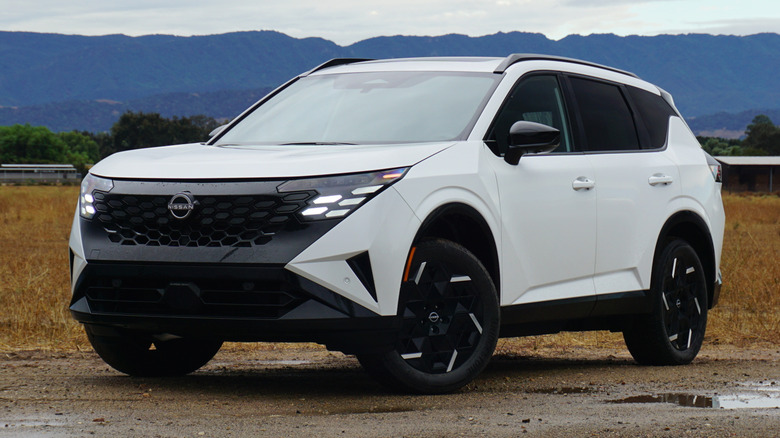
Standing out from the crowd is never easy, especially in the compact crossover segment. Whether it's the Honda CR-V, Hyundai Tucson, Chevy Equinox or the mighty Toyota RAV4, all compact crossovers sort of look the same, are similarly sized, have the same sort of tech, and usually drive the same, too. However, with the 2027 Rogue Hybrid, Nissan is looking to switch up the game by leaning on its trick e-Power series hybrid drivetrain that gives the Rogue a driving experience unlike any hybrid vehicle I've ever driven before — and more importantly, it's unlike any gas-powered crossover I've ever driven. I mean, hell, it even has one-pedal driving.
The name of the game when it comes to the 2027 Rogue Hybrid is peace and quiet. Throughout my introduction to the car, Nissan's designers and engineers emphasized how silent the Rogue Hybrid's cabin is and the lack of any sort of serious engine noise, and those claims were backed up over the 70-ish miles of testing I did on a rare rainy day in Southern California. Add in a simple yet comfortable cabin, a decent amount of tech, thoughtful safety features, solid build quality, competitive efficiency, and soft looks that buck the trend of simulated machismo that is all the rage these days, and Nissan delivered a package that's impressive as hell.
Full Disclosure: Nissan flew me out to Santa Barbara, California, put me up in a lovely hotel and fed me all so I could check out the 2027 Rogue Hybrid.
Drive*train*
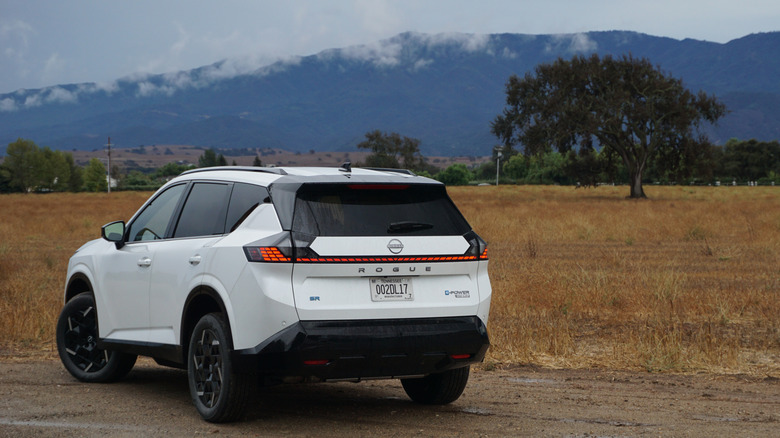
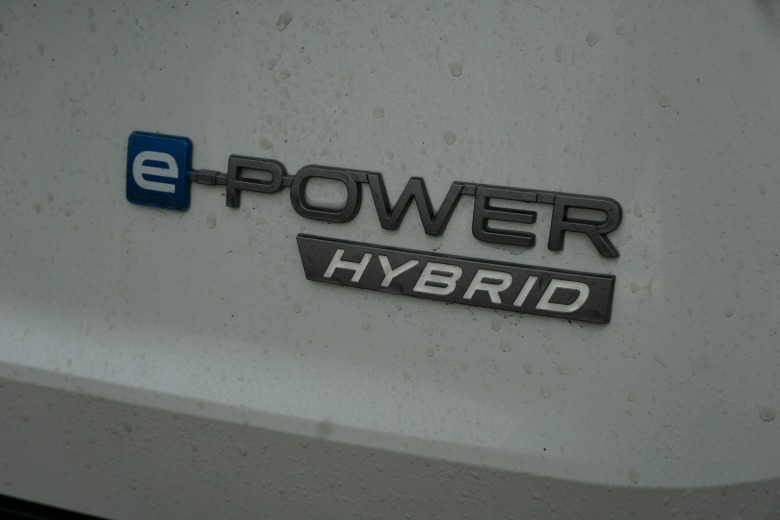
The Rogue Hybrid drives like nothing else on the road today in America, simply because the closest thing to it in our country is actually a train. Unlike every other non-plug-in hybrid on the market, which are parallel hybrid systems with gas and electric motors that work in tandem to motivate the drive wheels, the Rogue Hybrid's e-Power drivetrain is a series hybrid.
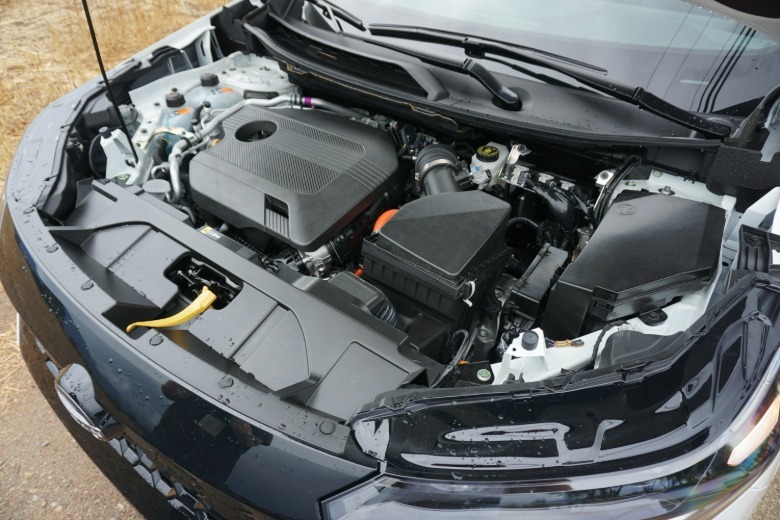
That means the 148-horsepower turbocharged 1.5-liter inline-three cylinder motor under the hood is only responsible for charging up the 1.67-kWh battery, and it has absolutely no mechanical connection to the front or rear wheels. That motor also achieves 42% thermal efficiency, which is damn good for an internal combustion engine. It might be the same size as the normal Rogue's engine, but Nissan engineers tell me it's a completely different motor.
 Andy Kalmowitz/Jalopnik
The wheels are actually powered by electric motors on the front and rear axles, meaning all-wheel drive is standard. Up front, the motor produces 202 hp and 243 pound-feet of torque; the less-powerful rear motor makes 134 hp and 144 lb-ft of torque. All in all, the system generates 225 hp, which is enough to rocket the 4,065-pound Rogue Hybrid from 0-60 mph in just 6.4 seconds. Nissan claims that's the quickest in its class, and that's incredibly important if you're the kind of compact crossover buyer who cares about that sort of thing. While that is very exciting, something that may be a bit of a letdown is the gas mileage the Rogue Hybrid achieves.
Behind the wheel
Nissan says the new crossover will get 41 mpg city, 36 mpg highway and 38 mpg combined. Sure, those are respectable numbers, but they're certainly behind the now-hybrid-only RAV4's 46 mpg city, 39 mpg highway and 42 mpg combined. The Rogue Hybrid asks what comfort and refinement are worth to you, because the experience behind the wheel of Nissan's vehicle is a far more pleasant one. It's much quieter and far more upscale than the Toyota, and the rest of its competitors. Plus, in day-to-day life, the near-EV-like driving experience it delivers is far more pleasant than the admittedly rattly four-popper noises of Toyota's hybrid system. Adding in the fact there's no transmission to shift makes things even smoother — no, there blissfully isn't even a CVT. My time with the Rogue Hybrid made me very curious as to how this powertrain technology would feel in a more luxurious application, like an Infiniti, where comfort is key and efficiency isn't nearly as important. I've got a feeling it would be rather lovely.
 Andy Kalmowitz/Jalopnik
Stepping on the gas pedal gave me the exact sort of acceleration feel I'd get from a conventional electric vehicle, just with the added hum of that three-cylinder in the distance. Nissan did a solid job of muffling its noise as much as possible, so for the most part, I didn't even notice it was running.
That was true even when I pushed the Rogue Hybrid on some of the twistier roads outside Santa Barbara. Don't get it twisted, this is no sports car; there's plenty of body roll and the front end loves to push due to the combination of eco tires and the more powerful front motor, but I had some fun in a slow-car-fast sort of way. It's goofy, I suppose. Thanks to the instant torque of the two electric motors, rocketing out of a corner was light work.
 Andy Kalmowitz/Jalopnik
Of course, canyon carving isn't at all what the 2027 Rogue Hybrid is about, and that's why it's a damn good thing that it's excellent when cruising on the highway and driving around town. Its quiet cabin means there's not much of a fatigue factor at play here, which is incredibly helpful on long trips. Equally helpful is Nissan's suite of ProPilot driver assistance systems, which did a good job of keeping me in my lane and out of the car's tailgate in front of me. It now even changes lanes and has hands-off traffic jam assist under 31 mph, which is great for those who can't bear to touch the slightly-too-large steering wheel for another moment.
Comfy, cozy
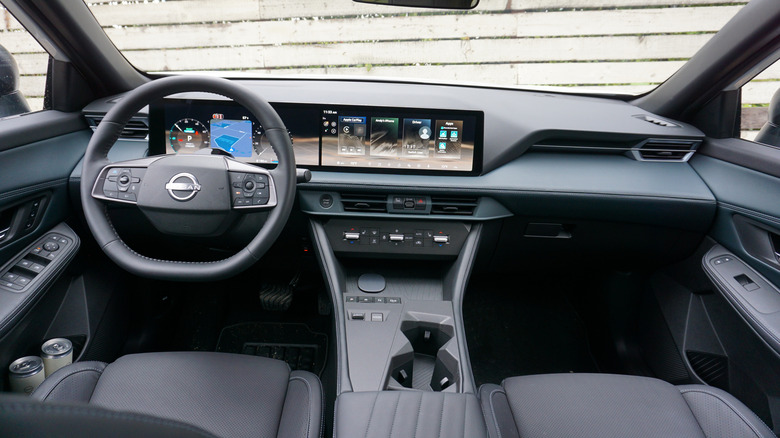
Other than the somewhat wonky steering wheel, the Rogue Hybrid's interior is an overall pleasant place to be. It's certainly not a luxury car, but it feels a hell of a lot more premium than the aforementioned RAV4. I was able to sit in a RAV4 Limited (top-dog in the lineup) right after being in the mid-spec Rogue Hybrid SR Tech, and the Nissan felt like a higher-quality product. I can't speak for the longevity of its materials, but out of the box, it felt great. There are even some interesting surfaces and shapes going on to make it a bit more distinct on the inside.
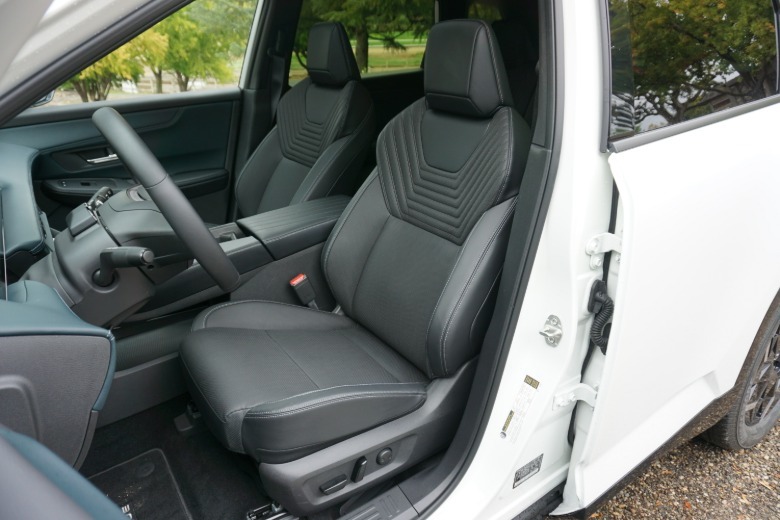
Every surface was covered in soft-touch materials, and even the hard plastics had a real quality look to them. Scratchy, cheap-feeling plastic was hard to find, to say the least, and Nissan has eradicated shiny black plastic. The seats were also wonderfully comfortable — perhaps even a bit too soft and cushiony, but I'm also the type of guy who likes to sleep on a bed made of rocks. Nissan's senior design manager, Hiren Patel, said the interior of the crossover is meant to evoke the feeling of a premium puffer jacket, and while that's definitely a bit silly, I can see what he meant. The rear seats are nearly as comfortable, and there's enough room back there for me to sit behind myself at 6-foot-1. The Rogue also has plenty of room for your crap, with 31.1 cubic feet of cargo room with the second row of seats in place. That more than doubles to 65.9 cubic feet with them folded.
 Andy Kalmowitz/Jalopnik
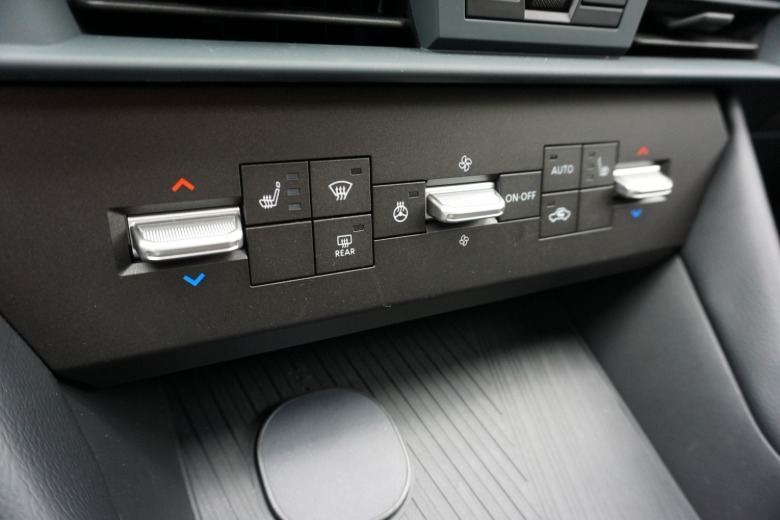
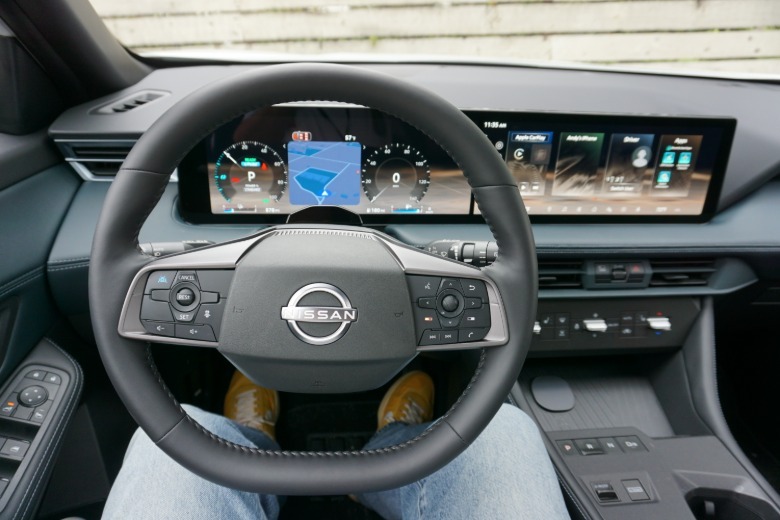
The main tech features inside are also pretty solid for this segment of car. Up front, there are dual 14.3-inch screens that nearly blend seamlessly together. One serves as a digital gauge cluster, while the other (which is 12.3 inches as standard) is the car's center infotainment display. Both run reasonably well and feature some crisp and easy-to-understand graphics. If the in-car experience isn't what you're looking for, feel free to use the Google built-in with Google Maps and Google Gemini (barf), or boot up wireless Apple CarPlay or Android Auto. Don't worry about the phone battery dying, either, because the Rogue Hybrid has a 15-watt Qi2 magnetic wireless charger as standard, with dual chargers available.
 Andy Kalmowitz/Jalopnik
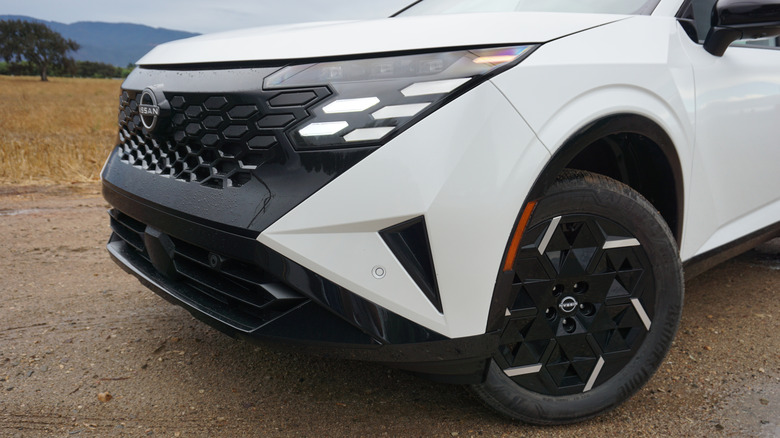
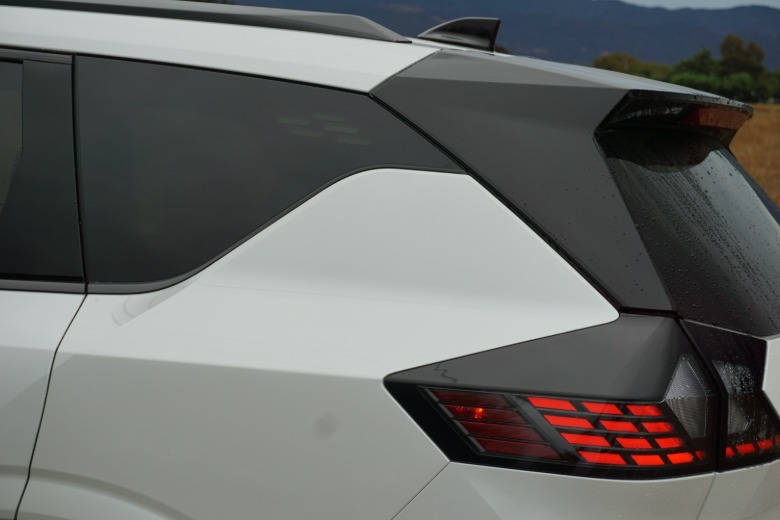
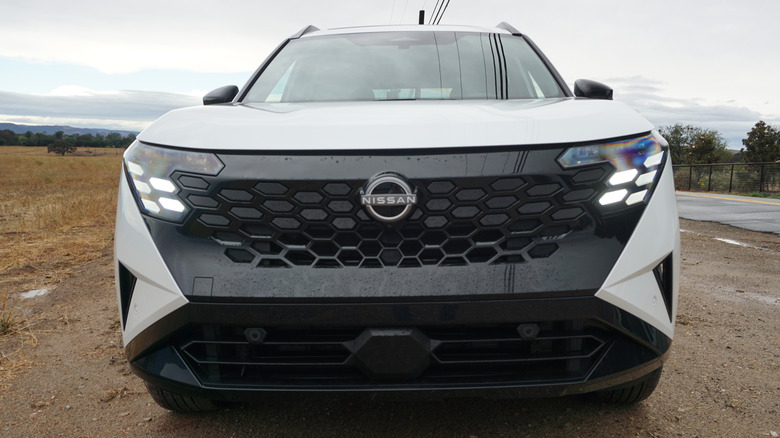
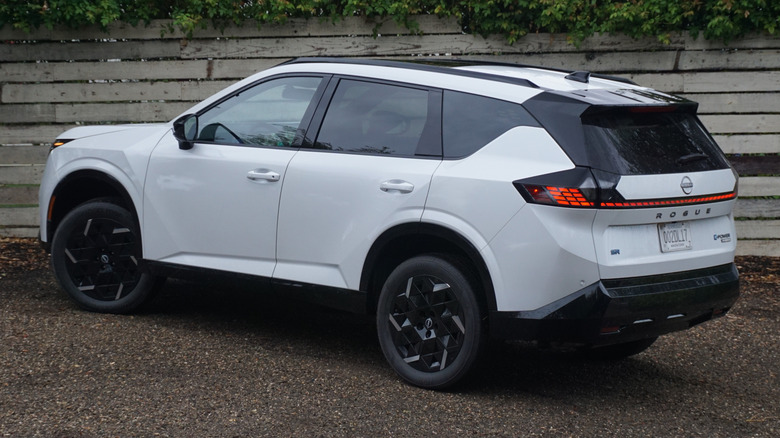
The outside of the Rogue Hybrid — and the regular Rogue, for that matter — is pretty handsome, too. Granted, we haven't technically seen the ICE Rogue just yet, but from my understanding it'll look just like this bad boy. 1 It does a good job of not leaning into the machismo soft-roader aesthetic these types of vehicles are going for right now, which is certainly refreshing. It does remind me slightly of the outgoing Hyundai Tucson, which is okay since the new-gen Tucson has joined in on the beefy-looks fun. One of my favorite elements of the car is the upkick in the bodywork on the rear quarter panel, which is designed to evoke Mount Fuji's silhouette. It's a little silly, but I like it.
A price to pay
Much like a man who hasn't accepted he's going bald yet, the Rogue's lineup is going through what Nissan is calling a "phased transition." Basically, Nissan isn't quite ready for a full launch of the fifth-generation Rogue just yet, but with a sweet product like the Rogue Hybrid and its e-Power drivetrain, the Japanese automaker wanted to get things moving. That's why the 2027 Rogue Hybrid will lead the charge for the new bodystyle. In the meantime, Nissan says the current-generation internal-combustion-powered Rogue will continue for the 2027 model year, and a fifth-gen ICE Rogue will eventually come out for the '28 model year.
 Andy Kalmowitz/Jalopnik
Unlike the ICE Rogue, there won't be a true "base" Rogue Hybrid, since the lineup begins with the SV rather than S. That car starts at $37,065, including destination. From there, we move up to the Rogue Hybrid SR, which starts at $39,065. Then, there's my test car, the SR Tech Package, coming in at $43,065. Finally, at the top of Rogue Mountain is the Platinum, which will set buyers back $45,065. Each trim adds in niceties like bigger screens, more driver aids, better cameras, more premium seating materials, as well as heating and ventilation for your tush. There's even a 10-speaker Bose audio system on the Platinum, but the standard six-speaker system is fine enough as-is. You're a smart fella. You know how these things work.
Going Rogue
In a sea of fairly uninteresting vehicles, the Rogue Hybrid dares to be different. It dares to actually be interesting. Of course, that's mostly down to its drivetrain. There's really nothing else about the Rogue Hybrid that's particularly exciting, but its e-Power drivetrain is something truly unique in the U.S. market. Sure, similar powertrains exist in other parts of the world. Hell, Nissan sells a variety of e-Power models in 68 countries already, but that doesn't matter for us.
While e-Power may not set the world on fire when it comes to efficiency, it does offer a completely different way to interact with a hybrid vehicle, and it offers up a far more relaxing and refined experience than you're going to find in anything that isn't a true EV. Because of that, you've really got to ask yourself what your priorities are: all-out efficiency or a more pleasant driving experience. The answer to that question will tell you if the Rogue Hybrid is right for you.