

2027 Hyundai Tucson Goes Right For The RAV4 With A 42-MPG Hybrid And A Smarter Brain
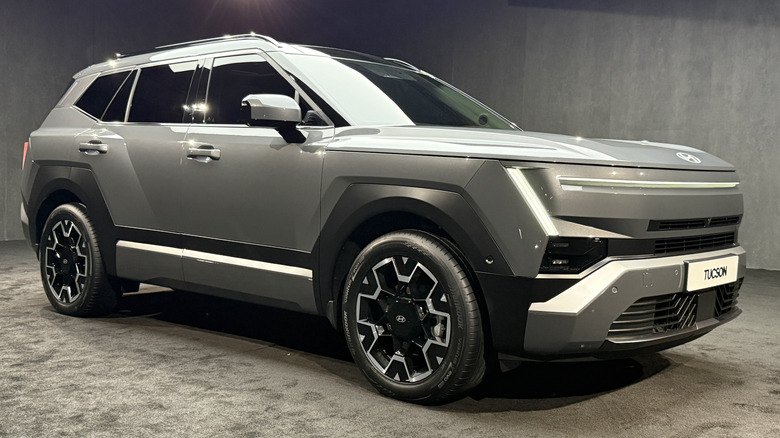
There's no more important segment in the entire automotive industry than the compact crossover. Just about every single automaker offers at least one, and they're all trying to stand out in the crowd and take down the king: the mighty Toyota RAV4. In a world where everybody is going for more rugged looks, the Tucson was a bit too flowy for some people's tastes. Now, for its fifth generation, Hyundai is switching directions completely, offering a much different-looking Tucson than we've seen before.
Gone are the softer, sportier lines of the old car. They've been replaced with hard edges, a more boxy profile, and wider hips. It's also grown a bit bigger in every dimension. Inside, you'll find a nicer interior with upgraded soft-touch materials, interesting patterns and an entirely new user interface running on Hyundai Motor Group's Pleos operating system. Hyundai also decided to reshuffle its powertrain options for 2027, dropping the plug-in hybrid it admitted wasn't selling particularly well, and it's now offering a U.S.-exclusive XRT Pro trim with real mechanical differences from the normal car. Hyundai is clearly swinging for the fences with the redesigned Tucson, and it ought to, because the segment is as competitive as ever.
Full Disclosure: Hyundai paid for my food and transportation so I could check out the 2027 Tucson at a warehouse in Jersey City, New Jersey.
Looks, maxxed
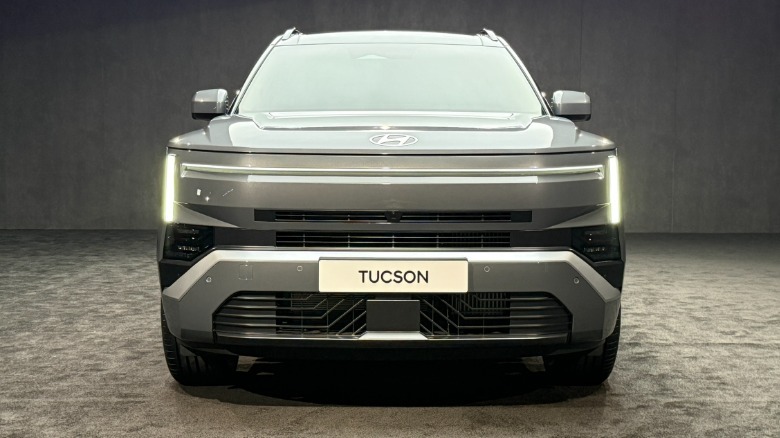
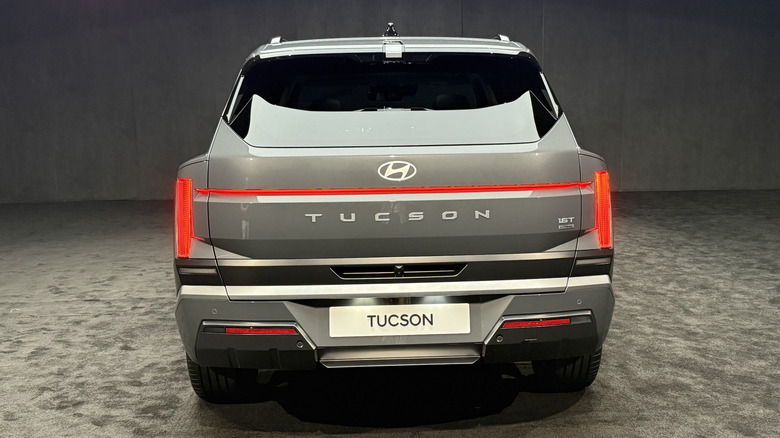
Unlike a lot of automakers, Hyundai doesn't subscribe to a single design ethos or believe in the idea of small changes between generations. The new Tucson is vastly different from the car it replaces, and it follows the brand's new Art of Steel design language with plenty of angles, funky surfacing and slim lights shaped into H-patterns on the front and rear. It's far more muscular-looking than the last generation, more in keeping with the sorts of design trends folks are into these days, and it takes a bit of a page out of the Santa Fe's playbook in that regard. While it might be a bit bold for everyone's taste (I personally think it looks great), there's no denying that the new design is crisp. It's got an impressively low drag coefficient of 0.30, too.
 Andy Kalmowitz / Jalopnik
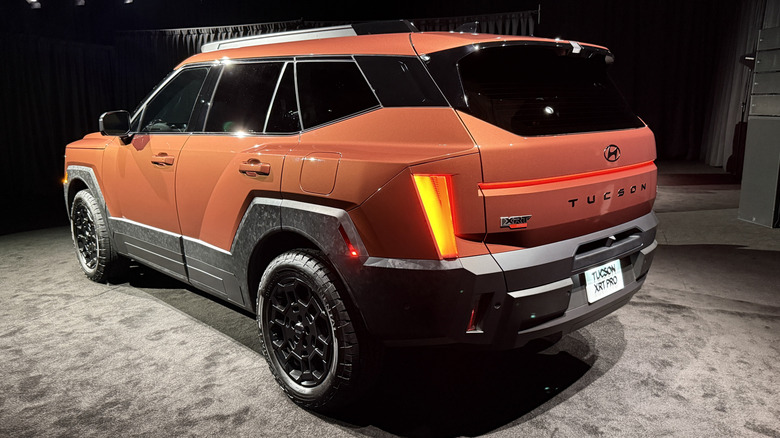
Hyundai says the fifth-generation crossover is 2.4 inches longer, 1.6 inches wider and 0.8 inches taller than the previous-gen model. Its wheelbase has also grown 1.2 inches, with most of that going to rear legroom. All of this, along with the more upright nose and thin lighting elements up front, makes the Tucson look a lot more imposing. Hyundai says the available Micro Pixel headlights made up of 25,600 individual LEDs, and the treatment out back is equally interesting, especially the taillights that are actually see-through from the sides.
There's some new paint finishes as well, and they aren't just black, white, gray or silver! The four new colors are Kodiak Blue Pearl, Ranger Green in Pearl or Matte finishes, Driftwood Gray in Metallic or Matte, and my personal favorite, Red Rock Orange Pearl or Matte. It has some really interesting hues that show up as pink or purple depending on the lighting. It's also the hero color for the Tucson's XRT Pro trim, which offers all sorts of actual physical differences meant to make the Tucson more capable.
Comfy, cozy cabin
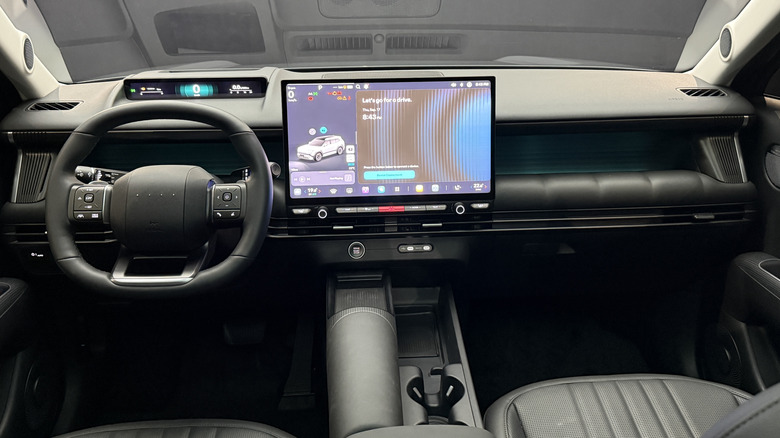
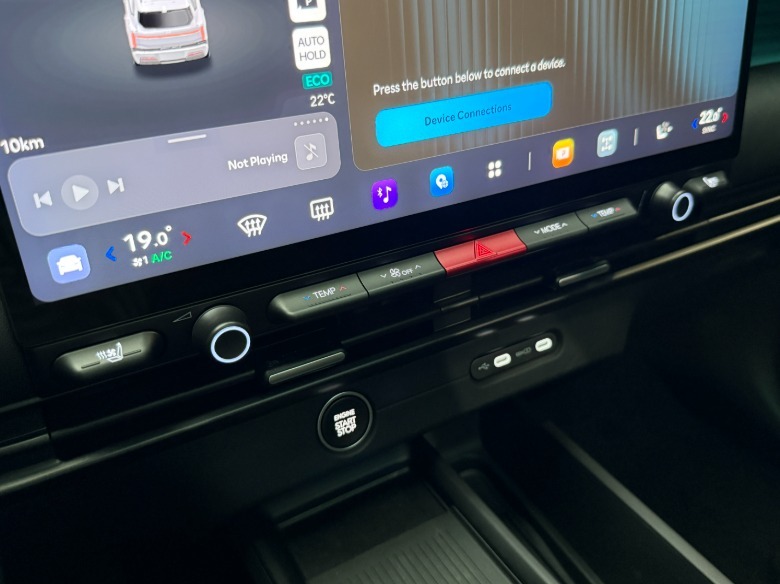
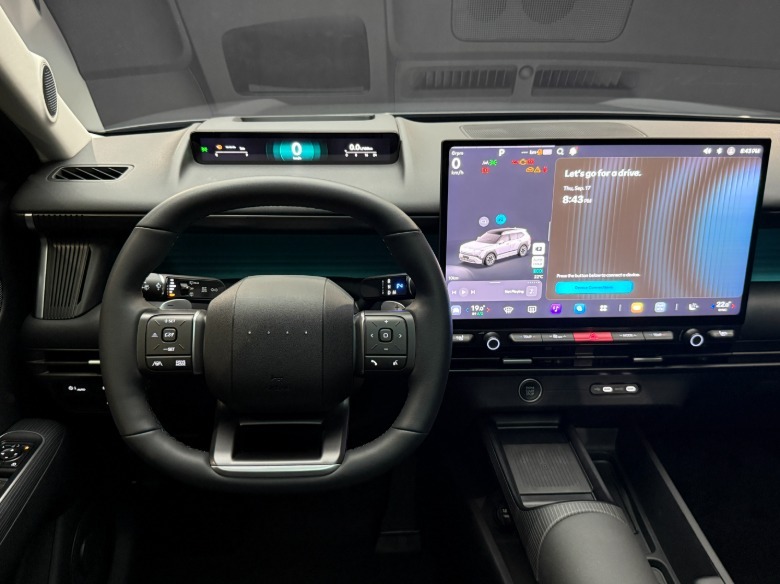
Hyundai didn't just blank-sheet the 2027 Tucson's exterior, either. It also redid the crossover's interior, creating a much plusher and more inviting space. The automaker Hyundai describes the Tucson as a "software-defined vehicle," but it still has some of the physical switches and controls drivers use every day, like buttons on the steering wheel and below the center infotainment screen for climate and radio controls.
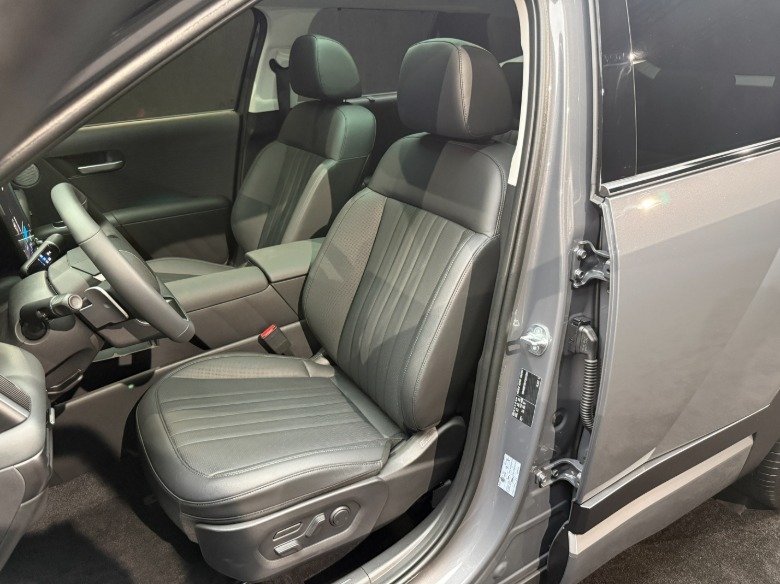
The interior is apparently inspired by home furnishings, and that's why you'll find all sorts of soft cushioning and ergonomically shaped surfaces. It's supposed to make you feel relaxed, and I guess it sort of did, even during the chaos of a vehicle reveal while I sat in there to get away from another car journalist I didn't particularly want to talk to. The massaging ErgoMotion driver's seat certainly helped, too.
 Andy Kalmowitz / Jalopnik
There's a real feeling of openness in the Tucson's cabin, thanks partially to the increase in size. It's roomier for rear-seat passengers too, with more head, leg and shoulder room. I was able to fit behind myself without a problem at 6-foot-1, and getting in was a cinch, thanks to the fact the rear doors now open at an 83-degree angle.
The more minimalist designs of the dashboard and center console also contribute to the airiness. Hyundai worked to slim both down, cutting down on distractions while creating what it calls a "two-layered instrument panel design" that separates form and function. The horizontal upper layer is meant to provide visual comfort, and the lower area and open tray are for a more practical storage space and optional dual 15-watt wireless charging pads.
 Andy Kalmowitz / Jalopnik
One of the goals of Hyundai's Pleos Connect system is to cut down on driver distractions, which is why the infotainment layout is pretty simple. In the middle of the dash, there's a fairly traditional 12.9-inch touchscreen. The left section of the screen serves as a driver display showing speed and other pieces of vehicle information, while the rest of it is a regular infotainment screen with configurable widgets for media, maps and everything else you could imagine — including things you can't imagine since Pleos allows owners to download apps created by others.
Behind the squircle-shaped steering wheel is a rather slim 9.9-inch display similar to what we saw on the Polestar 4. Engineers say it's meant to keep the driver's field of vision uncluttered and only display critical information like speed, as well as radio, map directions or a few other things via widgets. It's almost like a head-up display built into the dash.
Drivetime
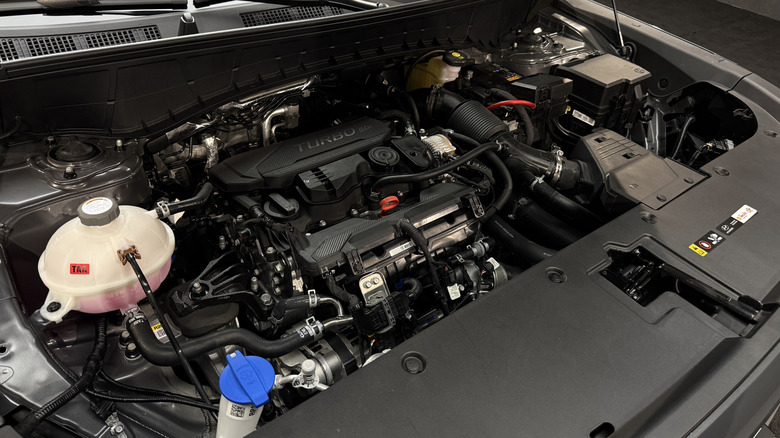
When the Tucson officially launches in the U.S., we'll be given the choice of two different engines: a turbocharged 1.6-liter inline-4 or that same motor hooked up to a hybrid system. Unfortunately, the plug-in-hybrid Tucson will not see a fifth generation in the U.S. (it lives on overseas), but there's a possibility that an extended-range electric version of the crossover comes sometime down the road.
In any case, Hyundai is dropping the naturally aspirated 2.5-liter inline-4 from the Tucson lineup for the new generation. The turbo four takes its place, pumping out 187 horsepower and 195 pound-feet of torque through a eight-speed transmission to either the front wheels or an optional all-wheel-drive system. It's enough oomph to move the boxy little thing from 0 to 60 mph in 9.5 seconds, not that Tucson buyers really care about that. What is important is the fact it'll return an EPA-estimated 28 mpg in front-wheel drive guise, or 26 mpg with all-wheel drive. It'll be available on the SE, SEL and Limited trims.
 Andy Kalmowitz / Jalopnik
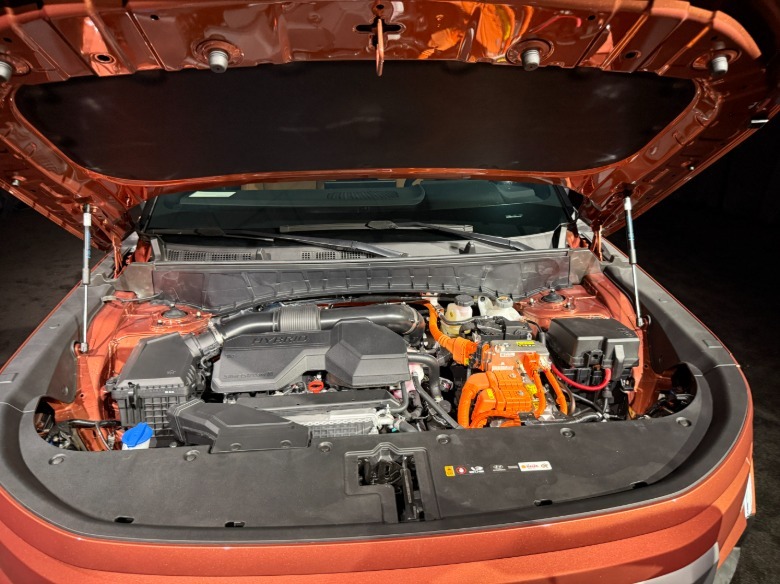
Since regular hybrids are all the rage right now, Hyundai wasn't going to sunset that motor. It's largely similar to the one found in the previous Tucson Hybrid, but power is now up to 233 hp and 280 lb-ft of torque, sent through the same six-speed automatic transmission to either the front wheels or all four depending on how spicy you are. The real headline here is that, when properly equipped with front-wheel drive and 17-inch wheels, the Hybrid will return 42 mpg combined. At worst, mileage drops to 38 mpg, which is still quite solid for a vehicle this size. Hell, even the 0-60 time is pretty good at 8.5 seconds. It's no sports car, but it's not a slouch either.
The hybrid has other cool stuff like Stay Mode, which will run interior comfort accessories off the electric motor, rather than running the gas engine. An E-Traction system can move torque from wheel to wheel to increase traction when a sensor detects slippage. Hyundai says the hybrid powertrain is available on the same three trim levels as the base engine, and it's the only one offered on the XRT Pro model since it needs the extra oomph to deal with the added weight and increased drag that comes with a higher ride height and chunkier tires.
 Andy Kalmowitz / Jalopnik
Of course, the Tucson will be offered with all the driver safety features and aids we've come to expect, which are pretty close to top-notch in the auto industry. New features include navigation-linked adaptive cruise control that will proactively decelerate for curves and other road conditions like speed bumps using that nav data. There's also Smart Terrain Assist, Target Speed Control, Memory Reverse Assist, Ground View Monitor and Trailer Reverse Assist. In the Tucson, you're being assisted, rest assured.
Never rest
Hyundai has been doing a bang-up job with the Tucson. Since its introduction in 2004, the Korean automaker has sold 10 million units worldwide, and it just had its best sales year ever in 2025 with over 235,000 Tucsons sold in the U.S. alone. It's never really been a company that has liked resting on its laurels, though.
A senior VP at the company told me that the design of the new Tucson is meant to be "bold on purpose," and clearly Hyundai really went for it with this one. Sure, the new look of the Tucson might spook some of the more conservative-minded folks out there who are afraid of change and illegal immigration, but everyone else should be able to appreciate the fact that Hyundai went buckwild with the next-generation 2027 Tucson. It's tough to say where Hyundai goes from here, but I'm not too worried. It always finds some way to one-up itself.