

Why Most Cars Won't Be Able To Last 300,000 Miles
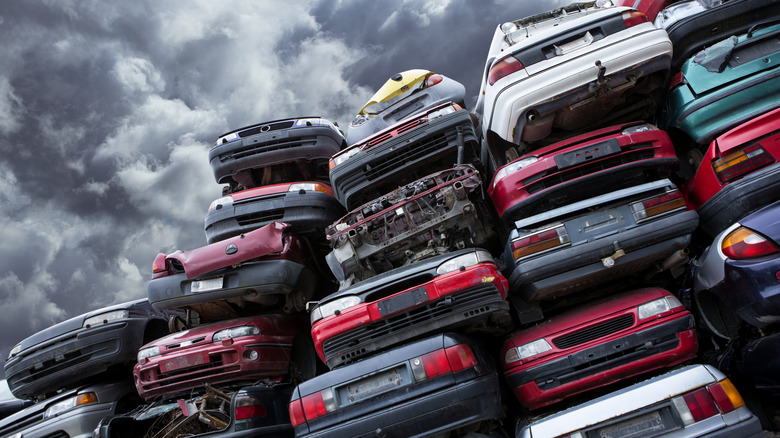
New cars are better than ever. They are quicker, safer, more efficient, and loaded with enough technology to make Marty McFly's DeLorean feel like a tin can. On top of all that, a new car is packed with that intoxicating off-gassing scent known as new-car smell. However, that smell will eventually fade, and despite all of the advances in engineering, manufacturing, materials, and design, getting a new car to last for 300,000 miles is harder than you think.
Of course, 300,000 miles is no small feat. As recently as the 1980s, many automakers still used analog five-digit odometers in their cars. In other words, even the people building them didn't make six-figure mileage a priority. Cars built today are expected to last 100,000 miles easily. That is one reason why owners are holding onto cars longer than ever. The average car in the U.S. is 12.8 years old. So, you would think that even 300,000 miles should be reasonably attainable. But there is more standing in your way than you may expect. For one thing, it will take you a very long time to get there.
As of 2024, the average light-duty passenger vehicle with a short wheelbase traveled 10,812 miles per year. At that rate, it would take nearly 28 years to reach 300,000 miles. That is a long time to be dodging potholes and distracted drivers. However, time is just one reason why most cars will never see 300,000 miles on the odometer.
Cars are built differently today
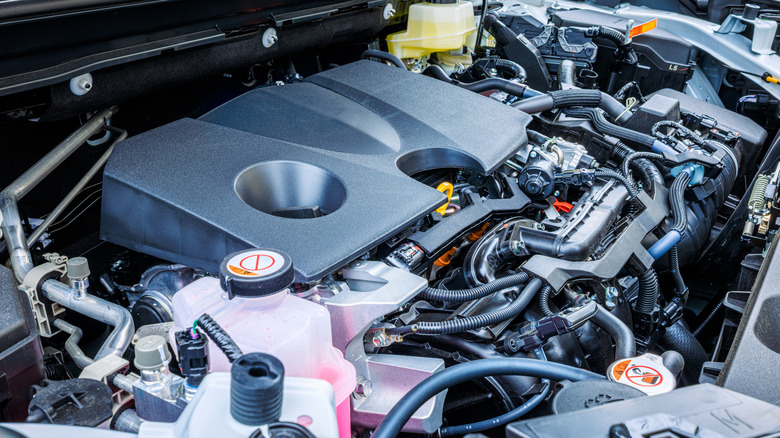
Open the hood of a car built 30 or 40 years ago, and you may be surprised by what you find — or what you don't find. First, the engine isn't hiding under a cover, and everything is easily accessible. You can probably even see pavement underneath because everything isn't packed so tight as it is in a modern car. And it doesn't need to be, because there isn't as much to pack under the hood.
The average modern car today contains roughly 30,000 individual parts. It is an incredible feat of engineering to get them all working in harmony. But 30,000 parts means 30,000 potential sources of failure.
Older cars were simple and just built different. Take, for example, the Ford Crown Victoria. It was built on the Ford Panther platform. It is a simple, rear-wheel drive, body-on-frame car. Most cars today are not constructed this way. Heck, most SUVs don't even use body-on-frame construction anymore. But the Crown Victoria did. As a result, it was incredibly strong. An early 1990s Crown Victoria, with the optional tow package, had a 5,000-pound tow rating. That is more than a modern Ford Maverick pickup truck.
A modern car is quicker, more efficient, and handles better than an old Crown Victoria. The tradeoff is the complexity that comes with the modern car. A Bugatti Tourbillon is one hell of an impressive car. If you want to wow your friends at a car show, that is the one to have. But if you want a car to take you around the equator 12 times, a Tourbillon with a cross-plane crank 8.3-liter V16 combined with three electric motors may not be the best choice. Give us the dead-simple Ford.
Clean air isn't easy
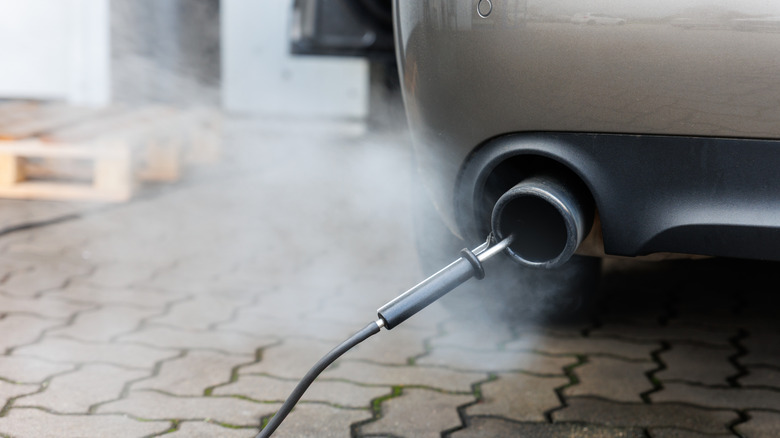
In the halcyon days of 1960s muscle cars, big-block V8 engines and ever-increasing horsepower figures seemed like they would never die — until they did. In 1975, Congress introduced the Corporate Average Fuel Economy (CAFE) standards. Automakers now had to strive to make their vehicles more fuel efficient. In 1978, the average fuel economy standard was 18 mpg. By 2031, that target will be 34.9 mpg. That is a dramatic improvement that required manufacturers to rethink how they built automobiles.
Not only did vehicles have to become more fuel efficient, but they had to be cleaner as well. As a result, catalytic converters, oxygen sensors, diesel particulate filters, and other emissions-related components are all part of modern cars and trucks. These not only add more points of failure but also increase maintenance costs.
Then came technology like direct injection, which sprays fuel directly into the combustion chamber. That is great for lowering emissions and improving fuel economy. However, it can also lead to carbon buildup. If left untreated, this condition can lead to lower performance and fuel economy, and, in extreme cases, it could mean an early death for your engine.
We are asking more from powertrains

Modern engines are capable of generating impressive power from relatively small displacement. The AMG CLA45 S Final Edition coupe, for example, can produce 416 horsepower from a tiny turbocharged 2.0-liter 4-cylinder. That is more powerful than the 5.4-liter V8 found in the C55 AMG from 20 years ago. It is an incredible achievement — however, it also means we are asking a lot more of modern engines. To achieve these impressive power outputs, modern engines rely more heavily on forced induction and hybrid assistance. That doesn't make them inherently unreliable, but it does make them more complex, and more stress is put on engine internals such as the rings and bearings.
The good news is that electric vehicles eliminate the high-stress, complex engines, but they introduce something else. That something else is enormous battery packs. How will those battery packs hold up nearly 30 years from now? The average degradation rate for an electric vehicle battery is 2.3% per year. So, in 14 years, when an EV would be just halfway to the 300,000-mile mark, the battery would have lost over 32% of its efficiency. And a replacement battery pack could cost more than $25,000.
If these high-stress engines or battery packs need to be replaced, that could be enough to end a car's life. The cost to fix may outweigh the value of the vehicle.
Technology ages faster than cars
The average car today is far safer than those of decades ago. Air bags, anti-lock brakes, electronic stability control, and countless other features keep us all safe. According to NHTSA, over 600,000 lives have been saved between 1960 and 2012, thanks to these advanced features. That is amazing progress, and we all want our families to be in the safest cars possible. However, it's also precisely why a car today may not make it for 300,000 miles.
With race car safety innovations trickling down to everyday cars, an older vehicle's safety technology will increasingly lag behind that of newer models. The safest car on the planet today may only have a fraction of the most advanced safety features that new cars 15 years from now will have. Buying a new car because it has the latest safety equipment is a completely reasonable excuse to upgrade to a new car and ditch your old one.
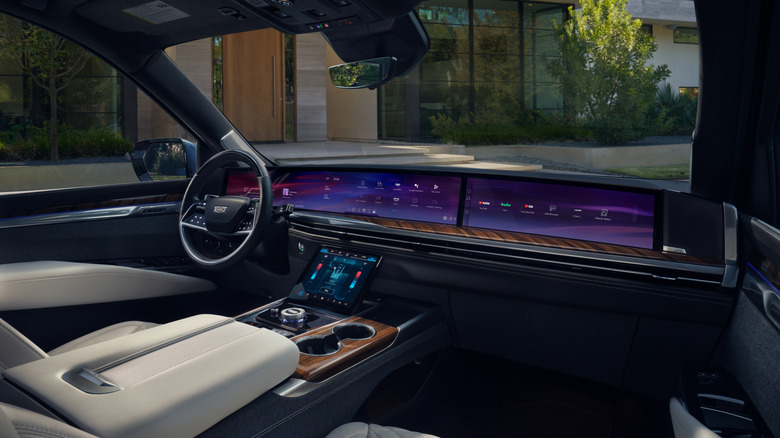
But as quickly as advances in safety technology come, infotainment advances come even faster. Remember, 20 years ago the iPhone didn't even exist. Now, you can buy one that you can fold into your pocket. Technology moves at lightning speed. A car that seems advanced today can be outdated in a few short years. Porsche recognizes this, which is why it offers PCCM Plus for its older models. But not everyone drives a Porsche, and most automakers are not developing new infotainment systems for cars they stopped building decades ago. So, if you want the latest safety and infotainment technology, you are going to have to upgrade to a new car. Your older car may find a new owner, or it may go to the recycling plant.
Rust is undefeated
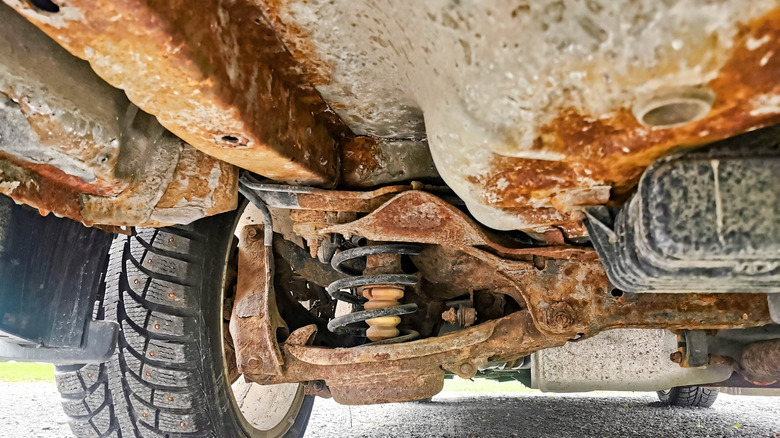
Corrosion protection has improved dramatically over the years. Rust-resistant metals such as aluminum are more common. Protective coatings have improved. New vehicles today don't have nearly the rust concerns that vehicles of the past did. That is one reason why every new Tesla comes with a 12-year warranty against rust. But that doesn't mean it still can't happen. And remember, you will need to keep your car for nearly 30 years to reach 300,000 miles. That means exposure to a lot of harsh winters with your vehicle being bombarded with rock salt and brine solutions.
Ford switched the F-150 to an aluminum-intensive body for the 2015 model year. Not only did that save a dramatic amount of weight, but it also dramatically reduced the likelihood of rust. However, the frame, suspension, and other components under the body are still steel. These parts are exposed to the elements and can rust over the years.
The Toyota Tacoma is one of the most famously reliable vehicles ever made. Yet, in 2019, a service campaign was issued for 2011 to 2017 model year Tacos. The campaign noted that in climates that expose the truck to road salt, the truck frame could rust to the point where it would need to be replaced. A rusted frame is usually a death sentence for a truck. For a vehicle to last 300,000 miles, it needs to avoid the brown death for nearly three decades.
The car depreciates but the repair bill doesn't
According to Bureau of Labor Statistics data, the cost of motor vehicle maintenance and repair increased by approximately 55% between January 2020 and August 2026. That is a significant increase in just over half of a decade.
There are several reasons for this sharp cost increase. Post-pandemic inflation certainly plays a role, but so does modern vehicle technology. If your car is involved in a crash, roughly one third of the overall shop bill goes toward repairing or replacing advanced driver assistance systems (ADAS). Per AAA, "the average cost of replacing ADAS components in a minor front collision repair was $1,540" back in 2023. On top of that, you have to factor in fixing body panels and other expensive components such as modern headlights. A single Laserlight headlight repair for a modern BMW M4 can cost as much as $9,000.
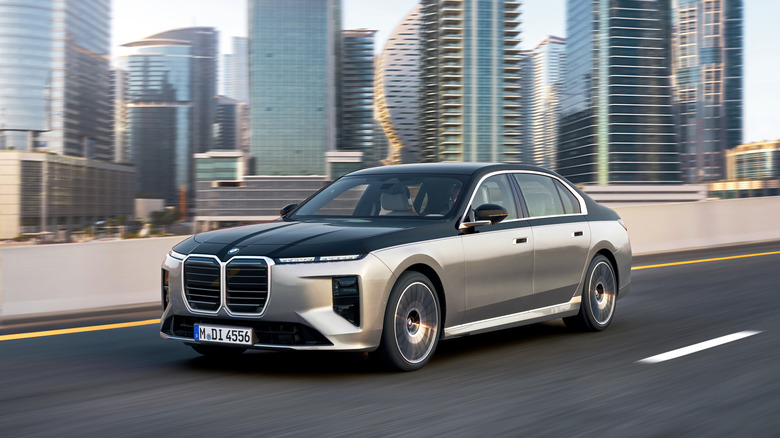
Depreciation makes expensive repairs like that difficult to justify. According to an iSeeCars study, the average new vehicle loses nearly 42% of its value after five years. Some vehicles, such as the BMW 7-series, will lose over 60% in that time. After 10 years, the average asking price of a used car is just $14,195. And while the value of the vehicle can decrease dramatically, the cost of the repairs doesn't. There is a reason why we aren't all tooling around in 20-year-old Bentley Continental GTs and Aston Martins.
Dropping $5,000 to repair a $100,000 car is painful but justifiable. Dropping $5,000 to repair the same car that is now worth just $15,000 becomes a much harder decision. Sometimes, it is best to just put a car out to pasture for financial reasons, even if it could still reach that magical 300,000-mile mark.
Who will fix our older cars?
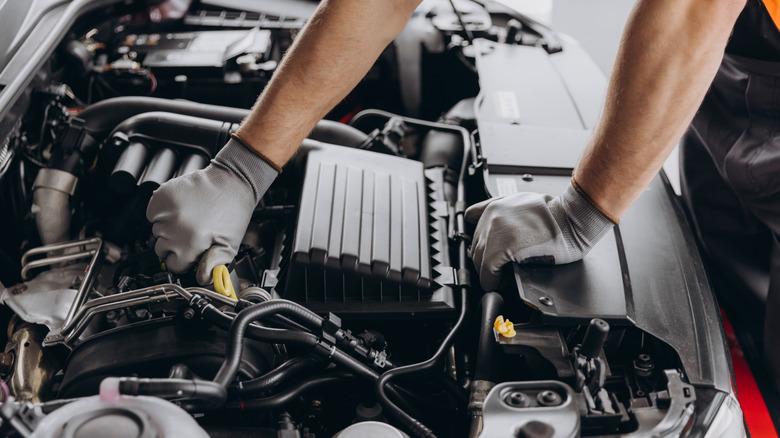
As cars become more complex, they also become more difficult and expensive to fix. Even if you can easily afford the cost of the repair, who is going to do it? Back in the day, you just needed a decent toolbox and some basic mechanical knowledge, and you could handle almost any job. Unfortunately, those days are long gone, as cars have become rolling supercomputers. In the early 2010s, the average car required 10 million lines of software code. Today, that number is over 100 million. Pop the hood of your car, and you will find between 30 and 150 ECUs.
One major concern is the reliability of all these electronics as they age. But the bigger concern is knowing if people will be around to fix them. To keep up with demand, the U.S. automotive industry needs 76,000 new technicians each year. We are currently falling well short of that number, with just 39,000 new service techs graduating annually.
Imagine it is the year 2040 and you have a 2026 model-year car with obsolete electronics, discontinued components, and software that few technicians have experience using. Having the money to pay for a repair is only half the battle. Finding a shop that you can trust to do the job right may be the bigger challenge. It may be easier to just buy something newer.
Nobody is thinking about 300,000 miles

Sometimes, a car won't reach the 300,000-mile mark, but not because of any shortcoming with the vehicle. The problem may be the owner. Many vehicle owners today just don't think long term.
In 1990, only about 4% of cars were leased. Fast forward to 2016, and that figure had climbed to roughly 30%. The pandemic brought a sharp decline in leasing, causing the percentage to drop to about 17% of new vehicles. That has since rebounded to about 23% today. Understanding how car leasing works will help explain why long-term vehicle reliability may not be the top priority for the average lessee. The person leasing a new car is only going to keep it for a couple of years. That's not to say all leased cars are neglected. But leasing changes our perspective. We may not be as concerned about how the car will operate 10 years from now, because we won't own it that long.
Whether a car is leased or not, many Americans simply don't keep up with maintenance. According to CarFax data, hosted by PR Newswire, 29% of owners are behind on oil changes, and 44% are behind on tire rotations. That may not seem like a big deal on a 2- or 3-year-old car. But if you want your vehicle to make it to 300,000 miles, regular maintenance is critical, even when a car is new.
So, for a vehicle to last for 300,000 miles, it must survive a number of mechanical, technological, and financial challenges for almost 30 years. But on top of it all, the car needs to have owners that are willing to invest in proper maintenance from day one. This is why most modern cars just won't make it.