

9 Tips To Help Your Car Last 300,000 Miles (Or As Close As It Can Get)
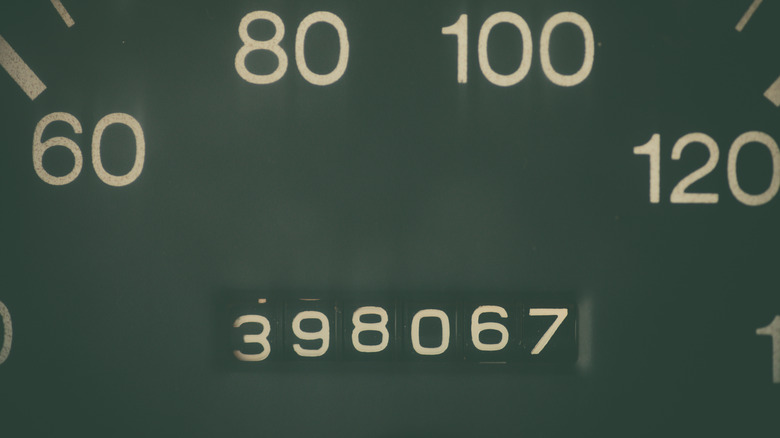
We've talked before about what million-mile engines have in common. Accomplishing such a feat requires a lot of stars to align, including the car having the sort of driving routine that lets it rack up a million miles in the first place. That's kind of impressive even before you start thinking about things breaking.
But 300,000 is a different story. 300,000 miles is the kind of distance that regular people can end up covering doing regular people things. The first 100,000 barely count –- a Hyundai powertrain isn't even out of warranty until then -– and pushing through and beyond six digits on the odometer is fairly normal stuff. How normal? We don't know. Despite the fact that you have probably personally provided your odometer reading to your insurance company and state motor vehicle office, not to mention had it spammed back to you in emails from Carfax or some company eager to talk about your car's extended warranty, there's actually not a clear aggregate data source for the little mileage number hiding in the gauge clusters of basically every car on the road.
What we can say is that 300,000 miles on a car is a lot, but it's not necessarily newsworthy. It's... doable. It might require a lot of care and some amount of luck, but there are at least some things you can do day-to-day that will give you a fighting chance at making it into the club.
Following the maintenance schedule means knowing what it is
Once upon a time, maintenance schedules lived in your heart, for vehicles and otherwise. You change your smoke detector batteries when daylight saving hits and 3,000 miles was the interval for engine oil changes despite generational leaps in both engines and oil. Yet today a smoke detector might message your phone that it needs a firmware update and your Subaru wants new coolant after 137,500 miles.
Modern recommended maintenance intervals can be a little annoying, with every car seeming to have its own very special list of hopes, dreams, and needs that may or may not be necessary to keep it alive. And yeah, if you're trying to do the bare minimum to stay in good graces with your leasing company before you trade the thing in two years, it's probably overly precious to be worrying too much about your 90,000-mile spark plug change. But that's not what we're talking about. This is your ride-or-die companion that you're going to be driving for 300,000 miles. You're going to go through a lot together. The least you could do is crack open the owner's manual and understand what the very smart people who designed the thing recommend about keeping it going.
Become an oil change enthusiast
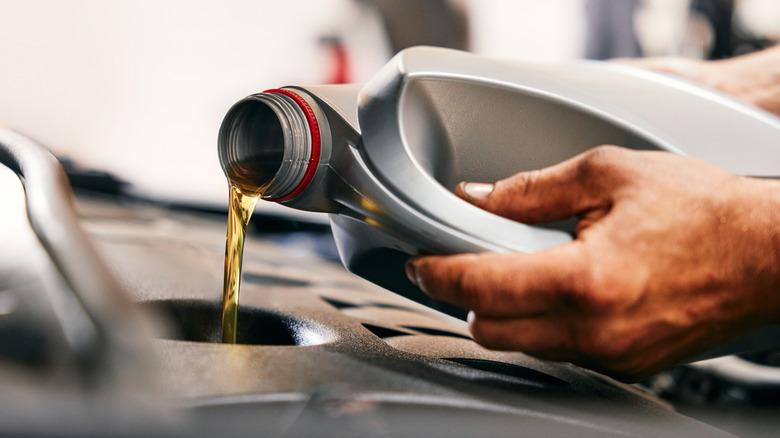
Obviously, the 3,000-mile oil change rule is ludicrous and the fact that mechanics and quick lube places kept saying it with a straight face for so long probably led some people to be a little skeptical about the whole premise. When even the 10-minute-oil-change guy starts winking when applying the sticker, you know something's amiss. But there's a huge gap between "oil change intervals aren't really what they say they are" and "oil changes are a conspiracy." You really, really need to stay on top of your car's oil and if you plan on going the distance to 300,000, it's table stakes.
That's because engine oil is doing a lot of different jobs. Obviously, it lubricates a bunch of fast-moving, high-stakes mechanical parts, which reduces wear and prevents things from breaking. But it also captures little bits of debris that will be flushed out when you do an oil change. There's a cooling component, particularly for corners of your engine where coolant can't really help. Also, a well-lubricated machine doesn't have to work as hard, meaning you're reducing strain on your engine, good news for something you're asking to run faithfully for a really, really long time.
So pull that owner's manual back out and see what kind of oil your car wants and how often it wants it. It almost certainly won't say 3,000 miles and your diligent enthusiasm for oil changes can become the backbone of your broader approach to car maintenance.
Remember that your transmission exists
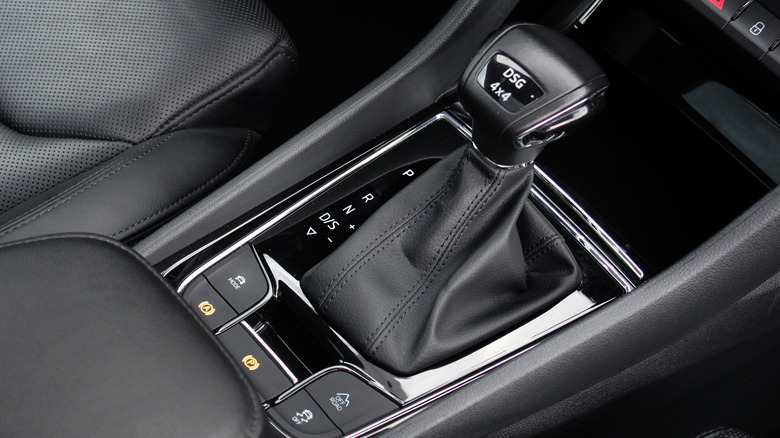
Given all that we ask of our transmissions, they really don't tend to make much of a fuss day-to-day. More and more cars are eager to tell you when they sense your oil needs attention, and it's hard to drive down the street without an oil change place with a snarky marquee sign telling you to stop in. Yet modern transmissions have gotten so good that some are marketed as "sealed for life," which might have you wondering if you need to change the transmission fluid on a sealed transmission or do anything at all.
The answer is yes, and even in the so-called sealed for life scenario, it turns out that "life" means something like 100,000 miles of driving and we're aiming for 300,000 here. The good news is that transmissions generally need less attention than engines, though making sure they get that attention is just as important. Fluid change intervals range from every 30,000 miles all the way up to that "for life" 100,000-mile mark, and again this is one of those things where you check your owner's manual and do as you're told. Beyond that: pay attention. A manual transmission naturally keeps you fairly in tune with how it's doing, but if you aren't shifting gears personally, keep an eye out for the signs that your car's automatic transmission might be having a problem.
Don't ignore the cooling system
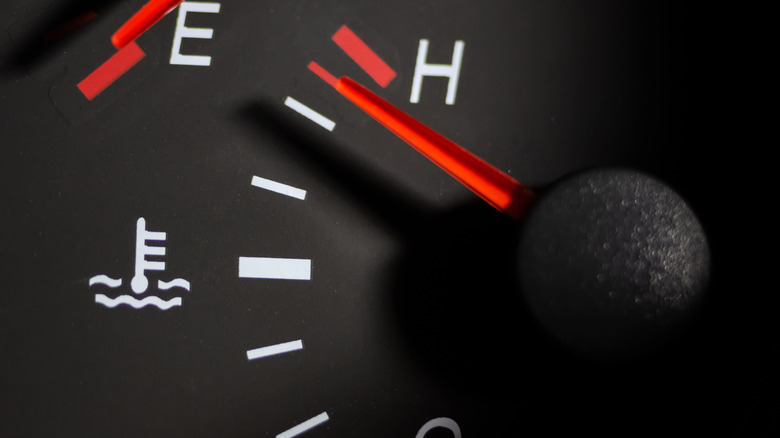
If you're trying to make an engine last, overheating is one of the things you really want to avoid along the way. Everyone knows that an overheating car can leave you stranded on the side of the road, but you might not realize that it can also sideline you on your journey to 300,000 miles. That's because while an overheating incident is dramatic, the quiet damage and deterioration caused by running hot can put crazy strain on certain engine components by wrecking gaskets, damaging valves, or worse.
The point here is that overheating can be catastrophic to an engine, but fixing the causes of it can often be trivially simple. Replacing a leaky hose or even reattaching one that has come loose might be a low-to-no-cost repair, which is a rare and wonderful thing. Something more complex, like a failing water pump, will increase the cost and effort required to address it. Either way, though, it's better than letting the motor run hot and you can at once be less nervous about making it into work tomorrow morning and more confident that you aren't slow-cooking your engine to the point that your 300,000-mile dreams go up in smoke.
Replace wear items before they tap out
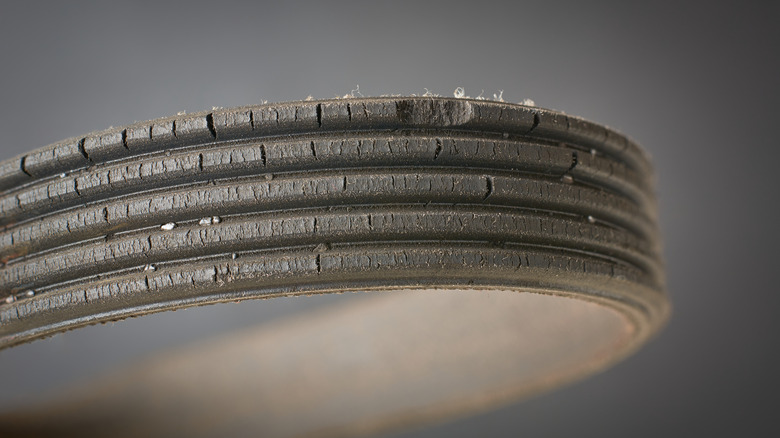
Replacing a worn hose or belt before it fails isn't good in some esoteric sense, like getting your taxes done before sundown on April 15. Replacing a timing belt on Saturday might mean it doesn't snap on Sunday, which could be the deciding factor on whether you're towing your car in for serious engine work on Monday. That simple belt is doing more than spinning pulleys. It keeps your engine's crank and cams in sync so that pistons and valves don't end up trying to be in the same place at the same time, with potentially devastating results.
This phenomenon where a small thing is minor on its face but can take out big expensive stuff with it when it fails is repeated in all sorts of ways throughout your car. From hoses to serpentine belts to bushings, mounts, and bearings, you're going to want to be in the business of staying on top of the little things if you want your car to keep going for a long time. Choosing to prioritize a $50 fix before it becomes a $5,000 overhaul is the kind of math that needs to win the day again and again as you cruise out of warranty and point yourself toward the sweet distant horizon of 300,000 miles. So yeah, don't let small, common mistakes destroy your engine before you get there.
Investigate odd noises

You can turn your car stereo up when you hear a weird noise you'd rather not think about or you can make it to 300,000 miles, but you can't do both. Besides, as much as it might spike your cortisol when a grind, a clunk, or a hum hits your ear when you're driving, it very well might be a blessing in disguise. Your car is telling you something, and there's a good chance that what it's telling you is that a small, inexpensive problem is raising its hand before it turns into a disaster.
We're not saying that you need to become an automotive Sherlock Holmes who knows how to tell if your wheel bearings are going bad by sound, but what you don't want to do is start tuning things out. When you're in a relationship with a car for a long period of time, you can end up accumulating an awful lot of, let's-call-it ambience. Don't chalk something up to the car having character when it might actually be a noise telling you that a heat shield is about to rattle off going over those train tracks and open the door to the exhaust cooking your gym bag in the cargo area. (No, that isn't a theoretical example and yes, that Forester did make it to 300,000 miles, albeit with a hole burned in the carpet.)
Anyway, you don't have to diagnose every sound from the driver's seat, but you do need to notice when something curious is going on, especially if it's polite enough to make a noise for you.
Reduce your salt intake
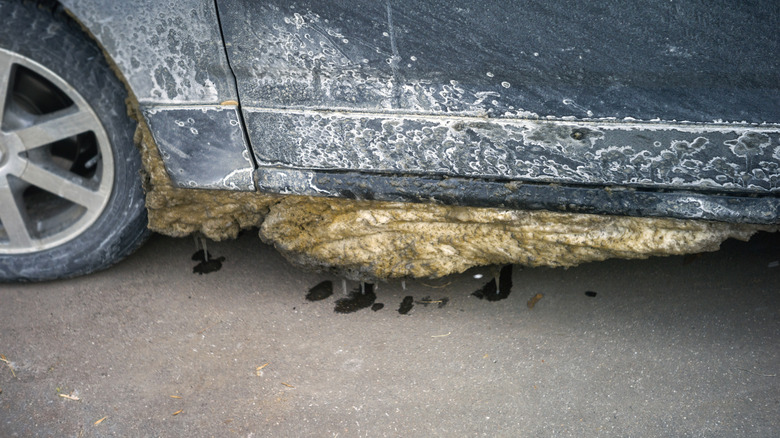
If you live somewhere that they salt the roads in the winter and you want to make it to 300,000, um... probably move. As any real Rust Belter will tell you, the salt comes for us all and your efforts to stay ahead of it will be futile at best. Salt damage can sink its teeth into anything and everything, from a body panel when a paint chip lets corrosion get a foothold to brake lines, suspension bits, and even the vehicle's frame itself.
The best you can do to combat the risk (again, aside from moving away and giving your car a long shower when you get there) is to park inside when you can and wash the exterior and undercarriage of your car often. Of course, this invites the eternal cold-weather debate about whether it's worse for your car to leave it salty or to wash it in freezing temperatures, but really that's one of those questions with no good answers.
The main thing here is to avoid salt when you can and, when you can't, rinse it off as promptly as possible. We wish there was better news on this one. If you live in Michigan and want to make it 300,000 miles, it's not impossible. It's just that you're going to face some adversity that others don't. The best thing you can probably do is get politically active and advocate for clearing our roads with pickle brine instead of rock salt.
Keep track of everything

There's an old management cliche that says what gets measured improves. It's not wrong. If you have a detailed accounting of your maintenance and service, you're both more likely to get the intervals right and more likely to continue giving a damn. Ignoring the oil change sticker that was probably a lie to begin with? Easy. Disappointing your little binder of service receipts? You would never.
Maintenance records keep you organized and they also keep you honest. Not only will you have some built-in personal accountability by the simple act of documenting the life of your vehicle, you'll also have an honest, impartial assessment of what it's costing you to keep that odometer spinning. You know, just in case you start wondering if your high-mile ambitions (not to be confused with mile-high ambitions) have passed the point of financial reason. You don't need a leather-bound archival-quality tome with gold embossing — any folder or file or app will do the trick. But if you're going to keep a car through 300,000 miles, at some point you're going to forget what happened back at mile 180,000.
Let a mechanic get to know your car

There's something to be said for having the same person look after your car for the long haul. (There can be drawbacks, too, of course. Recall the obsessive mechanic taking off with Jerry's Saab on "Seinfeld.") A good shop can develop a relationship with both you and your car, building up context for the quirks and nuances of your vehicle in particular. Someone who has watched your car age and checked in on it at regular service intervals will have a better perspective on what's going on and how to help you keep the thing on the road for a really, really long time.
They also won't try to talk you into a new lease the first time some bushings need to be replaced. Unless you're a deeply talented wrench with time to spare, you'll likely need to tag in a pro, at least here and there. It's nice to not have to start from scratch with someone new, especially if the stakes are high and a serious prognosis discussion is needed. The longer somebody spends learning your car's idiosyncrasies, the closer you'll be to having somebody who gives as much of a damn about it as you do.