

Car Repair Costs Have Risen Twice As Fast As Inflation
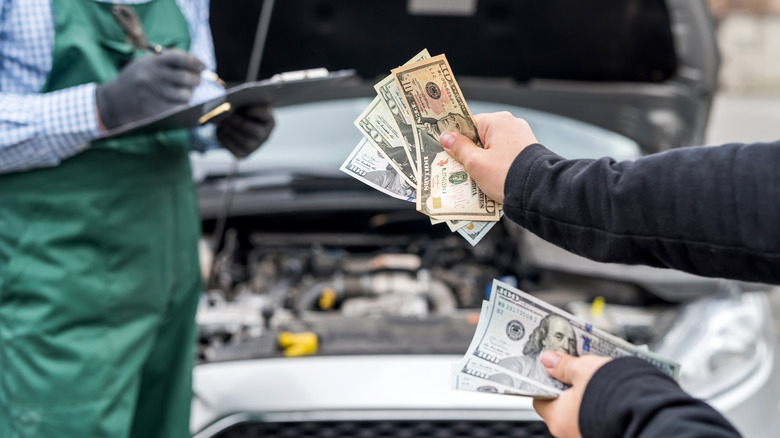
Everything is more expensive than it was not too long ago. The price of gas is through the roof, and the reasons why are pretty obvious. What's less obvious is that buried among ever-rising fuel, utility, and grocery bills, the cost of keeping your car on the road has increased 60% since January 2019, according a report by the St. Louis Federal Reserve. Inflation has only (only!) increased 32% during the same period.
Dealers deserve part of the blame, since they generally charge higher prices than independent shops and are mostly a scam anyway. But even independent shops are jacking their rates, too, and it isn't really their fault, either. CNBC visited Emil's All-Tire in Brooklyn, New York, where owner Ralph Czeisler explained where these rising costs are coming from.
[During] an oil change Czeisler said he had to use a computer just to reset the oil change indicator light on a vehicle. On an oil change for a luxury vehicle that would normally cost $400, the cost of accessing the software is another $75.
"You can't just go and reset it," he said. "You have to pay for information to download to your computer, to upload to the customer's computer to reset the light. Otherwise it's never going to reset and that costs more money. And the result? I pay more money. The consumer pays more money. It's not fair. But this is how the industry practice has gone."
As the highly eloquent President Trump once said, "Everything's computer." For once, he's actually right. Modern cars have become rolling computers with countless microprocessors on board. These require specialized computers to diagnose problems and even perform basic maintenance in some cases.
The more complex, the more expensive
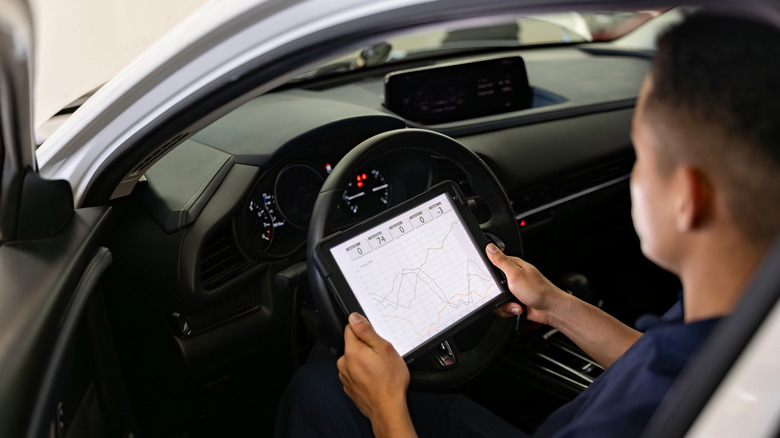
Manufacturers aren't just making cars more complicated out of spite. Customers demand advanced driver assistance systems (ADAS) these days, which require a sophisticated array of cameras and sensors to tell the vehicle what's going on around it. According to AAA (via CNBC), ADAS systems can increase the cost of a collision repair by 36.7%.
The effects go far beyond crash damage. A simple windshield replacement, which cost $200 for our old farm truck last year, can cost as much as $950 for my Ford Transit camper van. The larger glass is part of the cost, but much of it is for recalibrating the cameras and sensors behind the windshield for even my van's rather limited ADAS, like automatic wipers and high beams. From CNBC:
A single calibration machine costs about $28,000, according to an invoice the shop provided to CNBC. The necessary computer that comes with it is another $12,000. A total array can cost up to $90,000. On top of that, there are target boards mounted to the machine that are designed to calibrate specific cameras. Each of those boards can run hundreds or even thousands of dollars for more premium brands, Ariella Czeisler said.
Windshields are just the beginning. A shop that services everything, like Czeisler's, requires several computers to handle anything that rolls in. That means separate computers for American, European, and Asian vehicles, and sometimes even computers dedicated to one specific brand. All of these must be updated frequently, both to include new models as well as to incorporate changes for existing ones. This binds shops to expensive subscription plans to keep up with everything they need to stay in business.
"The consumer is getting the shaft at the end of the day because they're getting offset by the monetary cost as well," Czeisler told CNBC. Manufacturers can charge pretty much whatever they want. Independent shops can't afford to eat these costs, so they inevitably get passed onto customers. Add other costs like tariffs on parts, and it's no wonder it costs so much more to keep a car on the road these days. Not that we can afford to buy a new car, either. Perhaps it's time to see a man about a horse?