

Consumer Reports Says Buyers Are Overpaying For These 10 New Cars

While it seems like people are done paying over sticker price for new cars, the grim market realities of the post-pandemic supply chain crunch didn't fully go away; they simply shifted and evolved. Consumer Reports has identified plenty of vehicles from the 2026 model year that are still selling above their MSRP. There are some niche picks that speak to enthusiasts (like the Toyota GR86) or appeal to people fed up with buying gasoline (like the Nissan Leaf). But the organization's "Worst Deals on New Cars Right Now" roundup is mostly comprised of relatively straightforward or even bargain-minded choices.
Paying over sticker for some shiny enthusiast-bait is one thing. But getting squeezed for extra dollars when you're trying to put yourself into a base model Trailblazer to get yourself to work and the kids to school? That stings. Consumer Reports doesn't claim to know exactly why each of these cars is selling over sticker, but the publication does mention that it routinely sees "low-priced vehicles, special-edition sports cars, and front-drive SUVs" among the models going for above MSRP. Looking at the list below, that tracks; cheap transportation and anonymous crossovers make up most of the exaples, with the GR86 standing out as the one that's the most enthusiast-friendly.
To be clear, these aren't on par with the worst dealer markups we saw in 2021. Instead, these are cars that you may or may not want, but almost certainly don't need to be paying extra for the privilege of buying. Maybe that means sitting tight and waiting for the 2027 lineup – or just choosing a different generic egg-shaped crossover that doesn't have the gall to command a premium despite disappearing anonymously into the mall parking lot the second you walk away.
Toyota GR86
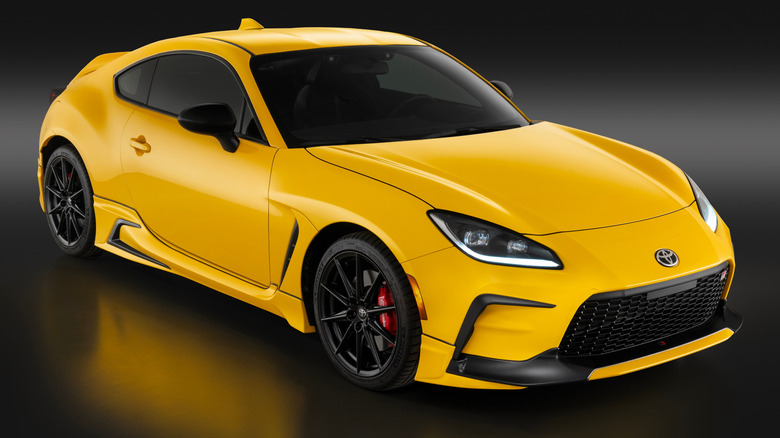
The Toyota GR86 might be the vehicle here with the most annoying price increase — but it's also the least anger-inducing. That's because the Consumer Reports data has the GR86 at the more palatable end of its "worst deal" list, at just 3% over MSRP. With the sports car market dwindling and fewer enthusiast-friendly options available new, it's probably not that surprising that dealers could wring a bit of extra money out of the ones that remain.
This is the one car that's perhaps the most likely to be somebody's present-day dream buy. But hit the pause button before you take that plunge, as the 2026 starts at $31,400 – and that's before you tack that 3% on top, adding another $942 to the final price. 2027 models begin at $31,500, and the market forces clawing at this year's car will likely try to do the same thing to next year's, so this is a little more complicated than a high school math problem. But if you've waited this long for your GR86, you might want to wait a bit longer and see what happens.
If waiting doesn't work out, you can aim for an alternative instead. Despite their similarities, one could argue that the Subaru BRZ is better than the GR86 – and (spoiler alert) you won't find the BRZ listed below. Subaru's BRZ costs a bit more up front at $35,860, but its differences in handling can make up for that higher price.
Chevrolet Trailblazer
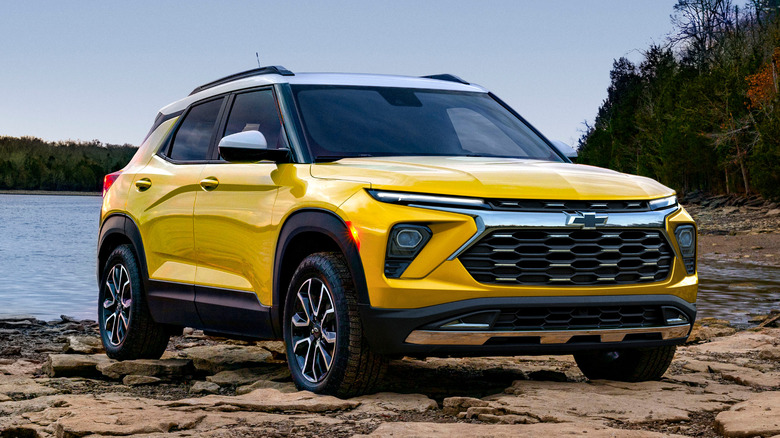
A Chevy Trailblazer with a three-cylinder engine is quirky, but one with a 3% markup over MSRP is less cute. The 2026 model starts at $23,300, which is certainly a price point where you can get ripped off at a buy-here-pay-here used lot. But the low $20,000 range should really be a safe, modest buy for something like a Trailblazer. Instead, it's pushing buyers into paying an extra $699 for a value-oriented vehicle that they'd like to be able to pick up without shenanigans. After all, it's a small, credible crossover that was designed to do small, credible crossover things.
That being said, this is a good time to point out that the "your mileage may vary" sentiment applies to all of these cars. Consumer Reports points out that your local area might differ significantly from its national averages. The organization pinned its number at 3%, but Kelley Blue Book says would-be buyers of Chevy's crossover should be aiming to pay $995 to $1,795 less than MSRP. So, if you want a Trailblazer — or anything else you see on this list — giving a second look to nearby offers is still worthwhile.
Nissan Kicks
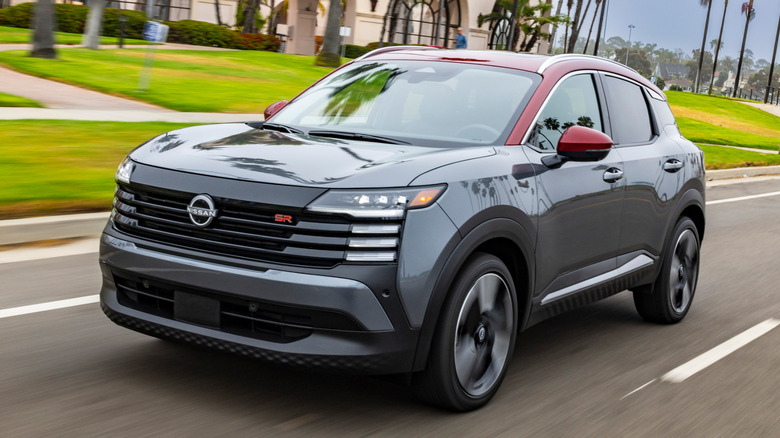
Earlier versions of the Nissan Kicks were seen as pretty mediocre, but the second generation has been fairly well-received. The Kicks is a cheap car done right, which makes it all the more frustrating when you can't buy one at its advertised price. The 2026 Kicks starts at a reasonably frugal $22,730; Consumer Reports pegs nationwide transactions at 3% over that price, which translates to about $681.90 for its base model.
But the Kicks also comes with a pretty dangerous pricing ladder. It seems designed to get people in the door shopping in the low $20,000s range, only to walk out having spent above $30,000. You start out with the FWD base model and then spend a bit extra for the AWD variant. Of course, then you're close to the next trim package, so why not upgrade? But then you're back at FWD, so you step up again, and now you're $1,000 away from the (relatively) coveted SR, so... you get the idea. Add another 3% on top, and suddenly you've slippery-sloped your way from a bargain to a boondoggle.
Kia Seltos
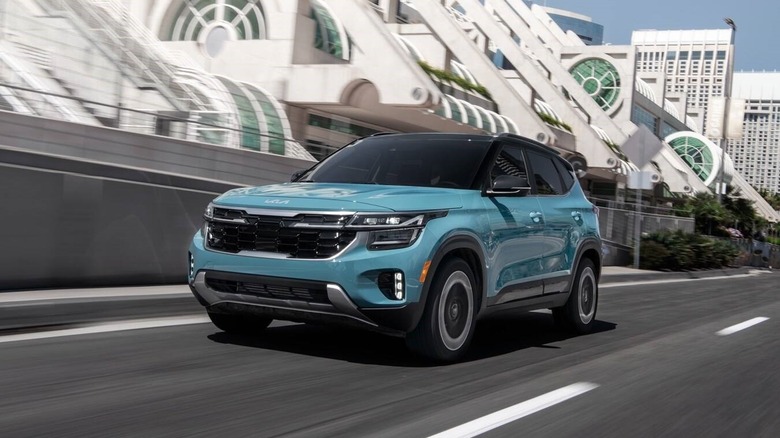
Also weighing in at 3% over MSRP is the Kia Seltos, and there are many reasons to balk at paying even a little bit over the base cost of one of these. First of all, with the higher trims approaching and exceeding $30,000, this isn't so much a bargain play as it is a value play, where you get some nice creature comforts for less than you might expect. That's the kind of proposition where piling another few percent on top might break the premise.
If you want to look at the most economical variant of the model year measured by Consumer Reports, you'd be facing a $23,790 MSRP for the front-wheel drive LX. And the 3% addition means you have to deal with an extra $713.70 tacked onto that. Meanwhile, the 2027 model is all-new, representing the start of its second generation — and it's no longer Kia's most boring design. It's also set at $24,990, so you can definitely see how the padded price of a 2026 model could be a recipe for regret.
Hyundai Venue
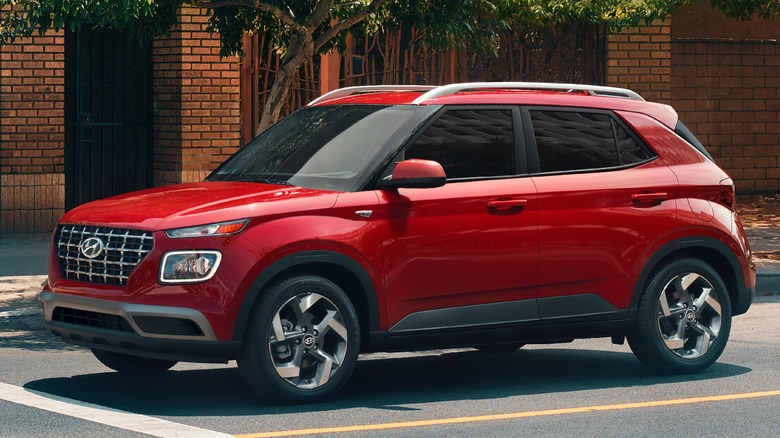
According to our readers, the Hyundai Venue is among cars that are the poster child for "mediocre is worse than bad." Starting at $20,550 MSRP, it's literally the cheapest new vehicle that you can buy in the United States (rest in peace, Mitsubishi Mirage). With that fact in mind, it's maddening that a struggling economy would chase car buyers to the very bottom of the new car market only for supply and demand to charge a premium for being there.
The Venue is the last vehicle on Consumer Reports' list in the 3% club, which works out to an average premium of $616.50 on top of its MSRP. And that extra cost is probably less about the total package experience and more about it being really, really inexpensive. The Venue is basic transportation in perhaps its purest form — and yet, it's still one of the five cheapest new cars Consumer Reports actually recommends buying. Just be sure you can actually find it for the price it's listed at.
Toyota Corolla Cross Hybrid
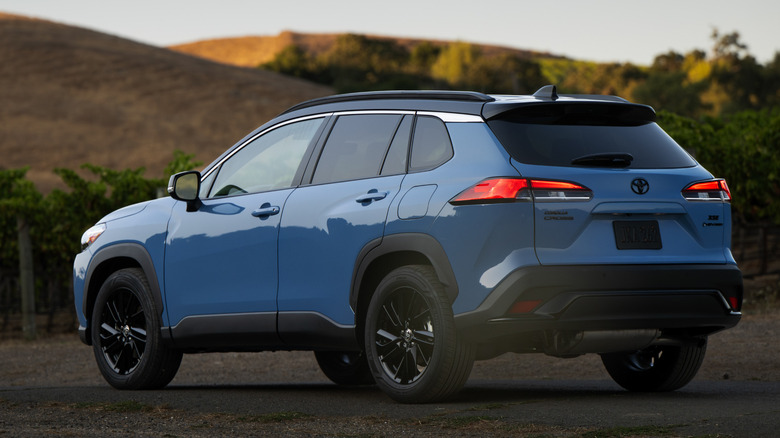
The 2026 Toyota Corolla Cross is still affordable and efficient, but it also still fades into the background. And that makes its placement here all the more frustrating, as the hybrid marks the first car on this list that turns the counter, averaging 4% over MSRP. This is the vehicle that Car and Driver characterized with underwhelming prose like "serves its purpose" and "lacks personality" while comparing it to a boring paint color from Sherwin-Williams called Agreeable Gray. These are not car review descriptors that are supposed to align with buying a model over sticker price.
Toyota describes the Corolla Cross as a value play in the compact SUV space. The hybrid lineup starts at $29,975, which does place it among the cheaper options, so it fulfills its role fairly well in that regard. But this does feel like the kind of car that should really let you get an economical power train without being shaken down for an extra 4% — which, in this case, amounts to an additional $1,199.
Toyota RAV4
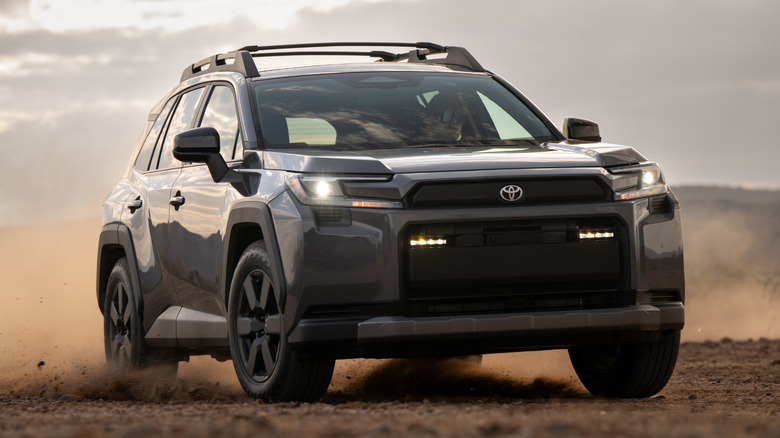
Does getting raked over the coals because you dared to want a RAV4 sound vaguely familiar? It wasn't that long ago when we reported on a dealer asking $97,000 for a Toyota RAV4 Prime. This time around, though, Consumer Reports has the base model at a comparatively-tame 4% over MSRP. With the entry-level RAV4 opening at $31,900, that translates to $1,276. You'll still have to pay a premium if you want to rock a RAV, but at least that premium doesn't cost an extra $46,800.
The biggest reason to pause here comes from the competition in this segment. Unlike with the GR86, you can't count the comparable offerings here on one hand. You could be cross-shopping the RAV4 against the Honda CR-V, the Kia Sportage, the Hyundai Tucson, and the Nissan Rogue. They all offer similar functionality at similar price points, and you won't have to worry nearly as much about paying over the MSRP.
Kia K4
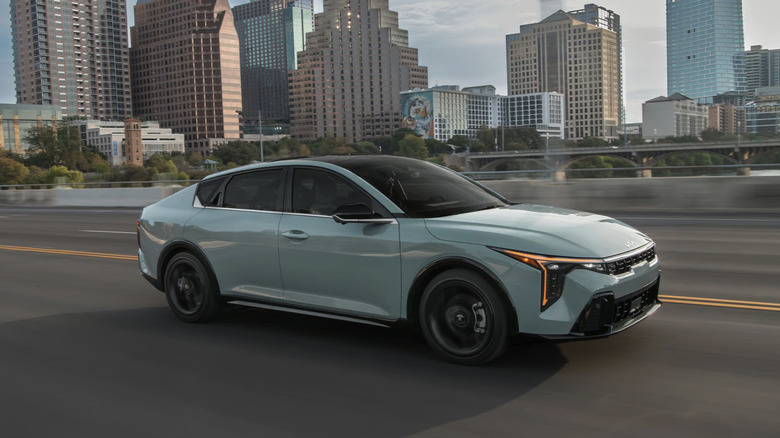
The 2026 Kia K4 feels like an easy home run in an underserved segment. And "underserved segment" counts for both "small hatchbacks and sedans" and "cars that aren't stupidly expensive new." This isn't an enthusiast darling, and it's not a hidden gem just waiting to prove how amazing it is. It's the kind of solid, everyday car that's easy to appreciate. But MotorTrend might have hit the nail on the head in terms of why it's transacting at a premium, calling it "a vanishing breed."
As SUVs and crossovers continue to gobble up market share, sedans and other passenger cars are getting pushed out of major manufacturer lineups left and right. Notably, the K4 comes in sedan and hatchback styles, and Consumer Reports lumps them together.And yet, at a $22,290 starting MSRP for the former and $24,990 for the latter, it feels like Kia wasn't trying to set a premium price point based on being one of few remaining options in the segment. Still, the math from Consumer Reports puts current sales prices at 4% over MSRP, which translates to respective price increases of $891.60 and $999.60.
Hyundai Ioniq 5
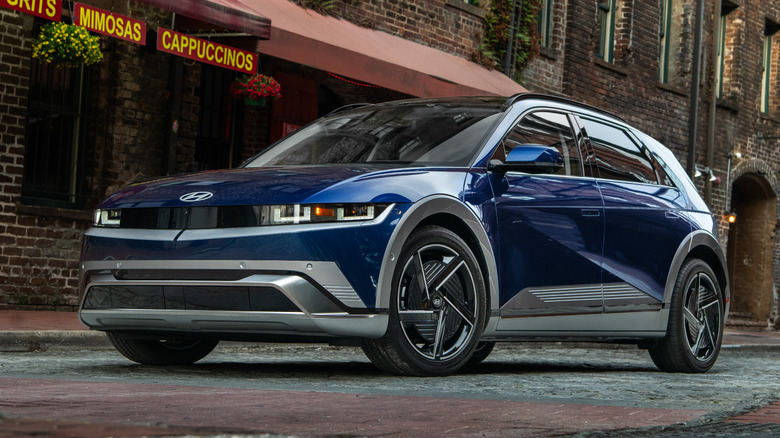
There are a couple of moving parts when it comes to pricing on the Hyundai Ioniq 5 — none of which should detract from how it's the perfect EV for someone who loves quirky cars. Often, one person's "quirky" will be a bunch of other people's "annoying and/or ugly," which can open the door for appealing prices in the quirk-enjoyer's favor. But that's not the case here, as Consumer Reports shows the Ioniq 5 going for 4% over MSRP. With a 2026 starting price of $35,000, that means you'll be paying an extra $1,400 on average.
But it gets worse with the other piece of context: Hyundai actually dropped the price of the model considerably for 2026. Cars.com calculated an average price drop among all Ioniq 5 variants of more than $9,000, with a $9,800 drop for the SEL trim. It isn't exactly the same thing that seems to be happening with the Venue, but it certainly rhymes, as their favorable pricing is "corrected" by the market. This time, though, it's even more explicit; Hyundai actively lowered the price on an appealing product, and economic forces pushed back.
Nissan Leaf
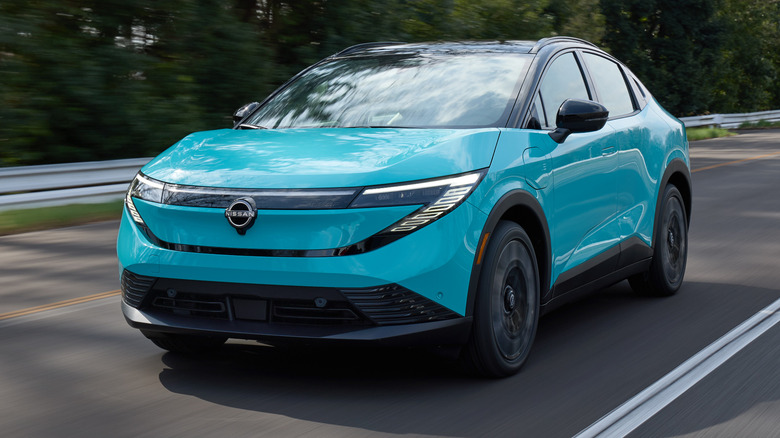
The 2026 Nissan Leaf isn't perfect, but it's light years better than before – and that apparently lets it command a whopping 6% over MSRP. Granted, if you read reviews of the 2026 Nissan Leaf, the evaluation is largely framed as how favorably it compares to previous Leafs. Maybe at a time when gas prices are nutty and EVs are multiplying, there's something to be said for a vehicle that's been around since 2011 and seems to have now reached peak form. Unfortunately, with a base MSRP of $29,990, that markup translates to a downright painful addition of $1,799.40.
Once again, context matters a lot for the cost of this model going above what it was set at. The little car pioneered mainstream automotive electrification back when Tesla was still messing around with the original Roadster, allowing Nissan to help a skeptical nation come around on EVs. It would ultimately be Tesla that raised the bar for electric performance luxury, and the humble Leaf took a back seat for a while. Today, the Leaf seems to have won hearts and minds all over again — and it has the markup to prove it.