

2027 Hyundai Tucson Looks Even Wilder Than The New Elantra
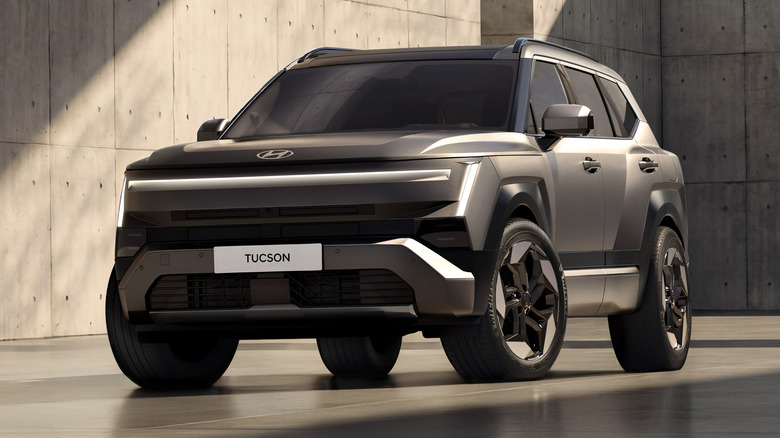
Two months ago Hyundai shocked the world once again with the redesigned Elantra, which wore one of the first applications of the brand's Art of Steel design language after previewing it with some concept cars. The Elantra has absurd widebody fender flares, lots of angular lines and surfacing and dramatic slim lights, among other cool design flourishes. Now, Hyundai has unveiled the next-gen Tucson that shares the Elantra's design language, and I think it looks even wilder than the Elantra does, perhaps because its crossover cohort are even more conservatively styled that compact sedans typically are.
We don't have many details about the fifth-generation Tucson yet, as the brand is only talking about its styling right now, but we do know its dimensions (the new model is bigger, of course). Hyundai's American arm isn't ready to talk about our version of the Tucson just yet, but expect the U.S.-spec Tucson to make its debut in the coming months, probably at the Los Angeles Auto Show. Still, there's a lot we can talk about when it comes to the styling, so let's dive in.
It's bigger and better
If you've ever been to Europe and seen a current-gen Tucson (or Kia Sportage) and thought "hmm, why does that look off?" it's not just you. The Tucson we get in the U.S. is a longer-wheelbase model that's about five inches longer than version of the SUV that's sold elsewhere, with Korea also getting the same LWB model as us. Now, that fun fact doesn't really matter anyway, because the as-revealed new Tucson is larger than our current one.
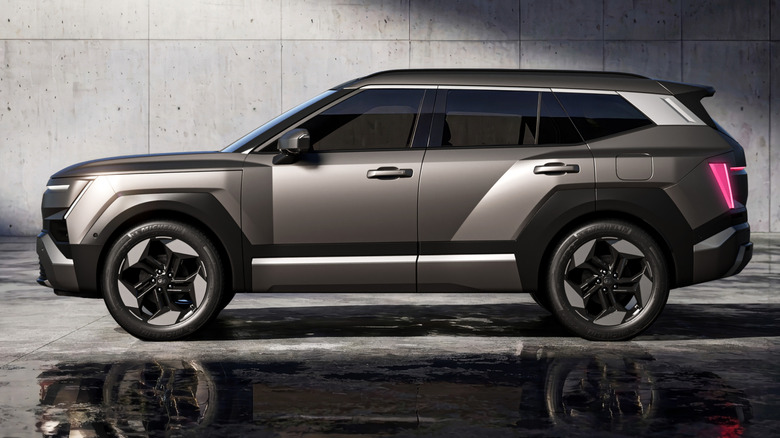
Hyundai says the 2027 Tucson is 185.0 inches long with a wheelbase of 109.6 inches, increases of 2.3 and 1.1 inches, respectively. It's also 1.6 inches wider overall, which Hyundai says gives the Tucson "best-in-class interior space." There's apparently 1.1 inches more second-row headroom, for instance, and the opening angle of the back doors has been increased from 73 degrees to 83 degrees — that sort of thing can make a surprisingly big difference.
The XRT is even more distinct
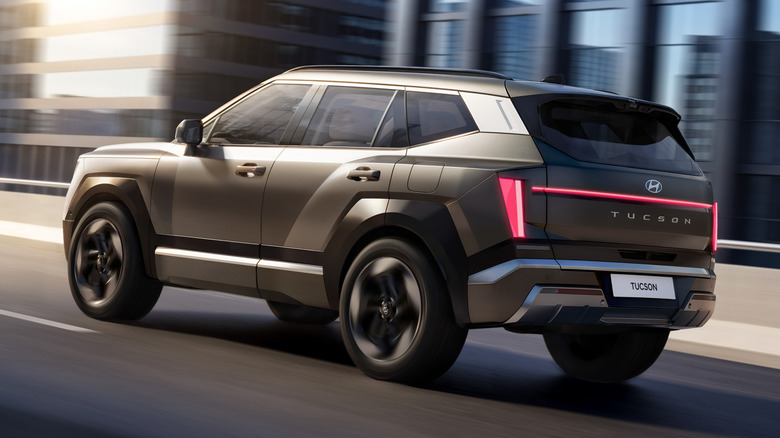
The Tucson's headlight setup is similar to the Elantra's, with diagonal running light slashes at the edges of the front fenders and a horizontal light bar that here runs across the entire nose. The actual headlights themselves are small pods tucked into the corners of the bumper. At the rear, there's the same motif as at the front, but the blades at the ends are larger and are the actual taillights. If you take a step back and think a bit abstractly, these light signatures form the letter H, for Hyundai, of course.
Those super chunky fenders give the Tucson an awesome stance, and I love how the black plastic wheel arch inserts are integrated into the body side, with angular edges but traditional round wheel openings. Hyundai also really thought out the cutlines for all the various body panels, with all of them nicely lining up with various styling elements. The automaker (and its sister companies Kia and Genesis) have been on a tear when it comes to colors and materials, and five new paint colors include Red Rock Orange Matte and Goyo Copper Pearl, both of which I want to see.
 Hyundai
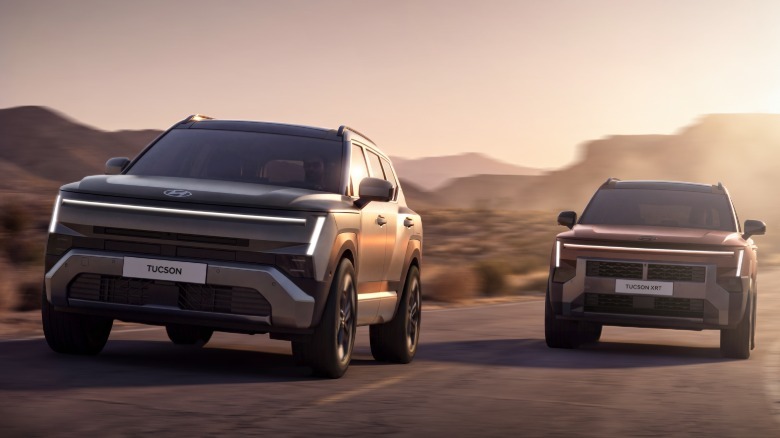
The bumpers and side skirts have thick silver components that give the SUV a more rugged look, but if that's not rugged enough for you, there will be an off-road-y XRT trim. Shown on the right in the photo above, it has an even blockier front end design with larger air intakes, more of that metallic-look trim and a broader application of black cladding that has a forged carbon–inspired pattern. Expect that model to also have different wheels with chunkier tires and unique color offerings, among other changes.
Hello, Pleos
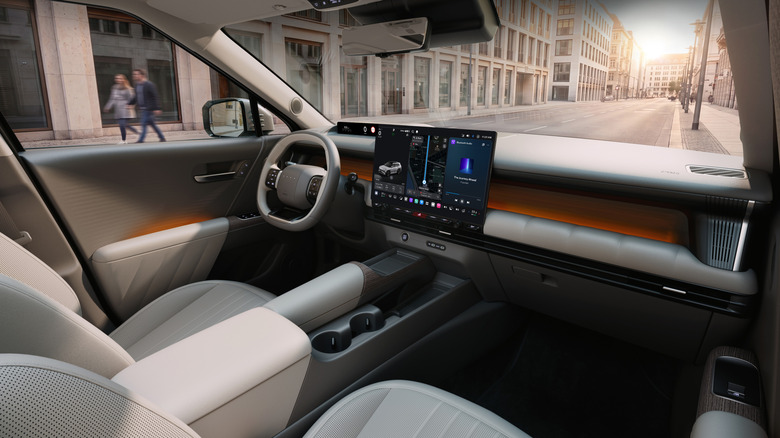
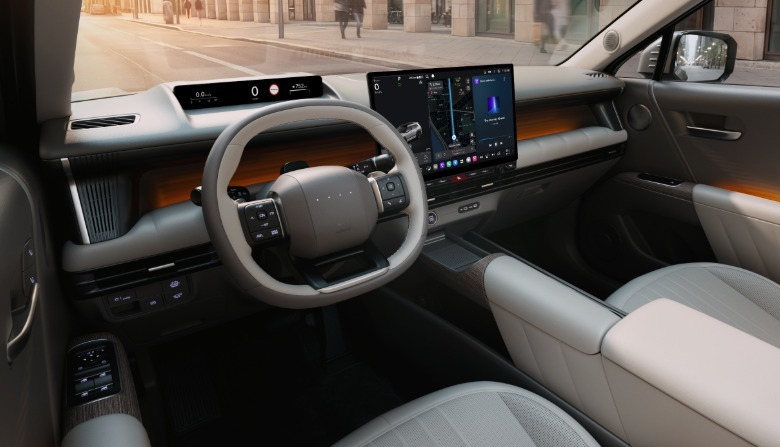
Inside the Tucson gains Hyundai's new Pleos Connect infotainment system, which pairs a large rectangular center touchscreen with a super-slim gauge display in front of the driver. Don't worry, there are a bunch of physical controls at the base of the screen for climate and media functions, and plenty other buttons throughout the interior. The dashboard has a similar rounded, padded design to the Elantra, but a distinct air vent setup with the slim vent strip lower down in the dash.
 Hyundai
I particularly like the slash design of the door cards, and the strange vertical air vents (or are they speaker grilles?) at the corners of the dashboard. Hyundai moved the shifter to the column to free up center console space, which now gains a pair of wireless chargers alongside a pair of cupholders and a thick elbow-rest to make using the screen easier.
Hyundai hasn't yet said when the new Tucson will launch in its home market of South Korea, but it will likely happen soon, with U.S. sales to potentially follow by the end of this year. Expect it to get updated gas and hybrid powertrains, among other mechanical refinements. What has me most excited? The thought of a Tucson N with 300 horsepower, which we already know is happening.