

10 Rare Indian Motorcycles And What They're Worth
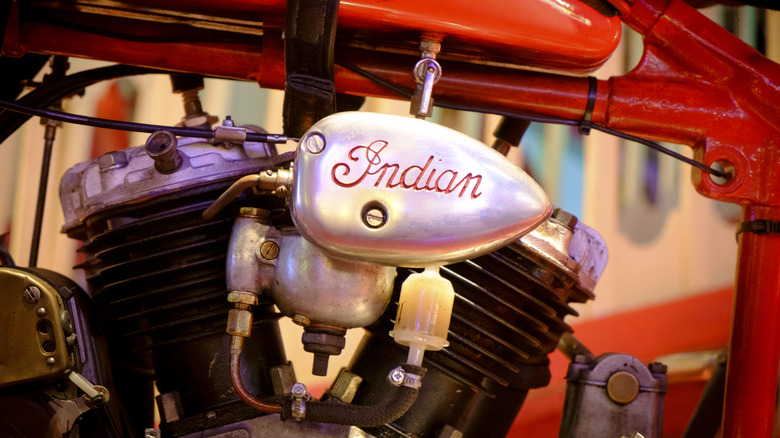
Indian officially — yet wrongly — bills itself as America's first motorcycle company (even though the oldest motorcycle brand isn't Indian or even Harley-Davidson). And during the 1910s, Indian was the largest in the world. But even the greats have to start somewhere, and for Indian, that was Springfield, Massachusetts, where George Hendee founded the Hendee Manufacturing Company in 1897.
In 1901, Hendee hired engineer Oscar Hedstrom, and the pair opened a downtown factory to build gasoline-powered bikes. Their first prototype followed that year (with Indian celebrating it 125 years later with gorgeous hand-painted bikes) and hit the streets in 1902. By 1905, roughly 1,000 Indians had been built; in 1913, it made 32,000. Then, in 1953, it closed up shop, inadvertently creating one of the rarest and most collectible Indian bikes of all time.
From 1902's single-cylinder Indian Camelback to the 1953 Chief, Indian built a great many ordinary motorcycles and a small number of extraordinary ones. Some are hard to tell from a bicycle, like the 1903 Camelback. Some were experiments the market rejected, like the 1914 Hendee Special, whose electric starter failed and triggered one of the first bike recalls. And some were contract builds for the U.S. Army and Department of War.
Below, we rank 10 rare Indian motorcycles, most common to rarest, based on the best available production figures and, where possible, survivor counts. Values come from verified auction sales or, where a bike hasn't changed hands publicly, estimates from major auction houses.
1902-1905 Indian Camelback
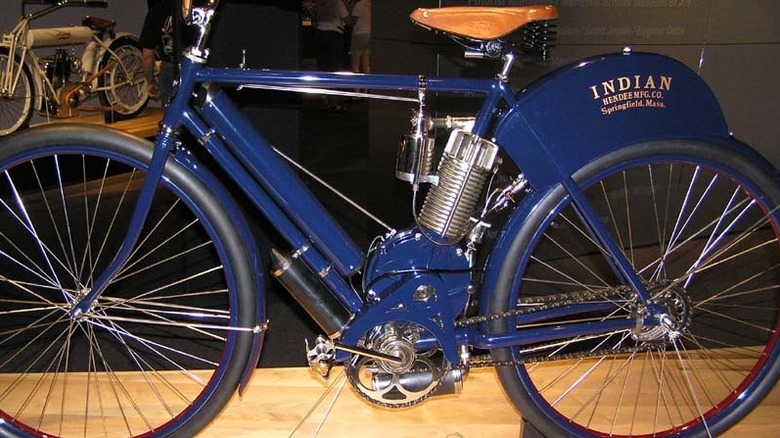
By today's standards, Indian's first production motorcycle barely looks like one, but as the first fruit of George Hendee and Oscar Hedstrom's partnership, it's a key part of the brand's history. Upon meeting Hedstrom in New York City in 1900 — and being impressed by his "motor-pacers" — Hendee wanted to build a motorcycle for the average Joe powered by a chain rather than the then-popular (but unreliable) belt drives. Hedstrom got to work, combining an Indian bike frame with a motor-pacer's engine, and his prototype was presented to the public on June 1, 1901.
A 1903 Camelback displayed at the now-closed National Motorcycle Museum kept the key features of Hedstrom's original design: a 2-horsepower 13-cubic-inch air-cooled single-cylinder four-stroke engine and a humped rear-mounted fuel tank that gave the model its name — all attached to a traditional diamond-shaped steel bicycle frame. The engines came from the Aurora Automatic Machinery Company in Aurora, Illinois, while the frames were made locally in Springfield. Despite their primitive design, these Indians performed well; Hedstrom rode one to a world motorcycle speed record of 56 mph in 1903. Two years later, his design got its first major upgrades — a sprung front fork and twist-grip throttle/ignition.
How many original Camelbacks were built is disputed. The National Motorcycle Museum, for example, claimed Hendee Manufacturing made just 1,000 between 1902 and 1905. Meanwhile, a Bonhams auction listing says the company manufactured 1,182 bikes in 1905 alone. Whatever the exact number, these are rare and highly collectible: the unrestored bike listed on Bonham's sold for in England for 40,250 pounds in 2015 — equal to $77,867 in 2026.
1941-1943 Indian 841
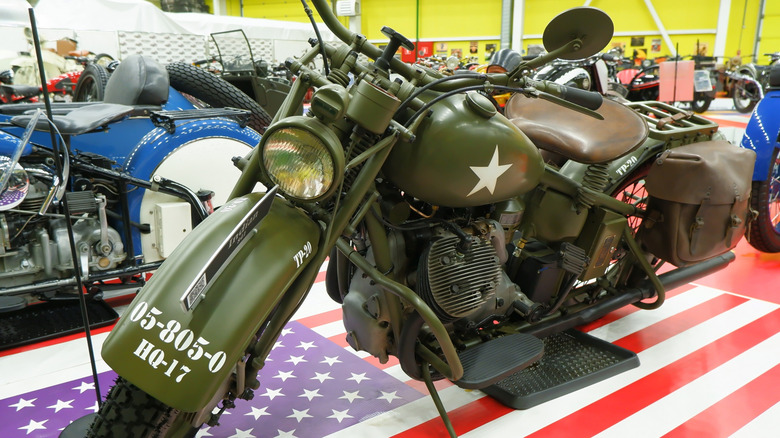
One of Indian's strangest (and most collectible) motorbikes wasn't built for cruising, but under commission by the U.S. government and military. In 1941, the U.S. Army commissioned Harley-Davidson and Indian to come up with a motorcycle fit for desert warfare in North Africa. Harley-Davidson's response was the XA, a close copy of BMW's R71 — the civilian predecessor to the heavy-duty R75 German military machine.
Indian, meanwhile, created the now-iconic 841, built around a 45-cubic-inch 90-degree side-valve V-twin with a longitudinal crankshaft that maximized air-cooling. The 841 also featured a low 5.1:1 compression ratio, letting it run on low-quality fuel; a four-speed foot-shift and an enclosed driveshaft; a girder front fork with coil springs and shocks; 8-inch drum brakes, plunger rear suspension, and rubber-mounted handlebars — all to meet the Army's demand for a low-maintenance machine that could handle heat, sand, and long distances.
Despite its unique design, there were no winners in this Harley-vs.-Indian motorcycle war within a war. The Army rejected both Indian's 841 and Harley's XA. Indian had built around 1,000 prototypes, perhaps as many as 1,056, but none ended up deployed; the Army chose to use Jeeps instead. What became of the 841s isn't clear; some sources say they sat in storage until the war ended, when Indian adapted them for civilian sale. Bonhams says the surplus bikes sold for $500 each circa 1945, equal to $9,305 in 2026.
Bonhams puts the number of complete 841s left at fewer than 100. One — originally owned by E. Paul du Pont, Indian's president from 1930 to 1945, and credited with saving the company during the Great Depression — sits in the Hagley Museum and Library in Wilmington, Delaware. In January 2026, a civilian 841 sold at Mecum's Las Vegas auction for $25,300.
1936-1937 436/437 Upside Down Four
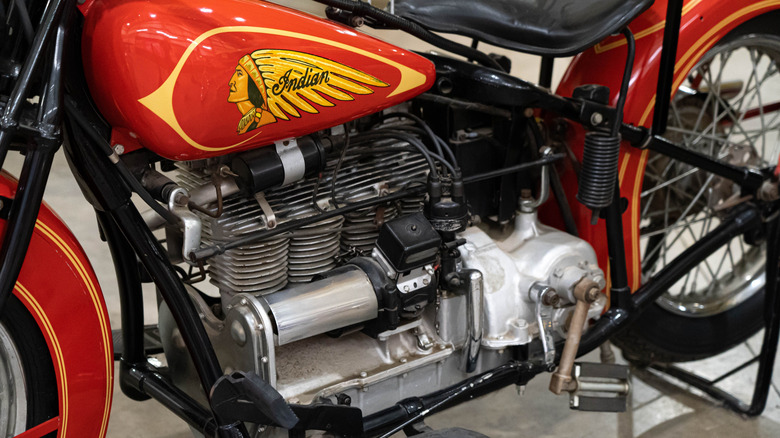
Next come two bikes from Indian's second-generation four-cylinder lineup. In an attempt to upgrade its first-generation fours (next in this list) and address their lack of speed and acceleration, Indian threw the engine design it inherited from the Ace Motor Company on its head — literally. It placed exhaust valves over the engine's side-facing inlets and created the short-lived Upside Down Four engine.
Early models (like the 436 from 1936) featured exposed exhaust valves, a Marvel updraft carburetor, leaf-spring front forks, a three-speed hand-operated transmission, 6-volt electronics, and drum brakes. The engines in these bikes displaced 77.1 cubic inches and are rated at 35 hp with a top speed of 95 mph.
In 1937, an update birthed the 437, which featured twin Zenith carburetors in place of the 436's single Marvel; redesigned connecting rods; and a thin guard over the previously exposed valve rockers. Indian marketed the 437 as the Sport Four, promising higher sustained speeds and better reliability. It delivered both, but still failed: The exhaust-over-inlet design exposed riders to excess heat from the top of the engine and required regular valve adjustments. By 1938, and after producing just a few hundred bikes each year in 1936 and 1937, Indian reverted to a traditional inlet-over-exhaust design.
In 2012, a restored 437 sold via Bonhams for $48,000 (equal to $70,033 in 2026). At Mecum's Las Vegas Motorcycles Auction in 2022, a 436 display bike owned by a former American Motorcycle Owners Club president sold for $126,500 ($144,795 in 2026).
1927-1928 Indian Ace
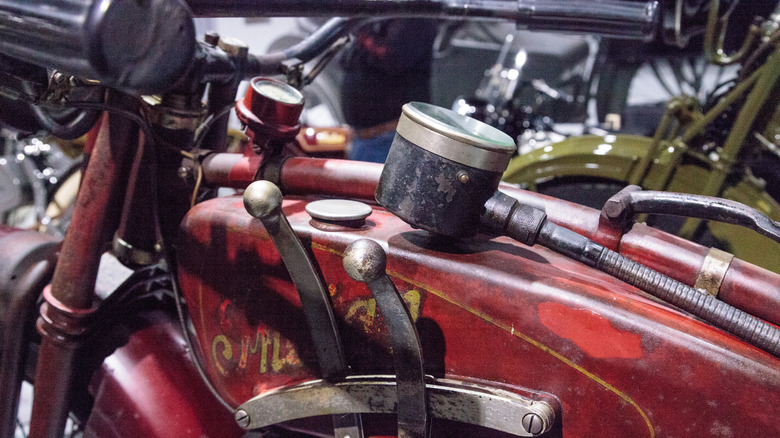
Indian's first four-cylinder bike wasn't really an Indian; it was essentially a 75-cubic-inch (1,229-cubic-centimeter) Ace Four, designed by William G. Henderson. In fact, the earliest fours to roll off Indian's production lines in Springfield still carried only the Ace name on the tank. The bikes stayed in production from April 1927 until July 1928 before they got rebranded as the Indian 401. Hard production numbers aren't known, but some sources put the total at just 260, making this a highly desirable collector's item.
Beneath the tank, Aces featured an air-cooled inline-4 engine with inlet-over-exhaust valves, a three-speed hand-operated transmission, and a chain drive. In 1927, Indian made one of its first substantial changes to that design: It drilled passages into the crankshaft, letting oil be pushed into every bearing in the engine under 40 pounds of pressure. The Indian-built Aces that have come up for sale also carry slightly more displacement than the originals (1265 cc against 1229 cc) — a difference of about 9 cubic centimeters per cylinder. In 1928, other improvements to Indian Aces included lighter alloy pistons, a lower saddle height, and a new camshaft. One of these bikes is currently on display at the Technik Museum in Sinsheim, Germany, rating at 30 hp with a top speed of roughly 80 mph.
At the time of writing, few Indian Aces have come up for auction: Dutch dealer Yesterdays lists one as sold without a final sales price, while a 1928 Indian Ace crossed the block at Mecum's 2024 Las Vegas Motorcycles auction for $220,000 ($235,062 in 2026).
1953 Indian Chief
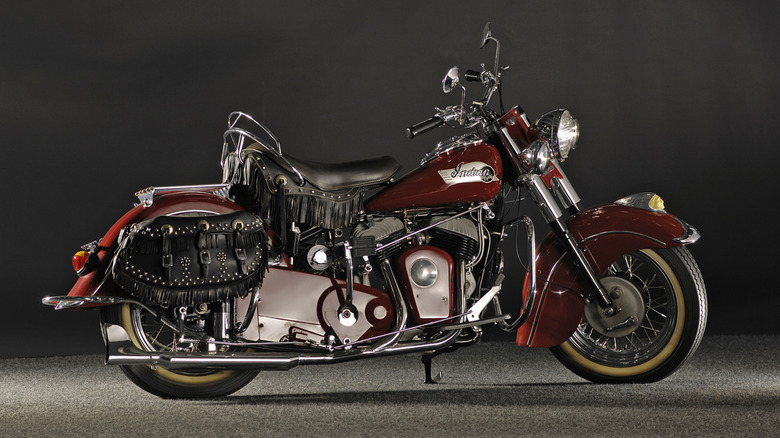
The Chief is Indian's most iconic bike, and lives on today without compensating for anything. It arrived in 1922 as a larger, more powerful successor to the earlier Scout. And by the 1940s, with its large, skirted fenders, the Chief was the defining image of Indian motorcycles. This bike generally isn't rare: Indian built nearly 12,000 Chiefs in 1947 alone — the highest known production year. Chiefs from 1953, however, are the exception, and a holy grail for collectors.
Early Chief engines displaced 61 cubic inches, but they grew to 80 ci by the 1950s. These later models paired the brand's characteristic air-cooled 42-degree side-valve V-twin with a 3.25-by-4.8- inch bore and stroke, a three-speed tank-shift gearbox, a foot-operated wet multi-disk clutch, hydraulic forks, and plunger rear suspension. They were rated at 40 hp, with a 90-mph top speed. What really sets the 1953 models apart for collectors, however, is this: Only about 600 were made and they were the last bikes produced at the Springfield factory before Indian shut down.
For a collectible Indian, these bikes generally don't break the bank. Mecum currently has several on auction, with asking prices ranging from $17,000 to $60,000 depending on condition and history. In 2020, however, a 1953 Chief restored by Dennis Craig fetched $77,000 (or $99,661 in 2026 dollars). Indian specialist Kurly's Starklite Cycle lists one at $89,995, but that bike was assembled over 30 years from new-old stock parts.
1914 Hendee Special
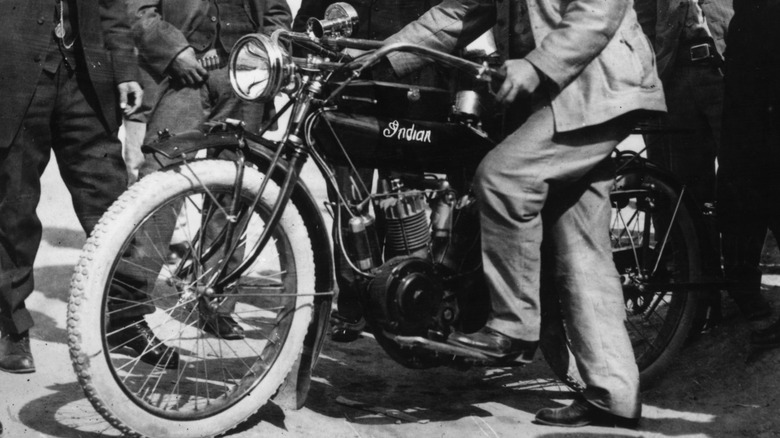
By 1913, just 12 years after Hendee and Hedstrom joined forces, the Hendee Manufacturing Company was producing 32,000 bikes a year — more than any other motorcycle brand in the world. A year later production dropped to 25,000, but Indian kept innovating: It built the world's first bike with an electric starter, the Hendee Special. Only 200 were made, and Bonhams estimates fewer than six still exist today — just three of them complete.
Named after co-founder George Hendee, who then was close to retiring, the bike featured a 61-cubic-inch V-twin making 7 hp; a three-speed transmission, and a twin six-volt ignition inspired by the Kettering's starters fitted to 1912 Cadillacs. The system sadly failed: Its batteries depleted after just one- or two-dozen starts, and there was no manual backup. The Hendee Special duly became the subject of the world's first motorcycle recall, with starters stripped out and kick-start levers bolted to the bikes' transmissions. Surviving bikes that kept their electric starter are what collectors now chase.
Hendee Specials retailed for $325 in 1914 ($10,887 in 2026). A century later, an all-original, unrestored example that still had its starter sold via RM Sotheby's for $126,500 ($178,997 today). At Christie's 2005 Monterey auction, a family-owned Hendee Special sold for $61,100 ($104,800 in 2026). A restored example sold for $55,000 at Gooding in 2006 ($91,388 in 2026), and Mecum sold one with its starter intact for $85,800 in 2020 ($111,051 today).
1948 648 Big Base Scout
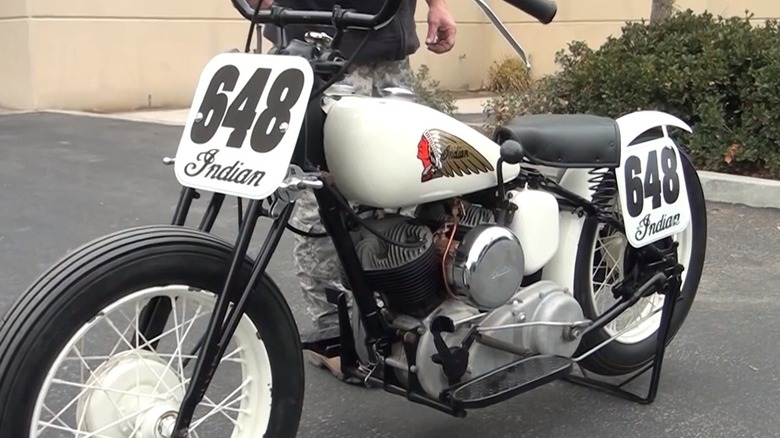
Like Chiefs, regular Scouts aren't rarities — Indian still builds them, and the 2026 Sport Scout RT could be the perfect cruiser. Debuting in 1920 as the Scout 37, this bike quickly became one of Indian's bestsellers. During World War II, Indian supplied bikes to the U.S. Army and Allied forces, among them 640 and 741B Scouts. After the war, however, the Scout disappeared from Indian's catalogue.
Then, in 1948, it made a quiet, short-lived comeback. Indian built just 50 648 "Big Base" Sport Scouts to meet homologation rules for that year's Daytona 200. This bike won Indian its last Daytona title with Floyd Emde aboard, and was the last Scout built before the company closed in 1953. Mecum puts the survivor count at seven.
A display bike at the National Motorcycle Museum, built from new old stock parts by dealer and race sponsor Erwin Smith, showed what these rare collectible bikes looked like. Beneath the saddle sat a 45-cubic-inch 42-degree side-valve V-twin making around 50 hp; a British Amal carburetor; three-speed gearbox; girder fork suspension; a rigid rear; and a Splitdorf magneto. Modest as that sounds today, it was grunt enough for Emde to dominate the 1948 Daytona 200 at an average top speed of 84 mph, ahead of Billy Mathews on a Norton and Woody Simmons on a Harley-Davidson WR.
Big Base Scouts (named for their massive oil capacity for racing) rarely come up for sale, and command high prices when they do. In 2008, a 648 restored by Jim Suter and raced at Daytona in the 1980s sold for $165,000 via RM Auctions ($256,716 in 2026). And in 2015, Mecum sold a 1948 Indian 648 Big Base owned and raced by Bob Lutz for $40,700 ($57,522 in 2026).
1920s A45 Altoona Hillclimber
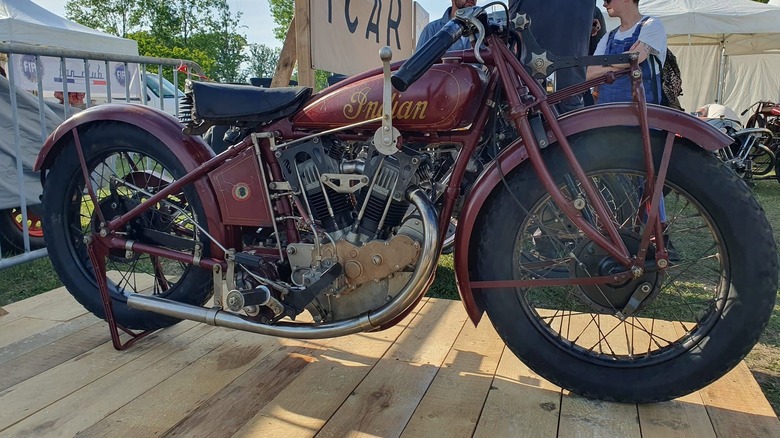
Hillclimbing emerged alongside track racing as a popular form of American motorcycle sport in the 1920s, with national championships drawing tens of thousands of spectators. For these races, Indian and its competitors made custom-built alcohol-burning machines with extended frames and chains around the rear tire for extra traction. One of these bikes, the Indian A45, performed so well that it was nicknamed after the Altoona track in Pennsylvania where it debuted and dominated. According to Mecum, Indian built just two dozen A45s, making them one of the rarest Indian motorcycles.
The limited information on these racers suggests that they had different specs, presumably to meet different racing requirements. For example, American Motorcyclist describes a bike belonging to pro racer Bob Armstrong as having an 80-cubic-inch V-twin with high-lift cams, 5.33:1 compression, ball bearings, and a single-speed gearbox. The Vintagent, on the other hand, describes a factory Indian A45 as having a 750 cc (45 ci) engine making more than 60 hp and boasting 15:1 compression.
While the specs for these bikes vary so much so that specialist Kurly's Starklite Cycle says there's no real definition of a factory-original hillclimber, one thing is certain: A45s are rare and highly sought by collectors. At 2015's E.J. Cole Collection Motorcycle Auction, a speed-record-winning 1928 Altoona hillclimber in as-raced condition sold for $247,500 ($349,796 in 2026). And Mecum sold a restored 1926 Indian Altoona three-speed racer with a largely replaced frame but original engine for $110,000 in 2026.
1938/1939 Indian Scout Factory Hill Climber
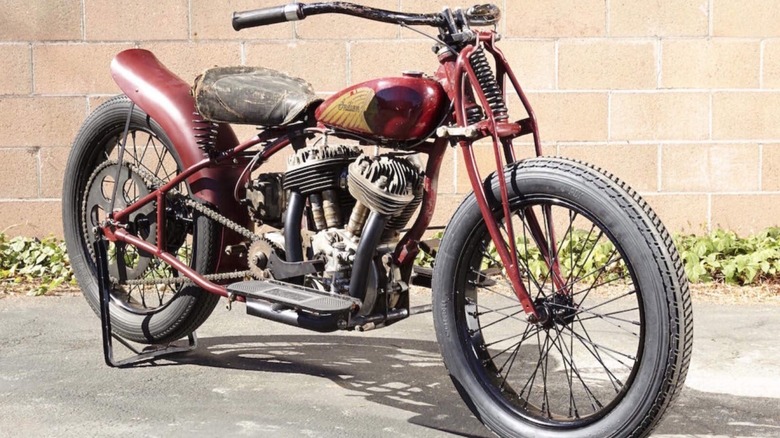
New Zealand driving legend Burt Munro used a 1920s Scout in 1967 to set a still-standing land speed record of 184 mph at the Bonneville Salt Flats in Utah. The Scout made many other track appearances, too, and tuned racers are a hot commodity on the collector's market. Among the most desirable (and rare) are the 18 custom hillclimbers Indian built in 1938 and 1939 — the last dedicated hillclimbers the Springfield factory produced.
Like the A45 Altoona, 1938/'39 Scout Factory Hill Climbers were custom-built for racing up steep hills and ran on alcohol. Most got modified by the riders racing them: a bike listed on Bonhams, for example, belonged to racer Ken Edmiston and once featured an extended frame and custom fuel tank. Other common features on these bikes are rear-facing air vents that keep contaminants like sand, mud, or grass from getting into the engine, as well as specialized Linkert carburetors.
The only '38/'39 Scout Hill Climber registered for auction is the bike previously belonging to Ken Edmiston. It was listed as part of the Bonhams' 2016 Las Vegas Motorcycle Auction at an estimated price of $60,000 to $70,000 ($83,743 to $97,700 today). However, Bonhams didn't announce a final sales price, and it is unclear whether the bike ever sold.
1910s 8-Valve Racers
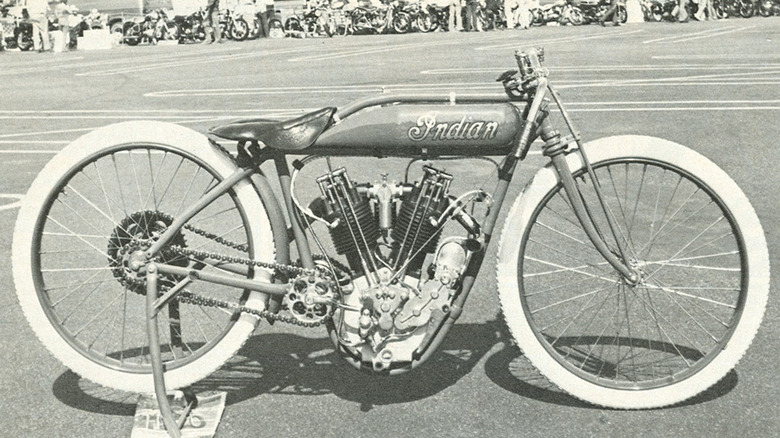
Arguably the rarest of all vintage Indian motorcycles are the brand's unique 8-Valve racers, built during the height of American board track racing in the 1910s. These bikes were never mass-produced; they were specially built in small numbers specifically for motordrome racing. Given the dangerous nature of the sport, few bikes survived the races, and fewer still exist today. Mecum, for example, puts the number for surviving eight-valve bikes at just four. But in 2023, one of these exceptionally rare racers came up for sale and made headlines.
The bike in question is the only known 8-Valve racer with a prototype keystone/Marion frame featuring its original factory castings, fork, and carburetor. This frame went on to define Indian racers in the 1920s, offering lighter weight and a shorter wheelbase. It also carried the matching racing fork and large fuel tank (built to suit 100-to-200-mile board races). And it came with photographs and written documentation to prove its rich history: It was originally purchased from the Springfield factory and raced by professional Indian and Excelsior racer Waldo Korn, then sold to racer/tuner Dewey Simms. Finally, it made its way into the hands of collectors and historians and, after a full restoration, ended up on display at New York's Guggenheim Museum in 1998. It sold for $313,500 a quarter of a century later ($344,652 in 2026 dollars).
Note that this particular example is a prized show bike, and other 8-Valve Indians from the 1910s have sold for much less. A beat-up, un-restored board track racer, for example, sold for $48,400 in 2019 ($63,417 in 2026 ). A replica of these iconic racers, on the other hand, sold via RM Sotheby's for $60,000 in 2026.