

Listening To Birdsongs Can Boost Your Mood, But The Effects Are Undone By Traffic Noise

The benefits of getting outside and into nature are myriad, from improved breathing and lower risk of fatal respiratory illnesses to improved mental health and happiness and reduced levels of the stress hormone cortisol. Of particular note in the growing body of research showing the benefits of time in the natural world is a 2022 study published by Scientifc Reports that suggests birdsong can have a major impact on a person's mood, cognition, and anxiety levels.
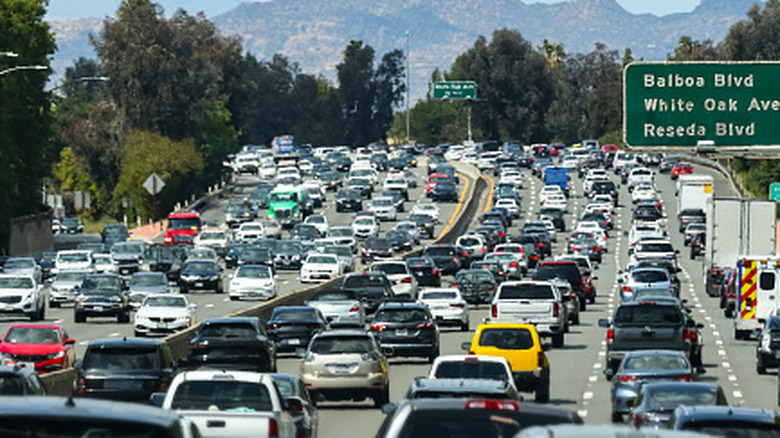
Sounds great, right? Well, wait until you hear about just how quickly traffic noise lessens and ultimately reverses these affects. Turns out that the suburbanites pushing their city councils to build massive sound walls around their neighborhoods were actually onto something. A 2026 study published by the British Ecological Society tested the effects of birdsong versus the effects of traffic noise and found that the benefits of those sweet, sweet poo-tee-weets begin to disappear rapidly when listeners can detect traffic noise in the background.
Does this mean that track days are actually making our mental health worse? We'll hold out for more research on that one. What about the guy who idles his Duramax-powered dually for 30 minutes every morning at 6 a.m.? Yeah, that one's definitely affecting us. And the Trump administration wants to increase noise thresholds for supersonic flight, so expect that to be the next type of traffic noise absolutely tanking your sanity.
Soundscapes for the modern age
To conduct that 2026 study, researchers at the University of Surrey in England created nine soundscapes with mixed levels of birdsong and traffic noise. The samples had different acoustic complexities for natural sounds, while traffic noise was made louder or softer in each. After participants listened to each sample, researchers queried them about how the sounds made them feel. In addition to over 1,500 people who listened to sounds online and then reported their reactions, the researchers had 63 participants wear a heart-rate monitor while listening to the soundscapes.
The Surrey scientists found a distinct pattern. No matter how loud or complex the birdsong, participants experienced psychological benefits from listening to natural soundscapes. But as soon as traffic noise was introduced, those benefits fell off steeply, and those hooked up to heart rate monitors showed increased stress responses. And this was true even when traffic noise was below the World Health Organization's threshold for daytime traffic noise.
It's unclear whether EV noises like the Bentley Torcal's musical "Dynamic Symphony" also contribute to declines in mood and increases in stress, but one thing is for sure: Traffic noise isn't good for anybody. When you add in that tire particles are directly linked to Alzheimer's disease and that the closer to the road you are, the more of these particles you're breathing in, it starts to look like traffic poses a far more serious health challenge than we realize.
Good luck avoiding noise pollution
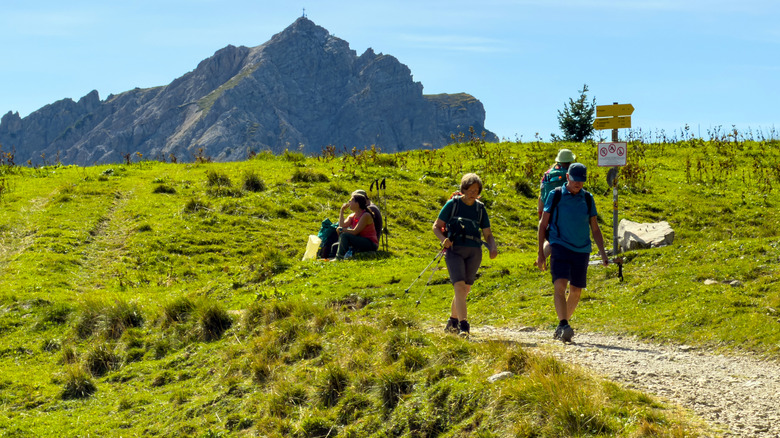
Just like plastics have infiltrated even the most seemingly inaccessible parts of the planet, from the Mariana Trench to your blood, so has noise pollution spread across the world. Between roadways slicing through major swaths of the planet's surface, planes flying nonstop around the globe, off-roaders threatening endangered keystone species in the Mojave, and ship noise from maritime travel, it's nigh impossible to find a place on Earth not impacted on a daily basis.
But with each subsequent study, it becomes more and more clear that living in a constantly noisy world isn't good for us. By some estimates, noise pollution in Europe alone is responsible for a million healthy life years being lost each decade. It's been associated with hearing loss, anxiety, worse sleep quality, and memory issues, but still, we keep increasing the number of cars on the road, adding more flights to the roster, and putting more shipping vessels in the world's oceans. Without some serious regulations, noise pollution is on track to get increasingly worse in the coming years.
Some people, though, are pushing for the preservation of the world's quiet places, and if you're never been to one, it's a nearly alien experience. If you want to experience true quiet for yourself, check out this map published by Quiet Parks International. Have you been to any of these places? What was your experience like?