

Porsche Drops Its 45% Stake In Bugatti Rimac As It Scrambles To Save Money

Good morning! It's Friday, April 24, 2026, and this is The Morning Shift, your daily roundup of the top automotive headlines from around the world, in one place. This is where you'll find the most important stories that are shaping the way Americans drive and get around.
In this morning's edition, Porsche is completely pulling out from its investments in Bugatti and Rimac as it looks to focus on the "core business." Trump says the U.S. government may just buy Spirit Airlines, Mercedes-Benz is all but giving up on selling at a high volume in China and Mitsubishi is recalling over 100,000 Outlanders for trucks that clonk people on the head.
1st Gear: Porsche pulls back from Bugatti and Rimac
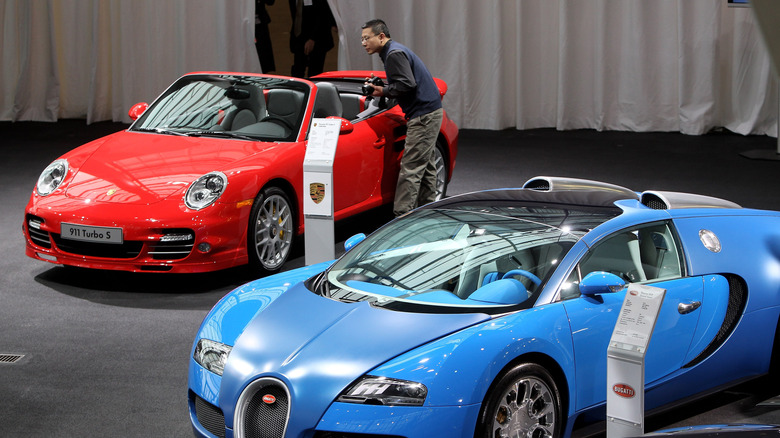
Porsche is completely divesting from its stakes in Bugatti and Rimac as it looks for ways to save money because of less-than-stellar profits and sales. The German automaker's stake will be taken up by a consortium led by a U.S. firm linked to Egypt's billionaire Sawiris family.
Now, Porsche will go without its 45% stake in Bugatti Rimac, a joint venture that was set up in 2021 that owns the luxury car maker. It's also divesting its 20.6% stake in the Rimac Group to a consortium led by the U.S.-based HOF Capital. The moves come as the automaker reviews its strategy following a sharp margin downturn and a 93% slump in 2025 operating profit. Porsche says it's looking to focus on its "core business." From Reuters:
While financial terms for the Bugatti and Rimac deal were not disclosed, Reuters reported in 2022 that Croatia's Rimac had a valuation of over 2 billion euros ($2.34 billion).
Bugatti Rimac, meanwhile, has a valuation of over $1 billion, a person with knowledge of the matter said.
[...]
"In setting up the joint venture Bugatti Rimac together with Rimac Group, we successfully laid the foundation for Bugatti's future," Porsche CEO Michael Leiters said in the companies' joint statement.
"Now, with the sale of our stake, we are focusing Porsche on the core business."
There was a lot of promise when Porsche joined up with Rimac. Then-CEO Oliver Blume said it was a marriage of Bugatti's expertise in hypercars with Rimac's electric vehicle innovation. Unfortunately, things haven't really worked out for Porsche in the time following the announcement.
Since then, however, Porsche has become a burden for its parent Volkswagen , with profit margins crashing to a mere 1.1% last year, from 14.1% in 2024, as the company was squeezed by U.S. tariffs and falling demand in China.
Now, Leiters, who took over as CEO at the beginning of the year, is under pressure to cut costs and free up capital.
Rimac said in November that it was in talks with Porsche over the structure of the joint venture.
Now, Rimac Group is set to take control of Bugatti Rimac and form a strategic partnership with BlueFive Capital — one of HOF's investors — and HOF itself in an effort to "support its continued growth."
Here's hoping Porsche can get out of this funk soon. The automotive world is a better place when it's got money to play with.
2nd Gear: Trump mulls government buyout of Spirit
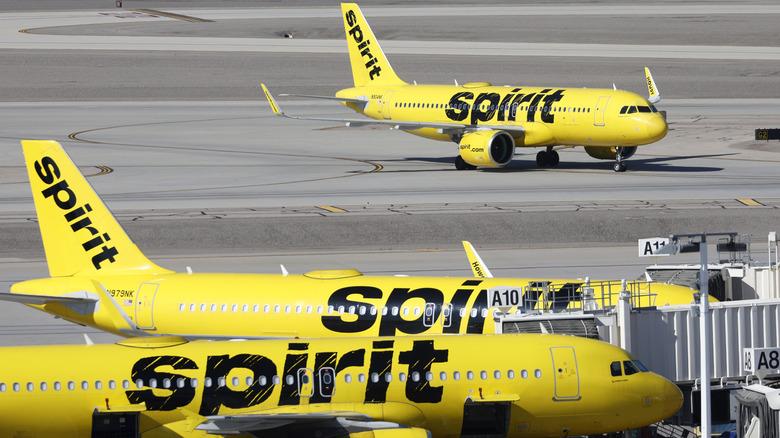
There's a real chance the U.S. government could end up taking over Spirit Airlines, especially if President Trump is to be believed. The news comes as the failing budget carrier is in the middle of negotiating some sort of federal bailout. From The Wall Street Journal:
"We're thinking about doing it, helping them out, meaning bailing them out, or buying it. I think we'd just buy it," Trump said, speaking from the Oval Office Thursday. He said that Spirit's aircraft and assets were good and that the government could sell the company for a profit when the price of oil fell.
"I'd love to be able to save those jobs," Trump said. "I'd love to be able to save an airline."
Spirit said it was grateful for the President's support, ignoring the fact that fuel prices skyrocketed due to a war he partially helped start. That's neither here nor there, though. I suppose it needs to do everything it can to find a way to stay afloat and keep its employees, you know, employed.
The Trump administration this week has been considering a rescue of Florida-based Spirit, which helped pioneer the ultralow cost model. Senior officials have been considering a loan of as much as $500 million, in return for warrants that could give the government a significant stake in the airline, The Wall Street Journal has reported.
Spirit has been laboring to emerge from its second trip to bankruptcy in less than a year. The escalating cost of jet fuel, driven sharply higher by the Iran war, has upended its plan. Creditors in recent weeks have been considering options including a potential liquidation.
Stakeholders at the company and in the government seem split on whether or not the U.S. should actually bail out Spirit.
A key bondholder group on Thursday voiced opposition to the government bailout plan, concerned it could harm their economic interests and leave them with a small minority stake in the airline.
Commerce Secretary Howard Lutnick has been the main proponent of the Spirit deal, seeing it potentially delivering a win for Trump by preserving the airline's roughly 14,000 jobs, the Journal reported this week.
Transportation Secretary Sean Duffy has voiced caution, pointing out that past government rescues, like the federal bailout of banks during the 2008 financial crisis, were politically unpopular. Other Republican lawmakers, including Sen. Ted Cruz (R., Texas) and Sen. Tom Cotton (R., Ark.), have also voiced opposition.
On Thursday, more allies of the administration aired reservations. Stephen Moore, a longtime economic policy adviser to Trump, told the Journal that he relayed his concerns to senior White House and administration officials.
Earlier this week, Trump said he liked "having a lot of airlines so it's competitive." The man has such a way with words, doesn't he? He also added fuel to the fire by saying, "If we could get it for the right price, I'd do it," adding that he had a candidate in mind to run the airline.
3rd Gear: Mercedes-Benz won't engage in China price war
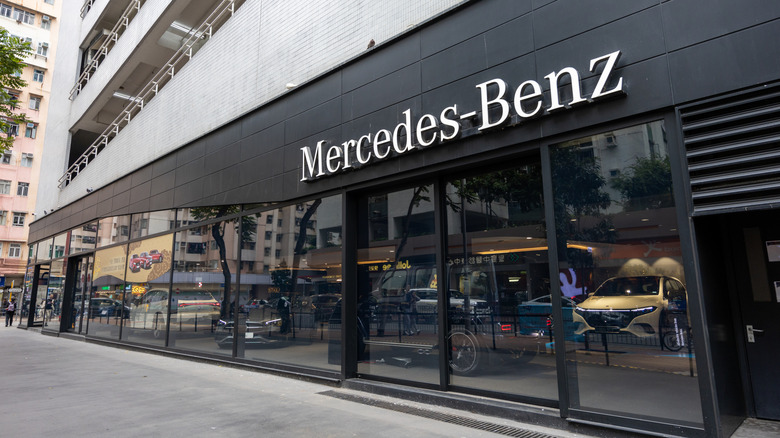
Mercedes-Benz CEO Ola Kaellenius is looking for a new way forward in China, saying it won't be drawn into a price war with hometown automakers. Of course, that means sales volume is going to be lower than what the company once hoped it would be, but that seems like something everyone can live with — especially in lower segments that make "less economic sense."
The German automaker plans to overhaul its lineup in China with seven new models by 2027 and roll out its advanced driving assistance system that it developed with China's Momenta. It hopes to stay relevant in the world's largest automotive market with innovation and an increasingly local footprint in terms of suppliers and development. From Reuters:
After breaking foreign carmakers' long-held dominance in the entry-level segment with low-cost electric vehicles, Chinese players like BYD are now looking to the premium market, ratcheting up further pressure on Mercedes, whose sales in the region tumbled by 27% in the first quarter.
[...]
Faced with cut-throat competition from cheaper, fast-moving local brands, Mercedes and other legacy carmakers such as rival BMW are seeking to reassert their appeal in the world's largest car market amid falling sales.
"I wouldn't count on the intensity of competition suddenly disappearing – and that's not our plan," Kaellenius told reporters on the eve of the show.
[...]
"It would be completely wrong to believe that pedigree does not matter. It does matter," Kaellenius said when asked whether Mercedes' heritage carried the same weight in a tech-driven market.
But young Chinese consumers are more willing to shop around on car brands, he said, adding, "It's a complete roller coaster market."
The company will use this year's Beijing auto show to pitch how it plans to navigate China's ever-evolving market. From where I'm sitting, it might be too little, too late. Mercedes makes some amazing, tech-forward cars, but they're just not quite what folks in China are looking for, it seems.
4th Gear: 108,000 Outlanders recalled for busted trunks
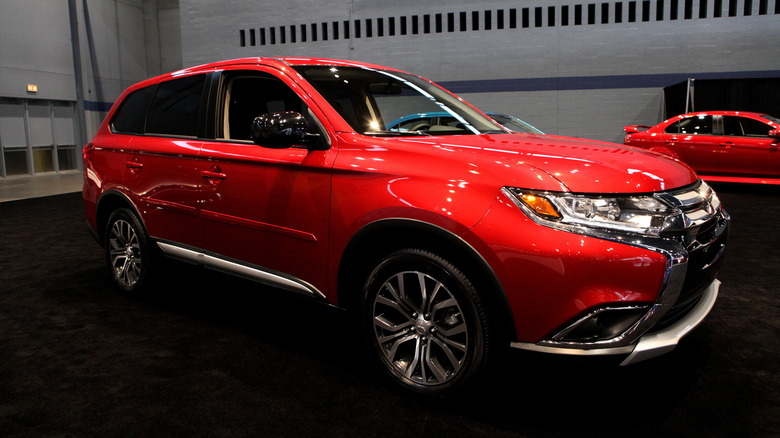
As if owning an old Mitsubishi Outlander wasn't bad enough, it can now bonk you on the head without warning. In an effort to stop that from happening, the automaker is recalling around 108,000 of the crossovers because of an issue with the cylinders in the trunk's gas springs. Apparently, salt water can get into them and cause them to corrode. When that happens, a rapid loss of pressure is possible, and BLAMMO. You just got knocked in the head, idiot. From AutoEvolution:
According to Mitsubishi Motors North America, salt water accumulates within the dust cap of the subject gas springs. 28 part numbers are listed in the recall documentation, with said gas springs designed for both manual and electric liftgates.
Mito Kogyo is the supplier of the iffy springs, which Mitsubishi used on 2014 through 2020 internal combustion models and 2018 through 2022 model year plug-in hybrid models. The subject vehicles were produced from April 12, 2013, through December 18, 2020, and November 13, 2017, through March 11, 2022, for the United States market.
Mitsubishi started investigating this matter in August 2025, following an earlier safety recall affecting 91,697 units of the Outlander and Outlander PHEV. Back then, only vehicles retailed in salt-belt states were fixed by the Japanese automaker's North American subsidiary. Following a report alleging a rupture outside of the salt-belt region, additional parts were collected for additional testing.
By the end of the investigation, MMNA became aware of no fewer than four claims and reports outside of the salt-belt area. In a similar fashion to the previous recall, dealers have been instructed to replace all subject steel cylinders with new parts that feature anti-corrosion goodies instead of a heat-shrink resin tube.
If owners aren't too concussed to read, they should expect to get a customer notification letter in the mail sometime in the middle of June. Until then, wear a helmet.
Reverse: Surely this will be the U.S.'s biggest embarrassment in Iran
 History.com
I cannot imagine any sort of U.S.-military-backed operation in Iran will ever go more poorly than the 1980 hostage rescue mission disaster. That would just be catastrophic. Wait a second. Oh God. I just turned on the news. Never mind. Anyway, if you'd actually like to learn more about this mess of an operation and the events leading up to it, head over to
.
The Fuel Up
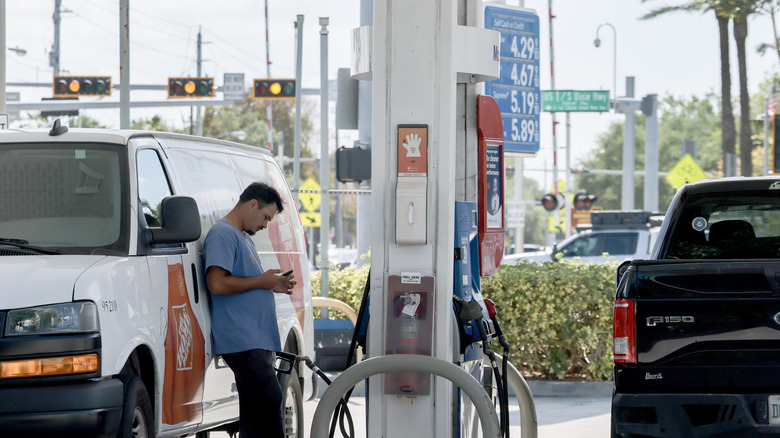
I hate to be the one to tell you, but yesterday's gas price increase wasn't a one-off event. A report from Reuters says that just five ships passed through the Strait of Hormuz in the past 24 hours, and fuel prices are reacting. At the time of publication, WTI Crude Oil futures sit around $94, and Brent Crude is near $105. It doesn't take an expert to realize that's less than ideal.
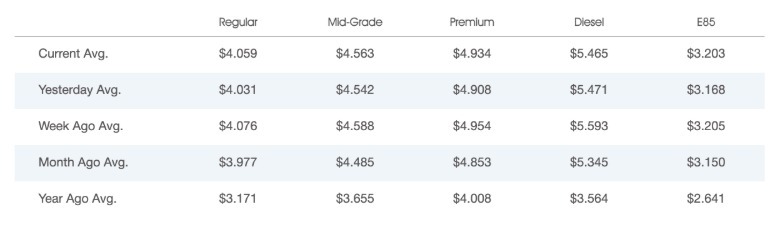
The sum-up of this is that the average price of a gallon of gas jumped three cents overnight to $4.06, according to AAA. We're still 11 cents off from our $4.17 peak on April 9, but things are decidedly moving in the wrong direction.
No matter how you slice it, though, the average price of a gallon of gas is now up $1.08 — or about 30.7% — since the U.S. and Israel's war with Iran first broke out on February 28.Here's where national average prices stand right now, according to AAA:
 AAA
AAA
On the radio: Olivia Rodrigo - 'drop dead'
Olivia Rodrigo is back, folks, and I, for one, could not be more excited — especially now that she's in her Joan Baez-Bob Dylan Era with Cameron Winter. Yes, I know this song came out a week ago, but, in my defense, I'm old. Still, I'm younger than you, and you should never forget that.
Enjoy your weekend, loves. Talk Monday.