

Can You Drive To Alaska From The Continental US With A Regular Driver's License?
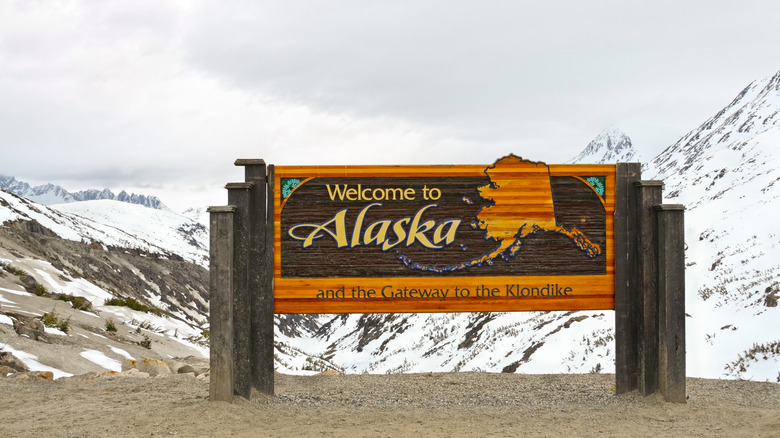
It takes quite a bit of work to visit all fifty of these United States. Through my nearly forty years on this earth, I've managed to visit 48 of them, and quite soon I'll be knocking Alaska off my list. My journey will start in Washington State, and I will travel by car through hundreds of miles of Canadian wilderness to be met with a sign welcoming me back into my home country. There are plenty of roads connecting the continental U.S. with Alaska, but as you no doubt know, there's no point at which Alaska touches the rest of the country it is part of. Can you just drive up to Alaska with your standard U.S. driver's license? The answer is complicated, but it kind of boils down to no.
The problem isn't your driver's license. The Canadian government will recognize your ability to drive a car, as certified by the United States government. We drive on the same side of the road, we mostly drive the same kinds of cars, and almost all of Canada's road signs are presented in English. If it weren't for the lower speeds, responsible drivers, higher quality of road upkeep, and speed limits posted in kilometers, you probably wouldn't even notice you'd entered a different country. There's no special exception for Canada; however, you still need additional documentation to enter land owned by another country.
If you're flying to Alaska as an American citizen from one of the other 49 states, you won't need a passport, as you took off from and landed on American soil. Driving from the Lower 48 to Alaska, though, requires two border crossings, so you need to prove who you are when you leave the U.S., and you need to prove you are an American citizen to get into Alaska. The best way to do this is with a passport.
What if you don't have a passport?
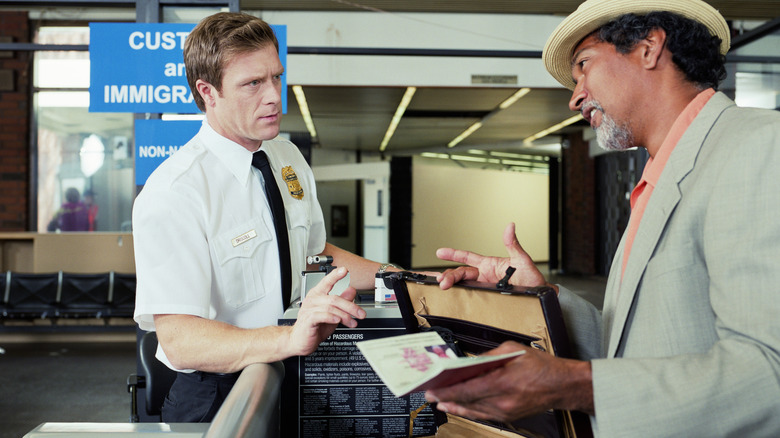
Can you get by without a passport? It depends. If you're traveling with children under 16, they won't need a passport, but you'll need to carry their birth certificates. If you are older than 16 and you don't have a passport or passport card, Canada will allow you entry if you are a member of a trusted traveler program, like NEXUS for frequent travelers, or FAST for commercial truck drivers. It is still recommended to carry a passport alongside your trusted traveler card, but it is not strictly required. There are also a few special circumstances where passports may not be required, particularly for U.S. Military, native Americans, and boaters crossing maritime borders.
What about an enhanced driver's license? There are a few U.S. states that share a border with Canada and have agreements with the Canadian government to allow special driver's licenses to be issued for citizens to quickly cross the border. Only available to residents of New York, Michigan, Minnesota, Vermont, and Washington, the enhanced driver's license allows Canadian Border Patrol to more easily scan and pre-screen you for entry. The EDL includes an RFID chip that will signal a secure system to automatically pull up your data for the Canadian officer as you pull up to the border inspection.
An additional note worth keeping in mind: whether you have a passport or not, Canada takes drunk driving extremely seriously, and will not allow travelers with a driving under the influence conviction on their record into the country, even as a passenger, with no intent to drive while in Canada. If at least five years have passed since the full term of your sentence was served, you are eligible to apply for rehabilitation and allowance into Canada, but otherwise you'll be turned away at the border.
What do you need to get into Alaska?
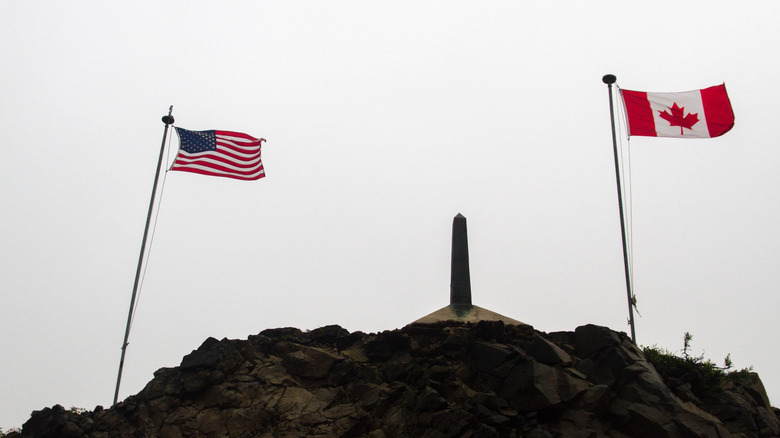
If you're driving up to Alaska, whatever you needed to get into Canada will likely be what you need to get back into the U.S. Proving citizenship to return to the U.S. can be done with a passport, a passport card, or a birth certificate. Your driver's license is not proof of citizenship to Canadian border officials, the same way it isn't for U.S. officials. If you somehow managed to lose your documentation during your trek across Canada, or it was stolen, you'll have to visit a U.S. consulate to get a temporary passport in order to return to U.S. soil. In both border crossings, you'll also need to carry proof of car insurance with you in your vehicle.
In my experience, it is pretty easy to get back into the U.S. when you're returning from Canada, but the border patrol agents tend to be more gruff. I recently drove into Canada for a car show, and the Canadian border patrol agent was genial, asking me questions about my car and how much power it made. When returning to the U.S., I was scolded for a minor procedural error and treated to an icy cold interaction with the CBP officer. Obviously this is just anecdotal and not indicative of every officer, but their reputation preceded them in both cases.
The point of all this is to say that you should be as prepared to cross into Canada as you would be entering any other country. Get your passport, keep it up to date, and travel as often as you can. The world is a gorgeous place, and seeing the world almost universally makes you a happier person and a more well-rounded citizen of the world.