

Here's What Jalopnik Readers Think About Hypercars
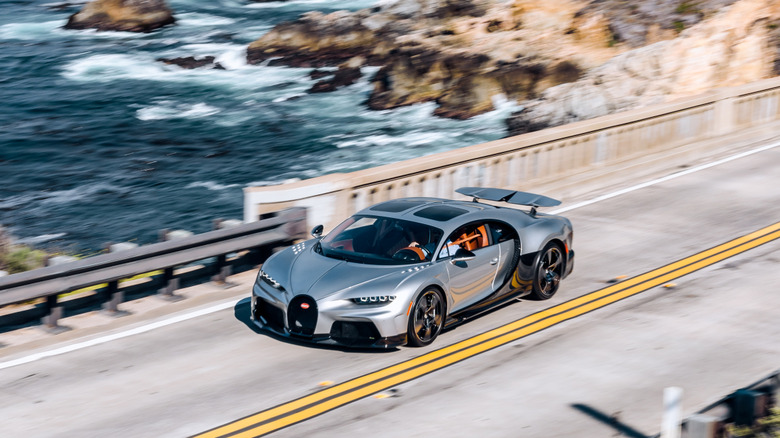
It seems that every week the high-end automotive market is tripping over itself to offer another new seven-figure status symbol/value store on wheels to the privileged elite. Over the weekend I asked the Jalopnik commentariat for their opinions on extreme-expense hypercars and whether they were still relevant to the automotive market, to their lives, or even to their dreams. Their answers absolutely did not disappoint.
There are so many options to choose from in the multi-million dollar car zone right now, how could you possibly ever choose? A market once all but dominated by Bugatti, there are seemingly dozens these days. It's easier to sell one five-million dollar car than it is to sell 100 five-hundred-thousand dollar cars, so it's hard to blame a manufacturer from committing to its Epstein-class customer base. It's their world, after all, and we're just here to submit to their reign of terror.
Maybe you, like many Americans, believe you are a temporarily embarrassed trillionaire, and with just a little more bootstrapping, you'll soon be in the market for a brand new McLaren W1 or whatever. Or maybe you couldn't possibly care about whatever streamlined pile of carbon fiber junk is the next to achieve vaunted allocation status. Or maybe you fall somewhere in between and there's nuance and layers to this argument. This is the internet, pick a side.
There seem to be three camps of people in the hypercar debate, mostly for, mostly against, and unsure. Let's go through some of these answers. If you have input, or didn't get an opportunity to answer this question when it came around the first time, jump in the comments and let us know. Let's dig in.
Yes
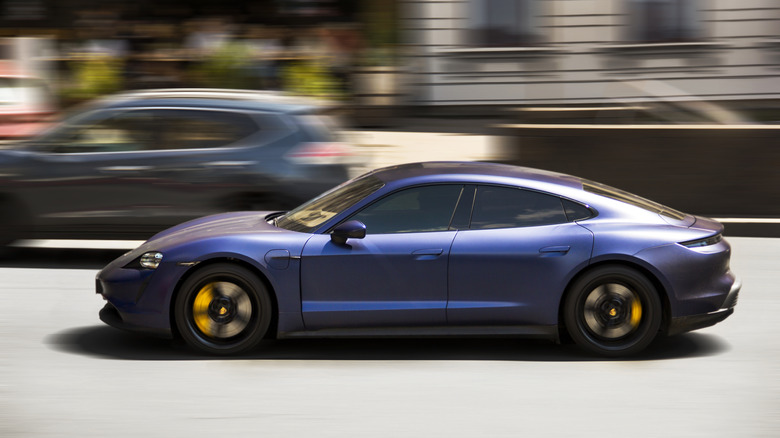
From a pure performance standpoint, EVs have leveled the playing field, may be not in absolute top speed due to single speed transmission limitations, but in acceleration, handling and not requiring $20k oil changes.
But while a $500 smart watch gives you more features than the $50k Rolex, there are always Rolex buyers and the same for hyper cars.
Outlandish design, attention to details and priority one, exclusivity. That wakes them desirable for all and unobtainable for most.
Suggested by igmgag
I would argue that, by dint of the responses to this question, hypercars are not in fact "desirable for all".
They've always been relevant to the people who can afford expensive toys. That will never change, they always want what other people can't have or afford, so as long as that "thing" exists they'll always be relevant to the 1%.
Suggested by snatch
Much of "the 1%" cannot afford a multi-million dollar car." For context, to be among the top 1% of earners in the United States, the nationwide floor is about $748,000 annually. It's entirely possible that someone making that much money would spend multiple years of their salary on a car, but unlikely. Even those in the "point one percent" group can make as little as $3.3M annually, and it would still be unwise to spend $5M on a Pagani Utopia, for example.
The only thing that could diminish their relevancy is having too many of them.
If someone tells you they own a Frtizinger A24 and you're like, "what's that?", it no longer matters because you don't know that you can't have it.
Suggested by Yowza
I think one is too many.
Now that EVs have completely disrupted the acceleration game, cars definitely have to give new meaning to our driving experience. To me, steering feel and the overall feeling of connectedness is still relevant. Some cars still feel special even when you get in, sit. Some cars put a smile on your face when you hold the steering wheel, look back at it as you walk away.
The Luce really forced everyone to think hard about what they really love about cars. It probably drives well, probably instills a lot of confidence, etc. Some people need the noise of an engine. Some need the visual distinction of a mid-engine exotic look.
What a hypercar means to us is definitely changing a lot. But it's always going to be relevant. A great horse is still relevant in the equestrian community!
Suggested by DL Bedford
In this analogy, if cars are horses, what kind of horse is my Cadillac Allante?
No

To me, they have never been relevant other than as the subjects of dorm room posters. Yeah, they look cool, but only the highest earners can afford them and they are optimized for performance that no one can use. It's like discussing owning an F-22 raptor.
Suggested by Frank
What do you think the insurance costs every six months for F-22 Raptor owners?
No longer....they have become so over priced that they are only accessible by the hyper rich, the .1%. Because of this, they are only interesting to a small part of the population, even used. The average man used to be able to aspire to owning one someday if they saved, no longer. Most of the people buying these cars do so as status symbols or a place to store their wealth. The cars are focused on extravagance and not driving. Pieces of unreliable art.
Suggested by Roberto Arango
Statistically speaking, among annual car sales, hypercars don't exist. They are not built in numbers large enough to be statistically significant. That's still too many.
As time moves forward, i see hypercars less as vehicles of fascination and more like meaningless white elephants for the affluent. The heavy majority of people who own them are not at all into the hand-crafted detail, or the limits of engineering power, but rather the fact the cost is high and the amount is rare. They will drive them on the city streets without testing their full limits, only revving the engine to go "look at me, I'm better than you".
They are the vehicular equivalent of Las Vegas (when Vegas was at least affordable); it's fun to toy around with for a day or two, but I would never in my life ever want it a part of my life.
Suggested by Alf Enthusiast
I can stomach two days in Las Vegas every year or so, but I wouldn't even want to be seen in a hypercar for two minutes.
Maybe so
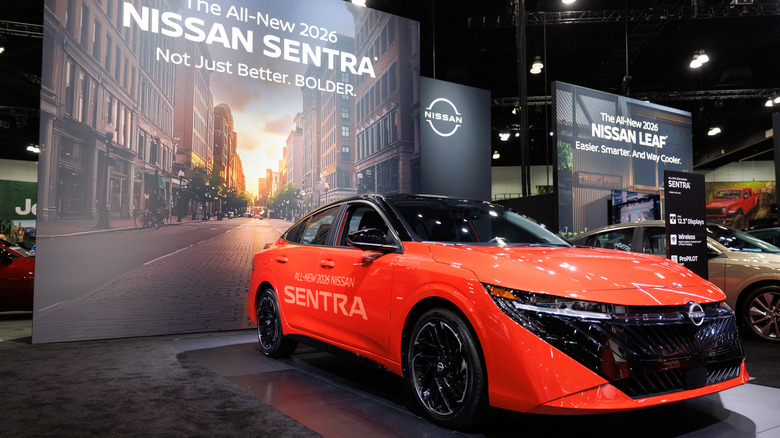
I wish the number of articles about hypercars was more in relation to how many people can afford them. You see so much journalism dedicated to them, but very few on the road. I've personally never seen a Veyron in the wild.
Somehow we never see articles beginning with, "Nissan flew me first-class to a resort on the Amalfi coast for a weekend with the highest-spec 2027 Sentra you can get..."
Yeah, I know why – I just find the attention a bit silly.
Suggested by John Aydelotte
It's not quite the same as the Amalfi coast, but Nissan did fly Logan to Phoenix to test a loaded Sentra.
I think if they start to focus more on driver experience/engagement instead of straight up speed they will be. EV's can give you straight up speed, what they cant replicate is the visceral experience you get with an ICE, especially when paired with a manual transmission.
Suggested by NEB376
Is there a reason to focus on driver experience if nobody ever drives them? If a car with a focus on driving experience falls in the woods and no millionaire is around to drive it, does it experience drive?
Not sure about their relevance, but they sure are useful for picking out rich d-bags I want to avoid.
Suggested by DieselOx
Natural d-bag selection.
The Veyron was an expression of Piech's desire to push boundaries far beyond what anyone thought was possible, and we all know the way that shook out, both positive and negative. But it was still relevant from a tech advancement perspective and learning lessons that could be applied to every day cars.
But I don't think these things became completely irrelevant until the electric hypercar came along, because achieving ludicrous hp was no longer as difficult as an engineering obstacle or triumph.
Suggested by Miles Leevey