

Airplanes Should Not Have Windows
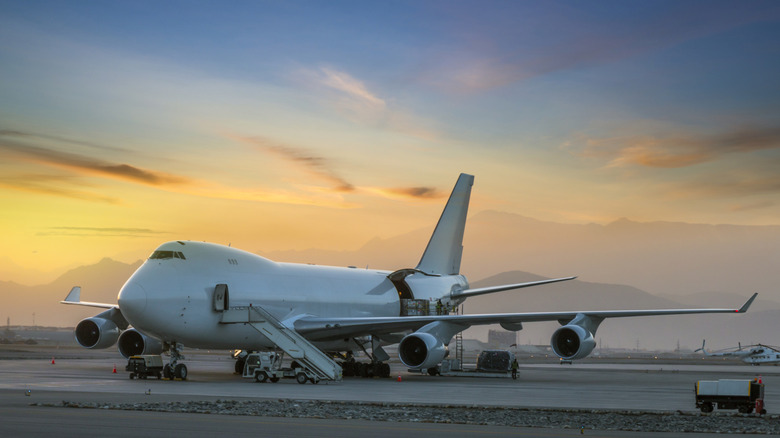
If you're a long-time reader here at Jalopnik, you'll have gleaned the fact that we do quite a lot of travel in the course of our daily work as automotive writers. Being on planes semi-frequently is part and parcel to the job. Some of my colleagues enjoy their time on aircraft, but I see it as a means to an end. I need to get to France to drive some new Volkswagen they'll never sell in the U.S., and a plane is the only expedient way to get there. I just find the whole process annoying. After two decades of jetting off to drive cars around the world I've narrowed down most of my annoyance to the existence of airplane windows. They simply should not exist.
Every time I fly, I'm reminded of the scourge that is the airplane window. I'll get my personal preferences out of the way up top. These are less important arguments, but they make my hatred of plane windows a little more clear. At some point my early 30s, I gained a mild fear of heights that wasn't present in my youth. I'm not afraid of flying, though I do occasionally get a sense of unease in turbulence, and when I can see the ground my unease grows. To combat this, I usually book a window seat and keep the shade closed, as it should be.
You may not agree with me, as many of my colleagues do not, but I will do my best to convince you of the need to disband with airplane windows. They're an irredeemable nuisance that make every single flight worse, more dangerous, and more expensive.
The plane itself
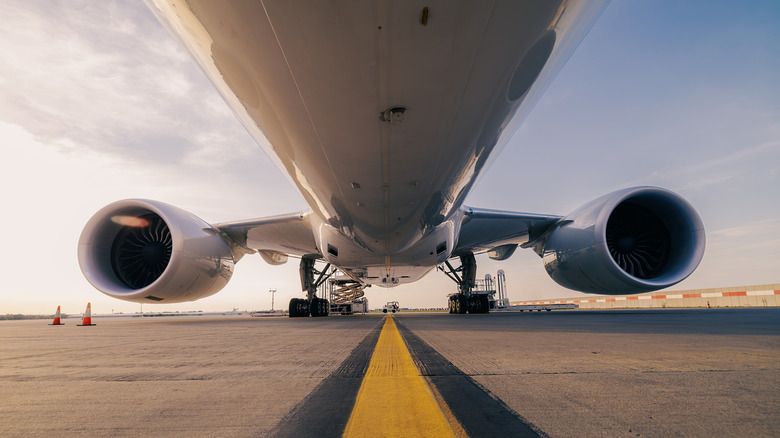
If you were going to design a pressurized metal tube with the explicit purpose of filling it with people and shooting it across the sky, would you put a bunch of holes in it? An airplane fuselage can be built smaller and lighter for the same load if it doesn't need to be reinforced to accommodate 100 additional apertures. Having a plane without windows is naturally a stiffer and more stable platform. Just like with a car, making it lighter has knock on effects to longevity, fuel consumption, and allows other components to be lighter in response.
Obviously planes are designed from the ground up with windows in mind, because they've had windows for 100 years. As a result there's no way to quantify exactly how much heavier the plane is, but weight is absolutely the enemy of flight, so every pound counts. Each window on an airplane is three layers of acrylic, adding up to around eight additional pounds over what a standard aluminum skin would be for that square footage. Eight pounds times 100 windows adds up quick. Add on the additional reinforcement frame each window needs, and how much additional reinforcement the airframe needs to accommodate the extra holes. It's deep into the thousands of pounds.
A plane without windows allows planes to be more efficient. The plane can burn less fuel for a given distance if it is lighter, or conversely, it could carry more passengers and cargo for the same fuel burn. Either way the airline can either spend less or amortize the costs out over more customers, potentially reducing flight costs, which are already absurdly high.
Annoyance is a reason, too
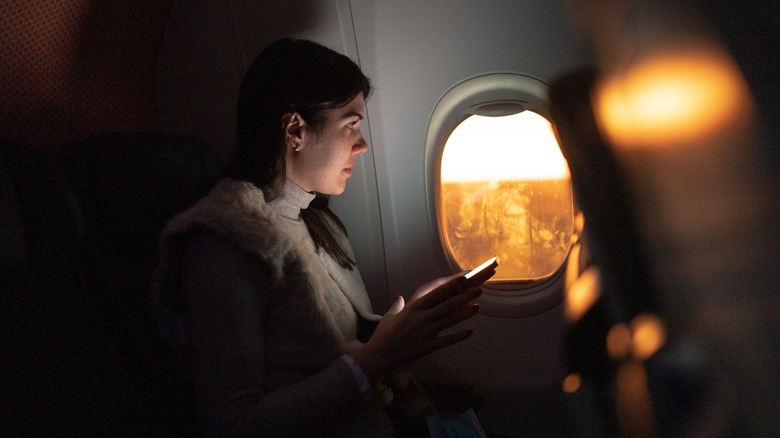
The biggest gripe I have with airplane windows, however, is one of etiquette. Society seems to be encouraging humans toward increasingly selfish living, and the airplane window is a microcosm of that social selfishness. There are unwritten rules of airplanes that some seem not to be able to follow anymore. The person in the middle seat gets both armrests, use the restroom before getting on the plane, don't bring stinky food, and keep to yourself. It really isn't that hard. There is one rule that I seem to be in the minority on, however, and that's keeping the window closed. If you're in the window seat you hold the controls for the comfort of everyone around you.
My colleague Andy was recently on an early morning flight and one of his fellow passengers decided to open the window before putting on a sleep mask and laying back to take a nap. This is truly sociopathic behavior, and should be met with mandatory airplane etiquette courses. With the controls firmly in their grasp, they made a conscious decision to inflict harsh morning sunlight on the tired and potentially trying to sleep passengers within a 12-foot radius at a minimum. No one person should have all that power. They've shirked their responsibility and made everyone's lives worse.
Having frequently flown to desert locales, these windows also introduce significant solar radiation heat into the cabin when the plane is sitting on the tarmac. Get rid of those windows and install a small layer of insulation in their place and everyone will be more comfortable onboard, the climate control won't have to work so hard, and the plane will burn even less fuel in doing so.
If it weren't for windows, the interior of an aircraft could have uniform walls instead of little window alcoves that never line up with your seat. I'm a large and tall man, and I constantly get the "rib" bit in between the windows lined up with where my shoulder and head want to be. It's annoying and I wish it would stop.
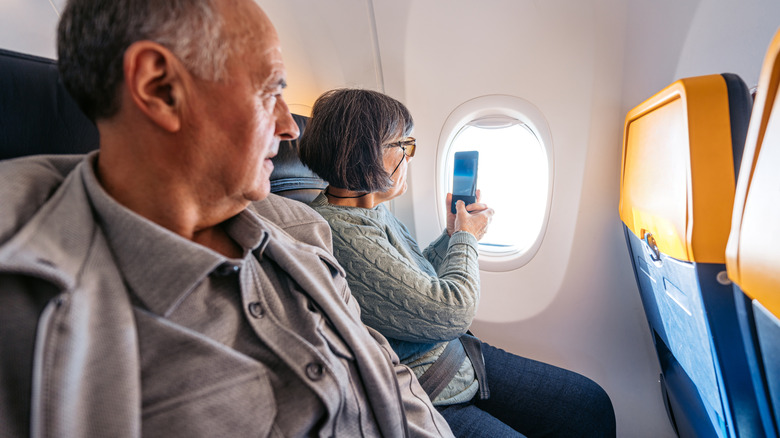
And don't get me started on taking pictures out the windows of airplanes. I've never understood this desire. What are you going to do with that photo? You're never going to look at it again, or if you do it'll be to post it on Instagram where nobody will care.
Why do planes have windows anyway?
So far I've only seen two solid explanations for why airplanes have windows, and neither of them hold water under even the lightest amount of scrutiny.
The first, and perhaps most important, is that windows can be used by first responders to see inside planes during crashes, and by airline staff to see out to assess which side of the plane they should exit from in event of a crash. If your aircraft has fallen out of the sky, something really bad happened. It's such a rare occurrence that I can't imagine windows were designed with this in mind. We are living in the future. If a $9,000 used BMW 5 Series can have surround view cameras that show you where each corner of the car is, then an airplane costing into the hundreds of millions can figure out a way to do the same thing. Or, just keep the windows that are already installed in the emergency exit doors. If I'm going to be on a plane that crashes, I definitely would rather take my chances with a lighter and stiffer aircraft than one with a bunch of holes cut in it.
The second reason, as Christine De Gagné, marketing director for Airbus, told PopSci, passengers just aren't prepared to fly on an aircraft with no windows. The windows make the airplane feel bigger, look brighter and cleaner, and help keep circadian rhythm intact. That's all phony junk, because airplanes have never felt smaller or dirtier, and my circadian rhythm always ends up completely jacked after a flight anyway. Have you ever heard of a concept called jet lag? I call BS, but either way, I'd trade all of those things for a cheaper and safer flight anyway.
Anyway, I'm sure a bunch of you disagree, so prepare to hurl insults at me in the comments below. I don't care if this makes you boo, I've seen what makes you cheer.