

Polestar Wanted To Leave The U.S. Anyway Before Regulatory Ban, Dealer Lawsuit Claims
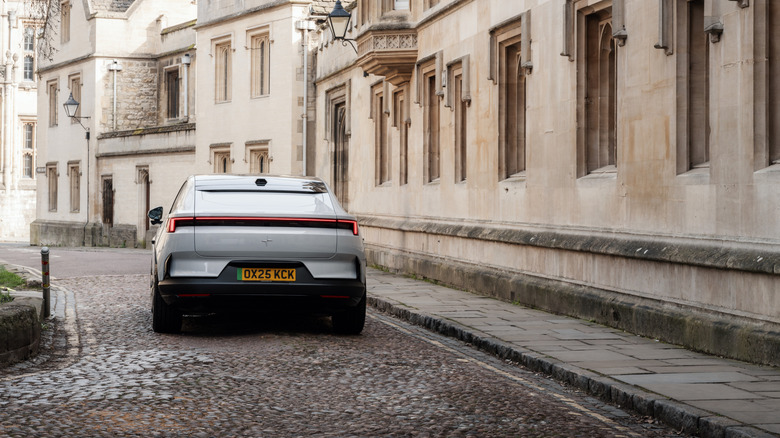
Polestar's exit from the U.S. market was actually part of the plan, claims a Polestar dealer that now finds itself without a new product to sell. Prestige Imports has filed a lawsuit against the manufacturer, reports Automotive News, seeking $25 million in damages despite Polestar's legally mandated departure.
The Biden Administration's Connected Vehicle Rule set the stage, with its ban on software used for communications and autonomous driving by "foreign adversaries," including China, taking effect with the 2027 model year (with hardware to follow for 2029). This, along with a bipartisan follow-up bill that would ban them even more, is for national security. After all, we wouldn't want to give a foreign adversary the ability to spy on us more than we already spy on ourselves, or remotely steer our cars off a cliff. The side effect of protecting existing manufacturers from an influx of competitive and far less expensive Chinese cars at a time when people can't afford cars must be a mere coincidence.
While Polestar is a Swedish company, it is majority-owned by Geely, the Chinese auto giant. In June, the U.S. Department of Commerce refused to grant Polestar a waiver to continue selling cars in the U.S. as of the 2027 model year. Its dealers must now sell out its existing stock of 2026 models, including the American-made Polestar 3 and South Korean Polestar 4, then transition to a service and support role rather than sales. While a blow to U.S. Polestar dealers, this won't hurt Polestar overall that much. In the first quarter of 2026, 94% of Polestar's sales were outside the United States. It will simply focus more on Europe, whose drivers love Chinese EVs. For this particular dealership, however, it's a pretty big loss.
Force majeure
Volvo, the company that spun off Polestar to become its own brand, is also owned by Geely and is subject to the same rules and regulations. It received government approval to continue selling its cars in the U.S., while its former performance sub-brand turned EV manufacturer did not.
Prestige Imports also operates a Volvo dealer, for whom it's business as usual. It's seeing both sides of this equation, and it believes something's not adding up. The lawsuit alleges that Polestar was already planning to exit the U.S., and "maneuvered the [government] into a ban" to facilitate that departure and escape its dealer commitments. Polestar sent Prestige a letter two weeks after its June 25 announcement claiming "force majeure." Cornell Law School defines this:
Force majeure is a provision in a contract that frees both parties from obligation if an extraordinary event directly prevents one or both parties from performing. A non-performing party may use a force majeure clause as an excuse for non-performance for circumstances beyond the party's control and not due to any fault or negligence by the non-performing party.
In other words, Polestar informed Prestige, and likely its other dealers, that it is unable to fulfill its obligations to them because of the government's decision, which was outside of its control. Not everyone sees it that way.
One of these things is not like the other
Prestige claims that Polestar was offered the same exemption as Volvo that would have allowed it to continue selling cars in the U.S., but turned it down as a way to exit the market and get out of commitments to its dealers. Current Senator and former auto dealership owner Bernie Moreno, one of the authors of the more restrictive ban working its way through Congress, told CBT News as much in an interview:
Polestar was screwed by Polestar. It wasn't screwed by the U.S. government. The U.S. government treats every company the same way. There's a Connected Vehicle Rule that already exists. Volvo was given a list of items that they needed to follow in order to comply with the bill.
[...]
It was a very exhaustive and tough list that Volvo had to follow. Volvo chose to follow it. Polestar used it as a convenient excuse, Jim, because they were losing $30,000, $35,000 per car. And so rather than doing the right thing for their dealers [...] they think they can bypass lawsuits from dealers and call a force majeure clause. That's obviously just a scam on dealers.
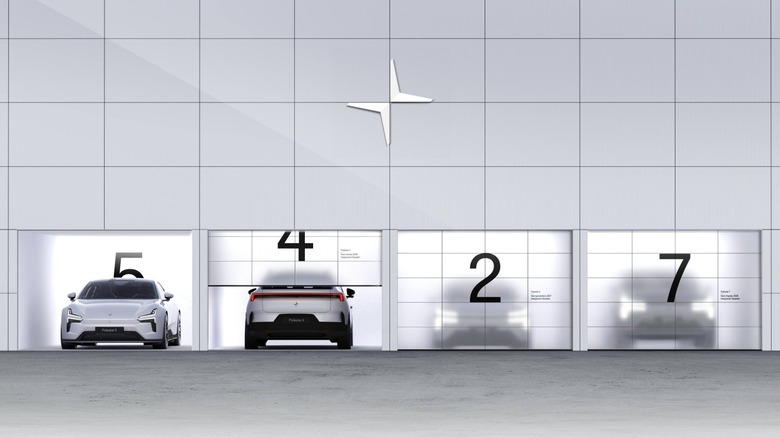
The Prestige lawsuit further claims that after the Connected Vehicle Rule was finalized in 2025, Polestar kept pushing dealers to invest, even while it was actively planning to leave the U.S. market. Polestar allegedly pushed the Polestar 7 as the next big thing for U.S. customers, right up until the announcement that it would no longer sell new vehicles here.
Prestige claims that Polestar violated New Jersey's Franchise Practices Act by providing no cause for the franchise termination, which can only be terminated if the dealer has not fulfilled its obligations. Polestar also allegedly did not provide the required 60-day notice. Prestige is seeking $25 million in damages from Polestar, five years of committed parts and warranty support, and a declaration from Polestar that it did violate the Franchise Practices Act.