

8 Toyota Models With Top-Tier Value Retention
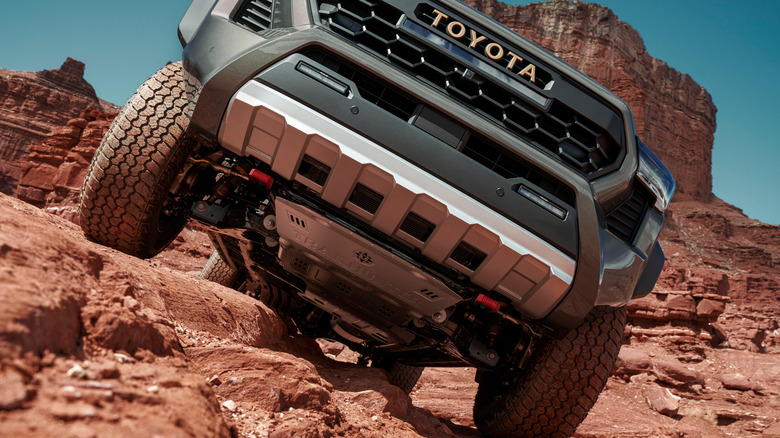
Most people look at sticker prices when buying a new car. Some also take into account the fuel efficiency, insurance, maintenance, and repairs before making a decision. The fact is, though, depreciation — not gas or insurance — is the single biggest expense of owning a new vehicle. Depreciation stays hidden right until the moment when you want to sell the vehicle. Then, reality kicks in, and you realize you lost over $10,000 in just a few years of ownership.
Toyota, however, consistently outperforms its peers in value retention. Hardly surprising, as it not only produces some of the most reliable vehicles in the business, but also legendary nameplates with a cult following, like the Tacoma, 4Runner, and Land Cruiser. Recently, Toyota also appealed to the enthusiast crowd with cars like the GR86, GR Supra, and GR Corolla, which further strengthened the brand in the public's eyes.
Critically, buying slow-depreciating Toyota is a hedge against market volatility. Yes, Toyotas still lose their value over time, but they are more of an asset than other cars. And in this piece, we'll have a closer look at the cream of the crop Toyota models for value retention, including the Sienna, Tacoma, Corolla Cross, and RAV4. We sourced data from different publications to give you the clearest picture possible and sprinkled some of our expertise to explain why these cars keep their value so well. We'll also include 2026 starting prices (with destination fees) to help you quantify the depreciation. Now, let's crunch those numbers!
Toyota Sienna
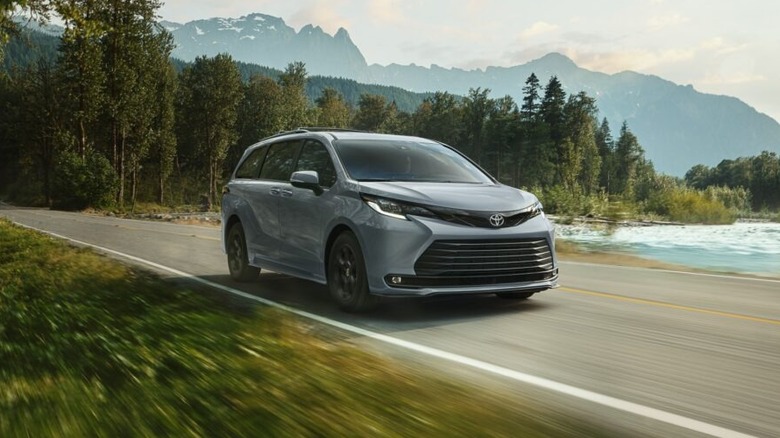
The 2026 Toyota Sienna may not be the most powerful minivan, nor the cheapest one, starting at $42,915. However, it's the easiest on the wallet in the long run. It comes as standard with a 2.5-liter hybrid powertrain that's good for a class-leading EPA-estimated figure of up to 36 mpg combined, and, according to Kelley Blue Book, it has a class-leading resale value.
As noted by KBB's 2026 Best Resale Value Awards, the Sienna keeps 54.3% of its value after five years, which is not only the highest of any minivan, but among the highest in the industry. iSeeCars also gave the Sienna a high rating, stating the minivan will keep the 71% of its residual value over five years, and 50% over seven years. Meanwhile, CarEdge says that the Sienna keeps 78.6% of its value after three years of ownership.
These results aren't too surprising. Due to the ever-increasing gas prices, hybrids are more desirable as secondhand vehicles, and that's especially true for Toyota's hybrid models. Furthermore, according to Consumer Report's 2026 Automotive Brand Report Card, hybrid cars have 15% fewer issues than regular gas engines — i.e., they break down less frequently. These powertrains are also easier on some consumables, like brake pads, because they mostly utilize regenerative braking.
The Sienna also steals momentum from three-row crossovers, as it's available with AWD. Granted, the system employs an additional electric motor on the rear axle and probably isn't the best solution for off-roading, but it works really well on snow.
Toyota Corolla Cross
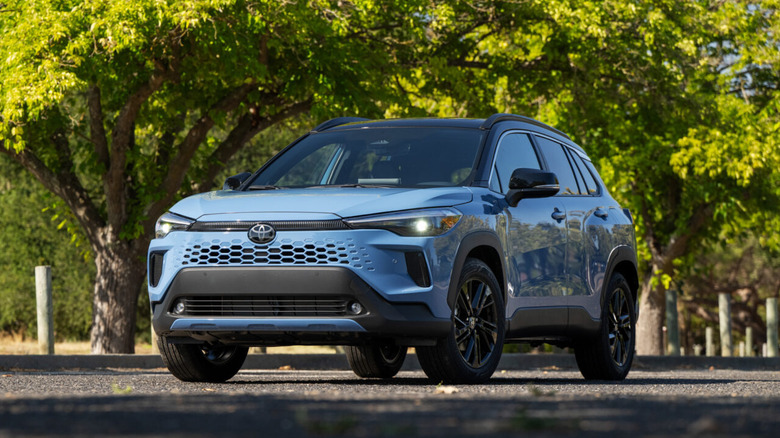
The crossover variant of the world's most trusted nameplate is an unremarkable car as far as the driving experience goes. It's unexciting to drive and not very well insulated from the road, and you could argue it isn't very attractive to look at. However, it's hard to beat as an investment. The Corolla Cross is very affordable and efficient, particularly with the hybrid engine, and, according to Kelley Blue Book, it has a higher-than-average resale value for the category.
Meanwhile, as outlined by Car Edge, the Corolla Cross keeps 70% of its value after five years of ownership and almost 60% after seven years. These are some outstanding figures for a car that starts at only $26,930, or $31,390 for the hybrid model, but hardly surprising considering the model's excellent reliability rating. Running costs should also be very low. Edmunds reports that the true cost to own a Corolla Cross over five years is $34,637, which is lower than the publication's findings for the Mazda CX-30 ($40,174) and Honda HR-V ($40,360).
Despite being equipped with AWD as standard, the Corolla Cross Hybrid achieves an impressive EPA rating of 42 mpg combined. With 196 horsepower on tap, it's relatively quick, too, and significantly peppier than the Corolla Hybrid Sedan, which packs only 138 hp. The slower gas-only model with 169 hp (same as the sedan) is rated at 32 mpg combined with FWD and 30 mpg with AWD, which is reasonable for a car of this size.
Toyota RAV4
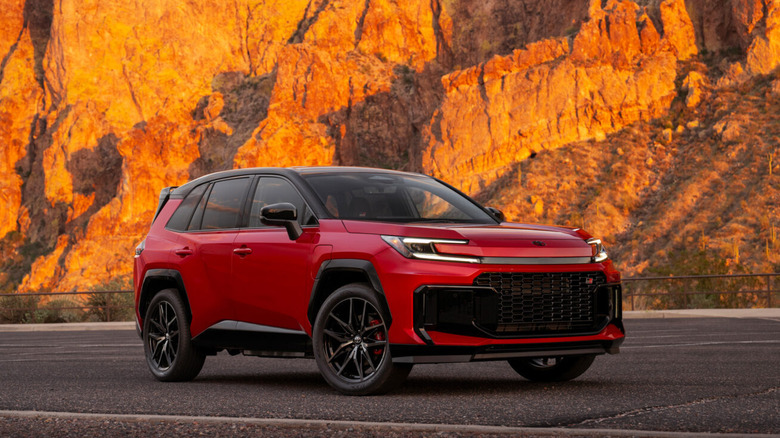
The RAV4 is a hot commodity in the U.S. In 2025, it finished as the best-selling non-pickup in America — and third overall, trailing only the Ford F-Series and Chevrolet Silverado. And people trust Toyota's bestseller for the same reasons they trust the Corolla Cross: reliability, practicality, efficiency, and value retention. Indeed, data from CarEdge shows that the RAV4 loses only 28% of its value over five years, with iSeeCars reporting a 38% value loss over seven years, compared to 50.7% average for all compact SUVs.
Toyota has launched a brand-new RAV4 for 2026, which should keep the same resale value as the previous model. Crucially, America's best-selling SUV now comes standard with a hybrid powertrain. The 2.5-liter hybrid produces 226 horsepower in FWD and 236 hp in AWD form, higher than the base gas models of its rivals, and starts at $33,495. The RAV4 also sips gas with an EPA combined rating of 43 mpg (FWD) and 42 mpg (AWD). A plug-in hybrid powertrain with 324 hp and AWD is also available, offering an excellent 52-mile electric-only range.
Although it still won't light your pants on fire, the latest RAV4 isn't just a sensible buy anymore — it's also a vehicle you'll actually enjoy owning. Yes, most trims aren't particularly exciting, but the performance-oriented RAV4 GR Sport is genuinely fun to drive, thanks to the standard potent PHEV powertrain, sportier suspension bits, and summer performance tires. Conversely, the RAV4 Woodland has some off-road improvements that appeal to the lifestyle crowd, like all-terrain tires and higher road clearance.
Toyota GR Supra
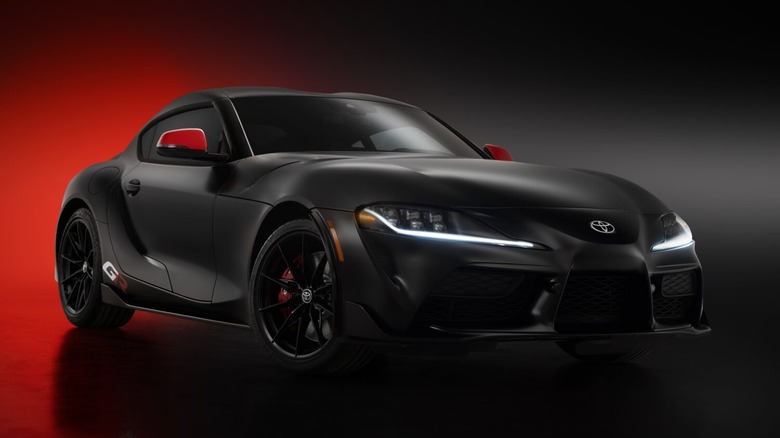
The GR Supra perfectly illustrates just how much resale protection the Toyota badge carries. According to iSeeCars, the GR Supra loses 23.9% of its value over five years, compared to a whopping 43.5% for the BMW Z4. CarEdge confirms this gap, logging a five-year depreciation of just 23% for the GR Supra versus 40% for the BMW Z4.
Why this comparison? Well, while one of these is a convertible and the other is a coupe, they share the same platform, engines, and transmission. Heck, you could argue the GR Supra is a BMW sports car with a Toyota badge, as it has almost no Toyota parts inside. Toyota purists aren't exactly thrilled by this, but what's wrong with a fun-to-drive RWD BMW sports car that also holds its value well, one that's also available with a six-speed manual and a potent 382-horsepower turbocharged inline-6 engine? Oh, and that inline-6 isn't just any engine. The B58 is famously overbuilt, reliable, and more than equal to the legendary 2JZ. The four-cylinder B48, which was also available in the GR Supra until 2025, is also generally reliable.
The Toyota badge also carries a price advantage, with the 2026 GR Supra starting at $59,595 with the standard turbocharged inline-6 with 382 hp. Meanwhile, the Z4 starts at $57,450, but that's with the 255-hp turbo-four — for the 382-hp M40i, the base price is $69,750. Sadly, neither car will be here for 2027, with no imminent replacements in sight. Still, considering the stout internals, both are an excellent secondhand buy for enthusiasts.
Toyota Tundra
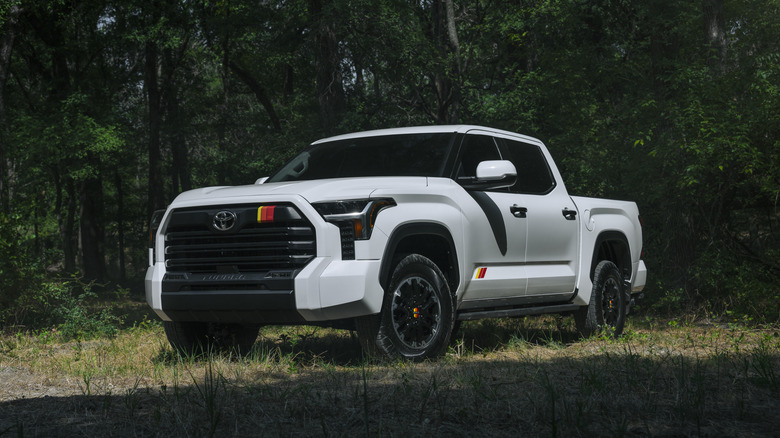
The Ford F-150, Chevrolet Silverado, Ram 1500, and GMC Sierra dominate sales volume in the full-size truck segment, with the Tundra trailing by a significant margin. However, Toyota's full-size truck routinely beats all its competitors in when it comes to value retention. It finished second to the Tacoma in the 2026 Kelley Blue Book depreciation study we cited earlier, with a five-year resale value of 59.9%.
iSeeCars has an even more bullish outlook on the Tundra, estimating a 21.4% loss of value over five years and only 32.4% over seven years. To put that into perspective, iSeeCars estimates a 37.9% value loss for the Ford F-150 over five years and 49.3% over seven years.
That said, the latest Tundra hasn't been quite as bulletproof as the legendary generation before it. Toyota replaced the old 5.7-liter V8 with a 3.5-liter twin-turbo V6, which keeps grenading itself, due to machining debris being left from the manufacturing process. For context, Tundra's old V8 has been one of the most reliable and durable truck engines.
Alas, the new twin-turbo powerplant is significantly peppier. In the base Tundra SR, it packs 348 horsepower and 405 pound-feet of torque, though every other trim gets a more potent version with 389 hp and meaty 479 pound-feet of torque. Then there is the i-Force Max hybrid variant, which bumps those outputs to 437 hp and a whopping 583 pound-feet of torque. Unfortunately, the hybrid doesn't bring massive efficiency benefits, with the 2WD Tundra Hybrid boasting an EPA rating of 22 mpg combined.
Toyota 4Runner
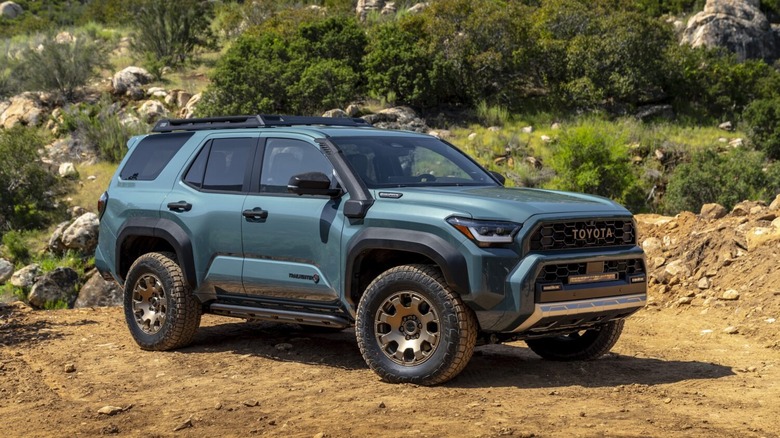
The Tundra wasn't the only Toyota that got its beloved naturally aspirated engine replaced by a turbocharged one. For 2025 and onward, the 4Runner is equipped exclusively with a 2.4-liter i-Force turbocharged four-cylinder engine, available in regular and i-Force Max hybrid form, succeeding the 4.0-liter V6 of its predecessor.
The turbocharged unit outmuscles the old V6, generating 278 horsepower and 317 pound-feet of torque in the base SR5 trim that starts at $43,865. To put that into perspective, the outgoing V6 produced 270 hp and 278 pound-feet. The i-Force engine is also rated at 22 mpg combined (2WD), much higher than the V6's abysmal 17 mpg figure. The hybrid version takes things up a notch with 326 hp and massive 465 pound-feet of torque, and gets an even higher 23-mpg rating.
Crucially, the four-cylinder i-Force hasn't been plagued with the same issues as the larger 3.5-liter twin-turbo V6 found in the Tundra, which should keep 4Runner's depreciation low. Indeed, per Kelley Blue Book, the 4Runner has a class-leading resale value, retaining 58% of its worth over five years. CarEdge's estimate is even higher at 74.9%, or 68.8% over seven years. For context, CarEdge reports that the Ford Bronco will only retain 42.6% of its value over five years.
But the 4Runner doesn't only ace the number game. It's now a more grown-up SUV that drives better on the street, has an improved tech inside, and offers more space for passengers and cargo. Even so, the 4Runner didn't lose its off-road credentials. The TRD Off-Road, TRD Pro, and Trailhunter trims offer different tastes of the off-road pudding, with advanced suspension tech and aggressive tires.
Toyota GR86
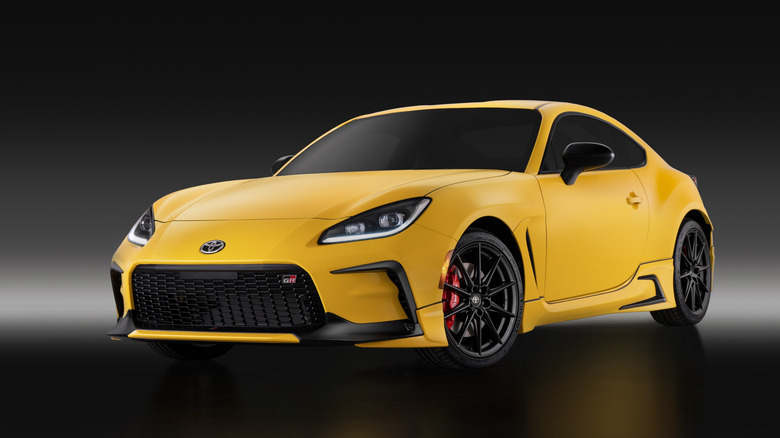
The GR86 stubbornly refuses to play by modern automotive rules. With a base price of $32,695, it's relatively cheap for an enthusiast car. It's also incredibly light, weighing less than 2,900 pounds. Critically, it comes standard all the right ingredients for a sports car: RWD, six-speed manual, and a naturally aspirated 2.4-liter boxer engine that produces 228 hp and spins to 7,400 rpm. It looks as good as it drives, too.
So, yes, the GR86 is quite the unique package, just like its largely similar Subaru twin, the BRZ. And these cars aren't only similar in the looks and driving-experience department. Fueled by steady enthusiast demand, the GR86 and BRZ hold their value remarkably well. As per CarEdge, the Toyota GR86 will depreciate 23% over five years, compared to 24% for the Subaru BRZ. Meanwhile, as per iSeeCars' estimates, GR86's value will only tank 14% over five years and 29.4% over seven years.
With that said, the Subaru-built FA24 four-cylinder boxer powering the GR86 and BRZ hasn't escaped its share of drama. There have been multiple reports of oil starvation, caused by debris from the RTV sealant (used to make gaskets) that clogs the oil pickup strainer. This shouldn't be an issue for street driving, but high-speed cornering on a track, particularly right-hand corners, can starve the engine of oil. Not that you should expect prices to drop anytime soon. Cleaning the FA24 from RTV debris is an easy and popular solution, and aftermarket oil pans, baffles, and AccuSump kits that solve the starvation issue are already available.
Toyota Tacoma
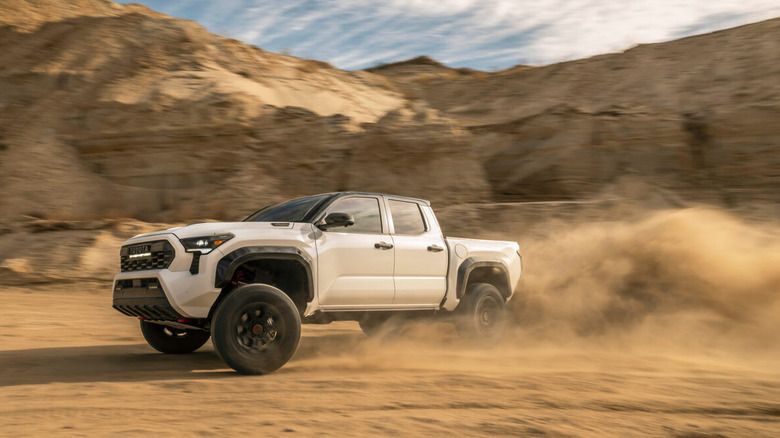
The Toyota Tacoma topped Kelley Blue Book's 2026 resale value list with a depreciation rate of 37% after five years of ownership. The projections of iSeeCars show an even lower depreciation of 19.9% after five years, 28.9% over seven years, and just 36.8% over 10 years. Meanwhile, data from CarEdge shows a 22% depreciation after five years.
But why does the Tacoma perform so well? For starters, it's one of the longest-lasting vehicles sold in the U.S. and one known for reliability, durability, and long-term support. The Taco also enjoys a cult following and remains the best-selling mid-size truck in the U.S. by a significant margin.
Sure, the latest Tacoma has been controversial as it replaced the aging 2.7-liter inline-4 and 3.5-liter V6 naturally aspirated engines with a 2.4-liter four-cylinder turbo. As we noted previously, however, the new engine has been generally reliable so far while offering significantly more oomph. Yes, it only makes 228 horsepower and 243 pound-feet of torque in the base SR trim ($34,290), but starting from the SR5 ($38,380) you get a 278-hp variant that matches the V6's power output, produces more torque (317 pound-feet vs. 265 pound-feet), and consumes less fuel (23 mpg vs. 20 mpg).
Toyota didn't forget about enthusiasts either — the Tacoma is the only manual transmission pickup truck you can buy in the U.S., packing the same 2.4-liter turbo with 270 hp and 310 pound-feet of torque. Then there is the i-Force Max hybrid version, which blows away every truck in its segment with 326 hp, 465 pound-feet of torque, and a 23-mpg combined figure. Finally, off-road enthusiasts are catered to with a plethora of rugged TRD and Trailhunter models.