

The History Of Toyota's Sports Cars
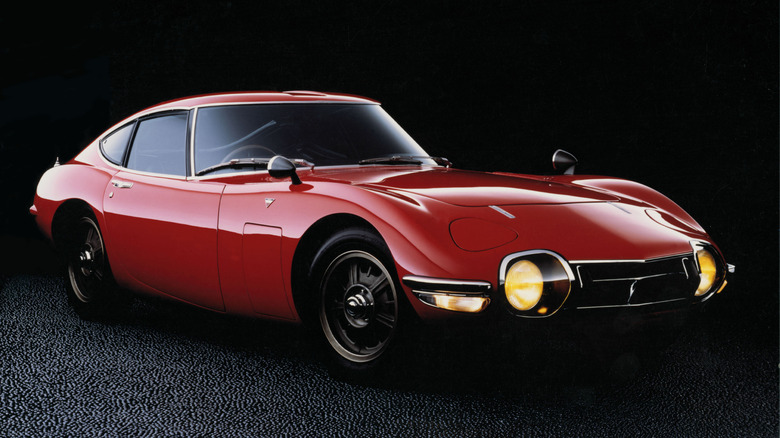
To some, Toyota is an appliance manufacturer disguised as an automaker. From the Corolla and Camry to the RAV4 and Tacoma, the Japanese giant is widely known for producing serviceable transportation devices that refuse to die, but don't always stir the soul.
Well, that couldn't be further from the truth, actually. Toyota may be a dependable manufacturer, but it's also one that isn't afraid to compete where it really matters: performance and driving enjoyment. In fact, the automaker produced its first sports car more than six decades ago, before even launching the highly successful Corolla.
Since then, Toyota has given us many legendary enthusiast-grade machines, from lightweight sports cars like the MR2, GR86, and Celica, to high-horsepower GTs like the Supra. And in this piece, we'll uncover how Toyota built its legendary sports car lineage, step by step. To paint the full picture, we're also bringing the brand's rally-bred hot hatches into the fold, although they aren't literally sports cars. With that settled, let's unpack the Toyota sports car legacy!
The genesis: Toyota Sports 800
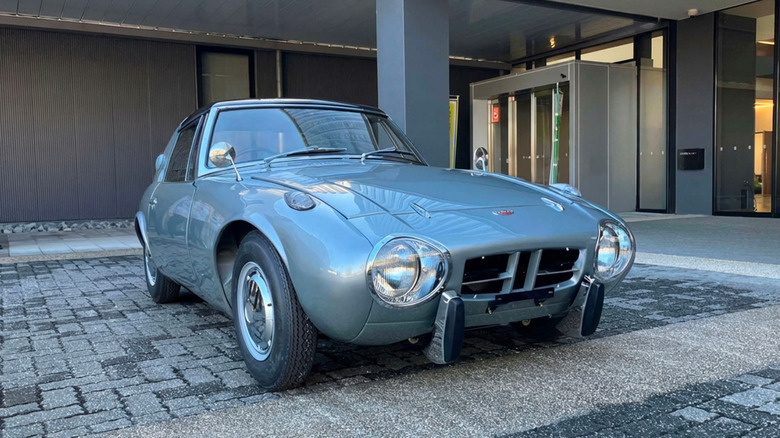
If you only look at the engine, Toyota's first foray into sports cars was an underwhelming one. The Sports 800 Yota Hachi packed a tiny 790cc two-cylinder boxer engine equipped with two carburetors for a maximum output of 45 horsepower. Not much, but it was a significant upgrade over Toyota's passenger car at the time, the Publica, which packed a 690cc engine with 28 hp.
However, power didn't make the Sports 800 fast — aeronautical engineering did. The car's chief engineer, Tatsuo Hasegawa, worked on WWII aircraft and used everything he learned there in Toyota's first sports car. He might have even went too far in the 1962 Toyota Publica Sports Concept, on which the sports car was based — it featured a sliding canopy, just like a single-seater aircraft. That part sadly didn't reach production, though the production model did receive an aluminum Targa top, two years before Porsche launched the first 911 Targa.
The Sports 800 also had an aerodynamic body to cheat the wind and aluminum panels to keep the weight down. The result was a car that weighed just 1,278 pounds, which aided handling responsiveness, and was slippery enough for a top speed of almost 100 mph. The boxer engine also gave the Sports 800 a low center of gravity, further enhancing the driving experience.
The Sports 800 was an honest first attempt from Toyota, though not a very successful one. Toyota only produced 3,131 units from 1965 to 1969, all sold in Japan. Curiously, around 300 of these cars were left-hand-drive units for members of the American military stationed at Okinawa.
Battling the giants: Toyota 2000 GT
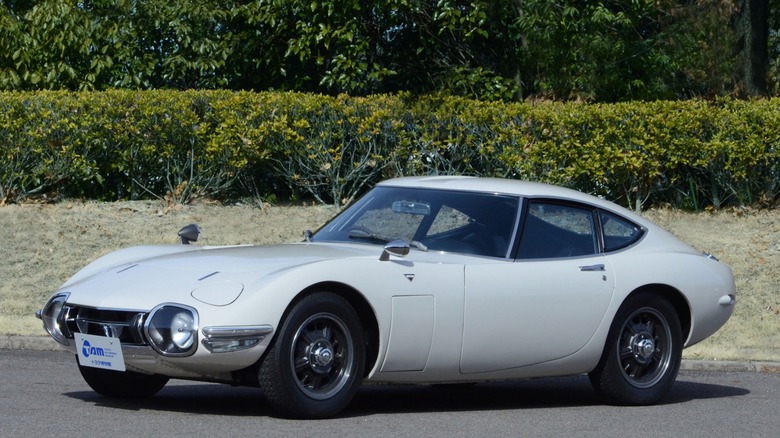
The Sports 800 had barely hit showroom floors when Toyota played its ultimate card at the 1965 Tokyo Motor Show: the breathtaking 2000GT. This was Japan's first supercar, designed to compete with the crème de la crème sports car of the time, the Jaguar E-Type. Crucially, it was as much a Yamaha supercar as a Toyota. The motorcycle manufacturer actually started the project with Nissan, and Toyota went in only after those two broke up.
The Yamaha-Toyota collaboration was more fruitful. Toyota used its own 2.0-liter inline-6 engine, borrowed from the Crown, but with a Yamaha-tuned DOHC aluminum head. It produced a healthy 150 horsepower and 130 pound-feet of torque, with competition models producing around 200 hp. Another hallmark feature of the car, the stunning body, was penned by Toyota's Satoru Nozaki. His design actually won against Yamaha's own, penned by Albrecht Goertz, the man behind the gorgeous BMW 507 roadster. Meanwhile, Yamaha's piano division produced the dazzling mahogany interior, befitting of a high-end supercar.
Okay, but how did it stack up against the E-Type? Jaguar's sports car had a significant 4.2-liter inline-6 with 265 hp, but it was also heavier at 2,800 pounds versus 2,560 pounds. It was still quicker in a straight line, but the 2000GT's low curb weight and center of gravity made it better in tighter corners. Besides, with a top speed of around 130 mph, the 2000GT wasn't slow. In fact, Toyota smashed the 72-hour speed record with a Tosco-tuned 2000GT with an average speed of 128.76 mph.
Everyday performance: Toyota Celica
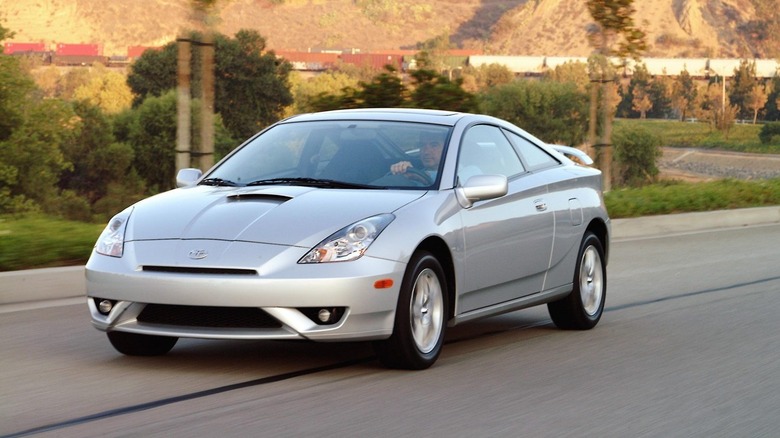
With just 337 units sold, the 2000GT was an ultra-rare halo car. To truly appeal to the public, Toyota needed a more affordable sports car, and it arrived in 1970 as the Celica. The first-gen model was rear-wheel drive and had pony-car looks, though it was only powered by four-cylinder engines. The most powerful was the 2.0-liter DOHC unit developed in collaboration with Yamaha, which produced a solid 115 horsepower.
The second- and third-gen models arrived in 1977 and 1981, respectively, but still had underpowered four-cylinder engines. There was an interesting homologation variant of the third-gen model for Group B racing with a 1.8-liter turbocharged engine, but other than that, the Celica's performance wasn't particularly scintillating.
Interestingly, the Celica's real rise to fame arrived with the front-wheel-drive fourth-gen, launched in 1985. Packing a 2.0-liter engine with 135 hp in the U.S. (147 hp in other markets), the Celica finally had the power befitting of a sports car. And that was only the base model — in 1988, Toyota launched the Celica Turbo All-Trac (GT-Four in other markets) rally homologation special with AWD and a turbocharged 2.0-liter 3S-GTE engine with 190 hp. The next-gen ST185 Celica Turbo All-Trac had an even more powerful variant of the engine with 204 hp (222 hp in Japan), while the final ST205 model packed a whopping 255 hp.
The Celica returned as a seventh-gen model in 1999, albeit only with front-wheel drive and naturally aspirated engines. At least the higher-end variant received the high-revving 2ZZ-GE 1.8-liter engine with 180 hp (190 hp in other markets), until the model was discontinued in 2006.
Reaching cult status: Toyota Supra
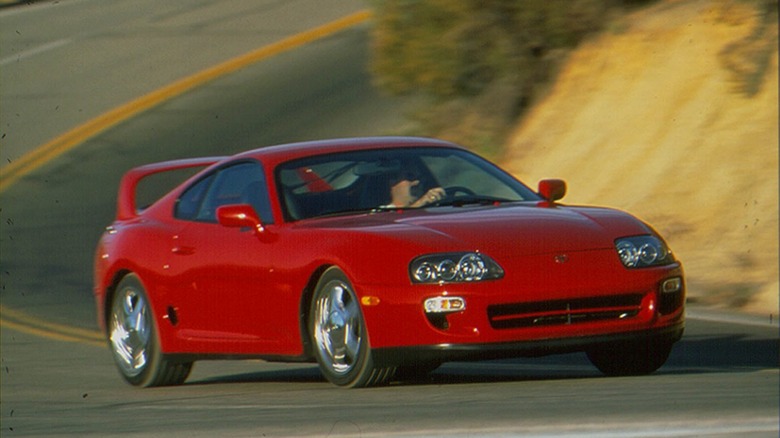
The Celica put Toyota on the enthusiast map, but four cylinders simply weren't enough to compete against the Datsun Z. So, in its typical pragmatic fashion, Toyota shoehorned an inline-6 into the 1978 Celica, stretched the wheelbase by 5.1 inches, and called it the Celica Supra. That new engine didn't impress, producing up to 110 horsepower from a 2.6-liter capacity, with later versions getting a 116-hp 2.8-liter unit. The second-gen Supra arrived for 1982 with a sharper design and independent rear suspension, but it was still a glorified Celica with a twin-cam 2.8-liter inline-6 producing 145 hp.
In 1986, the Supra finally severed ties with the Celica and was ready to serve as Toyota's new flagship sports car. Unlike its smaller sibling, the Supra remained rear-wheel drive and came with a brand-new 3.0-liter inline-6 with 200 hp. And that was merely the opening act. The next year, Toyota introduced the Supra Turbo, which packed 230 hp and sprinted to 60 in 6.4 seconds (per Car and Driver).
Then came the 1993 Mk4 — the car that catapulted Toyota into the performance elite. From the famed and unbreakable 2JZ-GTE 3.0-liter twin-turbo inline-6 with 320 hp, to its star role in the "Fast and Furious" franchise, the Supra became synonymous with 1990s car culture. But the Mk4's genius ran far deeper — it was also 220 pounds lighter and praised for its handling/comfort balance by Car and Driver in a 1993 comparison test, where it won against the 300ZX Turbo, RX-7, Corvette, and Porsche 968. Unfortunately, slow sales killed the Supra in 1998 in the U.S. (2002 in Japan) with no immediate successor in sight.
Birth of a drift icon: Toyota Corolla GT-S AE86
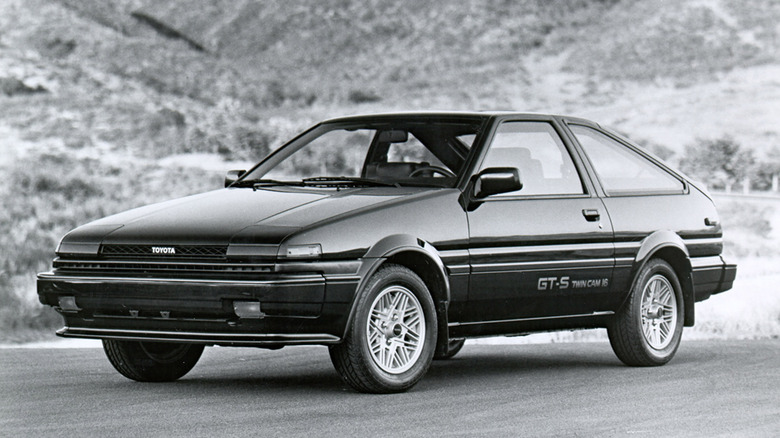
The 1983-to-1987 Corolla GT-S AE86 may not fit the sports car term entirely, as it was based on a Corolla platform. However, this was not the front-wheel-drive platform of the fifth-gen Corolla. Instead, the AE86 was based on a rear-wheel-drive platform and only offered as a coupe or liftback. It was incredibly light, too, with the GT-S Coupe weighing just 2,346 pounds, and had a near 50:50 weight distribution. The finishing touch was the high-revving 1.6-liter 4A-GE engine with 112 hp (128 hp in other markets) and a 7,600-rpm redline, paired to a five-speed manual.
In other words, you could hardly tell it was a Corolla behind the wheel. The AE86 felt like a sports car. Light on its feet. Adjustable in the corners. The optional limited-slip differential further enhanced the handling and turned the AE86 in a drifting machine. Sorry: the drifting machine. It's safe to say that the AE86 popularized the drift culture, with star driver Keiichi Tsuchiya chasing significantly more powerful sports cars while drifting in the rain.
Crucially for sports car fans, Keiichi claimed the AE86 made you a better driver because of its back-to-basics approach. This had the side effect of turning the AE86 into a collector's item, with prices ranging between $25,000 and $50,000. The drift icon is so popular that Alibaba sells brand-new AE86 body shells, and Toyota has developed new 4A-GE engines with improved blocks and heads.
Mid-engine for the masses: Toyota MR2
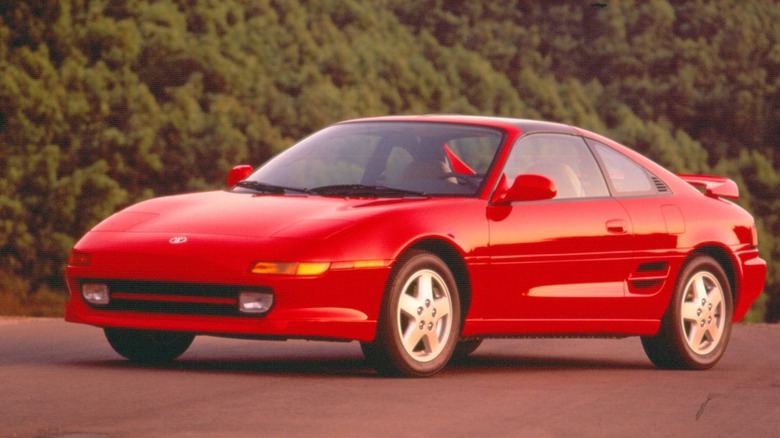
By 1984, Toyota already offered the Celica and its performance-oriented Supra variant as enthusiast cars. However, mid-engine sports cars were in at the time, and Toyota wanted to capitalize on that with the Midship Runabout 2-seater, better known as the MR2.
Based on the SV-3 concept shown at the 1983 Tokyo Motor Show, the MR2 arrived in dealerships in the summer of 1984 with a striking angular design and the coveted 112-horsepower 4A-GE engine also found in the AE86. Thanks to its low 2,154-pound weight and 44:56 weight distribution, the MR2 was praised for its handling, which even brought it the Japanese Car of the Year 1984-1985 award. In 1987, Toyota even introduced a supercharged variant with 145 hp, which sprinted to 60 in just 6.5 seconds.
Yet, it was the second-gen 1990 MR2 that propelled the nameplate to legendary status. Yes, the "SW20" was heavier than its predecessor at up to 2,755 pounds, but it was also a larger, more refined sports car. Crucially, apart from the entry-level 2.2-liter Camry-derived engine with 130 hp (later 135 hp), it was offered with the 2.0-liter turbocharged 3S-GTE from the Celica All-Trac Turbo, which produced 200 hp. As a result, it sprinted to 60 in 5.8 seconds, quicker than the V8-powered Ferrari 348 tb.
The third-gen MR2 Spyder was introduced in 2000 with a significantly less potent 1.8-liter engine with 138 hp. However, it weighed only 2,200 pounds, allowing for exceptionally nimble, go-kart-like handling. Unfortunately, the MR2 was discontinued in 2006, though Toyota should soon launch a brand-new mid-engine MR2 car with AWD.
The unlikely joint venture return: Toyota 86 & GR86
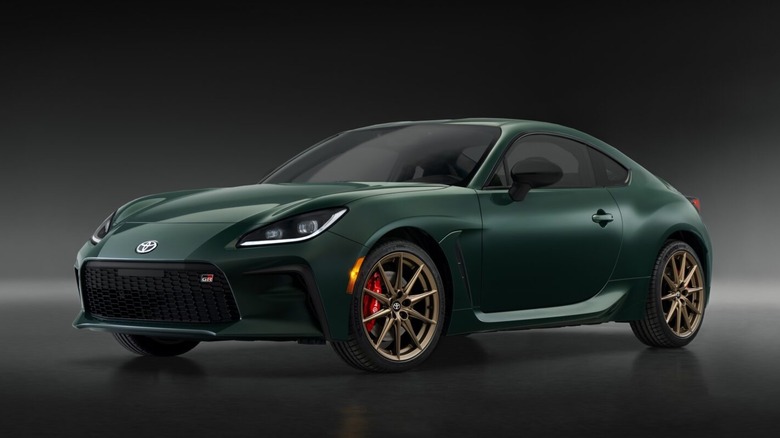
Toyota left enthusiasts wanting after the demise of the Supra, Celica, and MR2, with the brand's lineup was consisting mainly of boring cars, trucks, and crossovers based on front-wheel-drive platforms. But that changed in 2011 when Scion, Toyota's youthful sub-brand, launched the FR-S in the U.S. The car was developed together with Subaru, which called it the BRZ, while Toyota sold it as the GT86 in other markets and from 2017, as the Toyota 86 in the U.S.
Toyota was back in the game, and not just with any sports car, but a cheap, fun-to-drive one. The FR-S/GT86/BRZ were back-to-basics machines with rear-wheel drive, balanced chassis, and a naturally aspirated boxer engine for a lower center of gravity. In other words, a mishmash of characteristics from the Sports 800 (boxer engine) and AE86 (balanced chassis), with a design reminiscent of the 2000GT. The FR-S/86 wasn't particularly quick — its 2.0-liter engine produced only 200 horsepower (205 hp for 2017). But it didn't matter – journos and enthusiasts still raved about the driving experience, aided by the excellent steering and six-speed manual.
Toyota and Subaru fixed the performance issue with the 2022 GR86 (GR is for Gazoo Racing) and 2022 BRZ, which came with a 2.4-liter boxer producing 228 hp. Other than that, both are still fantastic cars to drive. In 2024, we drove the Toyota GR86 Hakone edition and found it to be fun and playful, but also confidence inspiring.
The Bavarian alliance: Toyota GR Supra
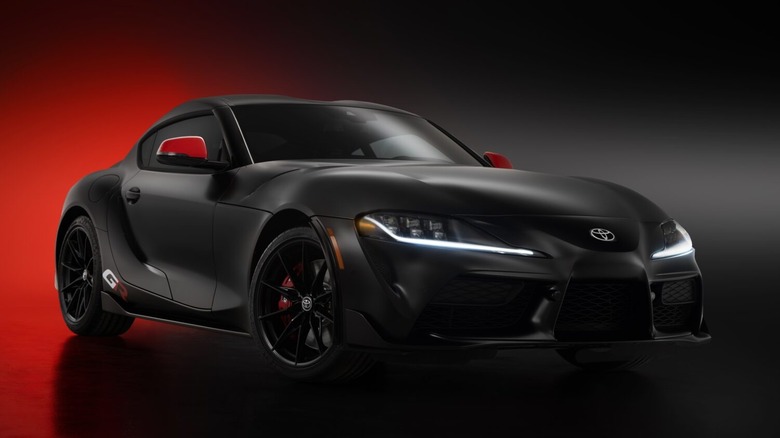
Toyota solved the affordable sports car problem with the 86. Next stop: reviving the Supra flagship. Rumors about a new Supra were actually swirling since 2014, when Toyota showed the stunning FT-1 Concept.
However, turning the concept into a production car wasn't going to be easy, as Toyota didn't have an inline-6 at its disposal. So, the Japanese automaker collaborated with BMW, borrowing the chassis from the Z4 roadster and its B58 turbocharged inline-6 engine with 335 horsepower. In fact, the 2020 GR Supra also had a BMW interior and eight-speed automatic transmission. Naturally, Toyota aficionados weren't pleased with this approach, but why anyone would bash a new (and cool-looking) sports car is beyond us. Besides, it's a BMW, not some no-name brand. The fact that the 2020 GR Supra drove and performed like a real sports car made those complaints ever more trivial.
Toyota also did its part in making the GR Supra more attractive to enthusiasts. For 2021, the Japanese automaker bumped the engine's output to 382 hp (0 to 60 in 3.9 seconds with the auto) and introduced a 2.0-liter four-cylinder turbo with 255 hp (also from BMW) to make it more affordable. Perhaps the biggest upgrade was the introduction of a six-speed manual for 2023. This time, it was borrowed from BMW's M cars, but Toyota also did extensive work to make it feel special. For 2026, Toyota introduced perhaps the best GR Supra to date, packed with chassis and suspension upgrades. Unfortunately, the "Final Edition" signified the end for the Toyota/BMW collaboration.
Homologation hero: Toyota GR Yaris
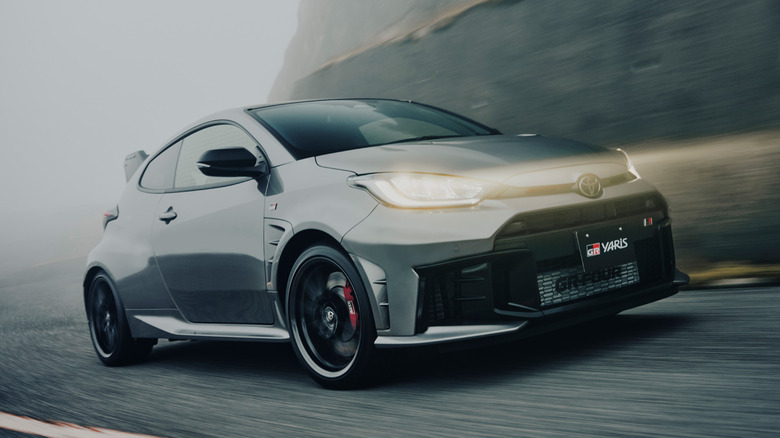
Toyota purists didn't have to wait long to get a pure-bred Toyota performance car. A year after introducing the GR Supra, the Japanese giant launched the GR Yaris — an all-wheel-drive rally homologation special built by the Toyota Gazoo Racing World Rally team.
However, there was a catch: The GR Yaris wasn't bound for America. Yes, North America later got the GR Corolla, but the smaller GR Yaris is the more bespoke car. Most notably, the GR Yaris only shared the front section with the regular Yaris and borrowed the rear section from the Corolla and CH-R. The GR Yaris also had a 3.74-inch lower roof to improve aerodynamics, alongside aluminum panels and a composite roof for a low curb weight of 2,822 pounds.
The headlining features, however, were the 1.6-liter turbocharged three-cylinder with 268 horsepower in Japan (257 hp in Europe), six-speed manual gearbox, and the competition-honed GR-Four all-wheel-drive system. The result was glowing reviews from journalists and enthusiasts alike, with the GR Yaris selling like hotcakes since day one. Hardly surprising, as the GR Yaris is fast in a straight line, great in the corners, and simply a joy to drive.
The best part: Toyota GR didn't rest on its laurels. In 2024, the company introduced an upgraded GR Yaris with a new cockpit that allowed better outward visibility and an eight-speed automatic transmission. The three-pot was also tuned to 300 hp in Japan, or 276 hp in Europe. Then, in 2025, Toyota GR launched a high-downforce aero package, showing its seriousness in creating the ultimate hot hatch.
The rally hot hatch for America: Toyota GR Corolla
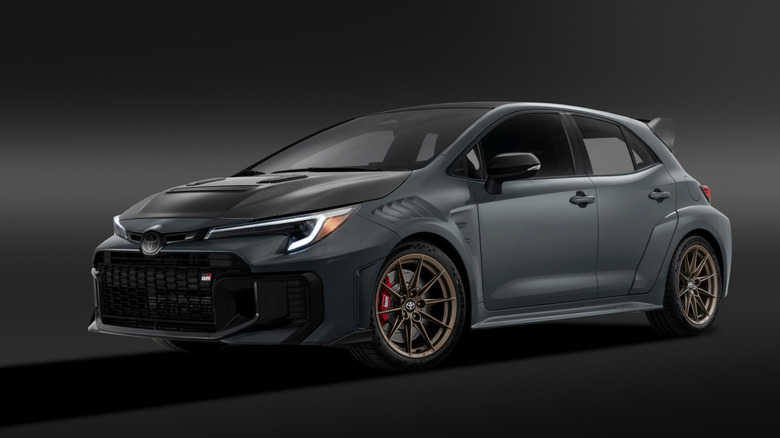
Glorious driving dynamics aside, the GR Yaris is a highly-limited vehicle with tight rear seats, a laughable trunk, and only two doors. In that sense, the America-bound GR Corolla is a much more versatile machine.
Launched for 2023, the GR Corolla borrowed the 1.6-liter turbocharged three-cylinder engine from the GR Yaris, albeit tuned to 300 horsepower, the same GR-Four AWD system, and the six-speed manual. Crucially, it still had four doors and offered more space for passengers and cargo than the GR Yaris. Yes, it was also heavier (3,249 pounds), but that's still not much for an all-wheel-drive performance car.
Following in its smaller sibling's tracks, the GR Corolla met a wall of rave reviews. But again, it wasn't job finished for Toyota GR. For 2025, the hot hatch received an eight-speed automatic option, but more importantly, modified suspension and cooling upgrades. The 2026 GR Corolla was tweaked even further, with Toyota GR improving the body rigidity and engine cooling.
Also for 2026, the GRMN Corolla received torque, aero, and carbon upgrades. As the most hardcore model in the lineup, the GRMN Corolla packs carbon-fiber aerodynamic and suspension components developed at the Nürburgring, alongside grippy Michelin Pilot Sport Cup 2 tires. The engine's torque was also increased from 295 pound-feet to 302 pound-feet, and the rear seats were removed to reduce weight.
Return of the supercar: GR GT
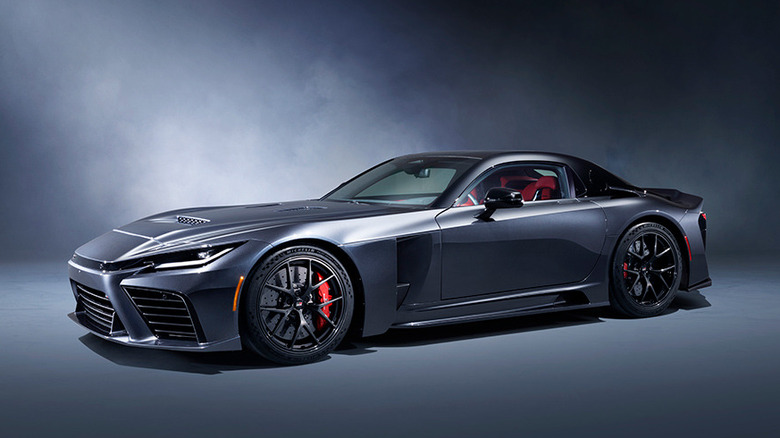
Standing on the shoulders of giants like the 2000GT and Lexus LFA, Toyota Gazoo Racing has revealed its crowning achievement: the GR GT. Yes, the GR GT doesn't carry a Toyota badge, but it's designed by the same folks that made the GR Yaris and GR Corolla, so we'll let that slide.
As far as milestones go, the GR GT may be the most important one in Toyota's performance car history. See, the GR GT is as much a road car as it is a FIA GT3 racing machine. TGR develops both versions side-by-side, meaning the final product should be as close to a road-legal race car as possible.
The concept behind the GR GT is quite intriguing. TGR went with a front-mid-engine layout, giving the car a dramatic hood line that looks even better in real life. But it's more than just looks: Aerodynamics played an even more bigger role when designing the GR GT. Propelling this menacing beast is a 4.0-liter twin-turbo V8 hybrid powertrain with over 641 horsepower, channeled to the rear wheels via an eight-speed automatic transaxle setup for 45:55 (front-to-rear) weight distribution. Furthermore, the supercar will weigh less than 3,858 pounds and have a top speed of over 199 mph. The GR GT should arrive in dealerships by 2027.