

Connecticut Set America's First State Speed Limit In 1901, And It Was Charmingly Low
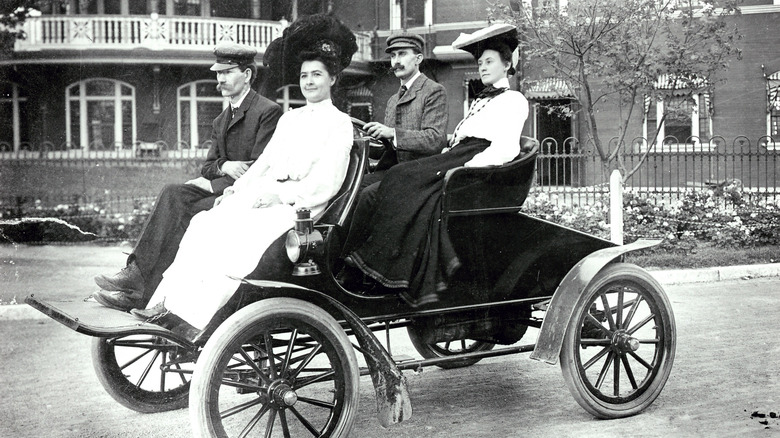
On May 21, 1901, Connecticut became the first state in the nation to regulate automobile speeds with a law that capped vehicles to a then-suitable 12 mph within city limits and 15 mph on rural roads. This would become the opening move to what became a century-long negotiation between drivers and the law over speed limits — and it started low enough that a determined cyclist could have kept pace.
Connecticut enforced speeds with fines that ran up to $200 (the equivalent of $7,951 today) for each offense — nearly a fifth of the cost for the average car at the time. The law also required drivers to slow at intersections and crossings. If a horse appeared frightened by the approaching vehicle, the driver was to come to a full stop and wait.
Though Connecticut's law was the first to set a specific numeric limit, the idea of penalizing motorists for moving too fast predates it.
Speeding was already being punished
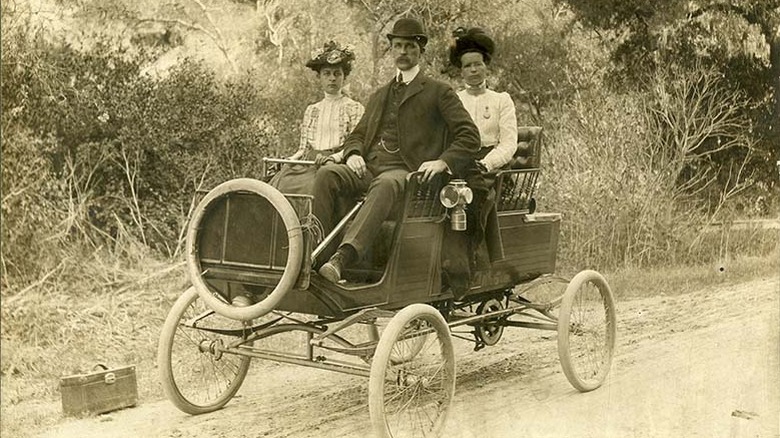
Two years before Connecticut's law passed, New York City taxi driver Jacob German became the first person ever arrested for speeding in the United States. Oddly enough, a police officer on a bicycle pursued him through Manhattan and pulled him over. German was clocked at 12 mph — a speed the officer considered reckless. Ironically, 12 mph is still quite quick in the congested city traffic we've become familiar with today.
Connecticut's 1901 enactment would set the template for enforcement elsewhere in the U.S. Within a few years, states such as New York followed with their own speed regulations, and the patchwork of limits that now governs American roads began to take shape.
The allowable pace has climbed considerably since. Many modern U.S. roads and interstates post a speed limit within the 85th percentile, meaning speed limits that are at or below what 85% of drivers travel at. While many interstates today have embraced increasingly higher speed limits, the mechanism Connecticut established over 120 years ago is still the one in use today — and it all started at just 12 mph.