

In Some US Cities, You'll Lose Over 100 Hours A Year Sitting In Traffic (That's More Than 2 Full Work-Weeks)
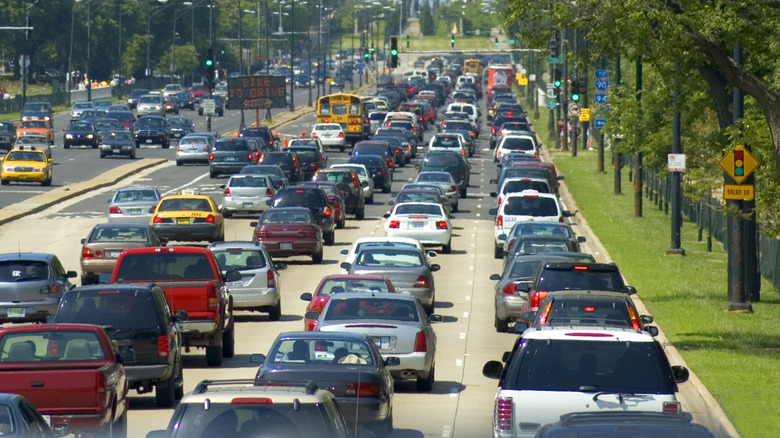
We're not going to dismiss the worst traffic jams our readers have ever experienced, but some of those are one-off situations, such as when folks are evacuating for a hurricane. For nonstop congestion that can rule your whole year, the 2025 Inrix Global Traffic Scorecard has the data — and it's especially disappointing for a trio of U.S. locales. Out of the five worst cities for traffic delays in the world, three were in the United States. Drivers in all three – Chicago, New York City, and Philadelphia — wasted more than 100 hours in 2025 just sitting in traffic.
For starters, Chicago lived up to its Second City billing with the second-highest traffic delay time in the world in that study — it was No. 1 in the U.S. — and trailed only Istanbul globally. Commuters in the capital of Turkiye wasted an average of 118 hours sitting in traffic each year, while Chicagoans suffered through 112 hours of being jammed up the road. That marks a 10% increase for the latter since 2024, and a jump of 17% since 2023. To further understand how bad things were, the Scorecard also indicates that during Chicago's rush hour traffic, peak speed was a mere 21 mph, with vehicles often limited to 9 mph during the final mile of their commute.
New York City and Philadelphia drivers gave up 102 and 101 hours of their lives annually stuck in traffic last year. For what it's worth, the fourth-worst city in this country for traffic delays, Los Angeles, rounded out the global bottom 10 with drivers trapped in traffic for 87 hours every year.
The true costs of traffic delays
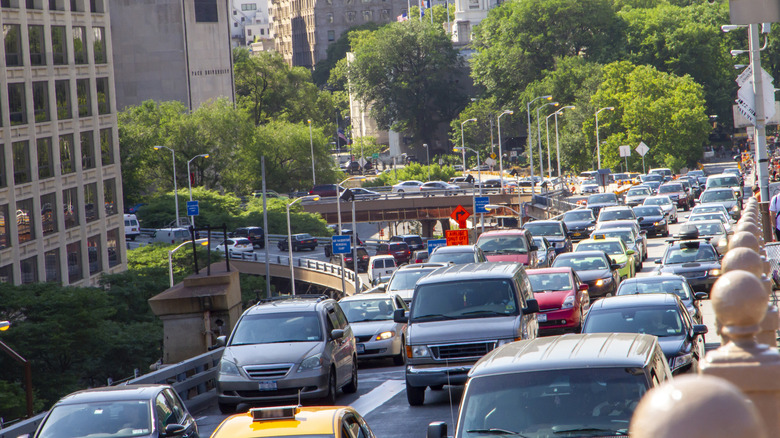
As for the cost of that wasted time, the Inrix Scorecard indicates traffic congestion costs those Chicago drivers some $2,063 per year in lost time alone — before factoring in fuel costs. When you do account for the price of gas, of course, expenses go up considerably. According to the EPA, a typical light-duty SUV uses approximately 0.7 gallons of gas per hour when idling, and that's with all accessories off. Chicago's 104 hours of lost time thus works out to 72.8 gallons of gas, which will set you back more than $375 annually — since gasoline was at an average of roughly $5.15 per gallon in Chicago when this was written.
Additionally, even though Trump ended greenhouse gas regulations for cars, that doesn't mean today's vehicles are suddenly releasing fewer emissions. In fact, they'll produce more than ever when they're idling, at least compared to when they're actually driving. This is because engines also run cooler when idling compared to when driving, which leads to incomplete combustion — sending more emissions from unburned fuel into the atmosphere.
Then, with you sitting in one place surrounded by vehicles producing all those emissions, you face up to 40% more pollution in your car than you would if you were driving. Meanwhile, the stress of all that traffic congestion can have a major negative impact on your mental health, which can affect your relationships, work, and driving. The consequences of this can be far-reaching, as mental-health challenges are the largest contributor to the rise in post-pandemic DUI deaths.