

Why The 100-Car Naturalistic Driving Study May Be The Most Important Ever Conducted
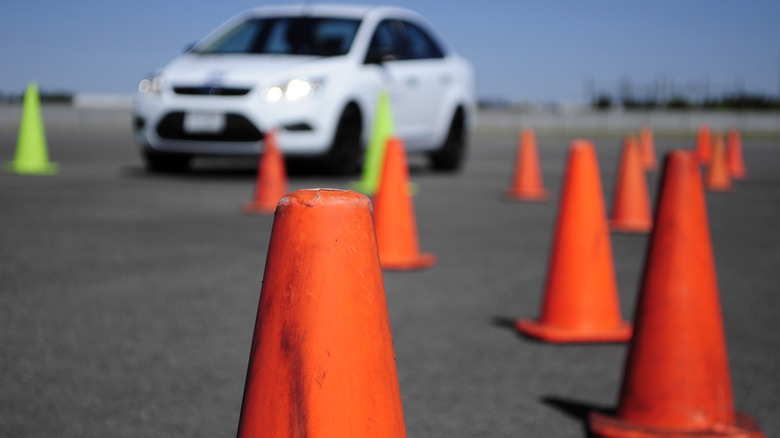
Although automakers and other interested parties spend untold hours testing vehicle safety, there's only so much that can be done without real-world research. Consider Consumer Reports' emergency handling tests: sure, they look super fun. But most folks actually don't spend much time zigging and zagging through orange traffic cones during their daily commutes.
True, some safety data can be captured with the typical after-the-fact crash analysis that goes into federal reporting, and your car's "black box" — the event data recorder — can provide very short snapshots of data as well. Yet that's still only part of the picture. And all those drawbacks help explain why the Virginia Tech Transportation Institute's 2005 program — the 100-car Naturalistic Driving Study — was so important.
This year-long study was the first of its kind and carefully constructed to be, well, as natural as possible for participants. For instance, most of the drivers were behind the wheels of their own cars — the study did provide complimentary leased vehicles for some of the people. Either way, though, each vehicle was equipped with a range of vehicle sensors and video cameras designed to collect data without intruding on the driver's attention. Nor did researchers try to control the action: drivers simply went about their business as normal.
The result was nearly 42,300 hours of data covering approximately 2,000,000 miles of driving by 241 drivers, of which 109 were considered primary drivers. Of course, just as important as the study's design were its results.
The study paid close attention to driver inattention

The study results continue to point to areas of concern today. After all, perhaps one of the most important discoveries might have been just how critical driver attention is to staying safe. Before the study, experts had generally believed that a failure to pay attention to the road played a part in about 25% of all crashes. The Naturalistic Driving Study, however, indicated that driver inattention factored into some 93% of rear-end crashes, approximately 80% of all crashes, and about 65% of all "near-crash" situations. Showing some of the difference in naturalistic data collection compared to traditional methods, NHTSA numbers from 2024, released in April of 2026, say that distracted driving was a factor in only 12% of all police-reported crashes for the year.
That potential for under-reporting is especially relevant today since smartphone use went up with the pandemic and never came down. Now, the same NHTSA data says that 8% of all fatal crashes in 2024 were impacted by distracted driving, and the specific distraction was a cellphone in 14% of those crashes. The question is, does this math really add up? The National Safety Council has its doubts. In a report on the difficulties of accurately reporting crash statistics, the Council says, "There is strong evidence to support that underreporting of driver cell phone use in crashes is resulting in a substantial under-estimation of the magnitude of this public safety threat."
There was a distinct disparity in crashes by driver age
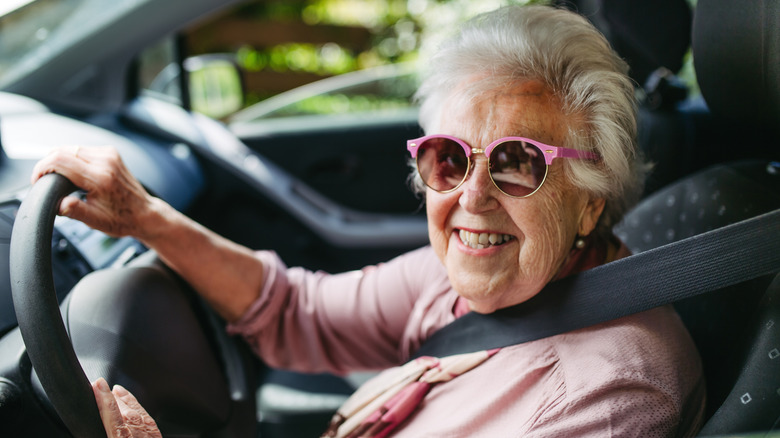
The VTTI research came up with further surprises when it came to comparing younger and older drivers. The general consensus today is that older drivers are more likely to make certain dangerous mistakes when on the road. The naturalistic results, on the other hand, showed a couple of areas in which they do better than younger drivers. For one, "errors in judgment," ranging from getting involved in a secondary task to driving while impaired, were much more common in the youngest group of drivers compared to those in older groups.
This likely leads to the second age-related finding: the rate of crashes and near crashes decreased as drivers got older. Slicing the data into one chunk for 18- to 20-year-olds, and one for drivers aged 35 or older, the rate was four times higher for the former than for the latter. In fact, it turns out that the NSC has its own data to show 7.6% of licensed drivers involved in vehicle crashes are aged 65 to 74, while the same people actually make up a much larger percentage — 13.6% — of all licensed drivers.
Are older drivers really safer than we think, then? Not necessarily. Despite dealing with a slightly different age range, the IIHS-HLDI reminds us that the drivers aged 70 and older are involved in a higher per-mile rate of fatal accidents than their middle-aged counterparts. The lower absolute numbers come from older drivers cutting back on their mileage.
The naturalistic data on drowsy driving
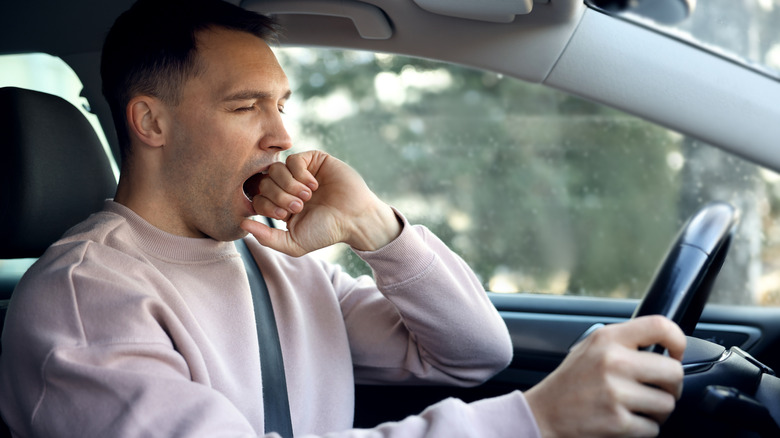
The 100-Car study also began to raise awareness of the dangers of drowsy driving. According to the research, typical databases of the time indicated that about 2% to 4% of all crashes involved tired drivers — the naturalistic study noted that fatigue was an issue in 12% of all crashes and 10% of all near crashes. The risk is especially significant when your road trip is mostly long highways, but lack of sleep can lead to issues at almost any speed.
That's because being overly fatigued can affect your thinking in much the same way as overindulging in alcohol. To be exact, the Occupational Safety and Health Administration (OSHA) tells us that going 17 hours without sleep is equivalent to having a blood alcohol content of .05. At that stage, according to the University of Toledo, you're likely to be feeling "buzzed" or "lightheaded" with the potential for impaired reasoning. Staying awake for a full day – 24 hours — is then compared to having a BAC of .10. As a reminder, the nationwide BAC limit for legal intoxication is generally accepted to be .08.
You should further keep in mind that drowsy driving is another of those factors with a lot of potential for under-reporting. It can simply be hard for crash investigators to determine how much fatigue may have contributed to a given event.
The growth in naturalistic driving studies
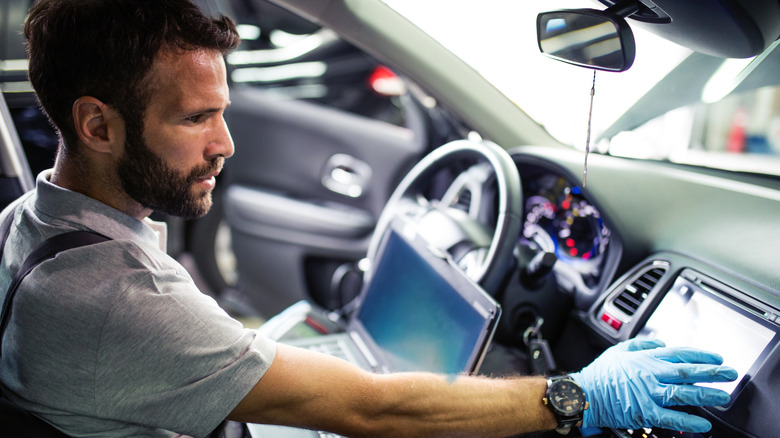
An additional result was an increase in naturalistic driving studies, with VTTI — which came up with the term "naturalistic driving" — playing a leadership role. Highlights include supporting the second Strategic Highway Research Program (SHRP2). Designed to look at how a driver's actions affect traffic safety, this effort relied on a naturalistic approach to data collection by following more than 3,100 participants as they completed 33 million miles of travel across 1.4 million hours of driving. The outcome included the SHRP2 database that was published in 2018 and remains online today for researchers.
Beyond massive programs such as SHRP2, VTTI has developed a history of bringing its approach to more targeted topics. The ongoing Daisy Research Study is a case in point. The focus is on how drivers interact with advanced driving assistance systems in six specific vehicles. To be exact, participants are limited to owners of newer models of the Ford Mach-E, Honda CR-V, Kia Sportage, Subaru Outback, Tesla Model 3, or the affordable and efficient Toyota Corolla Cross.
VTTI isn't alone, either. The Advanced Vehicle Technology Consortium, founded in 2015 and connected to MIT's Center for Transportation & Logistics, is also a major player in the field. It runs both its own naturalistic driving studies with participants operating their own cars and a separate program where drivers are loaned vehicles from the program.