

NASA Is Looking For A Few Good Introverts For A Simulated Moon/Mars Mission
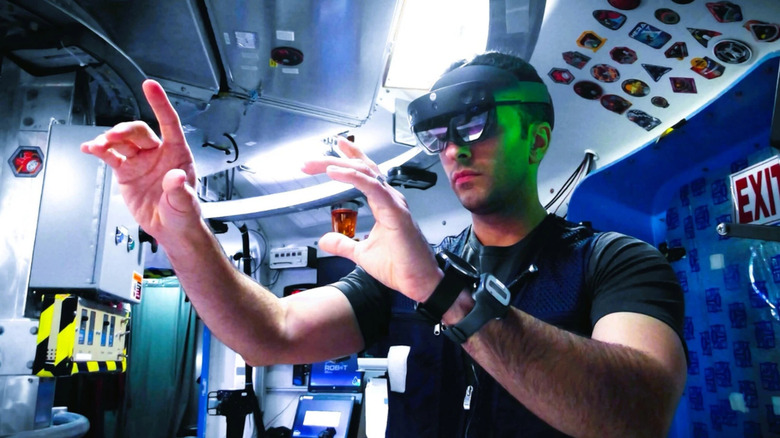
Of course you want to fly in a rocket ship and live on Mars, but would you actually do it? You can't put off the answer any longer, because NASA is recruiting right now. Four good people with the Right Stuff (plus two alternates) will be selected for the Moon and Mars Exploration Analog, or MMEA. For this program, you will fly all the way to Mars for months, then live there for more months, and then fly all the way back for even more months. As you may have guessed, there's just one small detail: You won't actually do these things. You'll never leave the Earth at all. You'll just get to do all the boring drudgery (live and work in cramped quarters without running water on a year-long group project) without any of the glory. But without you, NASA's upcoming plans for a Moon Base might suffer.
The basic idea here is to take two earlier real-world simulations, or "analogs," and combine them into the first end-to-end mission to Mars. The Human Exploration Research Analog (HERA) was a program to test how crews can thrive in a small spacecraft environment for extended periods. For this, NASA built a physical replica, recruited "astronauts" through the same rigorous process as actual astronauts, trained them for a mission, and then stuck them inside the spaceship for months. That was the easy one! The Crew Health and Performance Exploration Analog (CHAPEA) took place in a model Martian habitat, complete with a simulated Mars-like exterior (basically a glorified sandbox). The first CHAPEA trial covered 378 days of "living" on another planet; the second is ongoing right now, scheduled to end in October. MMEA will use both constructions to simulate the whole trip, from liftoff to life on Mars to the voyage home.
Being a bold explorer is one thing, but choosing to live the day-to-day life of one without actually going anywhere might take a certain type of crazy. A very certain type: specifically, a U.S. citizen between the ages of 30 and 55 who's no taller than 6'2" and also has a science or engineering degree. Oh, and you can't have dietary restrictions, you can't be a sleepwalker, and you need to pass a modified Class III flight physical. Plus, pass a psychological assessment. You can't be crazy, after all. If that sounds like you, and you ever wanted to go to Mars without ever going to Mars, NASA is recruiting.
Life on Mars in Houston
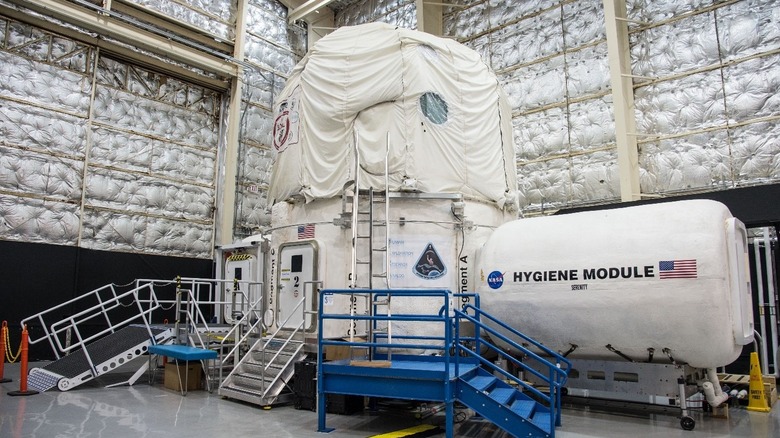
Alright, you want to go. What are we talking about here, exactly? MMEA is a program that will be run out of the Lyndon B. Johnson Space Center in Houston, Texas. Yes, the very same that Apollo 13 once radioed for help. It will begin no earlier than August 2027 and should last around 14 months, including six weeks before the actual mission and two weeks after for training and data collection. Once it starts, you are "leaving Earth," so you won't get to go outside the spaceship or habitat (except for Mars walks), and you can't visit your family. You get 8 hours a day of sleep, 4.5 hours a day of mealtime, and the rest is all work. You do get 1.5 days per week off, though.
So, where will you be living? The spacecraft is two stories tall and has five rooms, but only takes up a total of 682 square feet. You'll be living and working there with three other people for months as you journey to another planet. If that sounds a bit sub-optimal, don't worry, it gets worse. NASA will make sure to throw "specific stressful conditions commonly encountered in space flight" at you.
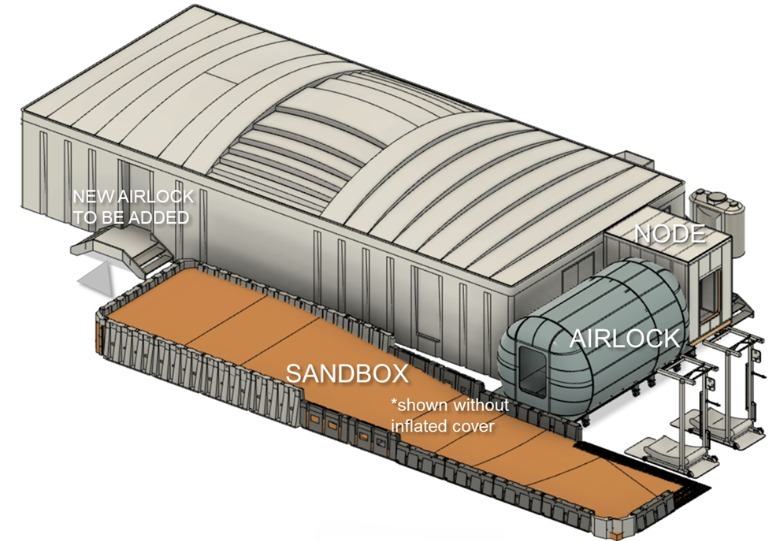
At last, you will reach Mars, and your living arrangements will be upgraded to an on-world habitat. This is only one story, but is much larger at around 1700 square feet. That's definitely an upgrade, but it's actually a downgrade from the old CHAPEA habitat. That program was simulating a well established colony, whereas MMEA is simulating something in the much nearer future, per CNN. So your living arrangements will be smaller, and probably less equipped, than that. You'll have scientific missions to perform, you'll likely grow some plants for food and oxygen, and you'll probably have some more stressful conditions thrown at you.
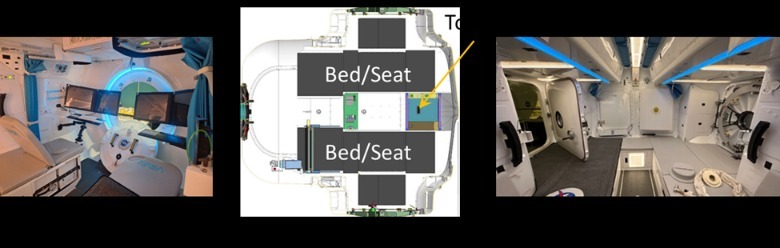
At least you can go for a drive! There will also be a model two-seater rover for you to cruise around in, although this is a simulator and it only moves virtually. You might just have to sleep in it, though, since it's designed for multi-day excursions. And yes, it has a toilet.
The real science is the friends you made along the way
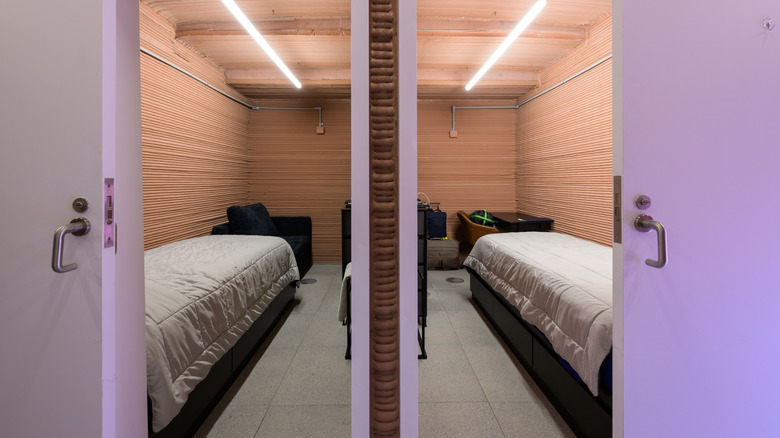
Obviously, the "science" missions you perform are artificial. Houston may be a strange place, but it's not Mars. The real point of all this is more of a study of how human beings will operate in these conditions. Will the monotony get to you? Will your crewmates drive you nuts? What's the best way to resolve tensions when there are only three other humans around? Is homesickness crippling?
This isn't just theory anymore. With NASA's Artemis program humming along, the chances are very strong that humanity's first colony on another world will happen in our lifetimes, potentially within the decade. If we're going to put people on the surface of another celestial body and leave them there, we'd better know what that will do to people. So you, dear "astronaut," might just prevent someone from losing their mind on the Moon. Does that sound like the coolest thing ever? NASA is recruiting.