

NASA Unveils Next Generation Of Moon Cars As Plans For A Permanent Lunar Base Take Shape
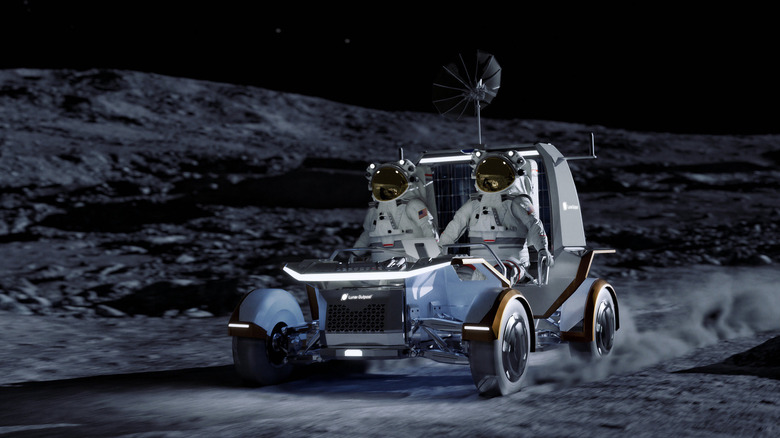
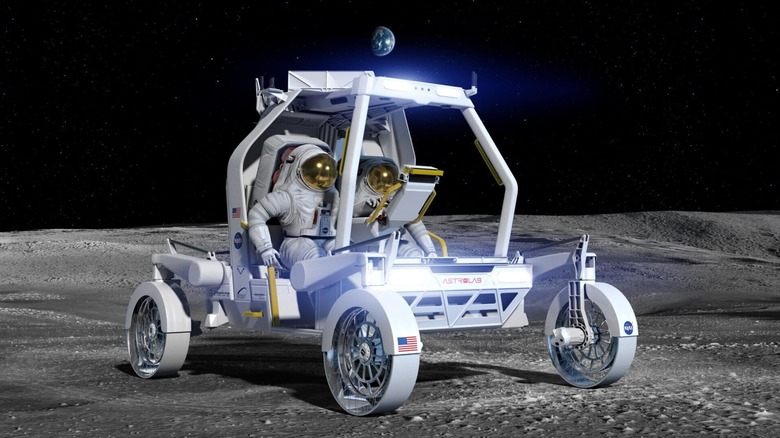
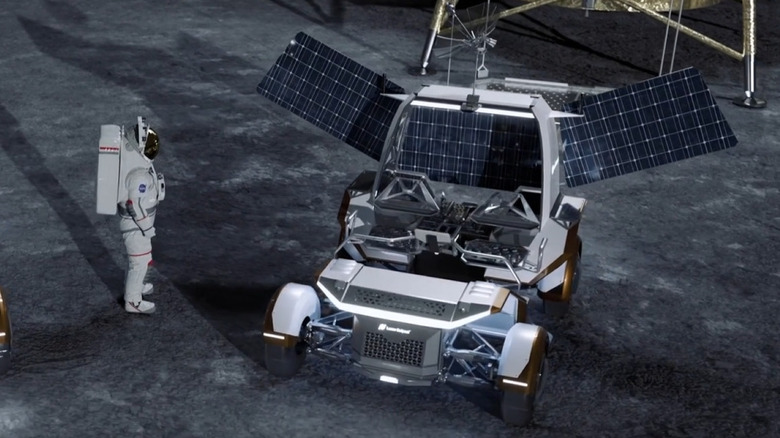
Lunar rovers once carried Apollo astronauts over the surface of the Moon, but since 1972, there have been no human beings to transport. But as NASA prepares to return astronauts to the surface of another world, the space agency wants to ensure that these bold explorers have a ride ready and waiting for them. To that end, on Tuesday NASA unveiled its next-generation lunar rovers, capable of being driven by humans inside them, humans back on Earth, or themselves autonomously if they want. The agency announced two winners for its bid: the Crewed Lunar Vehicle (CLV-1) by Astrolab and the Pegasus by (the appropriately named) Lunar Outpost. The latter features electrification technology from General Motors and Goodyear tires. Each one can carry two astronauts, weighs around a ton, tops out a little over 6 mph, costs about $220 million, can handle inclines up to 20 degrees, and is expected to last about a year. And, you know, will work on the Moon. I think you can qualify those as off-roaders; way, way off-roaders.
This actually represents a significant shift in NASA's approach to lunar terrain vehicles (LTVs). As recently as 2024, the plan was to create a far more capable car that would last a decade, as the New York Times notes. That changed rapidly when Jared Isaacman was sworn in as NASA Administrator late last year. The requirements were scaled back to allow for a faster development time, and the bidding companies had only a few months to submit their proposals. As you might imagine, these were mostly just streamlined versions of the previous proposals, so the new LTV designs aren't wildly different from the old ones.
The upshot is this: instead of having to wait until 2030 for an even more expensive vehicle that might have issues, NASA should be able to get the CLV-1 and Pegasus to the Moon by 2028, so that they're in place for the Artemis astronauts to arrive and take them for a spin. It also means NASA can learn what works and what doesn't, or what features it might like to add, on cheaper vehicles. It's a more iterative philosophy, which makes sense, given that NASA also announced ambitious plans for dozens of uncrewed landings on the Moon in the next few years. Why? The Moon Base is coming.
The first human colony on another world
If all goes to plan then, in our lifetimes, humanity's very first off-world colony will be built. In a press conference, the agency laid out its multi-year plan to build up a Moon Base piece by piece. Along with that, it announced the first three of many missions to send equipment to the lunar surface, beginning later this year. While it's a NASA plan funded by government money, the execution here will be through private sector contractors. The big winner here is Blue Origin, the rocket company founded by billionaire Jeff Bezos. The company's Blue Moon Mark 1 lander will be ferrying the first of these missions from space to surface. In 2028, the same lander will also transport the rovers. Astrobotic and Intuitive Machines won contracts for their own landers for missions that should be launching this year or early next year.
The exact location for all this activity is still being worked out, and the site of the Moon Base itself will partly depend on the discoveries made by all this scientific equipment. The rovers themselves will be scouting out potential sites. There's also important work to be done on exactly what it's like to live on white soil, something that NASA, after all this time, still knows surprisingly little about. Much about the Moon remains a mystery. That will need to be solved before the astronauts move in.
A big component of that solution is the MoonFall program, in which NASA's Jet Propulsion Laboratory will create "hopper" drones to explore the surface in more detail. They might, however, serve a second purpose: staking claims.
Claiming territory on the Moon
During the press conference, NASA mentioned that the MoonFall drones would eventually land for good, designating four corners of a piece of lunar territory. This would be a place where the agency wanted to do more research or, potentially, site the Moon Base. It is, in other words, interplanetary squatting. It would be a gentle signal to any other country (China) that might just so happen to be planning its own base (it's China) that it shouldn't perform any activity in this particular area.
Of course, that's merely a friendly notice! The Outer Space Treaty of 1967, still the basis for international space law, explicitly prohibits anyone from claiming sovereignty on the Moon or any other celestial body, per Ars Technica. So a couple of drones, nominally on some imaginary corners, might not have any actual standing. That said, NASA did call this a "Moon Base perimeter." The agency is thus not claiming the land, merely saying that it intends to build there and nobody else should go there. Which, again, for those in the back, isn't "claiming," surely.
What this all makes clear is that the return to the Moon isn't just a far-fetched fantasy anymore, but a tangible near future. Equipment for the Moon Base should start landing in the next twelve months; the next-gen Moon rovers should be there in two years. Actual people should be there to drive them just after. The long-term goal appears to be a frequent launch cadence, such that new, upgraded equipment (such as rovers) will come quickly. The Moon is about to become a commute. Let's just try not to litter it along the way.