

The Differences In Test Driving Cars From A Dealership Vs. Private Sellers
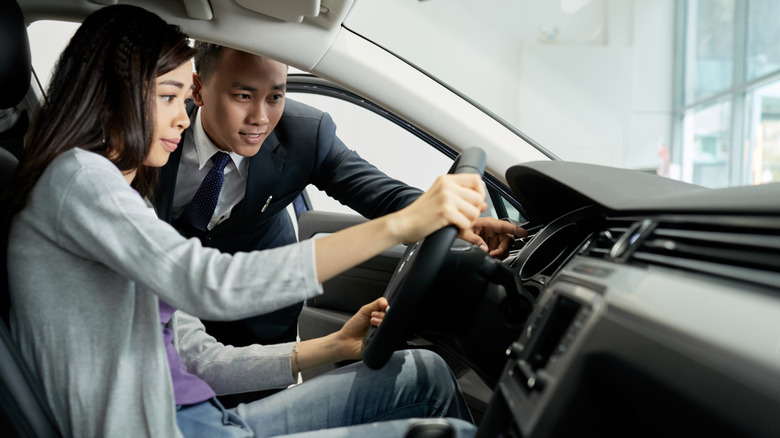
During my car-selling days, the test drive was one of those love-it-or-hate-it parts of the job. Away from the showroom, I got to know the customer in a more neutral environment and could quickly tell whether the buyer was serious. On the other hand, the outing could be a giant time suck if the customer was simply kicking tires and looking for something to do on a Saturday. I learned that shoppers who came prepared to test drive had the best car-buying experience; they were on a mission.
But not every test drive happens at a dealership. Decade-old data from the Federal Trade Commission says that about one-third of used-car transactions happen through private sellers. While the behind-the-wheel mechanics are pretty much the same regardless of the seller, it's what happens before and after the ride that mostly differ. Having been on both sides of private-seller transactions, non-dealership test drives can be unpredictable. Some owners think their Honda Civics should be treated like an Aston Martin DB5, while others can barely be bothered to deal with strangers. There are also security concerns about personal safety and the risk of being scammed.
On the other hand, dealers are in business to sell cars. If you're in the showroom and breathing, expect at least some encouragement to buy. You're likely not to worry about safety, but failing to take the caveat emptor (buyer beware) phrase to heart could be a mistake. Whether you've only test-driven vehicles at dealerships and are curious about the private-sale experience, or you're preparing to visit a dealership for the first time, knowing what to expect from each can help you get more out of the drive. Of course, there are tips for preparing for a test drive.
Test driving a car at a dealership
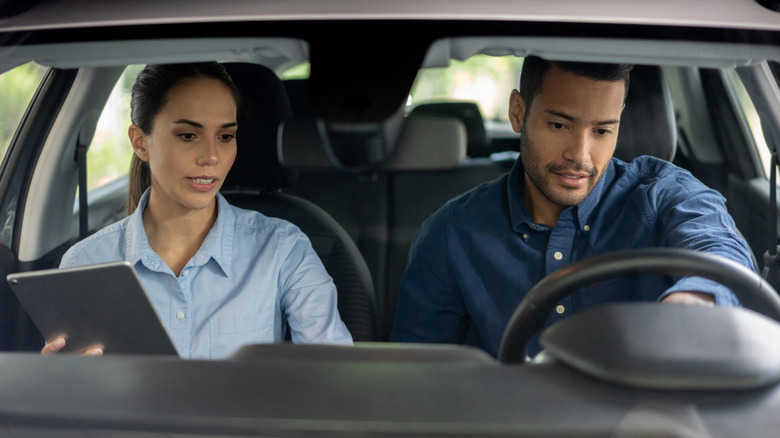
If you're all about convenient scheduling, then you'll appreciate the dealership business model. You can just walk in six or seven days a week, and many stores are open on holidays. More punctual types may prefer to set an appointment. Dealers are happy to accommodate both preferences. Before you get behind the wheel, expect to be asked for your driver's license, which will be copied or scanned. The business wants to know who you are in case something bad happens during the test drive. Reputable dealers won't run your credit, but some operations will use your info to create a buyer profile to tailor offers. Yep, you're trading personal info for an opportunity to drive someone else's car.
Where I worked, sales staff were always required to accompany buyers on test drives, except for repeat customers. Not every dealer operates this way, but the more expensive the car, the more likely your test drive will be chaperoned. The biggest drawback to be accompanied is that you're likely to be asked to follow a predetermined route (I had short, medium, and long options, depending on the buyer). You can always ask to deviate, but you might get rebuffed.
Arguably, the biggest advantage of a dealership test drive is that there's more than one car to look at. This is particularly useful when comparing powertrains. Another plus is having a salesperson who can explain the car's features and technologies (although this may not be your experience 100% of the time). In addition, you might be able to arrange an overnight test drive for a more real-world experience with the car.
Test driving a car from a private seller
Buying from a private seller means one thing: anything goes. Unlike the structured setting of a dealership, individual sellers can pretty much do what they want. This also requires you to do more work, starting with scheduling an appointment. If you've ever dealt with Facebook Marketplace, you know that sometimes getting a response can be challenging. Safety also needs to be front and center. Meet at a well-trafficked public location (in my area, I arrange meet-ups at a police department lot with video surveillance that's promoted for these purposes) and bring a friend. Smart sellers will ask to see your driver's license (I also ask for insurance information). Your homework includes verifying that the car's title is in the seller's name (ask for their driver's license to confirm).
Dealing with a private seller means you're unlikely to be denied for a test drive like some dealers. You can also expect the owner to ride along for the test drive, but you may encounter more trusting individuals. And unlike with a dealer, you may have more flexibility in choosing a route. Assuming you're not working with a flipper, the owner should be able to explain the car's features and quirks. Some private sellers may also have maintenance and repair records to review, which is unlikely to be available for most used cars at dealerships.
The post-test-drive setting may be just like at a dealer; the seller may apply pressure to make a sale. Alternatively, you may find an owner willing to wait for a better offer. You're also on your own registering and paying for the car, whereas a dealer can usually handle the DMV paperwork and help arrange financing.