

Following The 3-Second Buffer Driving Rule Could Save Your Life
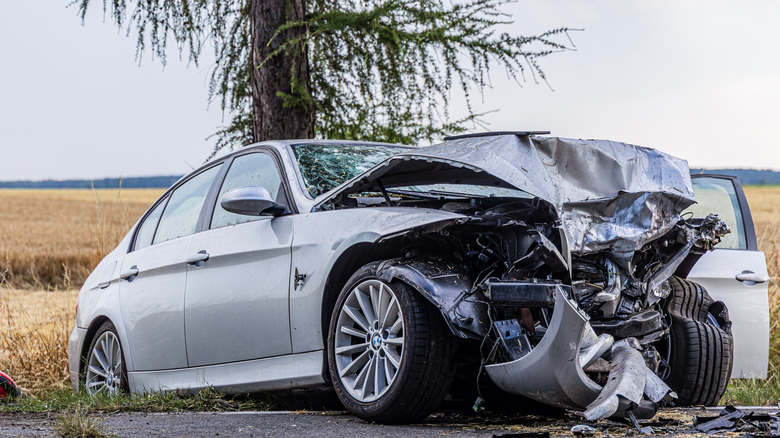
For as fun as driving can be, and as necessary as it is in many of the country's decidedly car-centric urban areas, driving is not a particularly safe activity. Even with far more safety features and safer structural design in modern cars — as demonstrated in this Insurance Institute for Highway Safety crash test pitting a '90s Chevy Blazer against a modern Blazer crossover — over 2.25 million people are injured in car accidents each year. Each day, about 100 people die in traffic accidents, with more than 36,600 fatalities in 2025 alone.
While not everything is under your control as a driver, there are proven ways to make your commutes safer, giving you the best opportunity to respond safely when something dangerous happens on the road. Chief among these is the three-second rule. No, it's not a suggestion that everyone should be driving cars with a three-second 0-to-60 time. Rather, the three-second rule, first formulated by the National Safety Council, urges drivers to always maintain a buffer between their car and the car in front of them of at least three seconds.
To follow this rule, drivers should identify a fixed landmark, like a tree, a road sign, or an intersection, and begin counting seconds the moment the rear end of the car in front of them passes this landmark. If you don't get to three seconds before the front end of your car passes the same landmark, you're likely following too closely and could be at increased risk of a collision if the car in front of you suddenly brakes. It's important to maintain this distance both in the city and on the highway both for safety and because it's good to keep a consistent practice.
Why time and not distance?
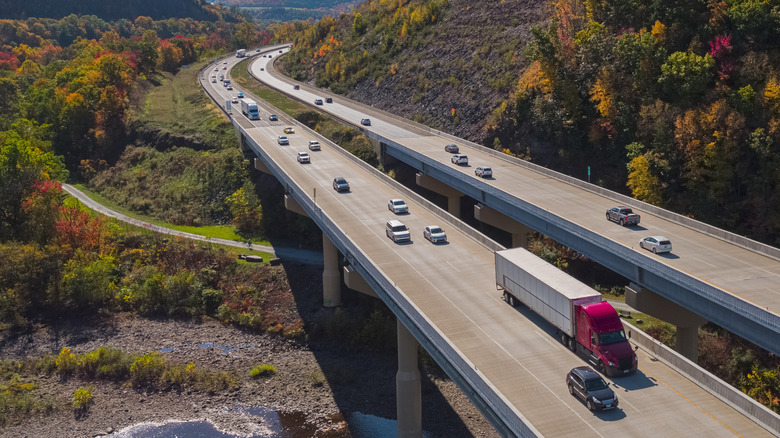
It might seem unusual to measure a following distance in terms of seconds and not feet, but this is the best way to ensure you're at a safe distance, according to the NSC and highway engineers alike. That's because what matters when most keeping a safe driving distance isn't how far away you are but how much time you have to react to a changing situation. One reason that spatial distances aren't adequate here is that the amount of time it takes to come to a complete stop changes depending on how fast you're going.
For example, a car going 30 mph needs about 150 feet to slow to a complete stop after slamming on the brakes. But at 70 mph, that distance is nearly 500 feet. It's simply not feasible or efficient to calculate several different safe following distances based on a car's likely speed and then ask drivers to remember these distances and adjust accordingly as their speed changes. It's too many steps, and there's too much room for error. Likewise, not everyone is skilled enough at estimating distances to correctly judge when they're appropriately far away.
When you need to stop quickly during an emergency, there are a few things that happen in sequence, and each takes up precious time. First, you have to realize that there's an emergency, and then you have to react by stepping on the brake pedal. This typically takes 1.5 seconds or more. That leaves a maximum of 1.5 seconds for you to safely come to a complete stop. These measures are truly independent of how fast you're going, which is why time and not distance is the gold standard for calculating a safe following distance.
3 seconds is the baseline, not the bottom line
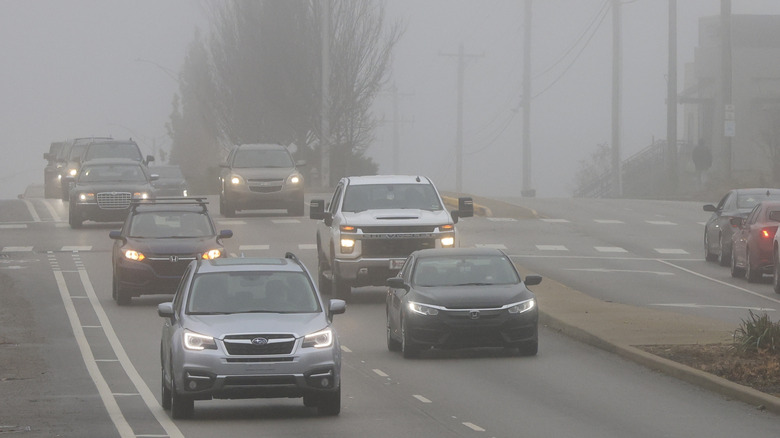
While the three-second rule is a good rule of thumb, it isn't the be-all and end-all of safe following distances. The three-second rule is designed to offer an appropriate following distance during ideal driving conditions, but several factors can increase the ideal amount of time between you and the closest car in front of you. NCS recommends adding one second to your count for every confounding factor or condition making your trip less safe.
Factors that warrant adding extra seconds to your following distance include illness, stress, fatigue, weather, and vehicle size. If you're feeling chipper and energetic, but it's snowing, add one second to your follow time, for a total of four seconds. If it's raining and you're tired, add two seconds, for a total of five. If it's raining at night and you're driving a large SUV while having a migraine, add four seconds. Or better yet, just stay home if you're in that kind of shape. That's probably what the sleeping Tesla driver who foiled FSD with sunglasses should've done.
Basically, anything that could reduce your reaction and response time should see you maintaining a longer following distance. In Australia, it's legal to drive with a little medicinal THC in your system, but you should probably add a second for that, too, as cannabis is known to slow down reaction times. At the end of the day, though, it's up to you to use your best judgment and stay safe while out on the roads. When in doubt, give the driver in front of you a little extra room, as you never know what's going to happen.